
01
A round cake for a round moon
A mooncake is less a dessert than a festival in pastry form: round like the full moon, heavy, rich, and meant to be shared.
A Cantonese mooncake is about the size of a palm and surprisingly heavy. The crust is thin, soft and shiny, and its top carries a raised pattern pressed in by a wooden mold: flowers, a border and the name of the filling or the bakery. Inside, the filling makes up almost everything; Cantonese bakers aim for a crust-to-filling ratio of close to two to eight. The classic filling is smooth lotus-seed paste, and the classic upgrade is a salted duck-egg yolk, or two, in the middle. Cut across, the orange yolk sits in the pale gold paste like the moon in the night sky, an image Cantonese writers compare to the setting sun over a long river.
The China Intangible Cultural Heritage register describes the Cantonese mooncake as thin-skinned and generously filled, soft and moist, glossy and golden, with fillings that run from sweet to savory, and notes that it was the first kind of mooncake to travel abroad, known among overseas Chinese communities in Southeast Asia, Europe and the Americas by the late Qing and early Republic. The crust comes in three families: syrup crust, flaky crust and the unbaked snow skin, with syrup crust by far the most common.
In Guangdong the Mid-Autumn Festival is a family night. People hang lanterns, children carry lanterns made of carved pomelo peel, and families set out mooncakes, pomelos, persimmons, star fruit and taro to honor the moon before sitting down to eat them. Taro, pomelo and snails all carry wishes for protection and many descendants; the mooncake carries the main one, reunion. A Cantonese saying sums up the mood: in winter and at New Year you may not get a full meal, but on the fifteenth of the eighth month you will.
Take it apart
A Cantonese lotus-paste mooncake
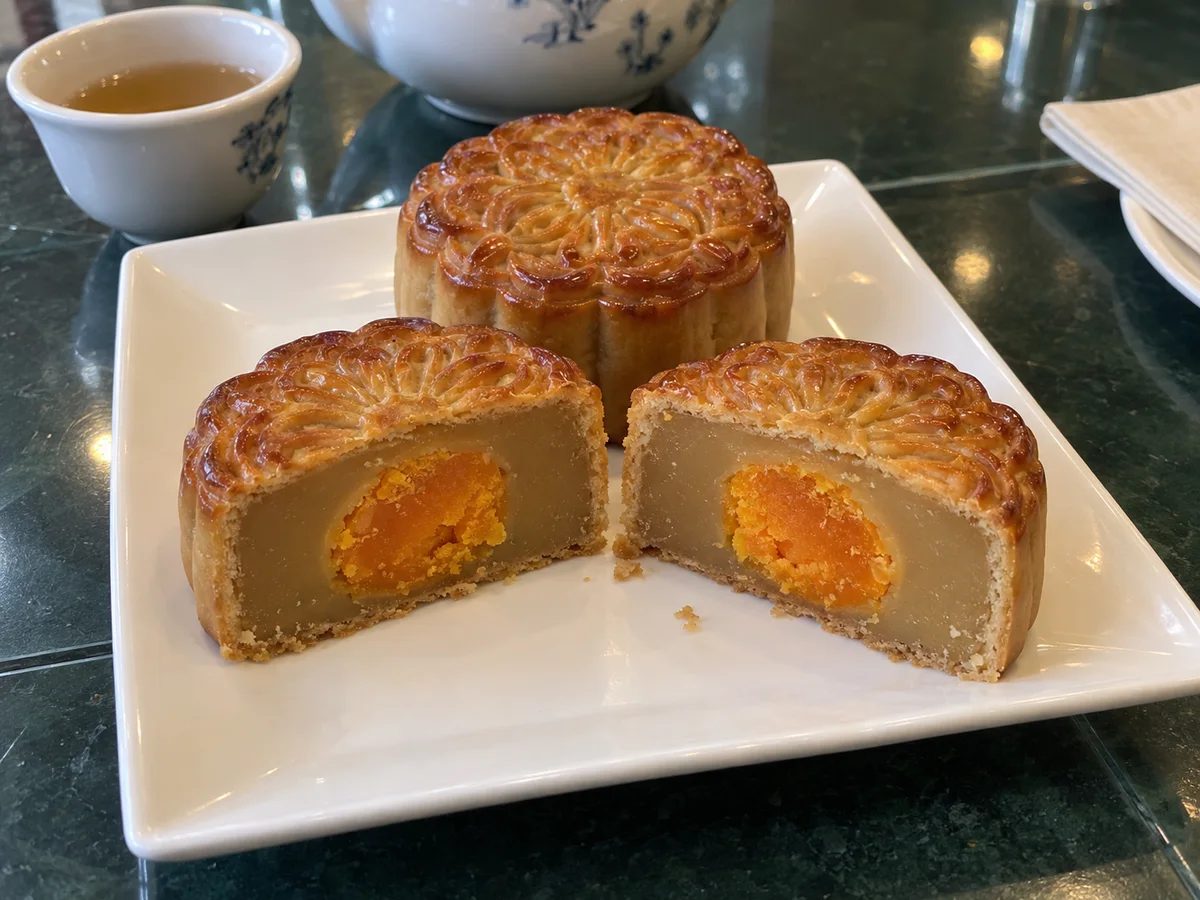
- The pattern
Pressed in by a wooden mould
- Lotus paste
Sweet, and nearly all of the cake
- Salted egg yolk
Cut through, it looks like the full moon
02
From an everyday cake to the festival cake
The name is old; the custom of tying it to the full moon is younger.
The word 月饼 first appears in Southern Song records of Hangzhou in the thirteenth century. Zhou Mi’s Wulin Jiushi lists it among cakes sold in the city, and Wu Zimu’s Menglianglu files it under steamed pastries sold all year round, so at that point a mooncake was an ordinary snack, not a festival food, and not necessarily baked. Some regional mooncakes are still steamed today, such as the layered mooncakes of Yongdeng in Gansu and the snowflake mooncakes of Yongkang in Zhejiang.
The link to the Mid-Autumn Festival becomes clear in the Ming dynasty, when round cakes were laid out as offerings to the moon and then shared. A Ming writer in Hangzhou noted that on the fifteenth of the eighth month people sent each other mooncakes to signify reunion. In Beijing, a Ming account of the moon offering says the cakes and fruit had to be round, that some cakes were two feet across, and that married daughters had to return to their husband’s home that night, which was called the Festival of Reunion. Palace records describe leftover mooncakes being stored in a dry, airy place and shared out by the whole household at the end of the year as reunion cakes.
By the Qing dynasty mooncakes were being judged as pastry. The food writer Yuan Mei praised a mooncake that did not taste particularly sweet. In Suiyuan Shidan (1792) Yuan Mei describes a flaky crust of fine Shandong flour around pine nuts, walnuts and melon seeds ground fine with a little rock sugar and lard, fragrant, loose and tender, and another with a frilled edge, filled with fresh jujube, baked between two braziers and kneaded by hand a hundred times. In Beijing, the Yanjing Suishi Ji (1906) called the mooncakes of Zhimeizhai outside Qianmen the best in the capital, mentions offering cakes more than a foot across painted with the moon palace and the jade rabbit, and says some families kept them until New Year’s Eve as reunion cakes.
03
How Guangzhou tea houses made the Cantonese mooncake
The Cantonese mooncake is a late-Qing invention, and it was born commercial.
Before it, the usual Chinese mooncake had a flaky pastry crust. In the late Qing, Guangzhou pastry shops and tea houses began making a different crust from flour, oil, lye water and a long-cooked syrup, a dough that bakes to a smooth amber skin. Guangdong grew sugar cane and was, by the early Qing, the country’s largest sugar producer, and the city’s bakers already made a whole range of wedding cakes and offering pastries. A syrup crust also suited the climate: it goes moldy less easily than a flaky one in Guangzhou’s damp air and does not crumble in transit, which later helped Cantonese mooncakes travel.
The filling came from the same world. In 1889 a baker at the Lin Heung pastry shop in Xiguan, Guangzhou, is said to have worked out a smooth lotus-seed paste while eating a sweet soup of lotus seeds; the sources disagree on the baker’s name. In 1908 the tea-house owner Tan Xinyi (谭新义) bought the shop and turned it into a tea house; a Hanlin scholar suggested adding the grass radical to its name, making it 莲香楼, Lin Heung Lau. Soon afterwards it wrapped lotus paste in syrup crust and sold lotus-paste mooncakes, and it is still called the first house of lotus paste. Its bakers used lotus seeds from Hunan, which cost about thirty percent more than lotus seeds from Hubei; Sheng Hui writes that Lin Heung used Xiangtan lotus seeds less than a year old.
Other tea houses competed with fillings. The Huiru Lou tea house (惠如楼) remade an old tribute cake with mung-bean paste and, in the 1930s, added a salted yolk and renamed it the Phoenix tribute mooncake. Tao Tao Ju, which called itself the master of mooncakes, sold a limited “mooncake king” filled with roast chicken, roast duck, egg yolk, dried shrimp, olive kernels, mushrooms and lime leaves among twenty-one ingredients. In the early 1920s Tao Tao Ju and Lin Heung, facing each other on the same street in Xiguan, staged a rivalry: one decorated its front with a huge peach tree in blossom, the other built a hill of peonies, and Tao Tao Ju launched “seven stars around the moon,” a large savory mooncake surrounded by seven small lotus-and-yolk ones. The pairing that won in the end was the simplest: lotus paste around a salted duck-egg yolk.
They were luxury goods. A 1923 Guangzhou newspaper reported that ten days before the festival the tea-house district was jammed with carriages and buyers queued through the night, above all at Lin Heung and Tao Tao Ju. Tao Tao Ju’s 1933 price list ran from 0.9 yuan to 5 yuan a box, at a time when one yuan bought about 50 kilograms of unhusked rice and a laborer’s monthly rent was about 2.9 yuan. Poorer families joined mooncake savings clubs, paying a little each day to a bakery and collecting their boxes below market price at the festival. In Shanghai, Cantonese-owned firms sold mooncakes too: one writer of the time noted a single mooncake at the Sincere department store priced at 400 silver dollars.
04
Syrup crust, lotus paste and a two-day wait
Each part of a Cantonese mooncake is made separately, and the cake is not ready on the day it is baked.
The crust starts with invert syrup: sugar boiled with water and a little acid for a long time, so that it stays clear and does not crystallize, then left to rest. Bakers mix it with oil and a few drops of lye water, which softens the dough, helps it hold a pattern and colors it in the oven: more lye gives a darker crust. Flour goes in last, and the dough rests for about an hour.
Lotus paste is the slow part. The skins of dried lotus seeds are washed off with lye water, the bitter green germs are pushed out of each seed, and the seeds are cooked and ground. The paste is then fried with sugar and oil, traditionally in a copper pan to keep it from darkening, over high heat at first and then low, stirred constantly with a wooden paddle until the water has gone. A home recipe gives an idea of how rich it is: 250 grams of lotus seeds take 150 grams of sugar, 50 grams of maltose, 80 grams of peanut oil and 20 grams of lard to make about 700 grams of paste, and that is already a reduced-sugar, reduced-oil version.
To assemble, a ball of filling, with a salted yolk buried in it, is wrapped in a thin sheet of dough, about 15 grams of crust to 35 grams of filling for a small cake, and pressed into a carved mold. The cakes are misted with water to set the pattern, baked briefly, brushed with egg wash, baked again and cooled. Then they need two or three days in a closed box so that oil from the filling seeps into the crust: bakers call this 回油, “returning oil,” and it turns a dry, pale crust soft and glossy.
| Part | What it is made of | What to look for |
|---|---|---|
| Syrup crust | Invert syrup, oil, lye water, flour | Thin, soft and glossy after resting; a clear, raised pattern |
| Lotus-seed paste | Skinned lotus seeds fried with sugar and oil | Smooth and fine, with a clean lotus aroma; dull or grainy paste is often cut with cheaper beans |
| Salted duck-egg yolk | Yolk of a brined duck egg | Orange-red, a little oil seeping out when cut, salty and fragrant rather than dry and chalky |
| Mold pattern | Carved wooden or plastic mold | Name of the filling or the bakery, flowers or auspicious words |
05
Lotus paste, five kernels and everything else
Republican Guangzhou put almost anything inside a syrup crust.
A 1928 survey of seven Guangzhou bakeries counted more than seventy mooncake names, thirty-one from a single tea house. There were mooncakes filled with roast chicken, cured duck, ham, squab, sausage, oysters and even shark’s fin, alongside garlic, chive and preserved-egg mooncakes, and patriotic names such as “Five Races in Harmony.” The “roast chicken” mooncake contained no chicken at all: it was olive kernels, almonds and fatty pork, sweet and salty at once. Over time most of these faded; the fillings that stayed are lotus paste with salted yolks, red bean, five kernels, mung bean and coconut.
The five-kernel mooncake is the one people love to complain about, and the one most often made badly. The kernels vary by region: walnuts, almonds, peanuts, melon seeds and sesame are common. Cantonese bakers replace the peanuts with olive kernels from the black Chinese olive, and the best come from Xishan in Zengcheng, Guangzhou. They are extracted by hand: a hundred jin of olive stones yields only six to eight jin of kernels, so good kernels cost hundreds of yuan a jin and the finest Xishan kernels over a thousand. A Cantonese five-kernel filling is bound with lotus paste or candied winter melon and studded with 冰肉, sugar-cured pork fat; a northern one is bound with cooked flour and laced with red and green candied citrus strips. Cheap versions swap the expensive kernels for peanuts and dry out the filling for a long shelf life, which is why so many people think they hate five-kernel mooncakes.
| Filling | Chinese | Taste |
|---|---|---|
| White lotus paste with one or two yolks | 双黄白莲蓉 / 单黄莲蓉 | Sweet, smooth, salty in the middle; the classic |
| Pure lotus paste | 纯正莲蓉 | Sweet and smooth, no yolk |
| Red bean paste | 豆沙 | Sweet, dense, slightly earthy |
| Five kernels with ham | 五仁金腿 / 伍仁 | Sweet and salty, crunchy, studded with cured fat |
| Mung bean paste | 豆蓉 | Sweet, fine and pale |
| Coconut | 椰蓉 | Sweet, fibrous; long the cheaper choice |
| Custard | 奶黄 | Milky and sweet; a Hong Kong addition |
06
Mooncakes across China
Cantonese is only one of many styles, and even within Guangdong the cakes change from town to town.
Outside Guangdong, the mooncake many people grew up with has a flaky or a short crust. Suzhou-style mooncakes have a crisp, many-layered pastry, and around Shanghai and the lower Yangtze a favorite version is filled with fresh pork. Shanxi mooncakes are tender and crumbly; the Guo Dulin bakery in Taiyuan, on the national heritage list since 2008, bakes them in a suspended oven with the heat judged by hand and then stores them in a cellar to deepen the flavor. Yunnan cakes have a harder, crunchier crust around cured Yunnan ham.
| Style | Where | Crust | Typical filling |
|---|---|---|---|
| Cantonese 广式 | Guangdong, Hong Kong, Macau | Thin syrup crust | Lotus paste and yolk, red bean, five kernels |
| Suzhou 苏式 | Suzhou, Shanghai, Zhejiang | Flaky layered pastry | Fresh pork is the favorite; sweet fillings too |
| Shanxi 晋式 | Taiyuan and central Shanxi | Soft, crumbly | Sweet fillings bound with flour; also hollow cakes brushed with brown sugar and sesame |
| Yunnan 滇式 | Yunnan | Hard, crunchy crust | Cured Yunnan ham, sometimes with yolk |
| Chaoshan lard cake 朥饼 | Chaozhou and Shantou | Lard pastry that flakes at a touch | Mung bean, black bean, winter melon and pork fat |
| Steamed mooncakes | Yongdeng in Gansu; Yongkang in Zhejiang | Steamed dough | Layers of colored filling, scented with turmeric in Gansu |
| Snow skin 冰皮 | Hong Kong, now everywhere | Unbaked glutinous-rice skin, kept cold | Many kinds; always kept chilled |
Wuchuan, western Guangdong
The Dajinjiu mooncake, founded in the Guangxu reign, is made with five kernels and shredded cured ham, weighs a jin or two, and the biggest reach eight jin, enough for a whole family.
Maoming and Huazhou
Maoming children get piglet-shaped cakes in small bamboo cages, given away by mooncake sellers. Huazhou has the tuoluo cake, filled with coconut, char siu and kernels; its name is explained by a story about a seller who beat a gong.
Chaoshan
Lard cakes with a big red seal on top, made with local lard and the water-and-oil flaky pastry; Yixi, Sunan and Guiyu are the famous names. They are cut into small pieces and eaten with tea.
Hakka areas and Huizhou
Moonlight cakes made from rice and glutinous-rice flour with nuts, with no lotus paste or yolk. Hakka settlers who found little wheat flour in the south made their mooncakes from rice.
07
Custard, snow skin and the gift box
Most of the newer kinds came from Hong Kong.
According to the timeline compiled by the Guangzhou Restaurant Group, a Hong Kong hotel first sold custard mooncakes in 1986, snow-skin mooncakes appeared in Hong Kong in 1989, and a Hong Kong bakery chain made molten salted-egg custard mooncakes popular in 2014. Factory production arrived in the 1980s and 1990s with tunnel ovens and automatic filling machines; in 1985 Tao Tao Ju sent mooncakes to Beijing for the first time and ninety thousand boxes sold out.
The gift box brought its own problems. China issued a national mooncake standard in 2005, restricted excessive packaging of food from 2009, and in 2022 four government departments issued a notice to curb extravagantly priced mooncakes. Ordinary Cantonese mooncakes are not expensive: in 2023 a 187.5-gram double-yolk white lotus mooncake from Lin Heung cost about 35 yuan, and a red-bean one about 21 yuan.
08
How to cut, share, store and choose them
Nobody eats a whole Cantonese mooncake alone, or at least nobody should.
Cut the mooncake into four, six or eight wedges with a sharp knife, so everyone gets a piece of yolk, and eat it with strong tea: pu’er, oolong or Chaozhou-style gongfu tea cut the richness. Mooncakes were traditionally packed four to a box, and at the festival they come with pomelo, taro and, in Guangzhou, stir-fried snails.
Mooncakes are rich, so share them and read the label. Hong Kong’s Centre for Food Safety reminds people that mooncakes are generally high in sugar and fat and some are salty; it suggests treating more than 20 grams of fat or 15 grams of sugar per 100 grams as high, and choosing low-sodium versions with no more than 120 milligrams of sodium per 100 grams. Store baked mooncakes as the box says and eat them before the date on it; snow-skin mooncakes must be kept at 4°C or below and ice-cream mooncakes at −18°C or below, eaten soon after they come out of the refrigerator and carried in an icebox.
To judge a Cantonese mooncake, look at the crust first: thin, even and glossy, with a sharp pattern. A good salted yolk is orange-red and lets a little oil seep out when cut; a dry, pale yolk tastes chalky. Good lotus paste is fine enough to stick lightly to the roof of your mouth and smells of lotus, not just sugar and oil.
09
At home
You need invert syrup (bought or made a day ahead), lye water (kansui), peanut or other neutral oil, plain or low-gluten flour, lotus-seed paste (bought, or made from the quantities above), salted duck eggs, an egg yolk for glazing and a mooncake press.
- 1. Make the dough
Stir invert syrup with oil and a little lye water, then mix in flour to a soft dough. Cover and rest for about an hour.
- 2. Prepare the yolks
Boil salted duck eggs for about eight minutes and take out the yolks, or bake raw yolks until set. Halve large yolks.
- 3. Wrap
Wrap each yolk in lotus paste, about 35 grams of filling in all for a small cake, pressing out the air. Flatten about 15 grams of dough, set the filling on it and ease the dough up around it until it is sealed.
- 4. Press and bake
Dust with flour, press in the mold and unmold. Mist with water and bake for about five minutes in a preheated oven, take out and let cool slightly with the oven door open, brush thinly with egg yolk thinned with water, then bake at about 165°C (325°F) for 5 minutes, glaze again and bake 5 to 10 minutes more, until golden.
- 5. Let the oil return
Cool completely, then keep in an airtight box for two to three days. The crust softens and turns glossy.
Choose a firm, fairly dry filling: water in a wet paste turns to steam in the oven and makes the cakes puff up.
10
More Cantonese pastries and tea-house food
Cantonese yum cha
The tea houses that invented the Cantonese mooncake still serve tea and dim sum every morning.
Read about yum cha →Chinese desserts
Sweet soups, pastries and festival sweets from Guangdong to Beijing.
Read the dessert guide →Guangdong
How Cantonese, Chaoshan and Hakka cooking differ.
Read about Guangdong →Guangdong classics
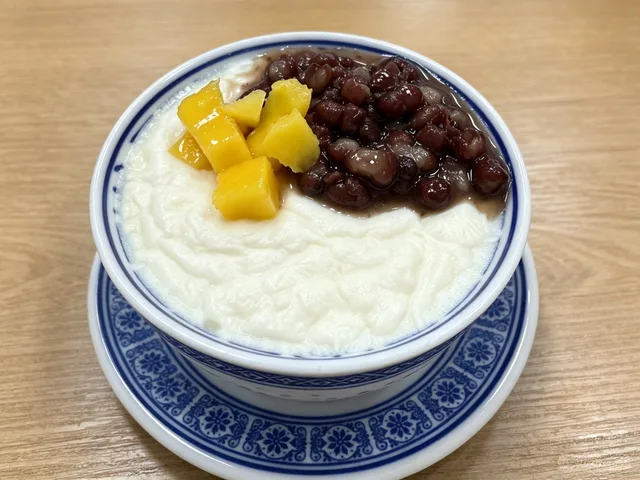
- Double-Skin Milk
Milk pudding · Dessert, hot or cold
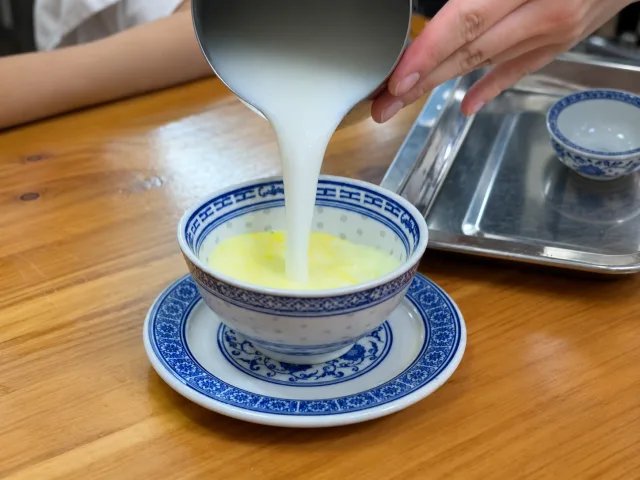
- Ginger Milk Curd
Milk set with ginger juice · Dessert, warm, especially in winter
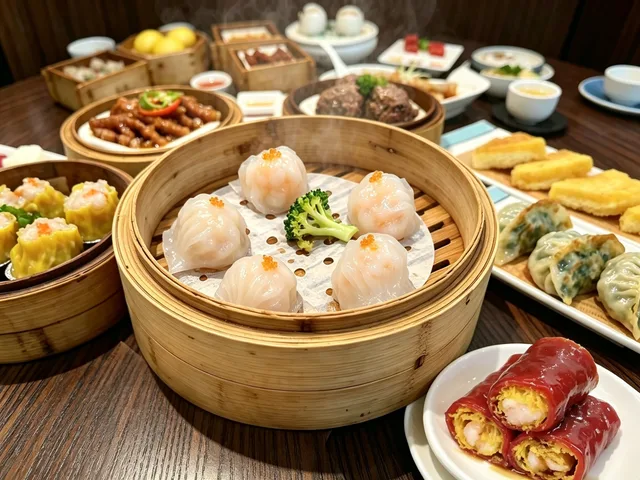
- Cantonese Yum Cha
Yum cha · Morning tea, weekends with family
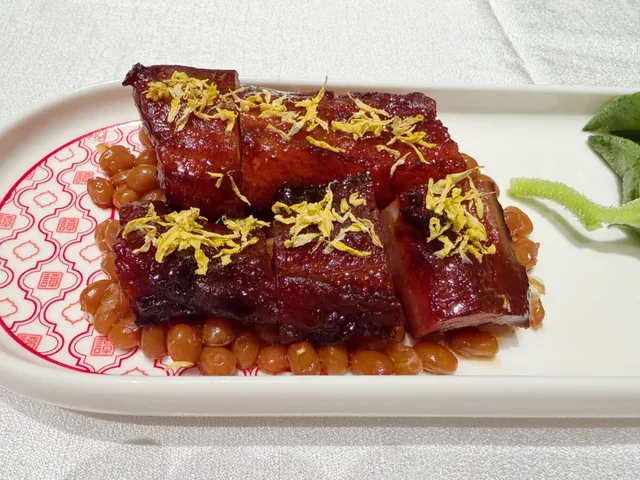
- Char Siu
Roast pork · Lunch or dinner, with rice
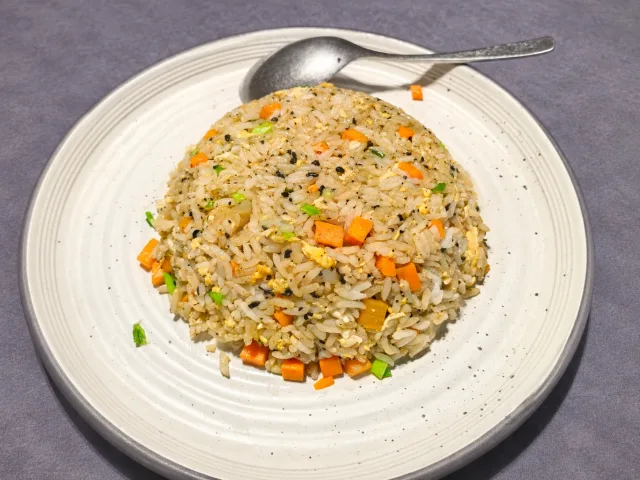
- Egg Fried Rice
Fried rice · Lunch, dinner, end of a meal
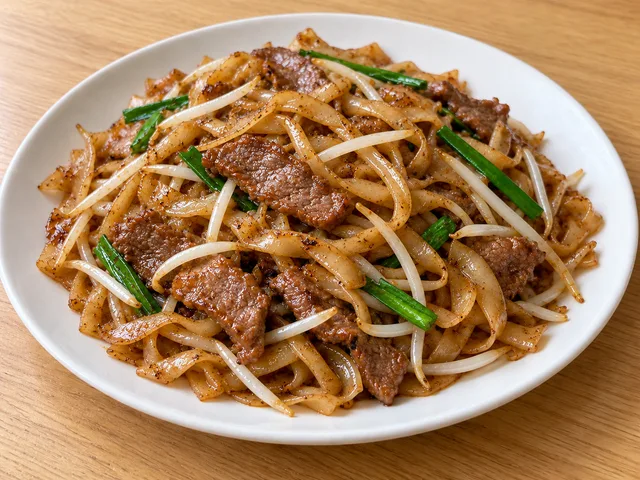
- Beef Chow Fun
Fried rice noodles · Lunch, dinner or late-night supper
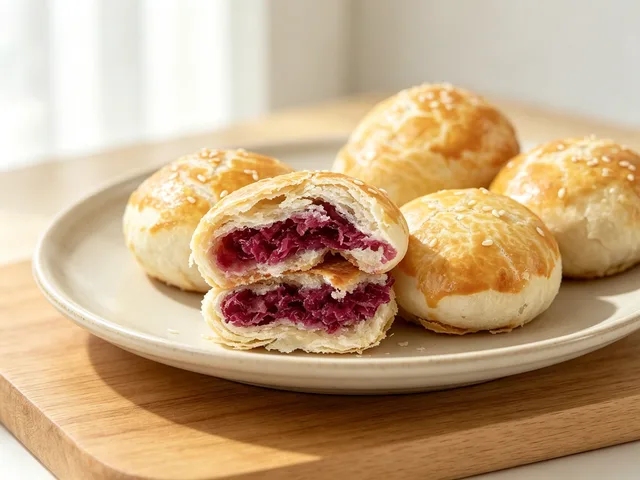
Sweets from other regions
FAQ
Questions about Mooncake
What is a mooncake?
A round filled pastry eaten and given as a gift at the Mid-Autumn Festival. The Cantonese kind has a thin syrup crust around lotus-seed paste, often with salted duck-egg yolks.
Why do people eat mooncakes at the Mid-Autumn Festival?
Since the Ming dynasty, round cakes have been offered to the full moon and then shared by the family, so the mooncake stands for reunion. Families also send boxes to relatives and friends.
Is it true mooncakes were used to hide messages against the Mongols?
It is a popular legend that rebels hid notes in mooncakes at the end of the Yuan dynasty. No historical record supports it.
Why is there an egg yolk inside?
A salted duck-egg yolk adds a salty, rich center to the sweet paste, and when the cake is cut it looks like a full moon. Lotus paste with yolk became the classic Cantonese pairing in the early twentieth century.
What does a Cantonese mooncake taste like?
Very sweet and dense, with a soft, slightly oily crust. A yolk adds salt; five-kernel fillings are crunchy and sweet-salty.
Why do people dislike five-kernel mooncakes?
Cheap versions use peanuts instead of olive kernels and are dried out for a long shelf life. A well-made Cantonese five-kernel filling is moist, bound with lotus paste or winter melon, and uses olive kernels.
How should I cut and eat a mooncake?
Cut it into four to eight wedges and share it, with strong tea such as pu’er or oolong.
How long do mooncakes keep?
Store baked mooncakes as the package says and eat them before the date on the box. Snow-skin mooncakes must stay at 4°C or below and ice-cream mooncakes in the freezer.
Are mooncakes unhealthy?
They are high in sugar and fat. Hong Kong’s Centre for Food Safety suggests sharing them and checking the nutrition label for fat, sugar and sodium.
What is a snow-skin mooncake?
An unbaked mooncake with a soft glutinous-rice skin, first sold in Hong Kong in 1989. It has to be kept cold.
Why is the crust soft and shiny rather than flaky?
Cantonese crust is made with invert syrup, oil and lye water, not layered pastry, and it absorbs oil from the filling in the two or three days after baking.
When is the Mid-Autumn Festival?
On the fifteenth day of the eighth lunar month, which usually falls in September or early October.
Sources
Sources and further reading
- 1 Guang Jiu Jun (广酒君), Guobing: Guangshi Yuebing de Qianshi Jinsheng (国饼——广式月饼的前世今生), chapters “The mooncake takes centre stage,” “Lingnan roots,” “The birth of the Cantonese mooncake” and Appendix 1, “Major events” (in Chinese)Guangzhou Publishing House (2025); written by the Guangzhou Restaurant Group
- 2 Sheng Hui, Yuecai Ji (粤菜记), chapters “Festivals mean eating” (过节就要吃吃吃) and “Thin clouds under the moon” (月下淡云) (in Chinese)People’s Literature Publishing House (2023)
- 3 Zhongguo Yuecai Gushi (中国粤菜故事), chapters “Lotus-paste mooncakes go everywhere: a hundred years of Lin Heung” and “Cantonese food sings in Shanghai” (in Chinese)Guangdong Vocational and Technical Teaching Research Office; Guangdong Science and Technology Press (2022)
- 4 Suiyuan Shidan (1792), dim sum list: Liu Fangbo’s mooncake and the frilled-edge mooncake (in Chinese)Yuan Mei, Wikisource ↗
- 5 Yanjing Suishi Ji (1906): Mid-Autumn, mooncakes and reunion cakes in Beijing (in Chinese)Fucha Dunchong, Wikisource ↗
- 6 Traditional mooncake techniques: Anqi Cantonese mooncakes (item Ⅷ-163, 2008) (in Chinese)China Intangible Cultural Heritage Network ↗
- 7 Traditional mooncake techniques: Guo Dulin Shanxi-style mooncakes (item Ⅷ-163, 2008) (in Chinese)China Intangible Cultural Heritage Network ↗
- 8 CFS announces test results of seasonal food surveillance project on mooncakes (2 October 2025)Centre for Food Safety, Hong Kong SAR Government ↗
- 9 Cantonese mooncakes at home: syrup dough, lye water, egg wash and two days of resting (video, in Chinese)Xiao Gao Jie (小高姐的魔法调料), Bilibili (2018) ↗
- 10 Tasting Lin Heung’s lotus-paste, red-bean and five-kernel mooncakes, 2023 prices (video, in Chinese)Mi Bei Shi Yan Shi (米焙食验室), Bilibili ↗
- 11 White lotus-seed paste at home, with quantities (video, in Chinese)A Li Chu Fang (阿李厨房), Bilibili (2020) ↗
- 12 Regional mooncakes compared: Gansu layered, Shanxi hollow, Shanghai fresh-meat, Yunnan ham and Chaoshan lard cakes (video, in Chinese)Zui Zui Shen Ye Shi Tang (嘴嘴深夜食堂), Bilibili (2025) ↗
Last updated November 2026