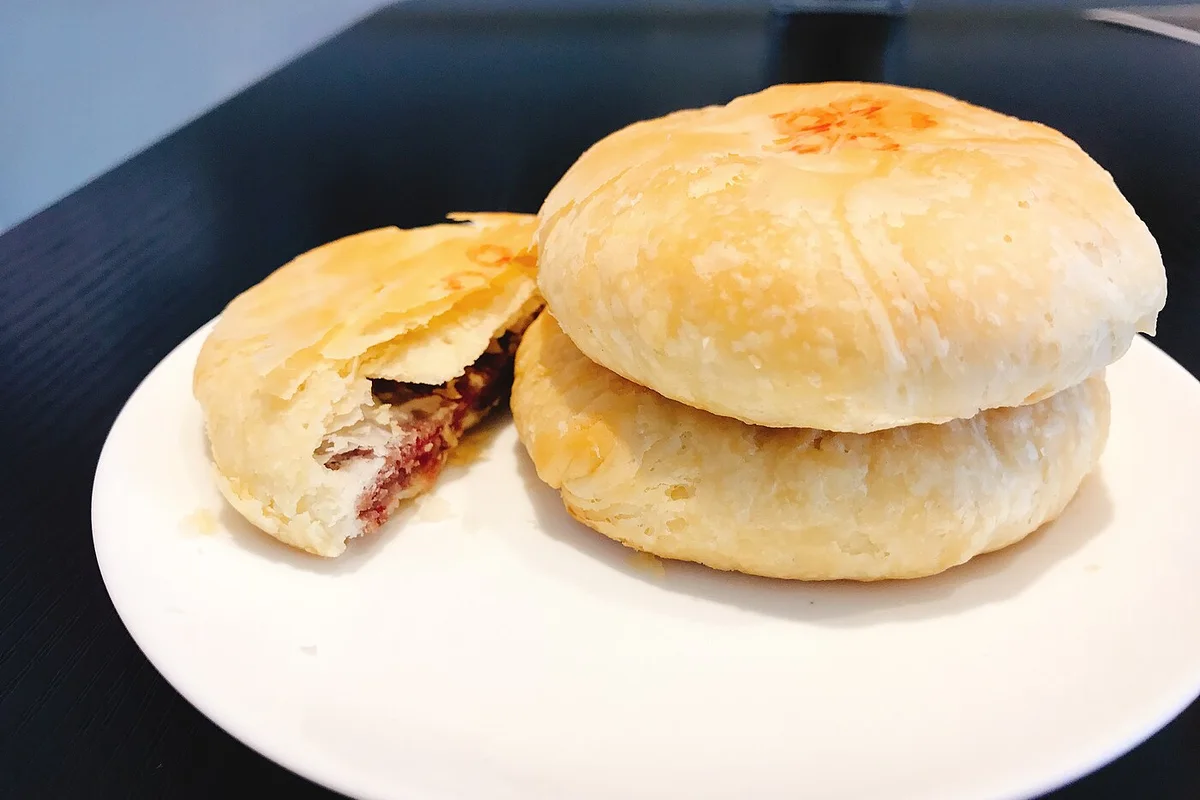
The flower belongs in the filling—not only on the box
Yunnan flower cake is a flaky pastry filled with sweetened edible rose petals. The best-known modern form uses locally cultivated food-grade roses made into a moist, fragrant filling and enclosed in layered wheat pastry. It functions both as an everyday bakery snack and as one of the province’s most recognizable gifts for travelers.
Common ingredientsFood-grade edible rose petals, sugar, wheat flour and lard, vegetable fat, shortening or butter depending on the bakery; egg, dairy or nuts may appear.
01
Use different standards for eating now and carrying home
How to order it
Look for a recent bake date; rose aroma and pastry crispness fade with long storage. Check the ingredient list if you want a true petal filling rather than rose flavoring alone. Fresh bakery cakes are softer and more aromatic, while packaged cakes are designed for travel. Pair one cake with unsweetened tea so the floral filling remains distinct.
How to eat and pair it
In Kunming and Dali, flower cakes appear in bakery windows, markets and gift boxes. Locals may eat them with afternoon tea, while visitors carry boxes home as souvenirs. A fresh cake can shed fine flakes and release a vivid rose aroma as it is broken open. The filling should show softened petals and remain moist without leaking syrup through the pastry.
Easy mix-ups
Misconception: Any pastry decorated with flowers is a Yunnan flower cake. In practice: The characteristic product uses edible flowers—most famously roses—as the actual filling. Misconception: All flower cakes follow one ancient recipe. In practice: Rose-pastry traditions have history, but modern bakeries use many fats, folding methods, sweetness levels and new fillings.
02
Rose filling and flaky pastry must both succeed
Edible roses
Food-grade petals—not florist roses—are harvested for aroma and commonly preserved with sugar before becoming a filling.
Layered pastry
Water dough and oil dough are folded or rolled to create thin flakes around the moist center.
Sugar
It preserves and softens the petals, but well-balanced filling should remain floral rather than taste like plain jam.
Fat
Lard, vegetable shortening, oil or butter can produce different levels of crispness and aroma among bakeries.
Classic rose flower cake
Sweetened edible rose petals form the center of a flaky round pastry and remain the reference version.
Bai and Dali bakery styles
Local pastry traditions may produce different crusts, shapes and rose preparations, including cakes connected with Bai food craft.
Ham-and-rose combinations
Some Yunnan bakeries combine floral sweetness with savory Xuanwei ham, linking two famous provincial ingredients.
- A recognizable rose-petal filling rather than a uniform artificial gel
- Pastry layers that separate without tasting dry
- Floral aroma that remains pleasant rather than perfumed
03
How petals become a filling that pastry can hold
Culinary rose petals are cleaned and preserved with sugar until soft and aromatic. A controlled amount of filling is enclosed in folded water-and-fat pastry, then baked until the layers set without scorching the petals or allowing syrup to soak through the base.
04
A gift shaped by Yunnan floriculture and local baking
Yunnan flower cake is best known as a flaky pastry filled with food-grade rose petals, reflecting the province’s edible-flower cultivation and local bakery craft. Older flower-eating traditions provide context, while the standardized gift boxes and year-round national market are also products of modern baking, packaging and tourism.
“Flower cake” is a changing category rather than one frozen ancient formula. Fresh bakery and sealed travel versions serve different needs; a credible rose cake balances recognizable petals, natural floral aroma, moist filling and layered wheat pastry. Decorative florist roses are not safe substitutes, and lard, dairy, egg, nuts or shared production lines must be checked when relevant.
05
How to say Flower Cake—and what the name tells you
Pronounced xiān huā bǐng. Menus may call it Yunnan flower cake, rose flower cake, xianhua bing, xiānhuā bǐng.
Xianhua identifies flowers as an edible ingredient, most recognizably food-grade rose petals in the Yunnan version. It does not require petals picked on the day of sale: they are commonly preserved and softened with sugar before becoming a stable filling.
A flower printed on the wrapper, decorative dried petals or rose flavoring alone does not establish the characteristic petal filling. Read the ingredient list when that distinction matters.
Edible rose petals supply fragrance, while sugar and fat determine whether the filling blooms or cloys
Yunnan flower cakes are most strongly associated with edible rose varieties whose petals are mixed or preserved with sugar before baking inside pastry. Petal variety, harvest and curing affect aroma. A good filling smells recognizably floral when the cake is broken, with petal texture and a slight fruit or honey depth. Rose essence can strengthen a weak batch, but perfume that tastes soapy or bitter overwhelms the pastry rather than proving generous flowers.
The filling must be moist enough to release aroma yet firm enough not to leak. Too much sugar becomes jam-like and erases rose nuance; too little control lets syrup soak the crust. Some bakers add honey, nuts, sesame or bean paste. These versions should be labelled because they change flavor and allergens. A pink color alone cannot establish real petal content.
Fresh bakery cakes and travel packs solve different problems and should be judged differently
A warm fresh cake can have a flaky, delicate shell and volatile rose aroma but a short quality window. Individually packaged souvenirs trade some flakiness for durability and transport, often using a firmer crust or sweeter filling. Neither category is automatically fraudulent. Check production date, ingredient label and storage instruction, then compare within category instead of expecting a months-long pack to behave like a pastry just lifted from a tray.
At a bakery, buy one classic rose cake before committing to a gift box. Break it rather than biting immediately: syrup and filling can be hot. Look for distinct thin layers or a tender short crust according to the style, no raw flour band and no pool of grease. A busy tray offers useful turnover evidence, but packaging hygiene and staff handling still matter.
One small cake with unsweetened tea reveals more than a box sampled at once
The pastry is rich and fragrant, so share varieties and pair with green, black or pu’er tea without added sugar. Taste the classic rose filling before osmanthus, jasmine, ham or nut versions, which belong to separate flavor systems. Floral aroma fatigues the palate quickly; eating several back to back can make every filling seem perfumed and obscure differences in crust.
The crust normally contains wheat and may use lard, butter or vegetable shortening. Fillings can include nuts, sesame, honey, dairy or egg wash, and “flower” does not mean vegan. Ask whether the roses are food-grade and grown or processed for eating; decorative florist petals may carry unsuitable treatments. People with pollen or plant allergies should use appropriate caution and ingredient guidance.
Treat the use-by date as real, especially for moist fresh fillings
Keep cakes in the conditions stated by the producer, protected from heat, humidity and crushing. Refrigeration may firm fat and dull aroma but can be necessary for certain fresh products. Let only the portion being eaten return briefly toward serving temperature. Do not leave a gift box in a hot car or assume sugar makes a wet petal filling indefinitely safe.
Discard cakes with mold, fermented gas, rancid fat or leaking packages. Reheating may refresh crust but cannot repair spoiled filling. Regional identity comes from Yunnan’s rose-growing and pastry tradition, not from every box carrying a mountain illustration. Transparent petal ingredients, baking date and producer address are more useful evidence than an unverified “ancient recipe” claim.
A few minutes of temperature change can reveal or hide the rose
Very cold pastry fat mutes aroma and feels waxy; an oven-hot filling releases steam and can make sweetness seem aggressive. Follow the bakery’s serving advice and let a refrigerated cake lose only enough chill for the crust and flower scent to open. Break it in half, smell once, then eat. Prolonged room-temperature display is not an acceptable way to improve a cake that requires refrigeration.
The ingredient list and production date tell more than the number of roses on the box
Look for an identifiable edible-rose ingredient, the type of fat, allergens, net weight, producer and realistic shelf life. “Natural flavor” may accompany real petals but does not quantify them. An image of fresh flowers or a heritage slogan cannot replace the list. For comparison, weigh aroma against sweetness and pastry quality rather than counting visible petal specks alone.
A good souvenir also fits the journey. Fresh cakes may be excellent but unsuitable for days without temperature control; a stable sealed cake may travel well but deliver a firmer crust. Buy the product whose storage window matches the recipient, and transport it without crushing. Responsible gifting is part of quality, not an afterthought.
Sources