Meet Yunnan’s shape-shifting rice food
Erkuai and ersi are closely related Yunnan rice staples with a distinctive cohesive chew. Their shape and cooking method determine what arrives at the table.
Common ingredientsCooked non-glutinous rice processed into a dense, chewy dough, served with sauces, pickled vegetables, herbs, egg or meat depending on the dish.
01
Separate erkuai, ersi and four cooking formats
How to order it
Name both the shape and the cooking method: grilled or stir-fried erkuai, or soup or mixed ersi. Then ask about fillings, broth and chilli rather than relying on the broad English label “rice cake” or “rice noodles.”
How to eat and pair it
Eat grilled pieces while their browned surface is still dry, and eat soup strands before they soften in the broth. Pickles, herbs and a modest savory topping should support the rice aroma rather than bury it.
Easy mix-ups
Misconception: Any Yunnan rice noodle is ersi. In practice: the menu should identify the named rice product and its preparation; shape alone is not enough when English translations flatten several foods.
Rice-based does not answer every allergen, storage or swallowing question
Erkuai itself may be rice-only, but sauces can contain wheat soy sauce, peanuts, sesame, dairy or meat stock, and griddles may be shared. Ask about the entire preparation. Dense sticky pieces should be cut into manageable bites for children and older diners and chewed carefully. Soup strands are still cohesive rice cake, not weightless noodles.
02
The same rice mass becomes four different foods through surface area and moisture
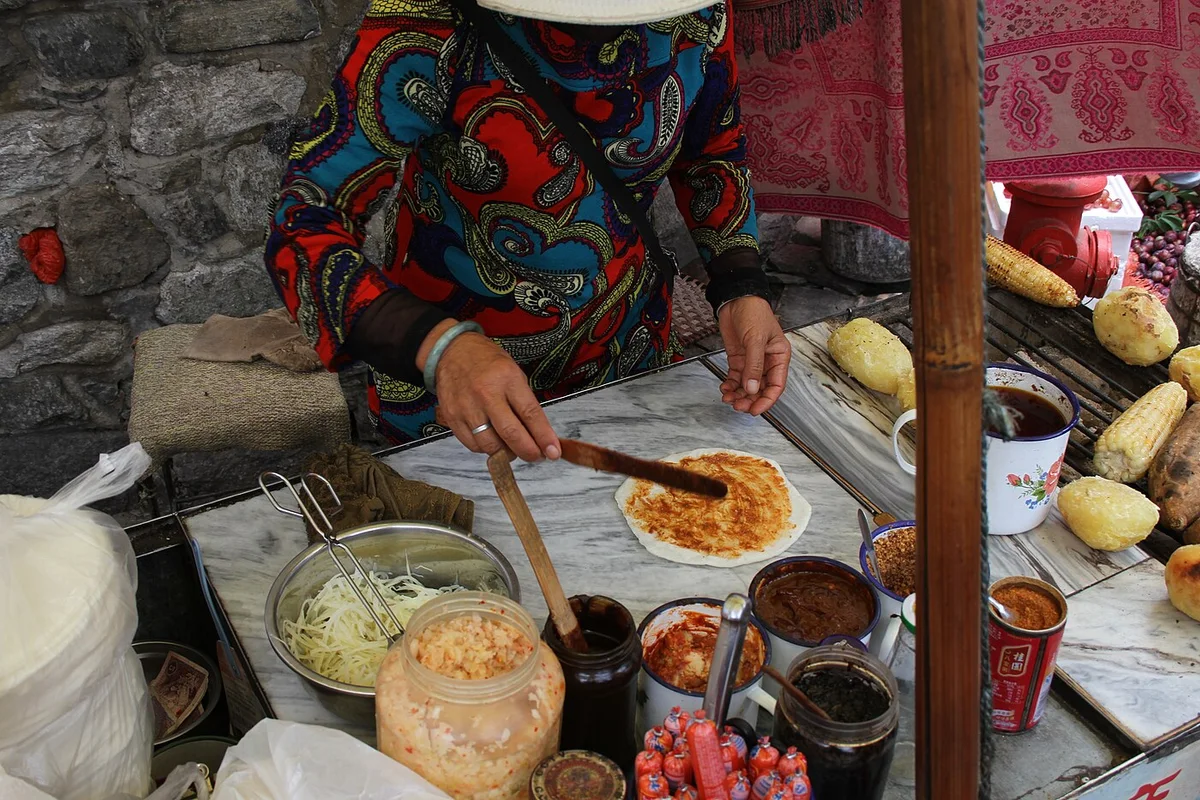
A grilled sheet exposes broad surfaces to dry heat, producing blisters and a pliable center. Stir-fried slices alternate browned faces with chewy interiors. Soup ersi increases surface area, softening quickly while carrying broth; dry-mixed strands emphasize sauce adhesion. Naming these transformations helps a visitor choose by texture rather than treating every menu item as duplicate rice noodles.
If only one order is possible, choose the method the shop is visibly set up to execute: an active griddle for shao erkuai, a fast wok for fried slices or a high-turnover broth counter for ersi. Specialist equipment and turnover do not guarantee excellence, but they give the rice product a better chance of reaching the table before it hardens or sticks.
Sauce should be judged in relation to the chosen surface. Thick bean or chilli sauce can sit comfortably inside a grilled wrap, while the same amount overwhelms fine ersi. Ask for sauce separately when comparing the rice itself, then add enough to season rather than lubricate.
03
Look for rice aroma, pliant chew and light browning
Erkuai is the pressed rice cake; ersi is its shredded form, not a separate grain
Yunnan erkuai is made from cooked rice that is pounded or milled while hot, kneaded into a cohesive mass and formed into blocks, sheets or rounds. Cutting it into noodle-like strands produces ersi. The process rearranges cooked rice into a dense, chewy product rather than mixing rice flour into a batter. English menus may call both “rice cake” or call ersi “rice noodles,” so look at shape and cooking method rather than assuming one fixed bowl. Sheets can be grilled and wrapped around youtiao or savory fillings, sliced pieces can be stir-fried, and strands can enter broth or be mixed with sauce. Different Yunnan cities have recognizable preferences and toppings. A traveler who tries only one soup has encountered one branch, not the definition of erkuai. Ask whether the shop makes, buys fresh or uses dried forms, because hydration and texture differ.
The desired chew is cohesive and yielding, never chalky, gluey or rubbery
Well-made erkuai smells clearly of cooked rice and bends before tearing. A dry white core indicates inadequate rehydration or heating; a surface that dissolves into paste suggests overcooking or poor storage. Sour fermentation is not a universal quality marker. Fresh product needs careful temperature and moisture management because dense rice cakes can spoil even while the exterior looks firm. During production, hot cooked rice must be worked evenly before cooling sets its structure. Incomplete milling leaves hard grains; excessive water weakens the mass. Shops cutting ersi need strands of similar thickness so a bowl cooks uniformly. Handmade claims matter less than clean rice aroma, consistent texture and transparent storage.
Non-glutinous rice
Processing creates chew without relying on wheat gluten or glutinous rice; the rice variety and freshness influence aroma and firmness.
Savory fillings
Grilled erkuai may wrap fried dough, egg, pickles, bean paste, chilli or meat, with strong local and vendor variation.
Broth and toppings
ErsI bowls may use pork, beef or chicken broth with scallions, pickled vegetables and regional sauces.
- A fresh, clean rice smell
- Elastic chew without a hard dry center
- Toasted spots on grilled erkuai
04
How cooked rice becomes sheets, strands and whole cakes
Cooked non-glutinous rice is worked while hot into a cohesive mass, then cooled and shaped with enough moisture to stay pliant. Careful pounding or milling creates the dense chew; poor control leaves a chalky center or a gluey surface.
Choose grilled, stir-fried, soup or mixed ersi according to the texture you want
Grilled erkuai should blister lightly, soften enough to fold and retain a rice chew beneath sauces. Stir-fried slices gain browned edges and carry pickles, meat or vegetables; poor heat makes them stick into a greasy slab. Soup ersi offers tender strands in stock, while dry-mixed versions emphasize sauce and garnish. Confirm meat, pickled vegetables and chilli level because the rice itself is mild and menu translations often omit toppings. For a first comparison, share a grilled sheet and a small bowl of ersi. The sheet shows surface browning and stretch; the strands show how the same material separates and absorbs broth. Eat promptly. Grilled pieces harden as they cool, and soup strands swell or fuse. Adding more oil can separate a stuck bowl temporarily but makes it heavy without restoring proper cooking.
Shape plus cooking verb is the most reliable way to order
Pair the noun with a method: grilled sheet, stir-fried slices, soup strands or dry-mixed strands. If pronunciation is difficult, point to the shape and repeat the method rather than saying only “rice noodles.” This gives staff enough information to correct a translation and helps diners remember whether they enjoyed erkuai itself or one sauce. A useful travel note records both form and topping.
05
Why Yunnan rice food extends beyond rice noodles
Across Yunnan, rice cookery extends beyond loose grain and conventional rice noodles. Dense, portable rice foods suit market snacks, breakfast shops and home meals while taking on local sauces, broths and herbs.
Dali, Kunming, Tengchong and other communities use related vocabulary and preparations without erasing local differences. A useful menu names the place and cooking verb instead of presenting one province-wide standard.
06
How to say Erkuai and Ersi—and what the name tells you
Pronounced ěr kuài / ěr sī. Menus may call it erkuai, ersi, Yunnan rice cake, Yunnan rice noodles.
Sources
Sources and further reading
- Production licensing rules for Yunnan rice noodles, juanfen, ersi and erkuaiYunnan Administration for Market Regulation ↗
- Yunnan dietary guidance and local rice staplesYunnan Provincial Disease Control and Prevention Administration ↗
- Dali food traditions including grilled erkuaiYunnan Provincial Department of Culture and Tourism ↗