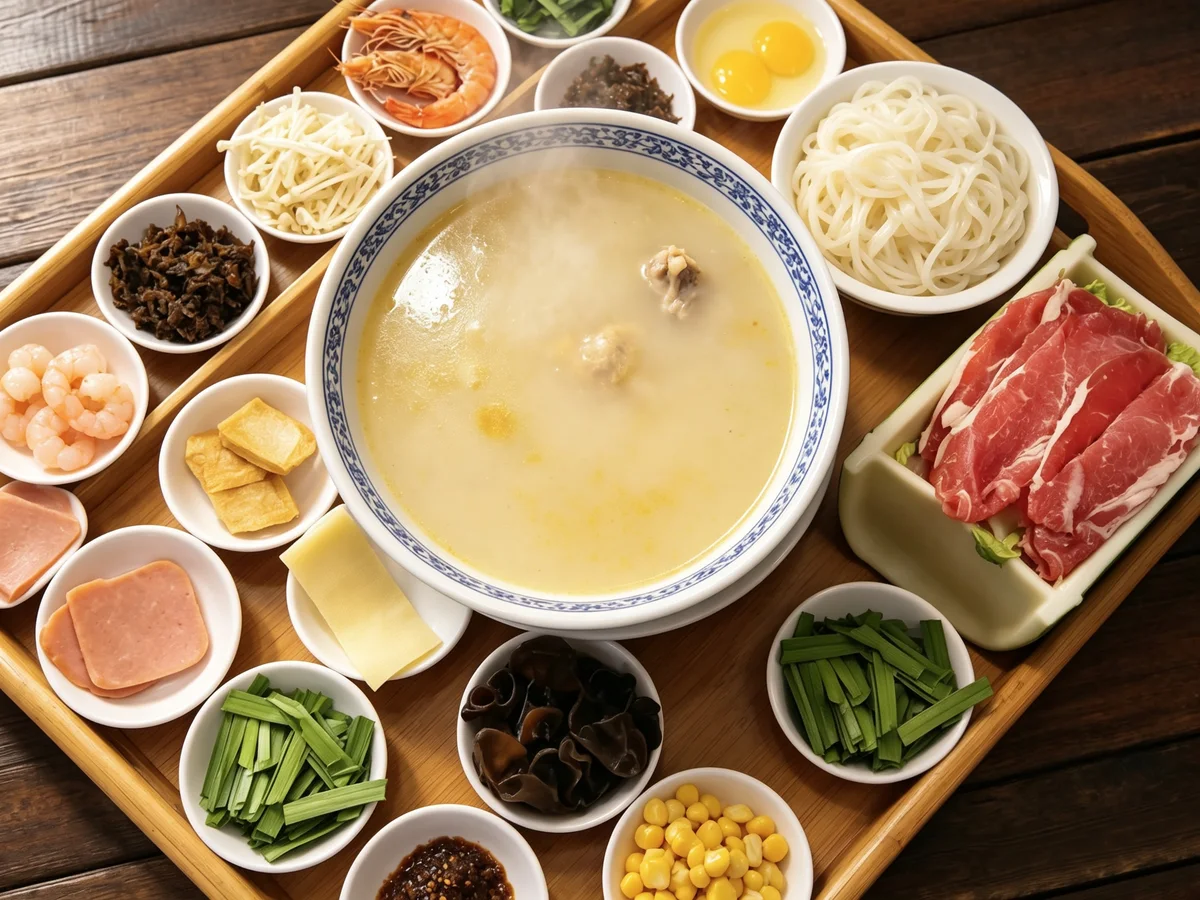
Start with the hot broth and separate ingredient trays
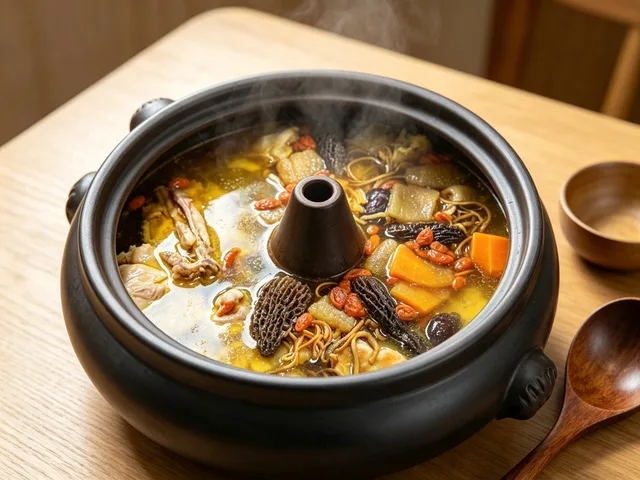
Crossing-the-bridge noodles, guòqiáo mǐxiàn, are a Yunnan rice-noodle meal most closely associated with Mengzi in Honghe Prefecture. A large preheated bowl of very hot broth arrives separately from rice noodles and small dishes of sliced meat, egg, vegetables, herbs and seasonings. The diner adds them in sequence so the broth cooks delicate ingredients at the table.
Common ingredientsYunnan rice noodles, chicken or bone broth with a heat-retaining fat layer, thin meat or fish slices, egg, cooked meat, tofu skin, vegetables, herbs and seasonings; exact sets and allergens vary widely.
01
Choose the set, add ingredients in order and test the broth’s heat
How to order it
Choose a standard set before paying for the largest number of side plates. Keep hands clear of the preheated bowl and do not test the broth temperature by touch. Follow the shop’s order: raw meat and egg components generally go first, noodles and herbs later. Wait until raw items are fully cooked; ask staff rather than relying on the absence of visible steam. Taste the broth before adding chilli, pickles or vinegar.
How to eat and pair it
The meal is served as a sequence, not a ready-mixed soup. The broth may look calm because a thin oil layer holds in heat. Diners add thin raw meats first, then other ingredients and noodles, following the restaurant’s instructions so everything cooks safely and remains distinct. Yunnan regulators require preheated bowls and a sufficiently hot mixed soup for service. The familiar story of a wife carrying noodles across a bridge to a studying husband is central to the dish’s cultural identity, but it remains a legend rather than documentary proof of invention.
Easy mix-ups
Misconception: The oil layer means the broth has gone cold. In practice: It can conceal steam while retaining intense heat, so the bowl should be handled carefully. Misconception: The bridge legend is fully documented history. In practice: The story is an important part of the dish’s identity, but it is best described as a legend associated with Mengzi.
02
Quality is not measured by the number of small plates
Hot broth
Chicken, pork bones and other ingredients vary by house. A surface layer of fat limits heat loss and can hide steam, so a calm-looking bowl may still burn.
Rice noodles
Fresh Yunnan mixian should be supple and smooth without dissolving in the broth.
Thin raw ingredients
Very thin meat, fish or egg components rely on the broth’s retained heat. Restaurants must control bowl and soup temperature and should explain the safe order.
Cooked garnishes
Vegetables, tofu skin, herbs, pickles and cooked meats add texture and regional character without all requiring the same cooking time.
Mengzi-style set
A large hot broth arrives with rice noodles and numerous small dishes of meat, egg, vegetables, herbs and seasonings for tableside assembly.
Kunming restaurant versions
Specialist chains range from simple everyday sets to elaborate banquet-like presentations with many side plates.
Ready-assembled bowls
Some casual shops combine the components before serving. Convenient, but it reduces the tableside ritual that distinguishes the classic format.
- Broth served genuinely hot enough to cook thin ingredients
- Rice noodles and toppings presented separately
- Clear instructions or an established order for adding ingredients
03
How hot broth, a heated bowl and separate ingredients form one system
The serving bowl is preheated and filled with sufficiently hot broth. Raw items are cut thin and kept separate from cooked garnishes; the diner adds higher-risk meat or egg first according to staff directions, then other toppings, rice noodles and herbs, while treating the oil-covered broth as scalding.
The fat cap can conceal extremely hot broth. Follow the restaurant’s ingredient order, keep your face and hands clear of splashes, and do not assume raw meat is safe unless the broth is hot enough to cook it completely.
04
Why Mengzi is the starting point for understanding the dish
Crossing-the-bridge noodles are most closely associated with Mengzi in Honghe Prefecture. The wife-carrying-lunch-across-a-bridge story explains the separation and oil-covered hot broth elegantly, but its people and dates belong to legend rather than a complete invention record.
Everyday and banquet-like sets coexist in Mengzi, Kunming and beyond. The defining identity is not the number of side plates but the Mengzi lineage, very hot broth, separate service and ordered assembly within Yunnan’s much wider rice-noodle culture.
05
How to say Crossing-the-Bridge Noodles—and what the name tells you
Pronounced guò qiáo mǐ xiàn. Menus may call it crossing the bridge noodles, guoqiao mixian, guo qiao mi xian, Mengzi rice noodles.
The familiar story tells of a wife carrying separated noodles and ingredients across a bridge to a husband who was studying. A layer of fat kept the broth hot until she arrived, and the components were combined at the destination. The tale elegantly explains the service logic, but its precise people, date and first bowl should be labelled legend rather than archive-complete invention history.
Crossing-the-bridge noodles, guoqiao mixian and Mengzi rice noodles are useful English search terms. “Yunnan rice noodles” is broader: the province also has small-pot, cold and other mixian traditions. Very hot broth, separately presented ingredients, ordered assembly and the Mengzi lineage together distinguish this meal from an ordinary ready-made noodle soup.
The calm-looking broth is an active cooking vessel
Crossing-the-bridge noodles arrive as a hot broth and separately arranged rice noodles, meats, egg, tofu products and vegetables. A layer of chicken fat or other oil reduces heat loss and may hide visible steam, so the surface can look calm while the liquid remains dangerously hot. That retained heat is functional: it cooks thin raw ingredients and keeps the final bowl warm after noodles and vegetables are added.
Follow the restaurant’s sequence rather than treating the plates as garnish. Raw quail egg, poultry, pork or fish slices generally go in first, followed by ingredients that need less cooking, then cooked items, vegetables and rice noodles. Exact order changes with what the kitchen serves. Stir carefully and wait for staff guidance; a crowded bowl cools unevenly, and a piece disappearing beneath noodles is not proof that it has cooked through.
The broth should taste complete before chilli is added: poultry or pork savoriness, gentle aromatics and enough body to carry many ingredients without becoming a heavy sauce. Oil provides heat retention and mouthfeel, but a thick greasy finish that obscures the stock is not the goal. Add condiments only after tasting, especially in a specialist shop where the broth is the main work of the meal.
A Yunnan rice-noodle tradition became a flexible restaurant format
The dish is strongly associated with southern Yunnan, especially Mengzi, and is now served across the province and far beyond it. Modern restaurants range from restrained bowls with a few classic ingredients to elaborate sets with dozens of small plates. More plates do not automatically mean a more regional or better bowl. Rice-noodle texture, hot broth, sensible ingredient order and a clear connection to Yunnan matter more than theatrical abundance.
The familiar story of a wife carrying broth across a bridge to a scholar explains the name in popular culture. It is best treated as a cherished origin legend rather than a fully documented account of one invention. The practical insight in the story—the insulating fat keeps broth hot during transport—does match the dish’s serving logic, which helps explain why the narrative remains memorable.
Rice noodles should be smooth and supple, holding together in the hot broth without becoming paste. Thickness and style vary among shops. A small set can be a full meal for one person; large ceremonial presentations may suit sharing, but diners should confirm whether raw ingredients and serving bowls are portioned individually. If a set is designed for one, passing partly cooked components around the table complicates both timing and safety.
Keep faces and hands clear of the first pour
Oil suppresses steam and splashes carry heat. Let staff place and assemble the bowl when tables are crowded.
Confirm allergens across the whole tray
Egg, soy, peanuts, sesame, shellfish, meat stock and wheat-containing sauces may be distributed among several dishes rather than listed in one place.
Do not drink around raw pieces
Wait until the required ingredients have cooked and the bowl has been mixed before treating the broth as ready to sip.
A smaller set is often the better first lesson. It lets the broth stay hotter, reduces uncertainty about which plate has been added and keeps the rice noodles from waiting while every garnish is photographed. Repeat a preferred topping later rather than choosing the largest display by default; ceremony should support the bowl, not cool it. If staff offer to assemble the set, watching their sequence once is more useful than insisting on doing every step unaided.
Sources
Sources and further reading
- Crossing-the-bridge noodlesChina Daily Government Services ↗
- Yunnan rice-noodle ritual in KunmingChina Daily Government Services ↗
- Food-safety requirements for crossing-the-bridge noodle restaurantsYunnan Administration for Market Regulation ↗
- Mengzi heritage status and Yunnan rice-noodle standardsDepartment of Agriculture and Rural Affairs of Yunnan Province ↗