Meet southwest China’s renowned cured ham
Xuanwei ham is a protected Yunnan cured pork leg from Xuanwei in Qujing. Salt, dry mountain air, temperature changes and a long managed fermentation transform fresh pork into firm rosy meat with concentrated savoriness and a distinctive mature aroma. In cooking, a modest amount can season an entire dish.
Common ingredientsLocal pork leg and salt, transformed through curing, drying and maturation.
01
Ask about age, cut and the ham’s role in the dish
How to order it
Ask whether the ham will be steamed alone or used within another dish; the experience and portion size differ. Pair plain slices with rice and mild vegetables rather than another strongly salted food. Buy products from recognized Xuanwei producers with clear labeling and storage instructions. Cook and store the ham according to the producer’s directions; do not treat every cured ham as ready-to-eat charcuterie.
How to eat and pair it
At the table, Xuanwei ham is often sliced thinly and steamed so its fat turns translucent and perfumes the lean meat. It may also be cut into small pieces to enrich qiguo chicken, braised vegetables, beans or rice. This supporting role is important: the ham is not merely a large centerpiece. In Yunnan kitchens, a few slices can contribute salt, fat and aged aroma to ingredients that would otherwise taste delicate.
Easy mix-ups
Misconception: Xuanwei ham is simply Chinese prosciutto and should always be eaten raw. In practice: Comparisons help explain dry curing, but its production, flavor and culinary uses are distinct; many presentations cook the ham. Misconception: More salt means a more authentic product. In practice: Quality depends on raw material, controlled salting, climate and fermentation—not blunt salinity alone.
Treat the ham as a concentrated seasoning and ask how much the dish uses
Thin steamed slices reveal lean meat, translucent fat and mature aroma, but a full plate can be very salty. Ham also appears with broad beans, bamboo shoots, chicken, rice or mushrooms, where a few pieces season a larger ingredient. Ask whether the menu item is mainly ham or a vegetable flavored with ham, and whether the price reflects a named grade or age. “Xuanwei-style” may indicate seasoning inspiration rather than certified origin. Taste a small piece with some fat attached before adding sauce. Lean-only slices can seem harsh and dry; warm fat carries the cured aroma and softens salt. Pair with plain rice, unsalted vegetables or a clear soup rather than several cured meats. Diners managing sodium should consider both visible slices and the broth they seasoned, following individual medical advice.
02
The cut face helps choose whether a piece belongs in slices, soup or stir-fry
A broad balanced section with clear lean and fat can be steamed thinly; a very lean end may work better diced into rice or beans; bone-adjacent scraps can season soup when the product instructions allow. Ask the seller which use suits the portion instead of choosing only the reddest face. Matching cut to cooking reduces waste and prevents a dry or overly salty first experience.
03
Lean meat, fat, salt and mature aroma must stay in balance
Good ham has firm ruby lean, clean fragrant fat and length beyond salt
The lean should be dense and slice cleanly, becoming pleasantly fibrous rather than leathery after cooking. Fat may look ivory to pale yellow and should melt with a sweet nutty pork aroma. Sharp rancidity, paint-like oxidation or sour spoilage does not become desirable through prestige. Extremely vivid color can also deserve questions about lighting, curing and additives rather than automatic admiration. Salt is essential to curing, but maturity should add fermented, fruity, cellar-like or nutty complexity depending on the cut and preparation. A ham that communicates only salt may have been cut too thick, cooked without soaking where required or used in excess. Restaurant cooks balance it by controlling slice size, preliminary treatment and the salt added to every other component.
Follow the salt from ham into the surrounding ingredient
In a bamboo-shoot, broad-bean or chicken dish, taste the vegetable or broth next to the ham before eating the slice itself. Proper use transfers cured pork depth outward: the vegetable becomes savory while keeping its own sweetness. If only the ham tastes seasoned and the rest is bland, it was added too late; if the whole dish is briny, the cook failed to reduce other salt. This transfer explains why a modest amount can be more impressive than a large platter. The ham functions like both meat and condiment. Ask whether the kitchen soaked or blanched the cut before cooking, since those steps can moderate salt in some preparations. They should be chosen for the product, not applied automatically until all mature aroma disappears.
Pork hind leg
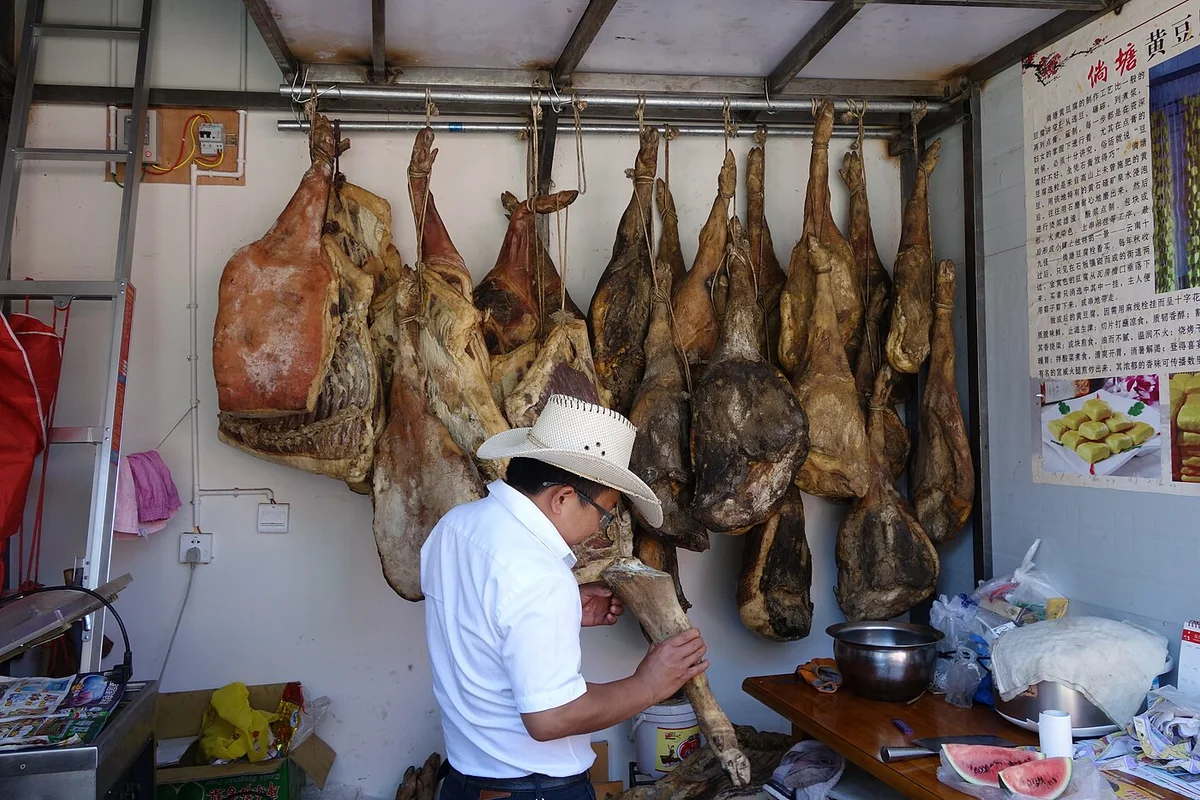
Traditional production begins with a carefully trimmed leg whose shape, fat coverage and meat quality affect even curing.
Salt
Salt preserves the leg and controls fermentation. Finished ham is concentrated, so cooks usually season the rest of the dish cautiously.
Time and climate
Curing, washing, shaping, hanging, drying and fermentation unfold over many months in Xuanwei’s distinctive highland environment.
Protective surface growth
Mature whole hams can develop natural surface molds during aging. This is managed by experienced producers and is not an invitation to eat spoiled household meat.
Steamed ham slices
A direct tasting that reveals fat, lean texture and maturation; portions are kept small because the flavor is concentrated.
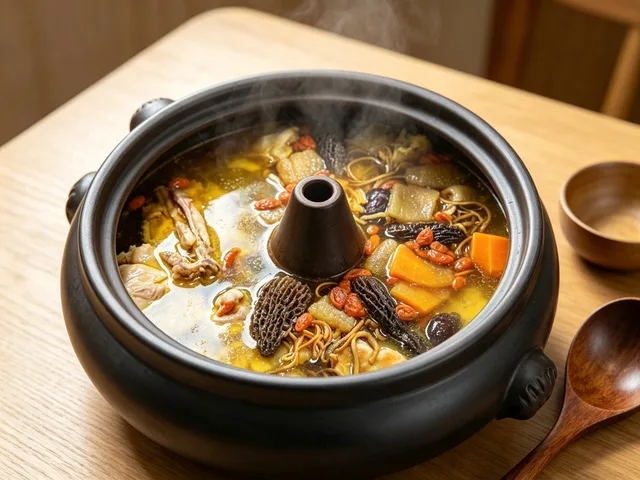
Ham in steam-pot chicken
A few slices intensify the clear condensed broth without turning the dish into ham soup.
Ham with vegetables or beans
Mild produce absorbs the cured aroma and balances the salt, a practical everyday use.
- Clear producer and geographic labeling
- A rosy cut surface with clean white fat
- Complex cured aroma without rancid or putrid notes
04
From salting and shaping to long maturation
Pork legs are salted and air-cured for an extended period, then cleaned and cooked according to the producer’s directions before serving or adding to another dish.
Xuanwei ham is a cured ingredient whose safe preparation depends on the specific product
Whole Xuanwei ham is made through salting, shaping, drying and maturation in Yunnan’s climate, developing concentrated pork savoriness and aromatic fat. It belongs to the broad world of dry-cured hams, but diners should not assume every cut is intended for raw slicing like prosciutto. Many Chinese preparations cook it in soups, steam it with vegetables or use small pieces to season other foods. Follow the producer’s label and restaurant guidance for whether a particular product is ready-to-eat or requires cooking. White crystals on a mature ham can be salt or amino-acid crystals, while surface molds may be part of managed curing before cleaning. None of these can be diagnosed safely from a travel photograph. Sliminess, rancid fat, insect damage or uncontrolled home mold are not signs of age. Buy from inspected producers with packaging, storage and preparation instructions rather than seeking an unlabelled leg as the most “authentic” souvenir.
Purchase a labelled cut you can use, not an entire ham without a storage plan
Travelers are usually better served by a vacuum-packed, producer-labelled portion than a whole leg. Check import rules before crossing borders, keep the cold or dry-storage conditions on the label and note whether the surface must be trimmed or soaked. Once opened, protect cut faces from drying and contamination and use within the stated time. Vacuum packaging does not make meat shelf-stable unless the producer says so. At home, cut small pieces across the grain and let them season soup, rice or vegetables. Reduce other salt until the ham has released its flavor. Cook to the product’s instructions; do not copy raw service from another cured-ham tradition. Discard damaged, swollen or leaking packs and products with an odor or mold not covered by producer guidance.
Buy cured ham from a traceable producer and follow its preparation instructions. Surface curing character is not permission to eat a product with unexpected spoilage odors or damaged packaging.
05
How Xuanwei’s climate shapes its cured ham
Xuanwei ham is named for Xuanwei in Qujing, northeastern Yunnan, where salted pork legs are cured and matured in the local climate.
It is a preserved ingredient as well as a food in its own right, used sparingly to season soups, steam-pot chicken and vegetable dishes because of its concentrated salt and aroma.
06
How to say Xuanwei Ham—and what the name tells you
Pronounced xuān wēi huǒ tuǐ. Menus may call it Yunnan ham, Yun ham, Chinese dry cured ham, xuānwēi huǒtuǐ.
Sources
Sources and further reading
- Xuanwei ham: protected origin, environment and traditional productionYunnan Academy of Social Sciences ↗
- Yunnan geographical-indication products catalogueYunnan Administration for Market Regulation ↗
- Xuanwei ham: geographical indication, craft and modern industryYunnan Provincial Department of Agriculture and Rural Affairs ↗