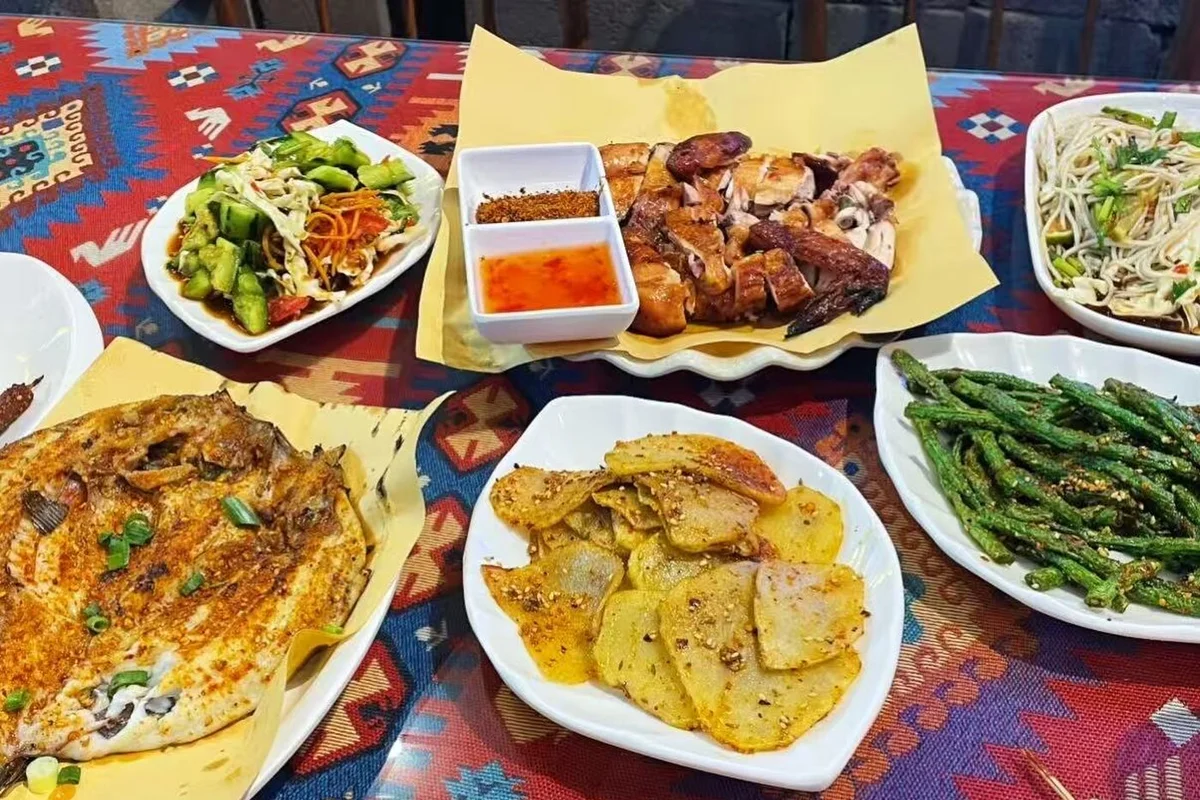
Meet a signature of Dai herb cooking
Dai grilled fish is a southern Yunnan preparation in which a whole fish is opened, seasoned generously with fresh herbs and chilli, secured with split bamboo or wrapped, and cooked over charcoal. Lemongrass supplies the signature citrus fragrance, while coriander, garlic and regional herbs connect the fish to the broader Dai preference for fresh, sour, hot and aromatic flavors.
Common ingredientsWhole fish, lemongrass, coriander, chillies, garlic, ginger and local herbs.
01
Choose the fish, size and herb direction first
How to order it
Ask which fish is used, its approximate size and whether the listed price is per fish or by weight. Request a lower chilli level if needed, but expect lemongrass and herbs to remain prominent. Check carefully for bones, especially when sharing pieces from a whole freshwater fish. Order plain or sticky rice and one cool or sour vegetable dish to balance the smoky main course.
How to eat and pair it
The fish usually arrives whole, still held in bamboo or opened across a platter. Diners lift pieces from the center and eat them with rice, allowing the herb paste and juices to season the grains. It may be one component of shouzhuafan, a shared spread of colored rice, vegetables, pounded relishes and grilled foods. That context matters: Dai grilled fish is not a standalone “spicy fish recipe” but part of a regional table where fresh herbs, fermentation, sourness, smoke and texture balance one another.
Easy mix-ups
Misconception: Dai grilled fish is one standardized Xishuangbanna recipe. In practice: Dai communities live across several parts of Yunnan, and fish species, herbs, wrapping and dipping sauces change by locality and household. Misconception: Its defining feature is extreme chilli heat. In practice: Chilli matters, but lemongrass, fresh herbs, sour accents and charcoal aroma create the more distinctive balance.
Choose a size for the table, request the house heat level and plan for fine bones
Confirm whether the fish comes whole, butterflied with the skeleton attached or in pieces. A whole fish loses edible yield to head, spine and fins, so weight is not the same as meat. Order it with rice, a cool vegetable and perhaps a light soup; several grilled meats with the same herb-chilli paste make the table repetitive. Ask for less chilli before marination if possible, while retaining lemongrass and fresh herbs so the dish keeps its aromatic direction. Use serving chopsticks to lift broad flakes away from the backbone. Move from thick shoulder meat toward belly and tail, place bones on a side plate and inspect every child’s portion. Banana leaf, bamboo clamp or string may be used during grilling or service; none is edible unless staff says so. Do not tear blindly through a parcel, because sharp fins, skewers and trapped steam can be hidden.
02
Taste under the herb layer to decide whether fire and aromatics reached the fish
Lift one flake from beneath the skin with only a little herb paste. It should carry lemongrass and smoke through the flesh, not present plain steamed fish beneath a burnt crust. Then taste a surface piece where chilli, coriander and char are strongest. The two bites should connect. If they feel unrelated, marination or grilling was superficial.
Acidic dipping sauces can brighten oily fish, but add them after this comparison. Lime-like acidity, salt and chilli quickly dominate freshwater delicacy. A restaurant confident in its grilling should be comfortable serving sauce alongside and telling diners which herbs are inside the fish versus in the dip.
03
Lemongrass, fresh herbs and charcoal should frame the fish
The fish is defined by a fragrant herb paste and charcoal management, not chilli alone
Dai-style grilled fish in Yunnan may be butterflied or opened, rubbed or stuffed with aromatics such as lemongrass, coriander, garlic, ginger and chilli, then secured for grilling. Exact herb mixes vary by community, season and restaurant. The first aroma should be citrusy, green and smoky, followed by moist freshwater fish. A thick red chilli coat that hides species, stale fish or burnt skin does not become representative merely because it is hot. Ask which fish is used, whether the listed price is per fish or by weight and how large it is. Tilapia and other farmed freshwater fish may appear; the Dai technique is not limited to one species. Legal, documented sourcing matters more than a claim of rare wild catch. If the menu uses a broad “river fish” translation, staff should still be able to describe size, bones and preparation.
A browned exterior should protect juicy flesh rather than compensate for a raw center
Opening the fish increases surface area and helps it cook evenly, while herb paste protects and perfumes the flesh. The cook must prevent sugary or finely chopped aromatics from scorching before the thickest meat is done. Good skin can be crisp or lightly charred, but black bitterness across the herbs indicates fire too close or too long. The central flesh must be opaque and safely cooked, never translucent against the bone. Smoke is a seasoning, not evidence of sanitation. Fish still needs cold-chain handling, clean gutting and separation from raw surfaces. Fresh herbs should smell bright, without fermented slime. A specialist grill with visible turnover and staff who can identify the fish offers better evidence than theatrical charcoal or a rustic riverside claim.
Whole fish
Freshwater species are common. Butterflying exposes more flesh to the seasoning and charcoal while leaving the fish easy to share.
Lemongrass
Stalks may be chopped into the herb mixture, tied around the fish or used in both ways to perfume it as it cooks.
Fresh herbs
Coriander, garlic, ginger, chilli and locally available aromatic leaves vary by community and season; there is no single universal formula.
Charcoal
Moderate heat cooks the thickest part through while drying and browning the skin. Smoke should complement rather than blacken the herbs.
Bamboo-clamped fish
The seasoned fish is folded or held flat between split bamboo, which makes it easier to turn over charcoal.
Leaf-wrapped fish
Wrapping protects delicate flesh and traps herbal steam; the result is moister and less directly smoky.
Hand-grab rice platter
Smaller grilled fish or portions join rice, fruit, vegetables, pounded dishes and other grilled foods in a communal presentation.
- Fish cooked through at the thickest point yet still moist
- A clear lemongrass and herb fragrance
- Charred edges without a blanket of burnt seasoning
04
Butterfly, fill, clamp and grill slowly
The fish is filled and rubbed with herbs, secured around split bamboo or wrapped, then grilled over charcoal until aromatic.
05
How Dai herbs define the fish
Herb-filled grilled fish is associated with Dai communities in Xishuangbanna and other parts of southern Yunnan. Preparations differ across communities and households.
Lemongrass, fresh herbs, chilli and charcoal smoke create the characteristic profile. The label “Dai-style” covers regional variation rather than a single standardized recipe.
Describe the food as part of living Dai cuisines, not an “exotic minority” spectacle
Dai communities span parts of Yunnan and neighboring Southeast Asia, with internal variation in language, religion, ingredients and cooking. One tourist-restaurant fish cannot stand for every Dai table. Menus are most useful when they name the preparation, herbs and local context rather than reducing the dish to primitive fire or extreme chilli. Diners can appreciate the aromatic connections across borders without erasing the specific people presenting the food.
06
How to say Dai Grilled Fish—and what the name tells you
Pronounced dǎi wèi kǎo yú. Menus may call it Yunnan lemongrass fish, Dai lemongrass grilled fish, xiāngmáocǎo kǎoyú.
Sources
Sources and further reading
- Dai flavors of Wandian: lemongrass grilled fish and the hand-grab mealPeople’s Government of Changning County ↗
- Yunnan ethnic food traditions and Dai lemongrass grilled fishYunnan Academy of Social Sciences ↗
- Dai lemongrass grilled fish in Yunnan’s multiethnic food cultureYunnan Provincial Ethnic and Religious Affairs Commission ↗