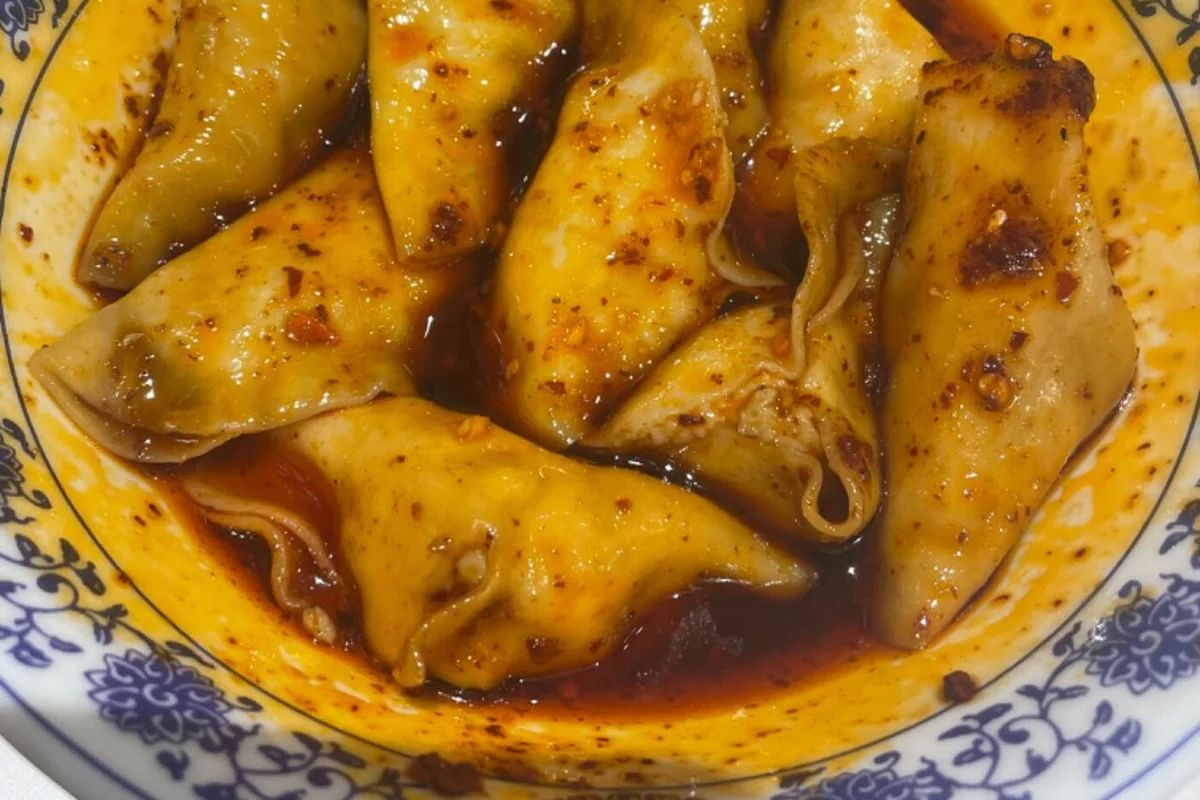
Meet Chengdu’s dressed pork dumplings
Zhong dumplings are a Chengdu snack of small boiled pork dumplings dressed after cooking with aromatic chilli oil and fuzhi jiangyou, a sweetened, spice-infused soy sauce. Unlike northern boiled dumplings built as a complete staple, these are compact, tender and intensely seasoned, usually served as one stop in a wider tour of Sichuan snacks.
Common ingredientsWheat wrappers, minced pork, soy sauce, chilli oil, garlic and sesame oil.
01
Treat them as a fully seasoned snack
How to order it
Treat one serving as a snack-sized plate and add another Chengdu specialty if you want a full meal. Mix or turn the dumplings so each one picks up the sauce at the bottom. Ask about heat level, but expect some sweetness—the seasoned soy sauce is part of the classic balance. Eat them promptly while the wrappers are tender and before they absorb too much dressing.
How to eat and pair it
Chengdu’s famous-snack tradition rewards variety. A diner might order Zhong dumplings with dan dan noodles, sweet-water noodles or a bowl of wontons, comparing several seasonings in modest portions. The dumplings should not be buried under minced garlic or a thick paste. Their identity comes from the contrast between a plain, tender parcel and a vivid red dressing.
Easy mix-ups
Misconception: The name “water dumpling” means they are served in soup. In practice: Shuijiao refers to boiled dumplings. Zhong dumplings are drained and dressed with seasoned soy and chilli oil. Misconception: They are simply ordinary dumplings with hot sauce. In practice: Their small size, tender wrapper, restrained pork filling and specifically sweetened aromatic soy sauce form a distinct Chengdu snack.
Use Zhong dumplings to anchor a varied snack flight rather than ordering three red-oil starches
Pair one portion with contrasting Chengdu snacks: perhaps sweet-water noodles for thicker chew, a clear soup item, or a cool vegetable. Dan dan noodles and red-oil wontons are valuable comparisons, but ordering all of them at full size can make the table taste like one continuous chilli-oil sauce. Ask for small portions and identify each bowl before mixing utensils. Tea or plain water is more useful than a sugary drink for resetting the palate. The wrappers contain wheat and the filling usually contains pork. Sauces may include soy, sesame and other shared-kitchen allergens. Lard or meat stock can appear even where not visible. Vegetarian diners need a separately designed dumpling and confirmation of sauce, not merely the removal of pork pieces. Diners avoiding garlic should ask about both the finishing sauce and the aromatic soy preparation. Chilli reduction does not automatically remove sesame, soy or wheat risk.
Boil to order, sauce immediately and eat before the wrapper drinks the bowl
Dumplings need enough room in boiling water to circulate without sticking. Once the filling is safely cooked and the wrapper tender, they are drained and sauced promptly. Water left on the surface dilutes the aromatic soy; long draining makes skins tacky. At the table, toss gently and eat while the seams still have resilience. Letting the bowl sit causes wrappers to absorb salt and oil, swell and eventually split.
02
Adaptations can be enjoyable when the menu tells you what changed
Some restaurants add vegetables to the filling, use thicker northern-style wrappers or increase vinegar for an overseas audience. These choices may produce good dumplings, but they shift the reference away from the fine pork filling and sweet aromatic soy associated with Chengdu’s Zhong dumplings. Ask for the house’s classic preparation before requesting additions, then judge adaptations on their own terms.
A menu name alone cannot guarantee lineage to the historic shop. More practical evidence sits in the bowl: restrained wrapper seams, moist pork, freshly fragrant red oil and sauce that remains fluid. Diners benefit from those observable standards without needing to turn lunch into a dispute over trademark or a single origin story.
For a useful comparison, taste one dumpling after a complete toss and another with only a light coating from the bowl’s edge. The first shows the full Chengdu seasoning; the second exposes wrapper and filling. If the pork remains tender and the skin pleasant in both, the kitchen has built a dumpling rather than relying on red oil to carry every bite.
03
Thin wrappers, fine filling, sweet soy and chilli oil
Zhong dumplings are a composed Chengdu snack, not plain dumplings waiting for dip
The bowl arrives with sweetened aromatic soy sauce, red chilli oil and often garlic, already designed to coat the dumplings. Lift from the bottom so each wrapper receives both the dark savory-sweet seasoning and fragrant red oil. Adding black vinegar or generic soy sauce before tasting can break that balance. A proper serving is often modest because the sauce is concentrated and the snack belongs naturally in a sequence with other Chengdu xiaochi rather than replacing a large northern dumpling meal. Order a small portion first and ask whether the house version contains garlic or extra pepper. “Less spicy” can reduce chilli heat while retaining aromatic soy, but ordering without sauce removes the feature that identifies the dish. If you truly need plain boiled dumplings, choose that item under its own name. When sharing, divide dumplings with some sauce into individual bowls instead of taking all the solids first and leaving one diner the seasoned bottom.
Thin wrappers, fine pork filling and flowing sauce must meet without any one becoming heavy
The wheat wrapper is rolled thin enough to feel delicate but strong enough to contain a moist pork filling through boiling and tossing. Pleats are usually restrained; excessive dough at the seam creates a hard ridge. Filling should be finely textured and juicy, seasoned to support the sauce rather than compete with chunks of vegetable. Broken skins leak fat and invite water into the center, while overcooking swells the wrapper until it loses tension. The characteristic soy component is more than straight bottled soy sauce. Aromatic soy may be slowly infused and balanced with sugar and spices, producing depth and a rounded sweetness. Red oil should smell of toasted chilli, not stale grease, and remain fluid enough to coat. The result can be sweet, salty, garlicky and hot in one bite without becoming syrupy. A pool of oil is normal only in moderation; the diner is not expected to drink it.
Thin wheat wrappers
The wrapper is tender and relatively delicate because the dumplings are boiled and served immediately, not pan-fried.
Pork filling
The filling is kept smooth and restrained so the seasoned dressing remains prominent.
Sweetened soy sauce
Fuzhi jiangyou is reduced or infused with sugar and aromatics, giving body and gentle sweetness rather than tasting like plain bottled soy.
Red chilli oil
A fragrant hongyou brings color and warmth; its toasted aroma matters more than raw heat.
Traditional snack-shop serving
Small crescent dumplings arrive in a shallow pool of sweetened soy and red chilli oil, with little garnish competing for attention.
Garlic-forward restaurant versions
Some kitchens add more garlic, sesame or crushed nuts. These can be enjoyable but move away from the restrained classic snack-shop balance.
Adjusted chilli levels
Shops can vary the amount and fragrance of their red oil. Less chilli should still leave enough seasoned soy to define the dish.
- Small, neatly folded boiled dumplings
- Thin wrappers that remain intact but tender
- Clear red oil rather than a heavy opaque sauce
04
Boiling and sauce mixing keep separate clocks
Small pork dumplings are boiled until tender, then coated in a glossy sweet-savory chilli dressing.
05
Why Zhong dumplings are not a northern staple dumpling
Zhong dumplings are a Chengdu snack named after the Zhong family business that popularized them in the late Qing and early Republican period.
Unlike many northern dumplings, the classic filling is plain minced pork without bulky vegetables; the defining finish is sweetened soy sauce and aromatic red chilli oil.
06
How to say Zhong Dumplings—and what the name tells you
Pronounced zhōng shuǐ jiǎo. Menus may call it Zhong shui jiao, Sichuan red oil dumplings, zhōng shuǐjiǎo, Chengdu dumplings.
Sources