
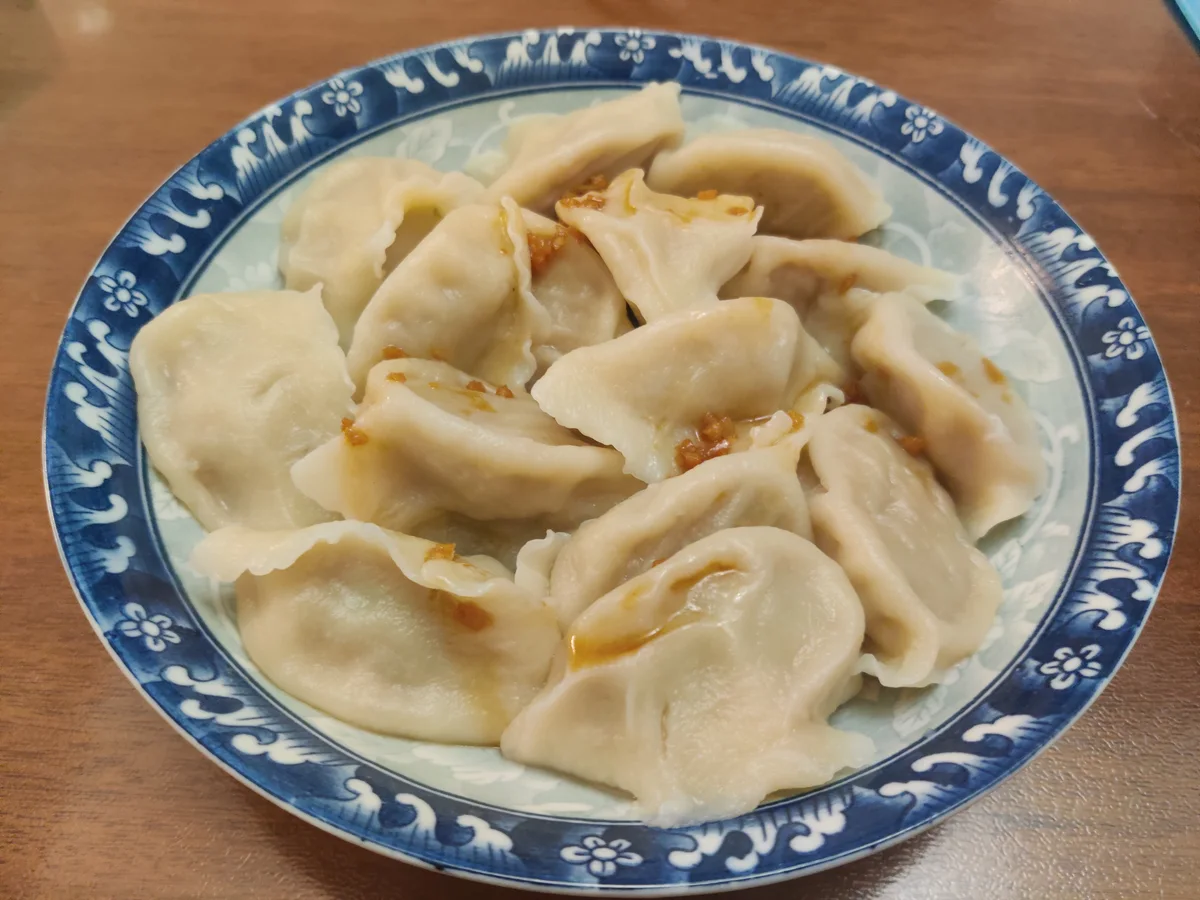
01
A crescent of dough, boiled, steamed or fried
There is a northern saying that nothing tastes better than jiaozi and nothing feels better than lying down.
A jiaozi is a round wrapper of wheat dough, thicker in the middle and thinner at the edge, folded over a spoon of filling into a half-moon and pinched shut along the rim. Boiled ones are 水饺, shuijiao; steamed ones, often made with dough mixed with boiling water so it stays soft, are 蒸饺 or 烫面饺; ones fried in a flat pan until the bottom is crisp are 锅贴, guotie, the dish English menus call potstickers. The filling can be almost anything chopped fine: pork with napa cabbage, chives, celery or fennel, lamb with carrot or onion, beef with scallion, egg with chives, fish or shrimp on the coast.
The essayist Liang Shiqiu, who grew up in Beijing in the early twentieth century, wrote that northerners rich and poor all treat jiaozi as a feast, and that Liang was fourteen before learning that the 煮饽饽, “boiled bobo,” of a Beijing childhood were the same thing; Beijing families used that older name, possibly from Manchu, rather than jiaozi. A big household could have jiaozi whenever it liked, but in an ordinary family a jiaozi meal mobilized everyone, mixing dough, rolling wrappers, chopping filling, wrapping and boiling, and in the countryside it might wait until a married daughter came home to visit.
Because the dish is cooked everywhere, it has many names. The Beijing writer Tang Lusun noted that scalded-dough dumplings were sold from the south to the north under other names, as steamed dumplings or as xiaolong, and the shape alone, a little ingot of dough, is enough to make it a lucky food. What changes from place to place is not the idea but the filling, the dough, the dipping sauce and the day of the year when it matters.
02
The fillings people actually make
Ask a northern family for the most classic filling and the answer is usually garlic chives.
Chives turn up in more fillings than any other vegetable. Pork and chives is the default in dumpling shops from the northeast to Guangzhou; chives and scrambled egg is the standard meatless filling; and chives, egg and glass noodles, chopped together, is the vegetarian filling many northern households make for themselves, often as big steamed dumplings. Add shrimp to chives and egg and it becomes 三鲜, “three fresh,” which dumpling chains sell as shrimp three-fresh; add pork as well and it is 肉三鲜. Chive fillings are mixed with a little oil before salt goes in, so the leaves do not weep water, and the dumplings come out as soon as the wrapper is done, before the chives turn yellow.
After chives come cabbage and scallion. Pork and napa cabbage is the plainest of all, the cabbage chopped, salted and squeezed dry first; pork and scallion is the other everyday standby, the scallion tossed in sesame oil before it meets the meat. Shepherd’s purse goes into spring dumplings in the north, though in Shanghai the same wild green is for wontons. Old Beijing has a weakness for fennel fronds with fatty pork, three parts fat to seven lean, eaten with rice vinegar; Liang Shiqiu noted that some people love fennel and others cannot stand it. The northeast has sauerkraut, and halal kitchens use mutton with carrot or cabbage and beef with scallion.
Many families make a point of the names at New Year. 白菜, cabbage, sounds like “a hundred fortunes”; 芹菜, celery, like “diligent wealth”; 韭菜, chives, like “lasting wealth.” Tianjin goes further: at midnight on New Year’s Eve, after a dinner of meat dumplings, families eat vegetarian ones “to be plain and clean for the new year,” a custom recorded in the Qing-dynasty Jinmen Jilüe. The filling has no meat at all: red mung-bean sheet, napa cabbage, chives, glass noodles and fermented tofu, bound with sesame paste, fermented tofu and sesame oil, and the dumplings are dipped in Laba garlic vinegar.
| Filling | Who makes it, and when | What locals know |
|---|---|---|
| Pork and chives 猪肉韭菜 | Everyone, all year; every dumpling shop | The classic. Oil the chives first; do not overcook them |
| Chives and egg 韭菜鸡蛋 | Home kitchens and shops | The standard meatless filling; scramble the egg first |
| Chives, egg and glass noodles 韭菜鸡蛋粉条 | Northern homes, often as big steamed dumplings | Vegetarian and filling; “lasting wealth” at New Year |
| Three fresh 三鲜 (chives, egg, shrimp; pork for 肉三鲜) | Home kitchens; dumpling chains | Sold by chains as shrimp three-fresh |
| Pork and napa cabbage 猪肉白菜 | All over the north | Salt the cabbage and squeeze it dry; “a hundred fortunes” |
| Pork and scallion 猪肉大葱 | All over the north | Toss the scallion in sesame oil before mixing |
| Pork and shepherd’s purse 荠菜猪肉 | Northern homes in spring | Shanghai uses the same green for wontons |
| Pork and fennel 茴香猪肉 | Beijing, especially in spring | Fatty pork, three to seven; rice vinegar to dip. Loved or hated |
| Pork and celery 芹菜猪肉 | Northeastern dumpling houses; Laobian | “Diligent wealth” at New Year |
| Pork and sauerkraut 酸菜猪肉 | The northeast | Squeeze the sauerkraut dry; some fry it first |
| Mutton and carrot or cabbage 羊肉胡萝卜 / 羊肉白菜 | Halal kitchens; the northwest; old Beijing | Dong Lai Shun sold them at four fen for ten |
| Beef and scallion 牛肉大葱 | Halal shops; Laobian | Also on Dong Lai Shun’s old menu |
| Tianjin vegetarian 津味素馅 | Tianjin, midnight on New Year’s Eve | No meat; sesame paste and fermented tofu; Laba vinegar |
| Mackerel 鲅鱼 | Qingdao and the Shandong coast | Beat water into the fish so it stays soft |
| Shrimp, squid ink, yellow croaker 虾仁、墨鱼、黄花鱼 | Coastal dumpling houses | Ordered as a mixed plate |
03
From Song-dynasty jiaozi stalls to a Tang tomb in Turpan
The oldest jiaozi known look much like the ones boiled in northern kitchens today.
Wheat is hard to cook whole, and for a long time northern China ate it reluctantly. The food writer Fuchsia Dunlop dates the change to around the Han dynasty, when flour-milling techniques reached China from Central Asia and northerners began making noodles and dumplings, which in time became their staple food. In the 1950s archaeologists excavating Tang-dynasty tombs at Astana near Turpan in Xinjiang found dried-out wontons and a bowl of shrivelled crescent dumplings that look almost exactly like modern northern jiaozi.
The name came later. Liu Haiyong, who writes about the food of Kaifeng, the Northern Song capital, points out that in the eleventh and twelfth centuries the word was 角子, “horn,” not 饺子. Meng Yuanlao’s memoir of the capital lists crystal jiaozi and fried jiaozi among the market foods, and the scroll Along the River During the Qingming Festival shows a food stall under a parasol with a jiaozi sign. The character 饺 did not exist before the Ming; a Qing-dynasty compendium notes that in the northern vernacular boiled dumplings and guotie were all called 馄饨, hundun, a usage it dates to the Ming. Farmers in eastern Henan still call a bun pointed at both ends a 角子.
Popular stories go further back. The best known credits Zhang Zhongjing, a doctor of the Eastern Han, with wrapping stewed lamb, pepper and medicine in dough for poor people whose ears were frostbitten, and calling the result 娇耳, “tender ears.” Another explanation ties the name to New Year’s Eve: the midnight hour between eleven and one was called 交子, the moment the old year meets the new, which sounds almost the same as jiaozi. Both are folklore rather than history, but they explain why jiaozi became a winter and a midnight food.
04
When jiaozi matter: New Year, the fifth day and the solstice
In the north, jiaozi mark almost half the festivals of the year; in the south, far fewer.
On New Year’s Eve northern families wrap jiaozi together in the evening and eat them at midnight, and some cooks hide a coin in one for whoever is lucky enough to bite it. They come back on the fifth day of the new year, 破五, “breaking the fifth,” when the holiday taboos on sewing, breaking things and cutting hair end; in Tianjin, pinching the wrappers shut is said to seal the mouths of gossips. Liang Shiqiu remembered people who could eat jiaozi at every meal from the first day of the year to the fifteenth, and others who begged for mercy after two.
The rest of the northern calendar is full of them. Jiaozi are eaten on the first of the summer fu days, the hottest stretch of the year, to wake up a tired appetite; at the start of autumn, meat dumplings help “put on autumn weight”; at the start of winter; and at the Winter Solstice, when a northern saying warns that if you do not eat jiaozi your ears will freeze and fall off. In much of the south the solstice and the New Year belong to tangyuan, sweet rice balls, and to fried nian’gao rice cake instead.
That north–south line is real but not absolute. A columnist for The World of Chinese, writing from the south, complained in 2017 that the national Spring Festival Gala had made jiaozi look like everyone’s New Year food, when in many southern homes dumplings are only one plate among many on the holiday table. In the south they are as likely to appear as a cheap lunch, a snack or a breakfast with vinegar and chili.
05
Jiaozi around China, filling by filling
Each region has a filling it thinks of as the real one.
In the northeast the classic filling is pork with 酸菜, napa cabbage fermented through the winter, squeezed dry and chopped so it stays sour and juicy; a big plate cost 16 yuan at a northeastern dumpling house in 2022. Shenyang’s best-known old dumpling house, Laobian, is famous for its rich, oily house filling, and in 2023 it sold a set of 42 dumplings with cold dishes for 150 yuan, with the cooking water ladled out free as soup in a corner of the dining room.
On the Shandong coast the filling is fish. In Qingdao, mackerel dumplings are the local pride, and the trick is to beat a lot of water into the minced fish so that it cooks soft instead of hard; a dumpling house in 2021 also sold yellow croaker, shrimp and squid-ink dumplings with black wrappers, fifteen to a portion, with white vinegar and crushed garlic on the table. Liang Shiqiu remembered both ends of the scale in the same city: tiny dumplings of yellow croaker and yellow chives floating in clear chicken broth at the end of a banquet at Shunxinglou, and leavened chive dumplings half a foot long carried up a hillside to a crew of stonemasons, who ate two each and drank boiling water from a ladle.
In old Beijing, Tang Lusun wrote, the Dong Lai Shun restaurant kept brick tables behind its kitchen where the poor could buy mutton, beef-and-scallion or mutton-and-cabbage dumplings, rich with oil and meat, at four fen for ten. In Xi’an, dumplings became a banquet: the dumpling feast of many shapes and fillings was first created by the Jiefang Road Dumpling House, and at Defachang near the Bell Tower a pastry chef who started there as an apprentice in 1985 took the menu from 108 kinds to more than 360. Defachang’s jiaozi technique was on Shaanxi’s first provincial intangible heritage list in 2007.
In the south, jiaozi are usually small, cheap and quick. In Guangzhou in 2026 a neighborhood shop sold fifteen small pork-and-chive dumplings for 5 yuan, eaten with vinegar and chili.
| Place | Typical filling or style | What to know |
|---|---|---|
| Dongbei (northeast) | Pork and fermented napa cabbage (酸菜) | Everyday food; a big plate 16 yuan (2022) |
| Shenyang | Laobian’s rich house filling | Old dumpling house; a 42-dumpling set 150 yuan (2023) |
| Qingdao and the Shandong coast | Mackerel; also yellow croaker, shrimp, squid ink | Fish beaten with water; eaten with vinegar and garlic |
| Beijing | Pork, mutton, beef and scallion; steamed scalded-dough dumplings | Old name 煮饽饽; jiaozi again on the fifth day of New Year |
| Xi’an | The dumpling banquet of shaped dumplings | Defachang, Shaanxi heritage list 2007; more than 360 kinds |
| Kaifeng and eastern Henan | Guotie; the old word 角子 | Northern Song “fried jiaozi” are the ancestors of guotie |
| Nanjing | Beef guotie | Crisp, juicy, slightly sweet; 12 yuan for five (2023) |
| Guangzhou and the south | Small pork-and-chive dumplings | Lunch or snack rather than a New Year dish |
06
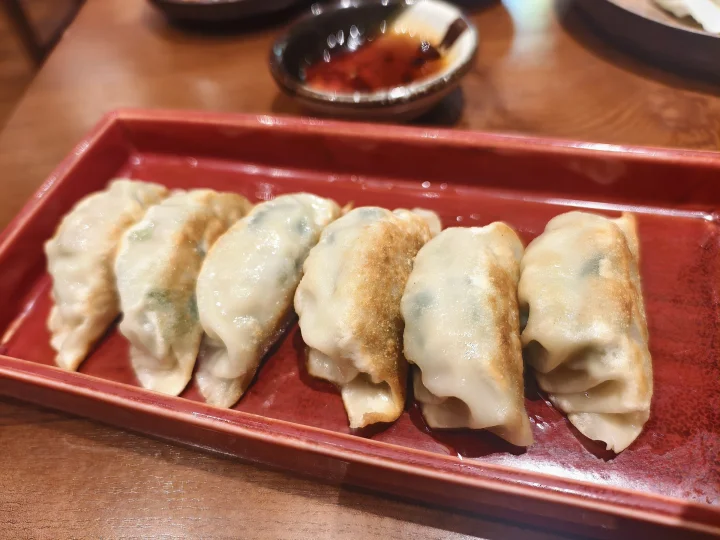
Guotie: the pan-fried jiaozi called potstickers
A guotie is a jiaozi that went into a frying pan instead of a pot.
Liu Haiyong suspected for years that guotie were simply jiaozi cooked a different way, boiled in water in one case and fried in oil in the other, and found in the Kaifeng food gazetteers that the city had sold them since the Northern Song under the name 煎角, “fried jiaozi.” The word 煎, pan-frying in a little oil, describes the method exactly: the dumplings are set close together in a flat pan, fried until the bottoms brown, then covered with a splash of water so they steam through. Done well, the bottom is crisp, the top soft and the filling juicy. Liang Shiqiu’s household had a humbler version: leftover boiled jiaozi, chilled overnight and fried golden the next morning.
Nanjing has made beef guotie its own. At Li Ji Qingzhen, a halal snack shop, five long beef guotie cost 12 yuan in 2023; the shell is crisp, the beef inside is juicy, salty and a little sweet, and the skin tears easily, so the trick is to lift one gently and bite before the juice runs out. They are eaten with a little vinegar, with a bowl of beef wontons on the side.
Pan-fried
Our own photograph of pan-fried jiaozi.
07
What makes a good jiaozi
Liang Shiqiu’s rule was simple: first, the wrapper.
Liang Shiqiu wrote that the first requirement of a good jiaozi is the wrapper, and that ready-made shop wrappers have too much alkali, so they boil up slippery and lack bite. Make your own dough, Liang advised, neither too soft nor too firm, and let it rest a long time under a damp cloth so it does not crack. Rolling is easy with practice: the centre a little thicker, the edge a little thinner, so the bottom holds the filling and the pleats do not turn into lumps of dough. Pinch each one shut with the fingers. Some shop workers squeeze a dumpling closed in one fist, which is fast, but they come out of the pot as dough balls.
The filling is a matter of taste. Some people love shepherd’s purse and others cannot stand fennel; some want a thin skin around a fist of meat, others like plenty of vegetables. Liang told of a guest who bit into a pork-and-spinach dumpling and cried out in alarm, not because of a fly but because “there is nothing but vegetables in here.” Juiciness comes from the filling as much as the meat: northeastern cooks squeeze their sauerkraut before mixing it with pork, and Qingdao cooks beat water into mackerel until it is almost a paste. Liang thought frozen jiaozi were a last resort, and on hearing of a new jiaozi machine replied that the best jiaozi machine is a person.
08
How to order and eat jiaozi
A dumpling house menu is a list of fillings; the rest is up to you.
Choose a filling, then a cooking method
Most shops list fillings first and let you choose boiled, steamed or pan-fried.
Order by the plate
A plate is usually about fifteen dumplings; two or three fillings make a meal for two.
Try the local one
Sauerkraut in the northeast, mackerel in Qingdao, beef guotie in Nanjing.
Make your own dip
Vinegar is standard everywhere; northerners add crushed garlic, southerners chili.
Drink the cooking water
Many northern shops serve the dumpling water as free soup at the end.
09
What a plate of jiaozi costs
Jiaozi are one of the cheapest full meals in China.
| Where | What | Price |
|---|---|---|
| Guangzhou neighborhood shop, 2026 | 15 small pork-and-chive dumplings | 5 yuan |
| Northeastern dumpling house, 2022 | A big plate of sauerkraut dumplings | 16 yuan |
| Li Ji Qingzhen, Nanjing, 2023 | Five beef guotie | 12 yuan |
| Laobian, Shenyang, 2023 | Set of 42 dumplings with cold dishes | 150 yuan |
| Qingdao dumpling house, 2021 | Two portions of fish dumplings, oysters and two other dishes for two | 185 yuan |
| Dong Lai Shun, old Beijing | Mutton dumplings for the poor | 4 fen for ten |
10
More dumplings on the atlas
China’s other wrapped foods, region by region.
Northeastern sauerkraut dumplings
The pork-and-sour-cabbage filling of Dongbei winters.
Read about sauerkraut dumplings →Xiaolongbao
Shanghai’s soup dumplings, with jellied stock folded into the filling.
Read about xiaolongbao →Shengjian
Shanghai’s pan-fried buns, cousins of guotie.
Read about shengjian →Wonton noodles
Cantonese wontons and shuijiao in broth.
Read about wonton noodles →Across China classics
- Wonton
Wontons in broth · Breakfast to late night
- Chow Mein
Fried wheat noodles · Lunch, late-night meals, takeaway
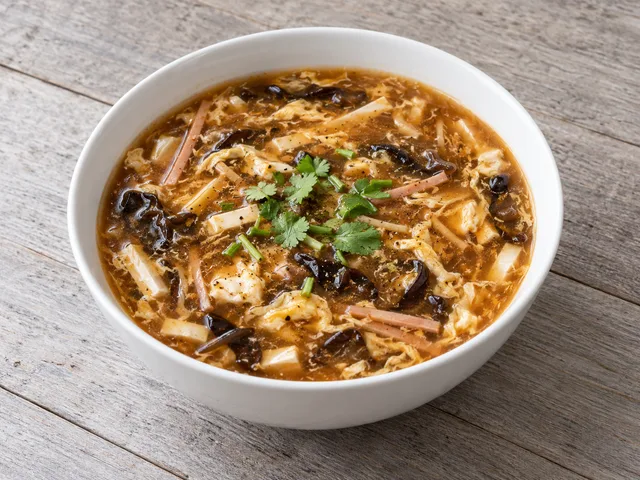
- Hot and Sour Soup
Thickened soup · With dumplings, at banquets
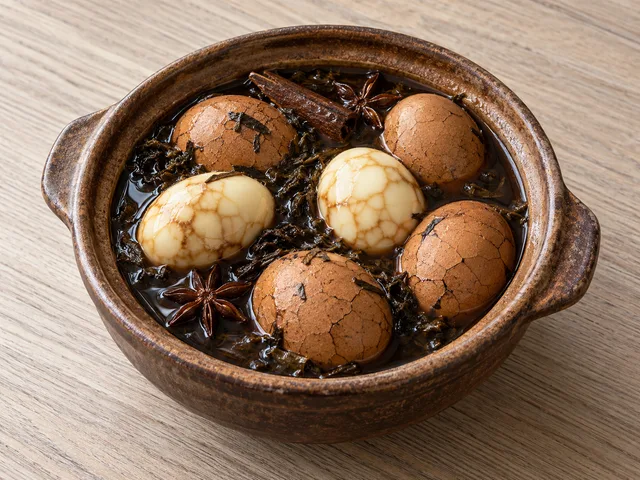
- Tea Eggs
Tea-marbled boiled eggs · Breakfast and snacks
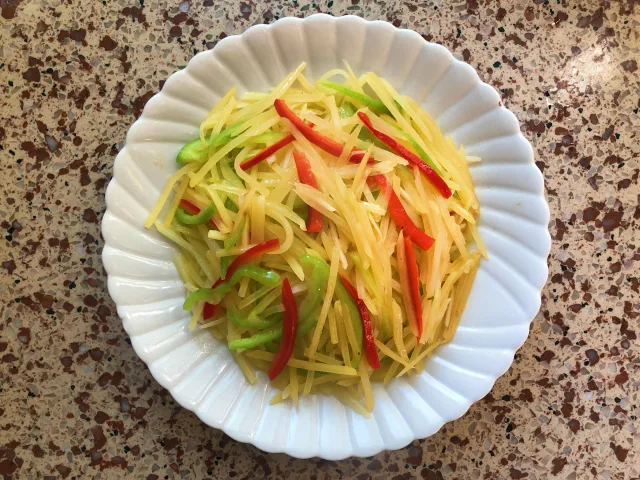
- Stir-Fried Shredded Potatoes
Stir-fried vegetable side dish · Everyday meals with rice
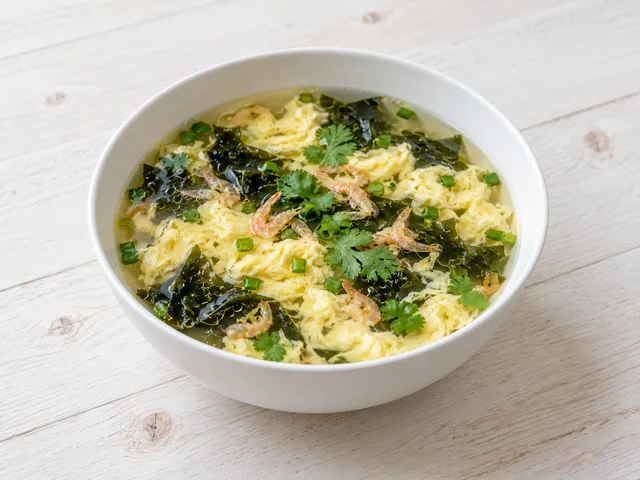
- Egg Drop Soup
Light egg soup · With any everyday meal
Dumplings and dim sum from other regions
FAQ
Questions about Jiaozi
What are jiaozi?
Crescent-shaped Chinese dumplings of thin wheat dough folded around a filling, then boiled, steamed or pan-fried.
What is the difference between jiaozi and potstickers?
Potstickers, 锅贴 guotie, are jiaozi pan-fried until the bottom is crisp instead of boiled.
What is the difference between jiaozi and wontons?
Jiaozi have a round, thicker wrapper and are eaten as a meal, often without soup; wontons have thin square wrappers and come in broth.
Why do Chinese people eat jiaozi at New Year?
In the north they are wrapped on New Year’s Eve and eaten at midnight; the shape recalls a gold ingot, and some hide a coin inside for luck.
Do southern Chinese eat jiaozi at New Year?
Less often. Many southern families eat tangyuan and nian’gao, and serve dumplings as one dish among many.
Why eat jiaozi at the Winter Solstice?
A northern saying warns that your ears will freeze if you do not; the custom is tied to the story of the doctor Zhang Zhongjing.
How old are jiaozi?
Crescent dumplings were found in Tang-dynasty tombs at Astana near Turpan, and the Northern Song capital Kaifeng sold them as 角子.
What is the most common filling?
Pork with napa cabbage or chives across the north; pork and sauerkraut in the northeast; mackerel in Qingdao.
What do you dip jiaozi in?
Vinegar, often with crushed garlic in the north and chili oil in the south.
How much do jiaozi cost in China?
About 5 to 16 yuan a plate at ordinary shops in 2022–2026.
Sources
Sources and further reading
- 1 Liang Shiqiu, Yashe Tan Chi (雅舍谈吃): the essay “Jiaozi” and notes on chive dumplings and Qingdao banquets (in Chinese)China Women’s Publishing House (2019 edition)
- 2 Liu Haiyong, Da Song Taoke Zhinan (大宋饕客指南): the chapter on guotie and the Northern Song jiaozi of Kaifeng (in Chinese)Henan Literature and Art Publishing House (2022)
- 3 Fuchsia Dunlop, Invitation to a Banquet, Chinese edition Jun Xing Shi (君幸食): chapters on grain, dim sum and the Astana tombs (in Chinese)Shanghai Translation Publishing House (2024)
- 4 Tang Lusun, Zhongguo Chi (中国吃): chapters on Dong Lai Shun and Beijing’s scalded-dough dumplings (in Chinese)Guangxi Normal University Press (2017 edition)
- 5 Shaanxi publishes its first provincial intangible heritage list, including the Defachang jiaozi technique (in Chinese)China Intangible Cultural Heritage Network (2007) ↗
- 6 A dumpling for every seasonSun Jiahui, China Daily, courtesy of The World of Chinese (2017) ↗
- 7 Down with dumplings! (opinion)Hatty Liu, The World of Chinese (2017) ↗
- 8 Egyptian students try Tianjin’s vegetarian New Year dumplings (in Chinese)Yan Dongjie, China Daily (2026) ↗
- 9 The Xi’an dumpling banquet: from 108 kinds to 360 (in Chinese)Contemporary China (当代中国) (2022) ↗
- 10 A Qingdao dumpling house: mackerel, yellow croaker, squid-ink and shrimp dumplings, 15 a portion (video, in Chinese)Te Bie Wu La La (特别乌啦啦), Bilibili (2021) ↗
- 11 Laobian dumplings in Shenyang: a 150-yuan set of 42 dumplings and the free dumpling broth (video, in Chinese)Pang Hu Lao Liu (胖虎老刘), Bilibili (2023) ↗
- 12 Beef guotie at Li Ji Qingzhen in Nanjing, 12 yuan for five (video, in Chinese)Zhen Tan Gao Wenqi (真探高文麒), Bilibili (2023) ↗
- 13 A northeastern dumpling house: a big plate of sauerkraut dumplings for 16 yuan (video, in Chinese)Hang Hang De Mei Shi Sheng Huo (航hang的美食生活), Bilibili (2022) ↗
- 14 Five-yuan dumplings and four-yuan noodles in Guangzhou (video, in Chinese)Lao Wu Zai Guangzhou (老吴在广州), Bilibili (2026) ↗
Last updated November 2026