
01
Noodles, wontons and soup, all three good
Guangzhou cooks say a good bowl needs three things to be good: the noodles, the wontons and the soup.
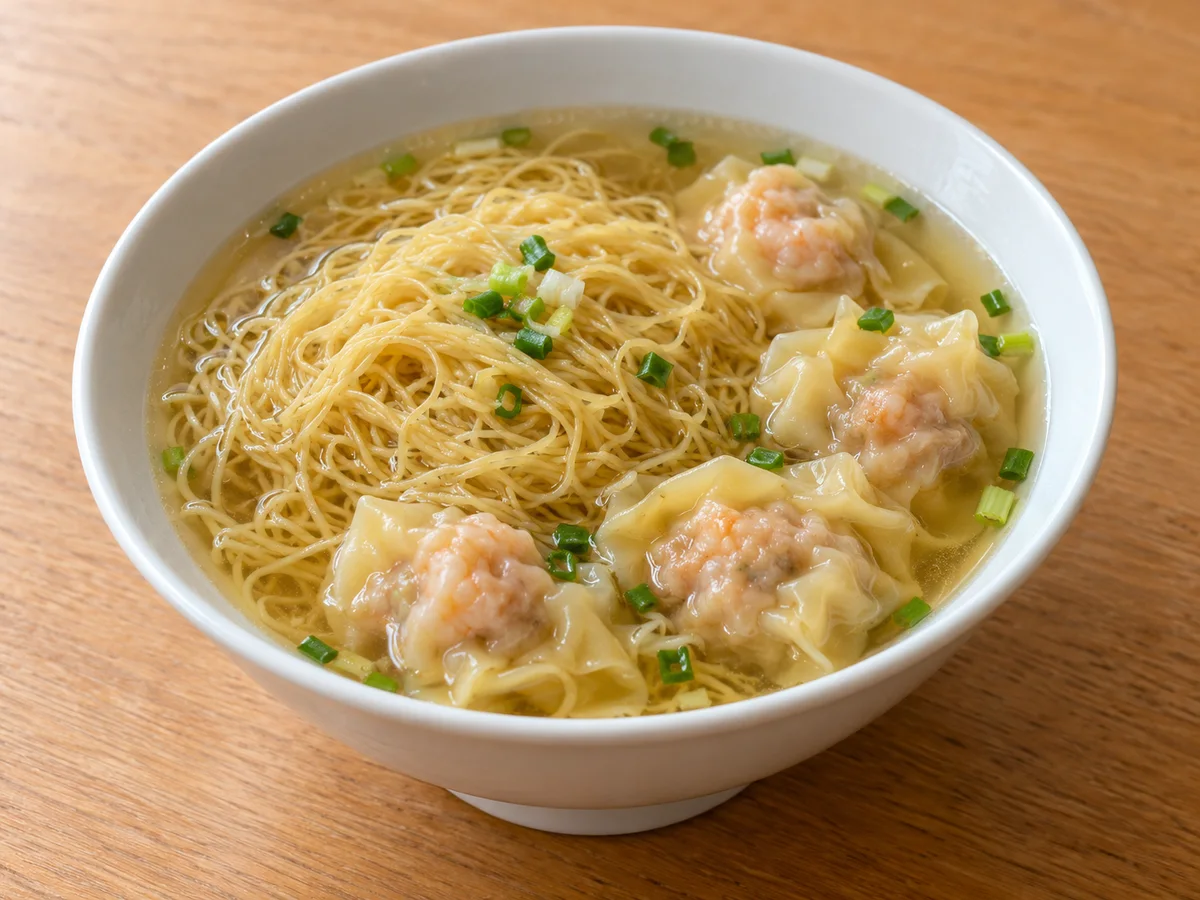
A bowl of wonton noodles is small. Thin, pale-yellow noodles sit in a clear, golden broth with four or so wontons, each a little parcel of shrimp and pork in a wrapper so thin the pink shows through, trailing a frilled tail. A pinch of yellow chives goes on top. The noodles are springy and slightly crunchy, the wontons are sweet with shrimp, and the broth smells of the sea even though it is mostly bones and dried fish.
The name is simply how 馄饨, the usual Chinese word for these dumplings, sounds in Cantonese: close to wan4 tan1, which came to be written with the characters 云吞, “cloud” and “swallow.” The sound came first. The meaning was read into the characters later: some Cantonese writers say the wontons float like small clouds and go down in one bite. The word traveled with Cantonese cooks. In 1932 the writer Chen Yiyi noted that the Japanese, fond of Cantonese food, called these dumplings wantan and wrote them as 云吞; the English “wonton” comes from the same Cantonese sound. A Hong Kong saying sets out the standard bowl: a ladle of fresh soup, half an inch of yellow chives, four wontons and nine qian, about 34 grams, of noodles. A Guangzhou must-eat list for visitors puts wonton noodles among the dishes not to miss, alongside roast goose, white-cut chicken, char siu and double-skin milk.
02
Noodles pressed with a bamboo pole
The noodle is the hardest part to copy.
Wonton noodles use 银丝面, “silver-thread noodles”: very thin alkaline egg noodles, yellow and translucent, springy enough that people from elsewhere in China tease Cantonese for eating rubber bands. Guangzhou eaters add a splash of red vinegar at the table, both for taste and to soften the alkaline edge. Before machines, the dough was made with duck eggs and no water and pressed under a long bamboo pole. A noodle maker sits on one end of the pole and bounces along the sheet of dough, again and again. The pole, 竹竿, was renamed 竹升 because 竿 sounds unlucky in Cantonese, so these are bamboo-pole noodles, 竹升面.
The skill is getting the spring without much lye water. Proper bamboo-pole noodles use little or none, and the pressing does the work; a little too much lye makes the noodles bitter and dry on the tongue. The Guangzhou gourmet Zhuang Chen, who runs a wonton noodle shop, says good noodles crunch audibly when you bite them, a quality that lasts only a moment: once they sit in the soup, the crunch is gone, so eat them hot and fast. In Macau, the noodle shop Lok Kei still presses its dough by hand with chicken and duck eggs and no water, folding and pressing it for about two and a half hours, more than twenty thousand presses. In Guangzhou, the MICHELIN Guide lists Xiguan Zhuyuan, a noodle shop that doubles as a factory, whose duck-egg noodles dry outside the shop and are sold to restaurants in Guangzhou and Hong Kong.
03
The wontons and the broth
The broth tastes of the sea because of one dried fish.
The first wontons in Guangzhou were pure pork; whole shrimp came later and gave the shrimp wonton, 鲜虾云吞, its name. They are boiled in water at a hard, rolling boil, which cooks say should look like galloping horses, so that they cook in the shortest time and keep their sweetness. Wrapped well, the frilled wrapper trails behind like a goldfish tail.
The broth is clear but strong. It is simmered from chicken, pork bones, dried shrimp and dried scallops, and above all 大地鱼, dried flatfish. Dried flatfish is called the soul of wonton noodles: dried, it looks like a sheet of rusty iron; it is toasted over charcoal to bring out its oil, ground and simmered in the stock, which turns pale gold and sweet. Some recipes add ham and a little rock sugar. Shops that cut corners skip the stock pot and stir ground dried-flatfish powder into hot water.
| Where | What goes into the broth |
|---|---|
| Guangzhou, common | Chicken, pork bones, dried flatfish, dried shrimp, dried scallops |
| Xiguan Zhuyuan, Guangzhou | Charcoal-toasted dried plaice, pork backbones, dried shrimp |
| Wing Wah, Hong Kong | Shark bones |
| Tsim Chai Kee, Hong Kong | A little monk fruit (luo han guo) for a sweeter, clearer soup |
| Lok Kei, Macau | Pork bones, chicken, dried fish, dried shrimp and codonopsis root, with a faint milky taste |
04
Wonton, huntun or chaoshou?
People often ask whether a wonton is just a huntun. It is, by another name.
Huntun, 馄饨, are among the oldest Chinese dumplings, and Cantonese wontons and Sichuan chaoshou, 抄手, both developed from them. One explanation for the old name is that people thought of the dumpling as a sealed bun with no openings, like 混沌, primal chaos, and the characters changed later. Sheng Hui, who grew up in Jiangsu, puts it plainly: what Cantonese call yuntun, his hometown calls huntun and Sichuan calls chaoshou.
What changes from place to place is the size, the wrapper and the soup. The Cantonese wonton is defined less by its shape than by its shrimp filling and the dried-flatfish broth it sits in. Northern huntun can be nearly as big as jiaozi, with a wrapper about as thick, though cut square rather than round. The small huntun of the Jiangnan towns are thumb-sized with very little filling, and the point is the broth. Sichuan chaoshou are about the size of a Cantonese wonton; the name, “folded arms,” is said to come from how quickly the thin wrappers cook, in the time it takes a cook to fold their arms. They are usually served in chili oil.
| Name | Where | Size and wrapper | Usually eaten |
|---|---|---|---|
| Huntun 馄饨 | Northern China | Close to a jiaozi in size and wrapper thickness; square wrapper | In a clear soup |
| Small huntun 小馄饨 | Jiangnan | Thumb-sized, little filling | In a very savory broth |
| Chaoshou 抄手 | Sichuan and Chongqing | About the size of a Cantonese wonton; thin wrapper that cooks fast | In chili oil, or in soup |
| Wonton 云吞 | Guangdong, Hong Kong, Macau | Thin wrapper trailing a frilled tail; shrimp and pork inside | In dried-flatfish broth, often with thin egg noodles |
05
From a Guangzhou bridge to Hong Kong
Hong Kong’s wonton noodles came from Guangzhou.
Food historians date wonton noodles in Guangzhou to the late Qing. The usual account is that a man from Hunan opened the Sanchu noodle house at Shuangmendi in Guangzhou during the Tongzhi reign (1862–1874) and sold wonton noodles there. Another story says that in the same reign a Yangzhou-style noodle became popular in Guangzhou and local cooks added wontons to it. Neither can be checked. In the 1920s and 1930s the most famous seller was Mak Woon-chi, 麦焕池, whose Chi Kee stall in Xiguan was called the king of Guangzhou wonton noodles. A 1948 magazine piece described the scene: the stall set up by a bridge and opened at nine at night, and high officials, rich men, opera stars and society women parked their cars by the road to eat its silver-thread noodles. A Guangzhou newspaper poem of the time praised a stall with “one carrying pole” that charged three times the usual price while “guests in cars came like running water.” A bowl there held four wontons and a small twist of noodles, and was called 细蓉, sai yung, a name Hong Kong shops still use for a small bowl of wonton noodles.
In October 1938 the Japanese army took Guangzhou, and Mak moved his family to Hong Kong, where the craft spread. Several of the best-known wonton noodle shops in Hong Kong and Macau trace their craft back to Guangzhou. Sheng Hui writes that the founder of Ho Hung Kee was Mak’s apprentice; the MICHELIN Guide says Ho Hung Kee opened in Wan Chai in the 1940s and is known for springy wonton noodles and a fresh, sweet soup, and it later became the first wonton noodle shop in Hong Kong to win a MICHELIN star.
06
Where to eat it
Almost every Cantonese neighborhood has a noodle shop; these are the ones people name.
Guangzhou
Ng Choi Kee (吴财记) is one of the best-known wonton noodle shops in the city; Xiguan Zhuyuan makes duck-egg noodles that other restaurants buy. In 2024 a noodle shop inside a neighborhood market charged 12 yuan for shrimp-roe tossed noodles, 13 for noodles with meat sauce and 20 for beef brisket.
Foshan and Shunde
Ying Kee (应记) in Foshan dates from 1936 and its wonton noodles were named a Chinese famous snack. Zhu Kee (珠记) in Bijiang, Shunde, is a small shop that makes its noodles and wrappers so dry they will burn, and fries wontons as crisp as egg rolls.
Hong Kong
Ho Hung Kee, founded in Wan Chai in the 1940s and now holding a MICHELIN star; Wing Wah, with its shark-bone broth; Tsim Chai Kee, known for big “ping-pong” wontons. Most Hong Kong cha chaan teng sell wonton noodles too.
Macau
Lok Kei (六记), founded in the mid-1940s by Li Luk, who came from Guangzhou, and still pressing noodles by hand, sold about 800 bowls a day in 2021; its shrimp-roe tossed noodles and wontons with dried fish are the set order. Liang Qing Ji (梁庆记), a roadside stall of three or four tables under a rain shelter, has been run by four generations for about a hundred years.
07
How to order
The menu is short, but the words matter.
云吞面 is noodles and wontons in soup. 捞面 is tossed noodles, served dry with sauce and a bowl of broth on the side; shrimp-roe tossed noodles, 虾子捞面, are scattered with dried shrimp roe, and others come with beef brisket or a meat sauce. 净云吞 means wontons only, without noodles, and many shops also sell brisket noodles and plain noodles in soup.
Eat it as soon as it arrives. The noodles start losing their crunch the moment they meet the soup. Add a little red vinegar to the noodles if the alkaline taste bothers you, and treat the bowl as a snack: it is meant to be small, and in Guangzhou it is as common at breakfast as at midnight.
08
At home
Bamboo-pole or thin Cantonese egg noodles are sold dried or fresh in Chinese shops. For the broth: pork bones, dried shrimp and dried flatfish (or a spoonful of dried flatfish powder). For the wontons: shrimp, a little fatty pork, thin square wonton wrappers.
- 1. Make the broth
Simmer pork bones with dried shrimp and toasted dried flatfish for a clear stock; skim, strain and season with salt.
- 2. Wrap the wontons
Mix chopped shrimp with a little minced fatty pork and season lightly. Put a small spoonful on each wrapper, fold and pinch so the wrapper trails a loose tail.
- 3. Cook the wontons
Boil them in plenty of water at a hard, rolling boil until they float and the wrapper turns translucent, then lift them into the bowls.
- 4. Cook the noodles
Shake the noodles loose and boil them in a sieve for a few seconds, rinse them in cold water, then dip them back into the boiling water for a few seconds more. The cold rinse is what keeps them springy.
- 5. Assemble
Put the noodles in the bowl with the wontons, ladle over hot broth and add a pinch of yellow chives. Eat at once.
Keep each bowl small and cook in batches; a big pot of noodles left standing turns soft.
09
More from a Cantonese noodle shop
Rice noodle rolls
Steamed rice sheets rolled around beef, shrimp or egg, a Guangzhou breakfast.
Read about rice noodle rolls →Char siu
Cantonese barbecued pork, sold in the same kind of noodle and rice shops.
Read about char siu →Cantonese yum cha
Tea and dim sum in a Guangzhou tea house.
Read about yum cha →Guangdong classics
- Beef Chow Fun
Fried rice noodles · Lunch, dinner or late-night supper
- Cantonese Yum Cha
Yum cha · Morning tea, weekends with family
- Char Siu
Roast pork · Lunch or dinner, with rice
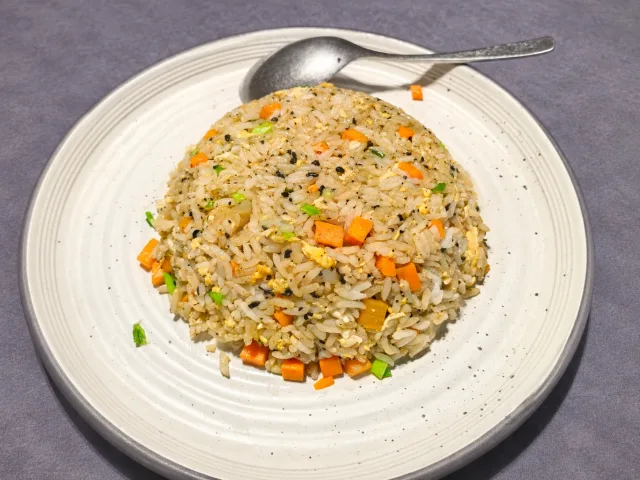
- Egg Fried Rice
Fried rice · Lunch, dinner, end of a meal
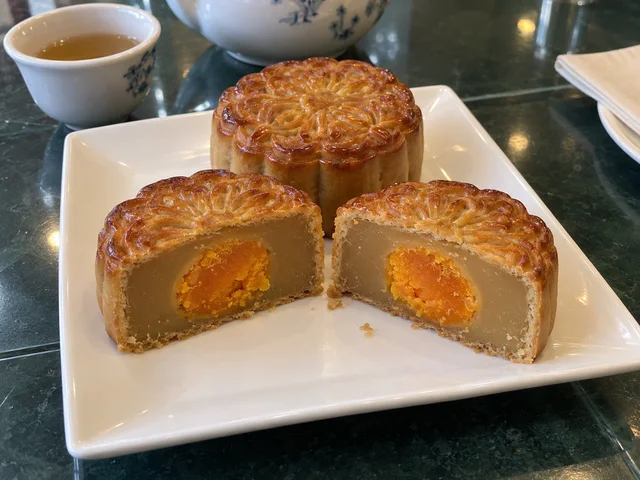
- Mooncake
Festival pastry · Mid-Autumn Festival
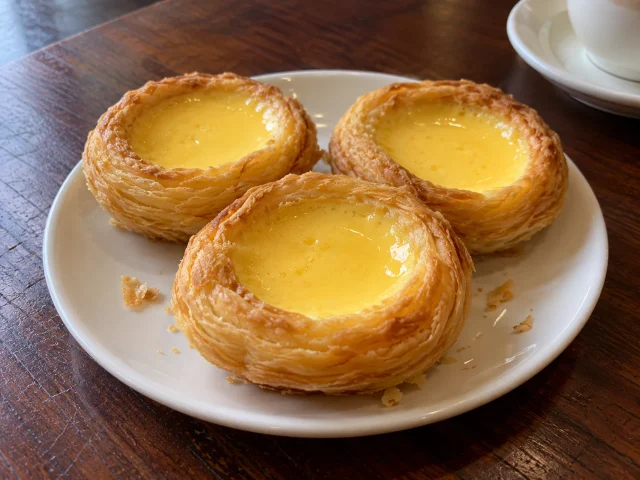
- Egg Tart
Custard tart · Dim sum, afternoon tea or bakery snack
Noodles from other regions
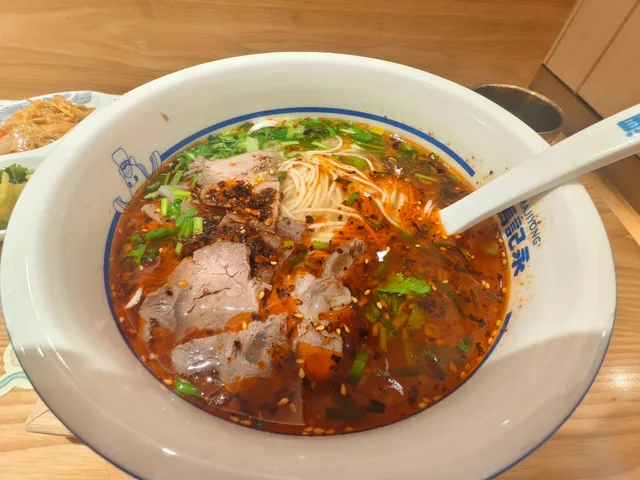
FAQ
Questions about Wonton Noodles
What are Cantonese wonton noodles?
Thin, springy egg noodles and shrimp wontons in a clear broth of dried flatfish, pork bones and dried shrimp, topped with yellow chives.
Why are the noodles so springy?
They are thin alkaline egg noodles, traditionally made with duck eggs and no water and pressed under a bamboo pole. Too much lye makes them bitter, so good noodles rely on the pressing.
What makes the broth taste of the sea?
Dried flatfish, toasted and ground, together with dried shrimp. The rest is pork bones and chicken.
What is the difference between wonton noodle soup and lo mein?
Wonton noodles come in soup. 捞面, tossed noodles, are served dry with sauce and the broth on the side.
Is a wonton the same as a huntun?
Yes. 云吞 is how 馄饨 sounds in Cantonese. Cantonese wontons are thin-skinned, usually filled with shrimp and pork, and served in dried-flatfish broth.
What is the difference between wontons and chaoshou?
Both come from huntun. Sichuan chaoshou are about the same size but are usually served in chili oil; Cantonese wontons come in a clear broth, often with noodles.
Why is it called wonton?
Wonton comes from the Cantonese pronunciation of 馄饨. The reading “swallowing clouds” was attached to the characters later.
What is sai yung?
细蓉, a small bowl of wonton noodles: in the old Chi Kee version, four wontons and a small twist of noodles.
Where did wonton noodles come from?
Guangzhou, in the late Qing; they spread to Hong Kong and Macau, especially after 1938, when the Chi Kee noodle maker moved to Hong Kong.
Sources
Sources and further reading
- 1 Zhongguo Yuecai Gushi (中国粤菜故事), chapters “A bowl of wonton noodles with three goods,” “Cantonese food cards and a must-eat list” and “Memories of chop suey in the Republic” (in Chinese)Guangdong Vocational and Technical Teaching Research Office; Guangdong Science and Technology Press (2022)
- 2 Sheng Hui, Yuecai Ji (粤菜记), chapter “Notes on morning tea” (早茶小札): wonton noodles (in Chinese)People’s Literature Publishing House (2023)
- 3 Fei Yong and Han Bangwen (eds.), Guangzhou She Hua Lu (广州舌华录), chapter “The Republic: the golden age of ‘eating in Guangzhou’” (in Chinese)Guangzhou Publishing House (2019)
- 4 Bu Bai Chi Manhua: Zhe Jiu Shi Da Zhonghua Meishi (不白吃漫画这就是大中华美食), chapter “Wonton noodles” (in Chinese)Wo Shi Bu Bai Chi (我是不白吃); Hunan Literature and Art Publishing House (2022)
- 5 Ho Hung KeeThe MICHELIN Guide Hong Kong ↗
- 6 Xiguan Zhuyuan (Lizhiwan)The MICHELIN Guide Guangzhou ↗
- 7 Lok Kei, Macau: bamboo-pole noodles pressed without water, 800 bowls a day, 2021 (video, in Chinese)Shan Zha De Shi Pin (山楂的视频), Bilibili ↗
- 8 Bamboo-pole noodles and wontons in a Guangzhou neighborhood market, 2024 prices (video, in Chinese)Jun Zai Xi’an (君在西安), Bilibili ↗
- 9 A four-generation, hundred-year roadside noodle stall in Macau, 2025 (video, in Chinese)Wang Gang (美食作家王刚R), Bilibili ↗
- 10 Cantonese wonton broth with dried flatfish, and rinsing the noodles (video, in Chinese)Shi Hou Pi Cheng (是厚皮橙), Bilibili ↗
Last updated October 2026