
01
A crunchy potato
Stir-fried shredded potatoes are potatoes cut into fine slivers and cooked just long enough to lose their rawness, but not their crunch.
For most Western cooks, a potato is done when it is soft. In China the most common way of cooking one stops well before that. The potato is cut into thin slices and then into slivers, rinsed, and tossed in a very hot wok for a couple of minutes; it comes out tasting cooked but still crisp. Fuchsia Dunlop calls it the most common way of cooking potatoes in Sichuan, and notes that it seems revolutionary to many Westerners because the potatoes are still a little crunchy when they reach the table. If you have never seen the dish, she adds, you may find it hard to believe it is made from potatoes.
The reason lies in how the potato is seen. In China it is not the starch of the meal: that is the rice, the noodles or the buns. The potato is a vegetable, one dish among several, eaten with rice. The anthropologist Jakob Klein lists stir-fried potato slivers among the country’s most popular potato foods, with di san xian, the Northeast’s sautéed potato, eggplant and green pepper.
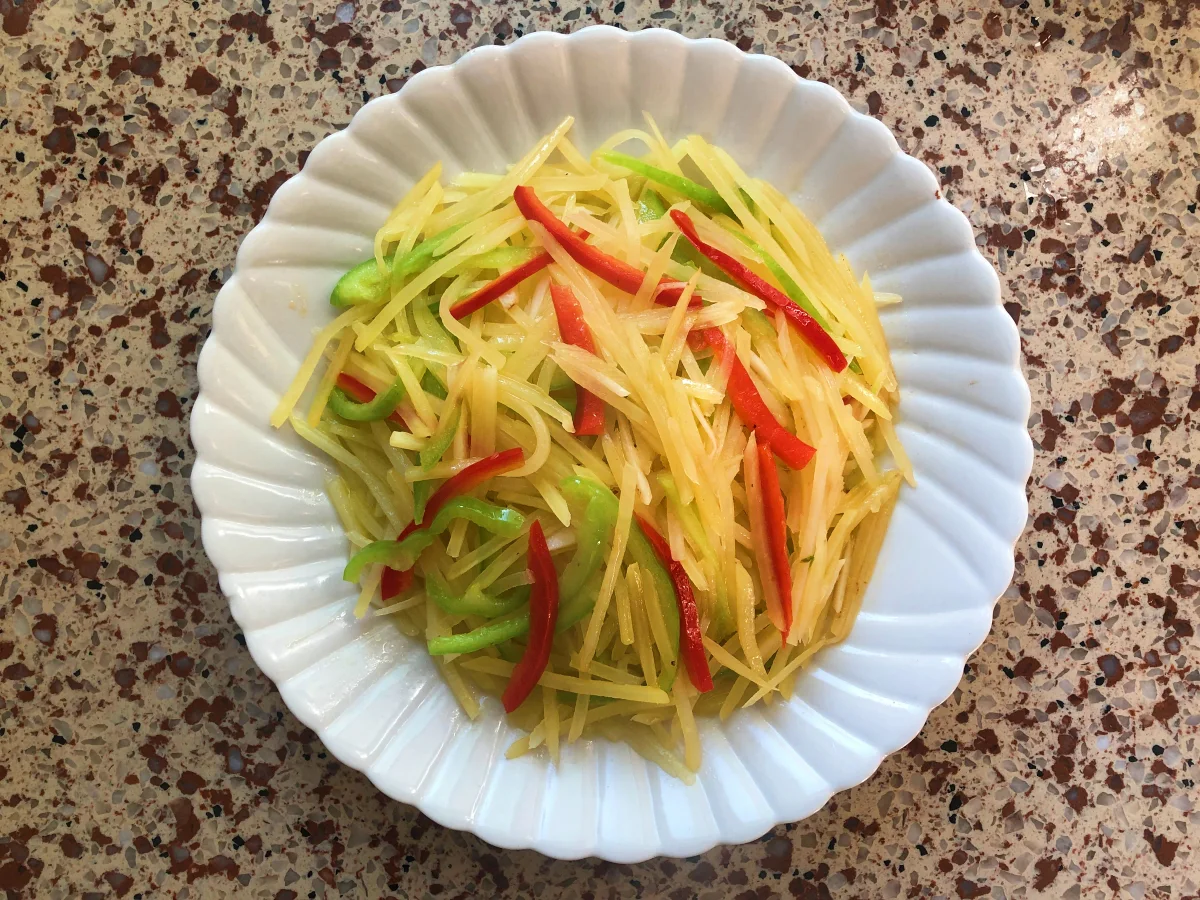
The photograph on this page shows the green pepper version, 青椒土豆丝: pale potato slivers threaded with strips of green and red pepper.
02
A test of the knife
It is a cheap dish, and a hard one to do well.
Everything depends on the slivers. The finer and more even they are, the better the dish, and Dunlop writes that good Sichuan chefs cut them so fine that in the wok they look like threads of wool. Some of her Sichuan friends joke that the dish should be called 洋芋炒土豆, “foreign tubers fried with earth beans,” using two of the potato’s Chinese names to make a cheap dish sound fancy.
In 2025 the hot dish in Sichuan’s college entrance exam for vocational-school cookery students was exactly this: stir-fried green pepper and potato slivers, one of four practical tasks to finish in 90 minutes. Candidates had to cut potato and pepper into slivers 8 to 10 centimeters long and 2 millimeters wide, soak them and stir-fry them until cooked through but not limp. Examiners scored the evenness of the cut and the precision of the heat; as one student put it, the dish tests the knife and the fire. Each year the hot dish is one common Sichuan classic, such as fish-fragrant pork slivers or mapo tofu.
03
How it stays crisp
Three things keep the crunch: the cut, the rinse and the speed.
Thin, even slivers cook through in moments. Rinsing them in cold water washes off surface starch, so they toss freely instead of sticking together; restaurants usually rinse them, Dunlop notes, though home cooks often skip it and accept a slightly sticky result. Then the wok must be very hot and the cooking short: a few minutes, until the slivers are steaming and no longer taste raw. Cut them thicker, leave the starch on and cook longer, and you get a softer, more familiar potato.
Vinegar is often credited too, and there is some science behind the habit: in a 2017 study, potato slices soaked in acetic acid before cooking came out firmest, with the most intact cell walls. But the experiments soaked the potatoes first, while most cooks splash vinegar in at the end, so in a hot and sour version the vinegar is there mostly for its tang; the crunch still comes from the cut, the rinse and the heat.
04
The main versions
The method stays the same; the seasoning changes.
The Sichuan classic is 炝土豆丝: dried chilies and Sichuan pepper sizzled in oil until the chilies darken, then the potatoes thrown in. Dunlop uses the same quick chili-and-pepper method for water spinach, bok choy and lotus root. The green pepper version leaves out the chilies and mixes in about one part pepper to five of potato. Dunlop’s vinegar version, what menus call 醋溜, adds a little soy and dark Chinkiang vinegar; 酸辣土豆丝 keeps the chilies as well as the vinegar. There is also a cold version, blanched for two minutes, then dressed with vinegar and hot chili oil.
| Name | What makes it |
|---|---|
| 炝土豆丝 qiang tudou si | Qiang: dried chilies and Sichuan pepper flashed in hot oil first; no sauce |
| 青椒土豆丝 green pepper potato slivers | Green (and often red) pepper strips, salt |
| 酸辣土豆丝 hot and sour potato slivers | Chili and a splash of vinegar at the end |
| 醋溜土豆丝 vinegar potato slivers | Vinegar and a little soy, often green pepper |
| 炝拌土豆丝 cold potato slivers | Blanched, dressed with vinegar and hot chili oil |
05
How the potato reached China
Nobody agrees when it arrived.
The potato came from the Americas, and its arrival in China is still argued over. Some Chinese historians place it in the Ming, reading a poem by Xu Wei about a 土豆 as a potato; others write of the 17th century. The American sinologist Berthold Laufer concluded long ago that the date cannot be fixed, and pointed to a 1700 county gazetteer from Fujian that mentions a 马铃薯. The linguist Xiang Mengbing argues that neither Xu Wei’s plant nor the Fujian one was a potato at all, and that the first sure record is 洋芋, “foreign tuber,” in a Hubei gazetteer of 1788, which would put the real arrival in the late 18th century.
Whatever the date, the potato did best in the southwest and northwest, whose main growing areas now account for nearly 70 percent of the country’s potato acreage, and the many names it picked up on the way still map the country. Even the formal word 马铃薯, “horse-bell tuber,” is, Xiang argues, a loan brought back from Japanese.
| Name | Where |
|---|---|
| 洋芋 yangyu, “foreign tuber” | Most of the southwest and northwest: Yunnan, Guizhou, Sichuan, Chongqing, Shaanxi, Gansu |
| 土豆 tudou, “earth bean” | The Northeast down to northern Hubei; now the standard Mandarin word |
| 山药蛋 shanyaodan, “yam egg” | Shanxi and neighboring parts of Hebei and Inner Mongolia |
| 地蛋 didan, “earth egg” | Eastern Shandong and northern Jiangsu |
| 荷兰薯 helanshu, “Dutch tuber”; 薯仔 shuzai, “little tuber” | Guangdong and Macao, in Cantonese |
06
The world’s biggest potato grower
China grows more potatoes than any other country.
China has been the world’s largest potato producer for years. In 2023 the agriculture ministry put the crop at nearly 90 million tons from about 70 million mu, some 4.7 million hectares, both roughly a quarter of the world total. In 2015 the government began promoting the potato as a staple alongside rice, wheat and corn, and a 2016 policy set a goal that by 2020, 30 percent of potatoes would be eaten as staple foods.
Eating habits did not follow the plan. Klein found no evidence of a national surge in potato-eating after 2015. On most tables the potato is still what it was: slivers in a wok, or chunks in a stew.
07
Ordering it
You will find it on most home-style and Sichuan menus.
Look for 酸辣土豆丝, 青椒土豆丝 or 炝土豆丝 on the menu of a home-style or Sichuan restaurant.
Hot and sour
酸辣土豆丝: chili heat and a sharp splash of vinegar.
Not spicy
青椒土豆丝 with green pepper is usually mild; ask for 不要辣, no chili, to be sure.
What good looks like
Separate, even slivers that snap rather than bend; a soggy, clumped plate was overcooked or never rinsed.
08
Stir-fried potato slivers at home
Ten minutes of cutting, three of cooking.
This is Dunlop’s recipe. Use a firm, waxy potato rather than a floury one, and a sharp knife or a julienne slicer.
For 2–3 as a side dish: 400 g potatoes; 4–5 dried chilies; ½ teaspoon whole Sichuan pepper; 2 tablespoons cooking oil; salt; ½ teaspoon sesame oil (optional).
- 1. Cut
Peel the potatoes and cut them into slices as thin and even as you can. Overlap the slices in a line and cut them into very fine slivers.
- 2. Rinse
Put the slivers in lightly salted cold water, swish to wash off the starch, then drain very well.
- 3. Prepare the chilies
Snip the dried chilies in half or into 2 cm pieces and shake out the seeds.
- 4. Season the oil
Heat the wok, add the oil and, before it gets very hot, the chilies and Sichuan pepper. Stir until they smell fragrant and the chilies darken but do not burn.
- 5. Stir-fry
Add the potatoes and stir-fry over high heat for a few minutes, until they no longer taste raw but keep a little crispness. Season with salt.
- 6. Finish
Off the heat, stir in the sesame oil. For green pepper slivers, leave out the chilies and Sichuan pepper and stir-fry the potatoes in plain oil with one-fifth as much green pepper, adding a few spring onion greens at the end. For a vinegar version, also skip the spices: add a few green pepper slivers, season with salt and a little light soy sauce, and add 1–2 teaspoons Chinkiang vinegar towards the end.
09
More everyday Chinese dishes
Other dishes on the atlas.
Tomato and egg
Another everyday home dish, sweet, sour and quick.
Read about tomato and egg →Dry-fried green beans
A Sichuan vegetable dish cooked until the beans wrinkle.
Read about dry-fried green beans →Chow mein
Stir-fried noodles, eaten across China and the world.
Read about chow mein →Across China classics
- Tomato and Egg
Home stir-fry · Everyday meals, canteens
- Mala Xiang Guo
Pick-your-own dry stir-fry · Lunch or dinner with rice
- Jiaozi
Boiled, steamed or pan-fried dumplings · Everyday meals; New Year’s Eve in the north
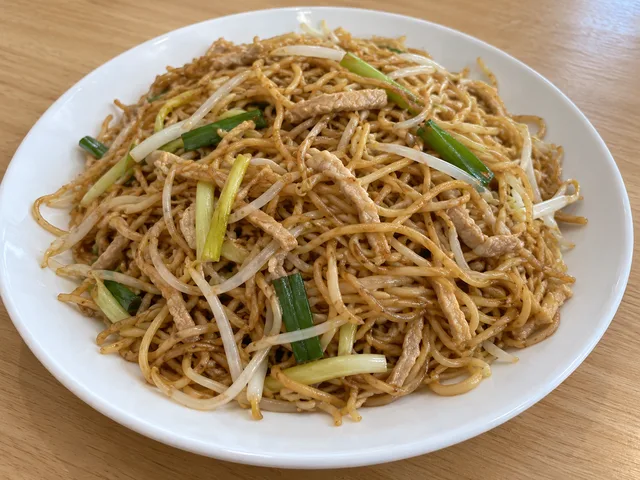
- Chow Mein
Fried wheat noodles · Lunch, late-night meals, takeaway
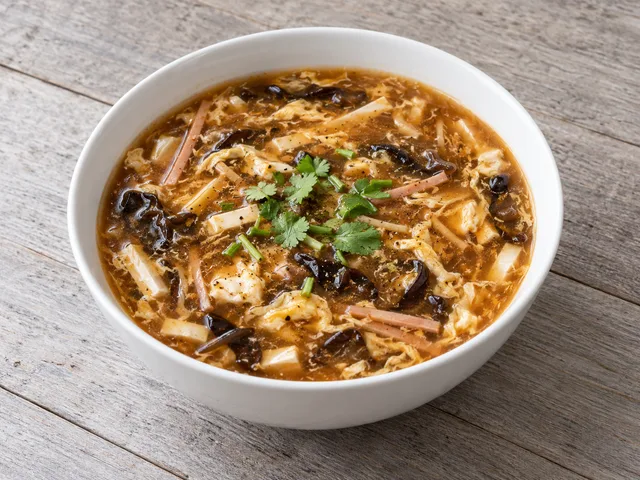
- Hot and Sour Soup
Thickened soup · With dumplings, at banquets
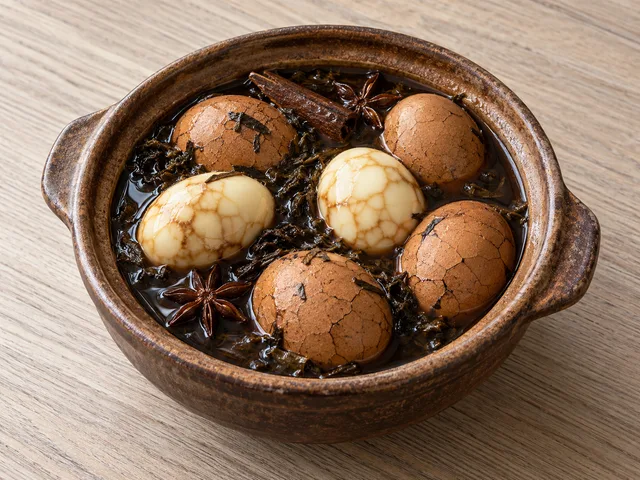
- Tea Eggs
Tea-marbled boiled eggs · Breakfast and snacks
FAQ
Questions about Stir-Fried Shredded Potatoes
Why are the potatoes still crunchy?
They are cut very fine, rinsed of surface starch and stir-fried for only a few minutes, so they cook through without turning soft. That crunch is the point of the dish.
Is it spicy?
It depends on the version. Hot and sour or chili versions are; green pepper potato slivers are usually mild.
Should I add vinegar?
Only for the sour versions. Most cooks add it near the end for flavor. In experiments acid kept potatoes firmer, but only when they soaked in it before cooking.
Which potatoes work best?
Firm, waxy potatoes hold their shape; floury ones break and turn soft.
Is it vegetarian?
Usually yes: potatoes, peppers, oil and seasoning. Check that no meat stock or lard is used.
When did potatoes come to China?
Sometime between the late Ming and the late 18th century; historians still disagree on the date.
Sources
Sources and further reading
- 1 Fuchsia Dunlop, The Food of Sichuan, Chinese edition Chuancai (川菜): “Vegetables” (stir-fried potato slivers with chili and Sichuan pepper) and “Cold dishes” (potato slivers in chili oil) (in Chinese)CITIC Press (2020)
- 2 Zhao W. et al., “Acetic acid pretreatment improves the hardness of cooked potato slices”Food Chemistry 228 (2017) ↗
- 3 Xiang Mengbing, “Notes on the history of the potato in China” (中国马铃薯历史札记) (in Chinese)Modern Linguistics 6(2) (2018) ↗
- 4 Xiang Mengbing and Zhou Yipei, “The potato in Chinese dialects” (汉语方言里的马铃薯)Modern Linguistics 6(2) (2018) ↗
- 5 Fuchsia Dunlop, “Stir-fried potato slivers with chilli and Sichuan pepper,” from Every Grain of RiceThe Observer (January 27, 2020) ↗
- 6 Berthold Laufer, on when the potato reached China (excerpt from The American Plant Migration, Part 1: The Potato, Chinese edition) (in Chinese)The Beijing News (May 23, 2026) ↗
- 7 “This year’s exam: stir-fried green pepper and potato slivers” (今年考炒青椒土豆丝!) (in Chinese)Red Star News, via Yangtse Evening Post (July 4, 2025) ↗
- 8 Jakob Klein, “Repositioning Potatoes in the People’s Republic of China”Contemporary China Centre Blog, University of Westminster (October 6, 2021) ↗
- 9 Wang Hairong, “Rediscovering the Value of the Potato”Beijing Review (February 12, 2015) ↗
- 10 “China decides to develop the potato as a staple food” (中国决定将马铃薯作为主粮进行产业开发) (in Chinese)Xinhua, via Zhejiang Online (February 23, 2016) ↗
- 11 Report on the Ministry of Agriculture and Rural Affairs press conference on the potato industry (搭建产业合作发展平台,甘肃定西将举办马铃薯大会) (in Chinese)Huanqiu (September 9, 2023) ↗
Last updated November 2026