
01
The dish everyone can make
Tomato and egg is the first dish many Chinese people learn to cook, and often the one they miss most abroad.
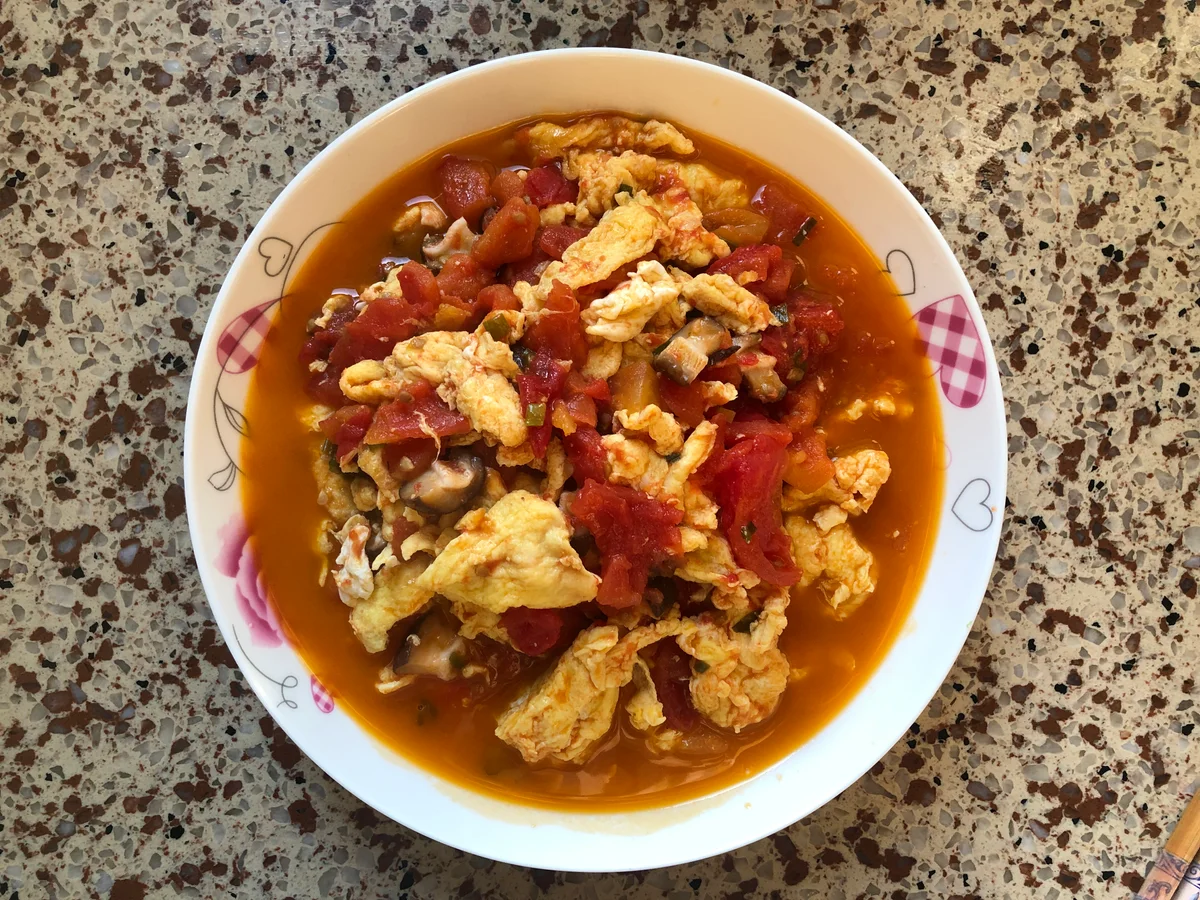
Beaten eggs are scrambled in hot oil until just set in large soft curds and lifted out; tomatoes go into the same wok and cook until their juice runs and thickens a little; the egg goes back in, there is salt and often a little sugar, and the whole thing is spooned over rice so the red juice soaks in. A plate takes ten minutes and two ingredients that every kitchen in China has.
For such a simple dish it carries a lot of feeling. It is on family tables and college canteen counters alike, it is often the first dish a Chinese child learns to cook, a kindergarten in Tangshan, Hebei, teaches it in class, and for Chinese living abroad it is the cure for homesickness. Restaurants serve it too, but it is fundamentally home food: the version people judge every other one against is a parent’s.
02
A young vegetable in an old cuisine
The tomato half of the dish is only a few generations old on Chinese tables.
Tomatoes came from the Americas. Liu Yanchun of the Shanghai Botanical Garden dates their arrival in China to roughly the Wanli reign of the Ming, between 1573 and 1620, when the plant encyclopedia Qunfang Pu recorded it as 蕃柿, “foreign persimmon,” and a county gazetteer in Shanxi as 西蕃柿. Both names survive in today’s words: 番茄, “foreign eggplant,” in the south, and 西红柿, “western red persimmon,” in the north. For three centuries it was mostly an ornamental plant grown on the outskirts of towns; only in the 1930s, Liu writes, did people in the northeast, north and central China begin growing it to eat, and large-scale planting as a national vegetable began in the 1950s.
Wang Zengqi still remembered when it was new. Many vegetables everyone takes for granted were once foreign, Wang observed: spinach, lettuce, and also tomatoes and onions, which “a few decades ago China did not have, and many people could not get used to. Now doesn’t everyone love them?” Liu Yanchun, born in the 1980s, remembers Liu’s mother picking ripe tomatoes from the vegetable plot, slicing them and sprinkling them with sugar as a summer treat, the same 蜜番茄, “honeyed tomato,” that Zhang Jianping recalls from a Jiangnan childhood alongside tomato and egg and a tomato, pickled mustard and egg soup.
The American food writer William Alexander, in a history of the tomato translated into Chinese in 2026, makes a broader point: Chinese cooking uses tomatoes far less than you would expect from the world’s largest tomato producer, most of whose crop is processed for export. The notable exception, Alexander writes, is a popular Chinese comfort food, tomato and egg, which may sound like something a café throws together on a Sunday morning but is an Asian original.
03
An egg recipe fifteen centuries old
The other half of the dish is very old.
Stir-fried egg goes back to the Qimin Yaoshu, Jia Sixie’s sixth-century agricultural encyclopedia, which gives a recipe for “stir-fried eggs”: break the eggs into a copper pan and stir until white and yolk are mixed, add finely chopped scallion whites, salt and fermented soybeans, and fry with sesame oil, “fragrant and delicious.” Two thousand years ago, the Discourses on Salt and Iron already mentioned chives with eggs sold in the markets, though without much oil the eggs were probably boiled or steamed.
What was rare was the eggs themselves. In the days of backyard hens, eggs were saved for the sick, the old and children. Only in the 1980s did state farms with modern breeds make eggs cheap and plentiful, and China has been the world’s largest egg producer since 1985. Put those two dates together, a vegetable that became common in the 1950s and an egg that became cheap in the 1980s, and it is easy to see why tomato and egg became the defining home dish of the late twentieth century rather than of any earlier one.
Sources [6]
04
Wang Zengqi’s Kunming plate
The best-known literary description of the dish is a comparison between Kunming and the north.
Wang Zengqi, who studied in Kunming during the war, wrote about its food in several essays. In Kunming, Wang wrote, tomato and egg was cooked so that the tomato was fried only until just done, still fragrant and not limp, and the egg was in big pieces and not overcooked; mixed together, the two colors stayed distinct, “unlike the northern tomato and egg, fried into a complete mess.” In an old Kunming restaurant, Wang remembered, the waiter memorized every order and, when two tables asked for the same dish, shouted down to the kitchen “tomato and egg, one cooking for two.”
The pairing appears in Kunming in another form as well. The writer Ba Jin recalled meeting Shen Congwen several times at a small eatery on Wenlin Street, where a bowl or two of rice noodles with tomato and egg made a satisfying supper; Wang went there with Shen many times. Tomato and egg over rice noodles or wheat noodles is still one of the commonest cheap meals in China.
Sources [1]
05
Sugar or no sugar
The argument everyone has about tomato and egg is whether it should taste sweet.
Chinese cooks disagree, often loudly, about sugar. Many families add a spoonful, which rounds off the tomato’s acidity and makes the sauce taste fuller over rice; others find any sweetness wrong and season with salt alone, perhaps with garlic or scallion. Plenty of recipes use both soy sauce and sugar; hotel chefs add sugar as a matter of course, and leave it out for anyone who dislikes sweetness. Neither side owns a region, and arguments over it happen inside families as often as between provinces.
Sugar also has a practical job. Supermarket tomatoes are often pale and sour, and a head chef’s rule is to compensate with a little ketchup and sugar; the better fix is to buy tomatoes that are deep red and full rather than hollow. The same chef’s proportion is about four parts tomato to three parts egg by weight, so neither ingredient swamps the other.
06
A 1927 recipe from a Peking tea shop
The dish was already being written down in English nearly a century ago, sugar and all.
In 1927 Nellie C. Wong published a small book of recipes in New York “from ‘The Only Place in Peking’,” her tea shop in Peking, and sold copies from her store on Amsterdam Avenue. Between shrimp toast, sweet and sour fish and almond chow mein is a dish she calls “Wang Shih (Tomato and Eggs).” It takes eight large tomatoes, four eggs and a teaspoon of sugar for six people. The tomatoes are skinned, and seeded too “if you have great patience,” then cooked in the pan until their water has evaporated; sugar, pepper and salt go in, then the eggs, well beaten and only lightly cooked, and a little soy sauce at the end.
Two details would settle arguments at many tables today: the sugar was there from the start, and so was the soy sauce. Her order is different, though. The tomatoes are cooked down almost to a paste before the eggs go in, closer to the soft, saucy versions made for children and the elderly than to a quick stir-fry. Tomatoes were not yet cheap in northern China. Even decades later, Wang Zengqi noted that in Beijing the winter tomatoes grown in heated pit greenhouses, called 洞子货, cost as much as arrowhead, a vegetable he called expensive there.
07
Why the oil matters
Frying the tomato does more than make a sauce.
The red pigment in tomatoes, lycopene, dissolves in fat. In a small 2005 Australian trial, 23 healthy adults ate a meal of 470 g of diced tomatoes each day for five days, cooked either with 25 ml of olive oil or without it. The main form of lycopene in the blood, trans-lycopene, rose 82% in the group that had the oil and did not change significantly in the other. That trial used olive oil, not a wok of vegetable oil and eggs, but the principle carries over, so the spoon of oil in the wok does useful work.
Sources [5]
08
Six ways to cook it
Every cook has a version, and they differ more than the two ingredients suggest.
A head chef with a large online following once demonstrated six of them, which together cover most of what home cooks in China do.
| Version | How | Result |
|---|---|---|
| All in one | Tomato diced into the beaten egg with scallion and salt, fried together | Fast, no extra seasoning |
| Peeled, saucy | Egg fried and set aside; peeled tomato, ketchup, water, salt, sugar, thickened with starch | Soft and thick, for children and the elderly |
| Unpeeled, saucy | Ketchup and garlic fried first, then tomato, water and the egg, thickened last | Brighter color, more texture |
| High heat | Large tomato pieces flashed in very hot oil with the egg, a little starch | Tender egg, tomato just cooked, juicy |
| Garlic, no water | Egg fried golden, large dice of tomato, salt and garlic only | Drier, more egg flavor, no sweetness |
| Tomato rounds | Whole eggs fried, thick tomato slices fried with them, salt and sugar | Neat, rich egg flavor |
Sources [10]
09
Making it at home
The trick is to treat the tomato in two ways: some for sauce, some for bite.
This is a sauce-over-rice version that suits most families. Leave out the sugar if you are on the salty side of the argument.
For 2 to 3, with rice: 4 eggs; about 400 g ripe red tomatoes; a little Shaoxing or Huadiao wine; salt; 1 to 2 teaspoons sugar (optional); a little scallion and ginger; 3 tablespoons oil; ketchup only if the tomatoes are sour.
- 1. Peel if you like
Cut a shallow cross in the base of each tomato, pour boiling water over, and the skins slip off. Leave them on if you prefer more texture.
- 2. Cut two ways
Dice half the tomatoes small, to collapse into sauce, and cut the rest into chunks that will keep their shape.
- 3. Scramble the egg
Beat the eggs with salt and a few drops of wine. Heat the wok well, add oil and pour in the eggs before the oil smokes; let them set, then push into large soft curds and lift them out while still a little runny.
- 4. Make the sauce
With a little more oil, fry the scallion and ginger, add the diced tomato over high heat with salt and the sugar, and cook about three minutes until it turns into sauce.
- 5. Add the chunks and egg
Add the tomato chunks for a minute, then return the egg, spread it out and let it bubble for about a minute so it absorbs the sauce.
- 6. Serve
Taste for salt and spoon it over hot rice or noodles straight away.
10
What to eat it with
Tomato and egg is almost never eaten on its own.
In a canteen or a cheap restaurant it is a topping: ladled over a bowl of rice as 番茄炒蛋盖饭, or over noodles and rice noodles as a tomato-and-egg noodle bowl, the same combination Wang Zengqi and Shen Congwen ate in Kunming. At home it is one dish among several, the one that children reach for and that soaks the rice red. The same two ingredients also make a soup: tomato and egg soup, or the tomato, pickled mustard and egg soup Zhang Jianping remembers, made by simmering tomato in water and drizzling egg into it.
11
More on the atlas
Other everyday dishes eaten all over China.
Egg drop soup
Egg drizzled into broth, including tomato and egg soup.
Read about egg drop soup →Egg fried rice
The other dish every Chinese cook makes with eggs.
Read about egg fried rice →Tea eggs
Eggs simmered in tea and soy, sold everywhere.
Read about tea eggs →Food guides
Comparisons and first steps in Chinese food.
Browse the guides →Across China classics
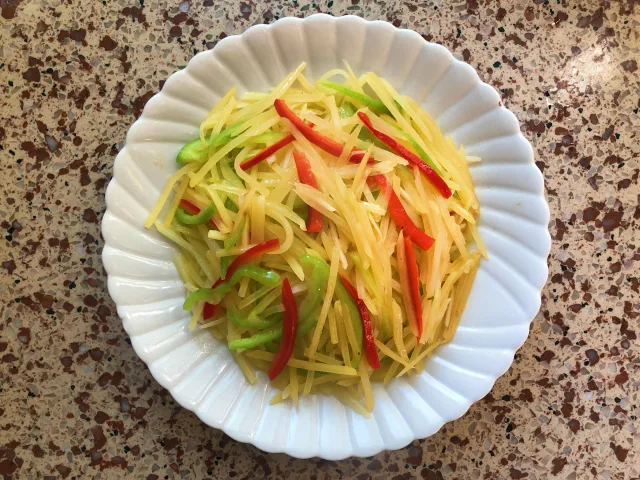
- Stir-Fried Shredded Potatoes
Stir-fried vegetable side dish · Everyday meals with rice
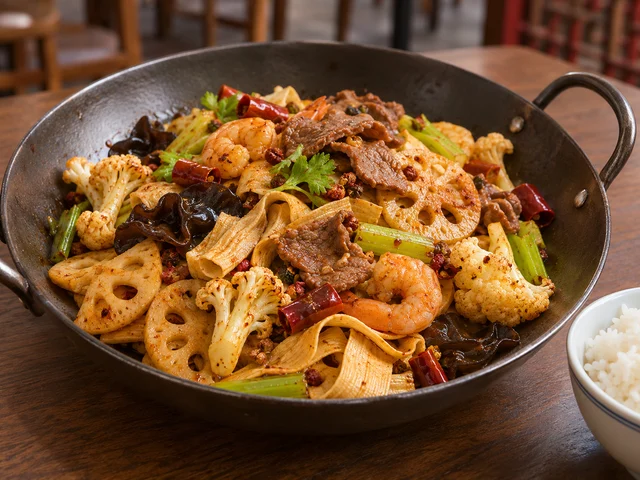
- Mala Xiang Guo
Pick-your-own dry stir-fry · Lunch or dinner with rice
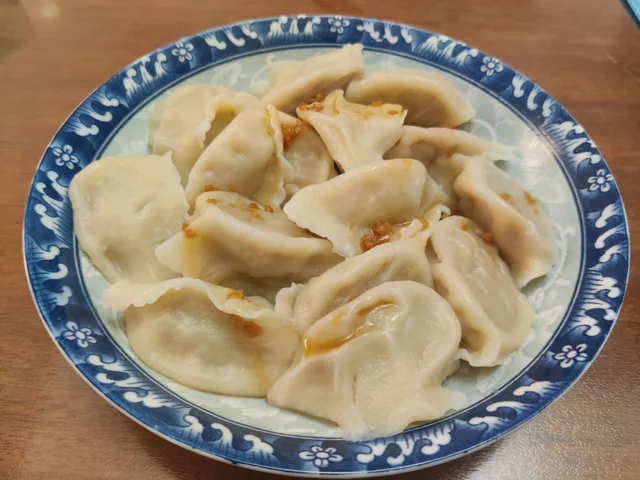
- Jiaozi
Boiled, steamed or pan-fried dumplings · Everyday meals; New Year’s Eve in the north
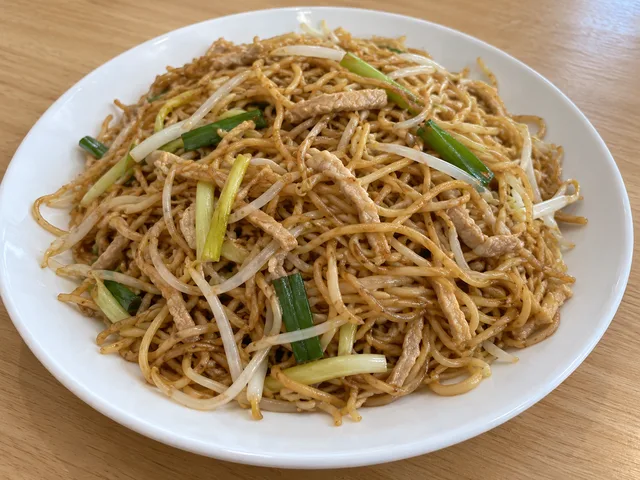
- Chow Mein
Fried wheat noodles · Lunch, late-night meals, takeaway
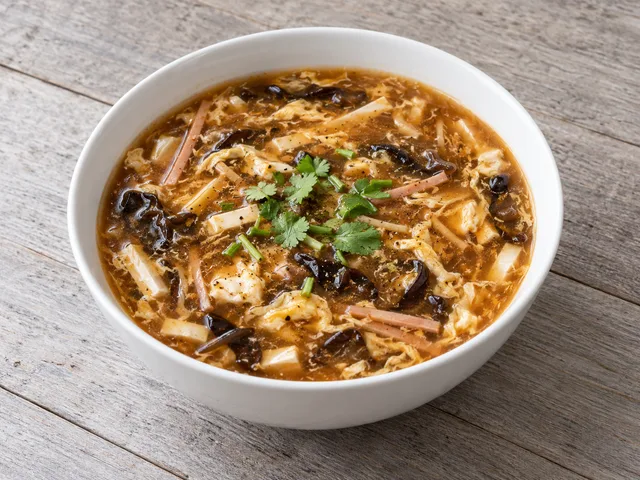
- Hot and Sour Soup
Thickened soup · With dumplings, at banquets
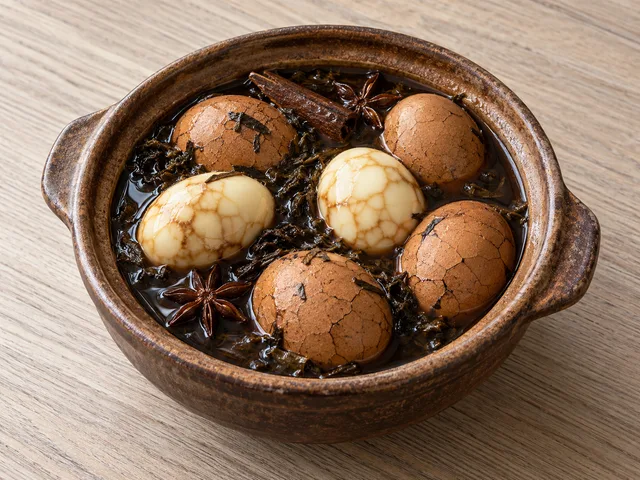
- Tea Eggs
Tea-marbled boiled eggs · Breakfast and snacks
FAQ
Questions about Tomato and Egg
What is tomato and egg?
Soft scrambled egg stir-fried with tomato until the juice becomes a light sauce, eaten over rice or noodles.
Is it 番茄炒蛋 or 西红柿炒鸡蛋?
Both: 番茄 is the common southern word and 西红柿 the northern one for the same dish.
Which region is tomato and egg from?
None; it is a home dish eaten all over China, common only since tomatoes spread in the mid-20th century.
Should tomato and egg be sweet?
Many families add a little sugar, others never do; it is a matter of household taste, not region.
Do you cook the egg or the tomato first?
Usually the egg, set aside while still soft, then the tomato, then the egg goes back in.
What is the right ratio?
About four parts tomato to three parts egg by weight.
Why add ketchup?
To make up for pale, sour tomatoes; ripe red ones need none.
When did tomatoes come to China?
Around the late Ming, but they were grown as ornamental plants until the 1930s.
Should you peel the tomatoes?
Optional: peeling gives a smoother sauce for children and the elderly; leaving the skin gives more texture.
What do you eat with it?
Rice above all, or noodles; it is also made into tomato and egg soup.
Is tomato and egg an old dish?
Not very. Tomatoes became an everyday vegetable in China only in the 20th century, but a 1927 recipe from a Peking tea shop already calls for tomatoes, eggs, sugar and soy sauce.
Does the oil make any difference to the tomato?
Yes. Lycopene dissolves in fat, and a small 2005 trial found that tomatoes cooked with olive oil raised blood lycopene far more than tomatoes cooked without it.
Sources
Sources and further reading
- 1 Wang Zengqi, Renjian Zhiwei (人间至味): “Kunming dishes”, “Kunming eating” and “Mallow and shallot” (in Chinese)China Literature and History Press (2023 edition)
- 2 William Alexander, Ten Tomatoes that Changed the World, Chinese edition translated by Tong Jinyu: chapter 6, “Beyond pasta” (in Chinese)Cultural Development Press (2026)
- 3 Zhang Jianping and Gao Feng, Chichi Baixiangxiang (吃吃白相相): “Good vegetables that beat meat” (in Chinese)Sichuan Literature and Art Publishing House (2025)
- 4 Wang Zengqi, Yi Shi Yi Wei (一食一味): “Food from my hometown” (in Chinese)Tianjin People’s Publishing House (2018 edition)
- 5 Increases in plasma lycopene concentration after consumption of tomatoes cooked with olive oilFielding et al., Asia Pacific Journal of Clinical Nutrition (2005) ↗
- 6 A History of the Egg in China: More than Just FoodThe World of Chinese (2026) ↗
- 7 Talking about tomatoes on a long summer day (薰风昼长话番茄) (in Chinese)Liu Yanchun, Shanghai Botanical Garden, on The Paper (2022) ↗
- 8 Eggs and tomatoes: The most popular home-style Chinese dishLu Zhao, The China Project (2020) ↗
- 9 Nellie C. Wong, Chinese Recipes: recipes from “The Only Place in Peking”, the Nellie Wong Tea Shop, p. 22, “Wang Shih (Tomato and Eggs)”The American Rehabilitation Committee, New York (1927), via Project Gutenberg ↗
- 10 A head chef’s six ways to make tomato and egg (video, in Chinese)Mei Shi Zuo Jia Wang Gang (美食作家王刚R), Bilibili (2020) ↗
- 11 Tomato first or egg first, sweet or salty: a hotel chef’s home method (video, in Chinese)Fan Da Chu Lai Le (范大厨来了), Bilibili (2023) ↗
Last updated November 2026