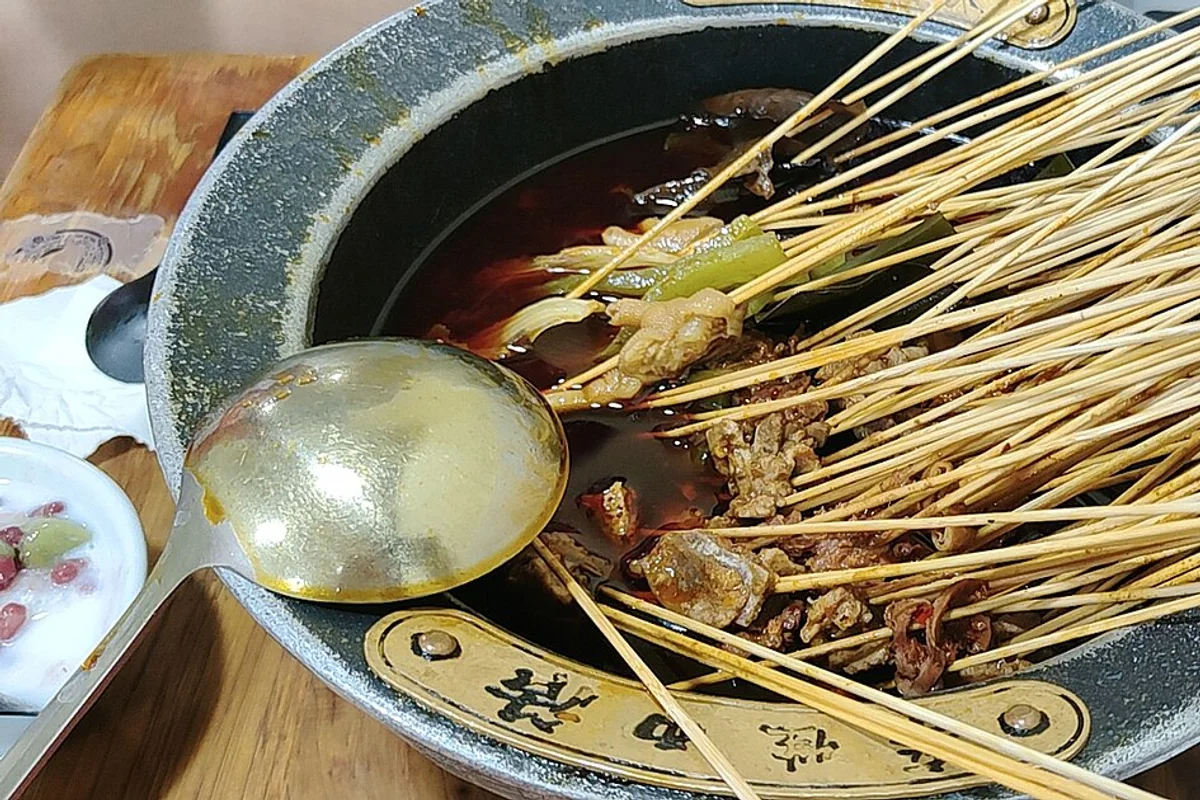
A Leshan snack built one skewer at a time
Bobo chicken is not a bowl of chicken soup and it is not a miniature hot pot. It is a spread of fully cooked skewers—meat, tofu, mushrooms and vegetables—rested in a deeply seasoned bowl and eaten cool or at room temperature. The fun is choosing contrasting textures and discovering how the same fragrant dressing changes from one skewer to the next.
01
The bowl is the point
The word bobo refers to the earthenware bowl traditionally used to hold the seasoned liquid. Chicken is important to the dish’s history and name, but a modern Leshan counter rarely stops there. Lotus root, potato, wood-ear mushroom, tofu skin, quail egg, chicken pieces and offal may all sit side by side. That variety is not menu clutter; it is how the dish works.
Each ingredient carries the seasoning differently. A lotus-root slice stays crisp and catches chilli oil in its holes. Tofu absorbs the savory stock. Chicken brings tenderness, while tripe or gizzard adds spring and chew. A satisfying selection moves between those textures rather than piling up ten versions of the same bite.
The earthen bowl organizes service as well as the name
The bobo holds seasoned liquid at a stable depth so many cooked skewers can rest, be lifted and counted without becoming a boiling tabletop meal. It is the center of the format, not nostalgic decoration.
Ingredients are cooked separately before they share seasoning
Lotus root, poultry, offal, tofu and mushrooms need different cooking times. Preparing each to its own doneness before cooling and soaking is what lets the final bowl offer crisp, tender, absorbent and springy bites.
The name is pronounced bōbō jī. “Sichuan cold skewers” is a useful description, but Bobo Chicken is the established English name.
02
What a good first bite should do
The visual drama comes from red oil, but color alone tells you very little. The best bowls are aromatic before they are punishing.
Fragrance first
Chilli oil carries toasted spice, sesame and a savory stock base. It should smell lively rather than only oily.
A clean tingle
Red Sichuan pepper gives a citrusy numbing finish; green rattan pepper tastes brighter, greener and more floral.
Fresh texture
Ingredients should still taste like themselves. Vegetables need snap, tofu should not be exhausted from soaking, and meat should stay tender.
A seasoned finish
Salt, stock and spice should meet in balance. A bowl that delivers only chilli burn has lost much of the Leshan pleasure.
03
How a bobo-chicken shop works
Some shops let you choose skewers from a chilled display; others bring a prepared assortment in the bowl. Pricing may be by stick, ingredient type, tray or weight, so ask before building a mountain. Empty sticks are often kept and counted at the end.
For a first round, choose one chicken item, one tofu product, one crisp vegetable and one mushroom or chewy item. That small mix explains the dish better than a large bundle of identical meat skewers. If the table is sensitive to heat, ask whether a rattan-pepper, clear or mild bowl is available rather than removing all seasoning.
Ask when cooked trays were replenished
Cool service makes holding practice important. Look for protected displays, clean tongs and steady turnover, and avoid trays whose vegetables have gone limp or whose meat has warmed during long exposure.
Red oil and rattan pepper require separate allergy questions
Sesame, peanut, soy and stock ingredients vary between bowls. A visibly green seasoning is not automatically lighter or simpler than a red one, so confirm the actual base before selecting skewers.
Already cooked
The skewers are cooked before they enter the serving bowl. You are selecting and seasoning, not cooking raw food at the table.
Ask about the count
Confirm whether the shop charges by stick, tray, type or weight, and keep empty skewers until the bill is settled.
Name restrictions early
Sesame, peanuts, chicken stock and offal may not be obvious. Tell the staff before choosing from a shared display.
Watch the turnover
A busy, clean display and ingredients that retain their own texture are better clues than the deepest-red oil.
04
What it is—and what it is not
Bobo chicken shares the skewer language of chuanchuan, but the dining rhythm is different. Many chuanchuan meals begin with raw skewers cooked in a boiling communal pot. Bobo chicken arrives cooked and absorbs flavor in a serving bowl, so it eats more like a cool, highly seasoned snack or light shared meal.
It is also different from mala tang, where ingredients are usually weighed and cooked into one hot personal bowl. If a menu photo shows a wide bowl of cooked skewers resting in red oil, sesame and pepper—with no tabletop burner—you are much closer to bobo chicken.
05
Red oil and rattan pepper create two different selections
The classic red-oil bowl layers dried chilli, red Sichuan pepper, sesame and seasoned stock. It suits ingredients with enough structure to remain clear through a rich dressing: chicken skin, gizzard, tofu skin, lotus root and potato are common choices. A green rattan-pepper bowl is brighter and more volatile, with a fresh citrusy tingle that can make mushrooms, bamboo shoots, leafy stems and lean chicken feel especially lively. Shops may offer both, but their spice and stock formulas are house decisions rather than standardized grades of heat.
Choose a bowl according to aroma, not only chilli tolerance. Red oil is not automatically hotter, and green pepper is not automatically mild; rattan pepper can produce a forceful numbing sensation even when little red chilli is visible. If sharing, two smaller bowls often teach more than one oversized bowl because the same lotus root or chicken piece reveals how differently each seasoning works.
06
Why the dish makes sense in Leshan’s snack culture
Leshan is known for an unusually dense culture of small eats, including skewers, tofu, noodles and highly seasoned cold dishes. Bobo chicken fits that landscape because it is modular: a diner can stop for a few sticks, combine it with another snack or assemble enough contrasting ingredients for a light shared meal. The bowl supplies a recognizable house flavor while the display lets each customer control portion and texture.
That flexibility also explains why “chicken” no longer describes every skewer. Chicken meat, skin and offal remain central historical choices, but vegetables and tofu products allow the seasoned bowl to function as more than one meat dish. The expansion is part of how contemporary shops serve the snack, not permission to label any cold skewer selection bobo chicken. The Leshan identity still rests on cooked ingredients, the seasoned bowl, chilli or rattan-pepper fragrance and a counter rhythm built around choosing and counting sticks.
Sources