
01
A hot pot for one
Malatang is what happens when a hot pot is shrunk to one bowl and handed to a cook.
The name is three words: 麻 má, the tingling numbness of Sichuan pepper; 辣 là, chili heat; and 烫 tàng, scalding hot, which is also the verb for dipping something briefly in boiling liquid. Fuchsia Dunlop translates it as “numbing-hot-and-scalding,” a spicy broth in which skewers of food are cooked. In a modern shop you take a bowl and tongs, walk along a chilled cabinet and pick what you like: leafy greens, lotus root, potato slices, tofu skin, mushrooms, fish balls, luncheon meat, sliced beef or lamb, quail eggs, and one or two kinds of noodles. The cook weighs the bowl, boils everything together in a deep pot of broth for a few minutes, and serves it in the broth or drained, with chili oil, garlic, vinegar or sesame sauce.
Because you choose every ingredient, no two bowls are alike, and that is most of the appeal. A popular saying puts it neatly: malatang is hot pot for one person, and hot pot is malatang for a group. It is also very common. In the first half of 2019 malatang was the best-selling daytime order on the delivery app Ele.me in seven of China’s ten largest cities, and in Ningxia and Heilongjiang it made up nearly a tenth of all delivery orders. One catering-industry estimate put the market at 96.8 billion yuan in 2016 and over 140 billion in 2022.
Take it apart
What’s in a bowl of malatang
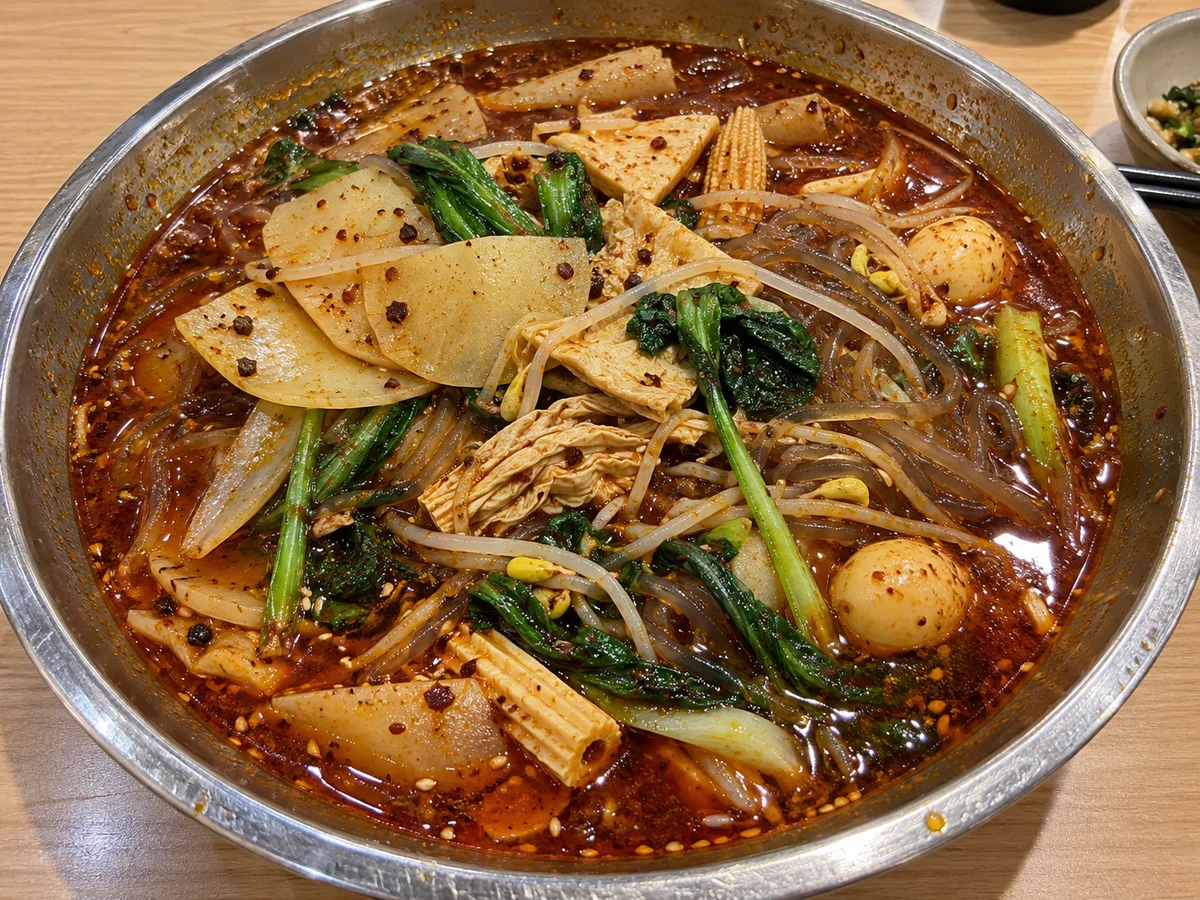
- Potato slices
Picked from the cold cabinet
- Greens
Picked by the diner
- Quail eggs
Picked by the diner
- Glass noodles
One or two starches go in too
- Red broth
Numbing Sichuan pepper and chili
02
Born in a salt town
No record settles where malatang began, but the strongest claim belongs to Niuhua, a salt town in Leshan.
Wutongqiao District in Leshan has been producing well salt for more than two thousand years, and Niuhua town sits in the middle of the old salt fields. The local story starts with Qing-dynasty salt workers on the damp wharves by the brine wells. They threaded beef offal from worn-out work cattle and vegetables from the fields onto bamboo sticks and dropped them into a pot of spicy broth, taking them out as they cooked. They called it 打偏食, “having a side snack.” Another popular telling has boat haulers on the Minjiang River boiling whatever food they had with chilies and Sichuan pepper to drive out cold and damp. Neither story has documents behind it.
The later steps have names attached. A salt-yard cook, Wang Dingfu, is credited with fixing how the offal was cleaned and how the pot was run. In the 1980s his successor Wang Daming opened the first fixed shop in the town, Daming Malatang, instead of a stall that moved around. A Leshan saying from those years describes the scene: people stood in the street under a lamp, boiled skewers in a shared pot and dipped them in one plate of ground chili. In 1988 a cook nicknamed Bapo, Zhang Yonggui, let customers pick their own skewers and gave each person a separate dip dish, and split the work into three stages: frying the broth base, preparing pickled vegetables and mixing the dip. That last idea, 味在碟中, “the flavor is in the dish,” is what Niuhua cooks still say makes their malatang different from hot pot. Bapo, Lü Yuan and Zhou Ji, the town’s best-known names, now run nearly 600 shops between them, and an industrial park making malatang broth bases was due to start production in Niuhua in September 2026.
04
Eating it in Leshan
In Leshan malatang is still a table, a pot and a fridge full of sticks.
You walk up to the cabinet, fill a tray with skewers, and choose a red, spicy pot or a clear one. The pot is set on your table and you cook the skewers yourself, a few at a time. Tripe needs only a few seconds; kidney slices about ten; potato, lotus root and wide sweet-potato sheets need longer. The broth is seasoned but not fiercely hot, because in Leshan the flavor comes from the dip. Staff bring a bowl of dry dip, ground chili mixed with crushed peanuts and other spices, and many shops also offer an oil dip with sesame oil and garlic. You roll each skewer in the dry powder, which clings to the wet food.
Leshan shops sell things that chains do not: beef heart and tongue marinated in pickled chili or cumin, chicken gizzards, small yellow catfish on a stick, eel, pig’s brain. Prices are counted by the stick, and in 2024 one well-known shop charged 0.9 yuan for a meat skewer and 0.4 yuan for a vegetable one. When you finish, the staff count the empty sticks in your jar. A meal for two with plenty of meat usually comes to well under a hundred yuan.
05
Chengdu: the scale-pan bowl
In Chengdu the newest form of malatang comes on the pan of an old-fashioned steelyard scale.
Chengdu people mostly eat maocai, but in recent years a style called 秤盘麻辣烫, scale-pan malatang, has caught on. Small plates of raw food wait in a refrigerated cabinet, each priced between about 4 and 12 yuan in 2022: beef, tripe, chicken feet, shrimp paste, duck intestine, bean sprouts, cauliflower. The cook boils the vegetables first and the meat separately, so the vegetables are not overcooked, then piles everything into a wide metal pan that once belonged to a market scale. Garlic, sesame oil and chili powder go in the pan, then a ladle of the red broth, then cilantro and toasted sesame seeds. There is no soup to drink. You eat from the pan with rice, which is often free, dipping each piece either in the garlic and sesame oil or in the chili powder at the bottom of the pan. A pan big enough for two with plenty of meat came to about 100 yuan.
06
How the northeast changed it
The malatang most Chinese people know today is not from Sichuan at all, but from the far northeast.
In the 1990s the state factories of Heilongjiang, Jilin and Liaoning laid off workers by the hundred thousand, and a pot of broth and a cabinet of vegetables was one of the cheapest businesses to start. Malatang suited the cold, but the original was far too hot for local taste. So northeastern cooks rebuilt it along the lines of their own hot pot. Red chili oil gave way to a white bone broth, less oily and much less spicy. More vegetables went in, meat came mostly as meatballs, and noodles were cooked in the bowl, from sweet-potato noodles to instant noodles. Heat became optional: diners added chili oil and vinegar themselves, as with dumplings. The biggest change was sesame paste, the northern hot-pot dip. In Sichuan the 麻 in the name means Sichuan pepper; in a northeastern bowl it came to mean the 麻 of 芝麻酱, sesame paste.
Yang Guofu, who opened his first shop in Harbin in 2003, went one step further and simmered beef bones with milk powder and rock sugar, giving a milky, slightly sweet soup you could drink. He began franchising a few years later and grew by about a thousand shops a year. Zhang Liang, the other giant, is married into the same family: Yang Guofu is the husband of his cousin. Both come from Binxian county outside Harbin, where many other malatang brands also started, and Zhang Liang was founded as a company in 2008. By 2024 the two chains had about 12,000 shops between them, including more than a hundred outside China. In Fushun, in Liaoning, a couple is said to have drained the soup off and tossed the boiled food with sweet, sour and spicy seasonings; that dry version, 麻辣拌 malaban, is a dish in its own right in the northeast.
07
Why your bowl cost 40 yuan
Chain malatang is priced by weight, which makes the bill easy to misjudge.
Older shops charged by the skewer or by the bowl. Yang Guofu popularized charging by weight, and most chains now do the same, often at one price for meat and vegetables alike. In 2023 a Zhang Liang shop charged 25.8 yuan per jin (500 grams), and a bowl of mostly vegetables still came to 41.6 yuan. Twenty years ago, a malatang meal for under 10 yuan was normal. In 2023 the price became a national argument: the Weibo hashtags “Why is malatang more and more expensive” and “I ate a malatang for 35 yuan” were viewed more than 100 million and 270 million times.
A few habits keep the bill down. Water is heavy: shake leafy greens and tofu before they go in the bowl, and go easy on frozen items that carry ice. Steamed wheat gluten, fish tofu, wide potato noodles and luncheon meat are dense, so a few pieces add a lot of weight. Leaves, bean sprouts, enoki and lotus root fill a bowl for less. The broth, sesame paste and chili oil are usually free, and some chains charge a few yuan extra for a premium broth such as tom yum.
08
The Tianshui craze of 2024
In early 2024 a small city in Gansu became famous for a bowl of malatang.
Tianshui, in southeastern Gansu, had always eaten its own malatang, but in mid-February 2024 a short video of it went viral, and within weeks people were traveling across the country to try it. During the three-day Qingming holiday in April, Gansu’s culture and tourism department counted nearly a million visitors, and at the most popular shop, Haiying Malatang, some people queued from 2:30 in the morning, eight hours before it opened. The Tianshui bowl differs from both the Sichuan and the northeastern styles. The cooked food is tipped into a large ladle with salt, sesame paste and a thick, fragrant chili oil made from Gansu chilies, tossed and served on a plate. It looks fiery red but is only moderately hot, a little numbing and slightly bitter from the toasted chilies. Fried potato balls and wide handmade noodles, often ordered separately, are the local favorites. In 2024 a large plate for two, priced by weight, cost 32 yuan at an ordinary street shop, and a separate plate of handmade noodles 6 yuan.
09
Malatang in Korea and beyond
Outside China, malatang’s biggest following is in South Korea.
Koreans call it 마라탕, mala-tang. It began to catch on among young people around 2017 and moved from a passing trend to a steady favorite, with shops opening across the main commercial districts. Korean shops often blend it with local dishes such as jeongol hot pot and ramyeon noodles, and in 2021 the delivery app Baemin found malatang was the favorite delivery order among teenagers. Some Korean shops weigh the vegetables and charge for meat by the portion, and many keep the northeastern habit of sesame sauce. Elsewhere malatang has followed Chinese students and migrants abroad, partly through the branches of Yang Guofu and Zhang Liang, which had more than a hundred shops outside China by 2024.
10
How to order a bowl
In a chain shop the routine takes about two minutes.
Take a bowl and tongs
Pick vegetables, tofu, meatballs and sliced meat from the cabinet. Add one portion of noodles: sweet-potato noodles, glass noodles, instant noodles or wide potato noodles.
Pay at the scale
The cashier weighs the bowl and asks for your broth: bone broth (骨汤), spicy (麻辣), tomato (番茄) or another house flavor. Say 微辣 for mild, 中辣 for medium.
Choose the finish
Ask for 加麻酱 if you want sesame paste, or 不要麻酱 if you do not. Some shops serve it 干拌, drained and tossed, with no soup.
Season at the table
Chili oil, vinegar, garlic and chopped cilantro are on the counter or the table; add them to taste.
11
Is malatang healthy?
It can be one of the more balanced fast meals in China, depending on what goes in the bowl.
Everything is boiled rather than fried, and few fast meals give you this many vegetables. A Beijing shop owner who has run a malatang shop for more than ten years puts it this way: boiled food with little oil is balanced if the broth is made from real bones and spices and you avoid heavily processed items. The weak points are salt, which is concentrated in the soup and the sesame paste, and processed balls and sausages. Leaving most of the soup, choosing leaves and fresh meat over fish balls, and taking a small spoon of sesame paste instead of a ladle make a big difference. Hygiene varies widely: between February 2022 and January 2023 the Beijing Consumer Association reported fifteen Zhang Liang shops for problems such as improper food storage and unsterilized equipment,.
Sources [3]
12
Making it at home
For two: about 800 g of mixed ingredients (greens, bean sprouts, lotus root, potato, tofu skin, mushrooms, meatballs, thinly sliced beef or lamb), two portions of noodles, 1.5 liters of pork or beef bone stock, a little hot pot base for a spicy version, sesame paste, chili oil, black vinegar, garlic and cilantro.
- 1. Make the broth
Bring the stock to a boil with ginger and scallion. For the northeastern style add a spoonful of milk powder and a little rock sugar; for the Sichuan style melt in some hot pot base instead.
- 2. Cook in order
Boil dense things first (potato, lotus root, meatballs, noodles), then tofu and mushrooms, and the leaves and sliced meat last, for under a minute.
- 3. Thin the sesame paste
Stir sesame paste with warm water and a pinch of salt until it pours.
- 4. Assemble
Ladle everything into bowls with some broth, then add sesame paste, chili oil, vinegar, garlic and cilantro to taste. For a Chengdu-style plate, drain the food and toss it with garlic, sesame oil, chili powder and a spoon of the broth instead.
If the soup tastes flat, it needs salt or a stronger stock; if the bowl turns muddy, the noodles went in too early.
13
More from the Sichuan pot
Sichuan hot pot
The parent of malatang, with beef tallow broth and a sesame-oil dip.
Read about Sichuan hot pot →Bobo chicken
Leshan’s cold skewers in chili oil, the other half of the city’s skewer culture.
Read about bobo chicken →Beijing copper-pot mutton
The northern hot pot whose sesame-paste dip northeastern malatang borrowed.
Read about copper-pot mutton →Sichuan classics
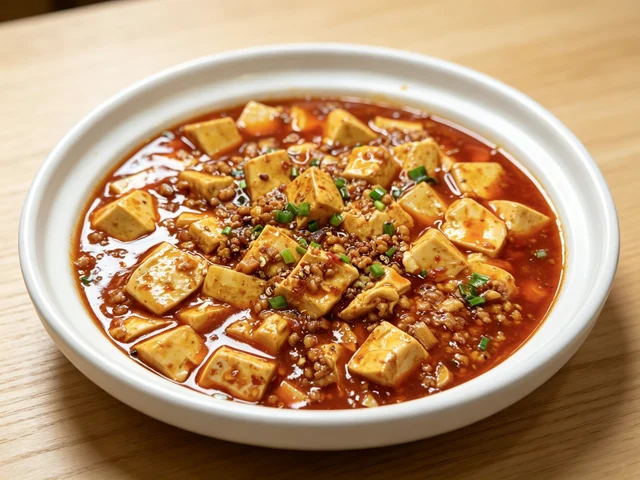
- Mapo Tofu
Tofu dish · Lunch or dinner, with rice
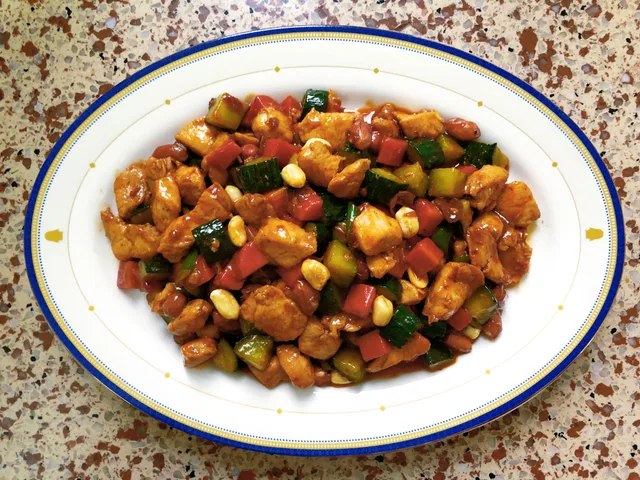
- Kung Pao Chicken
Chicken stir-fry · Lunch or dinner, with rice
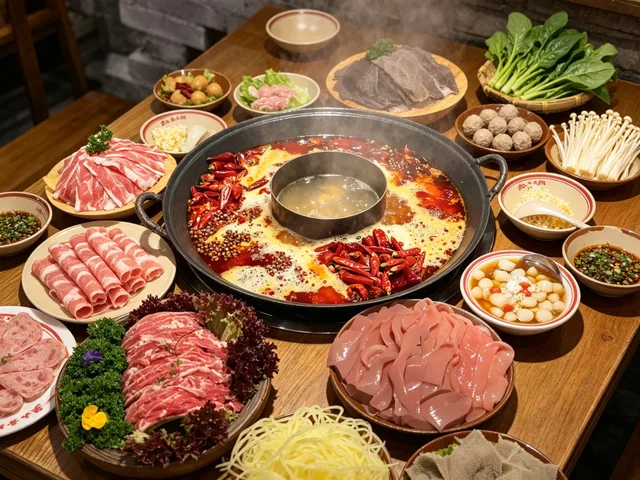
- Sichuan Hot Pot
Hot pot · Shared meal
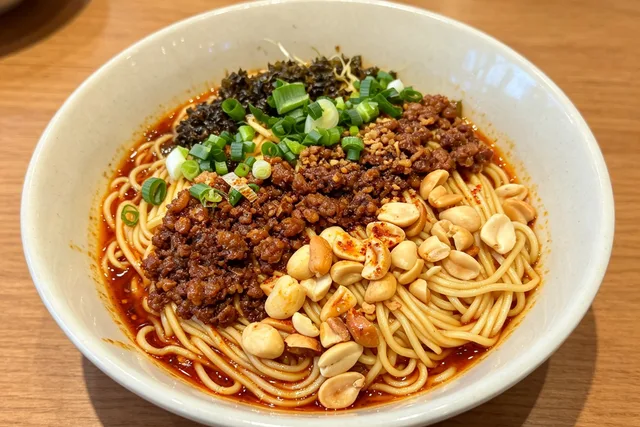
- Dan Dan Noodles
Small dressed noodles · Snack
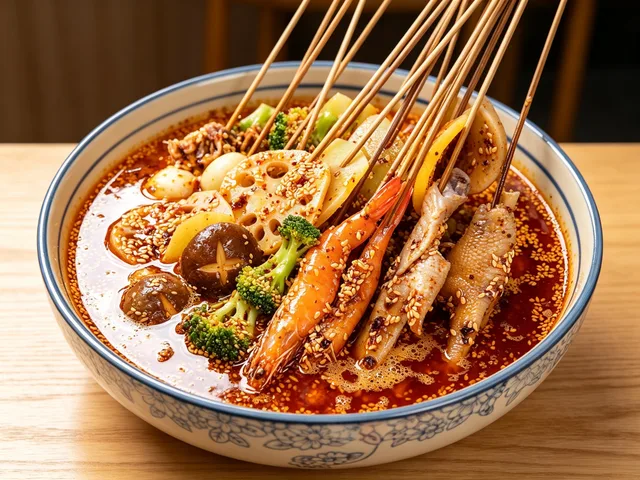
- Bobo Chicken
Cold skewers · Snack
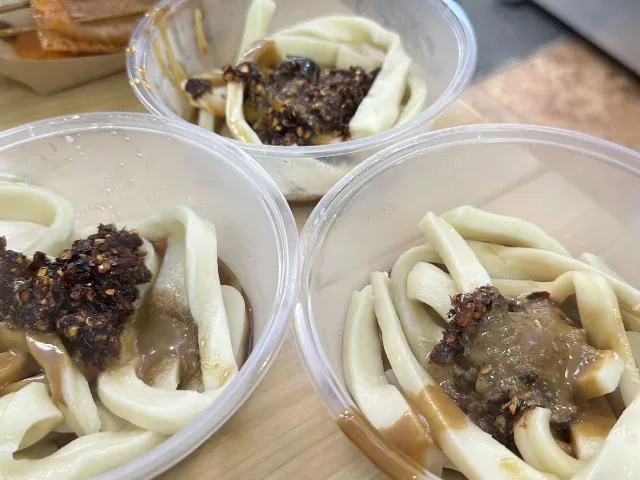
- Sweet Water Noodles
Thick dressed noodles · Breakfast or a snack
FAQ
Questions about Malatang
What is malatang?
A Chinese dish where you choose your own vegetables, meat and noodles, which are boiled in a spicy or bone broth and served with sauces. You usually pay by weight.
What does malatang mean?
Numbing (from Sichuan pepper), spicy (from chili) and scalding hot.
Is malatang Chinese or Korean?
Chinese. It comes from Sichuan and was spread across China by northeastern chains. It became popular in South Korea from about 2017.
What is the difference between malatang and hot pot?
In hot pot you cook at the table and share a pot. Malatang is cooked for you in the kitchen and served as one bowl per person.
What is the difference between malatang and mala xiang guo?
Malatang is boiled and served in broth. Mala xiang guo, mala dry pot, is stir-fried in a spicy sauce with no soup.
Malatang or maocai?
They are very close. Maocai is the Chengdu name and is usually eaten with rice; malatang usually has noodles in the bowl.
Is malatang very spicy?
Sichuan and Leshan versions can be. Northeastern chain malatang uses bone broth and sesame paste, and you choose the spice level.
Why is malatang so expensive?
Most chains charge by weight, and dense or wet ingredients such as gluten, fish tofu and frozen items add weight quickly.
What is the white soup in malatang?
Bone broth. Yang Guofu’s version adds milk powder and rock sugar, which makes it milky and slightly sweet.
What is Tianshui malatang?
The Gansu style that went viral in 2024: boiled food tossed with Gansu chili oil and sesame paste, with fried potato balls and handmade noodles.
Sources
Sources and further reading
- 1 Fuchsia Dunlop, The Food of Sichuan (川菜), Chinese edition, glossary of food terms (in Chinese)CITIC Press (2020), translated by He Yujia
- 2 Wutongqiao, Leshan: a whole industry from a skewer of malatang (in Chinese)Sichuan Daily (川观新闻), 28 August 2026 ↗
- 3 Hot and spicy: how the once humble malatang conquered the countryThe World of Chinese (April 2024) ↗
- 4 Tanghulu and malatang remain popular despite Korea-China tensionsKorea JoongAng Daily (16 August 2023) ↗
- 5 Zhang Liang versus Yang Guofu: how northeastern malatang took over China (video, in Chinese)IC Shi Yan Shi (IC实验室), Bilibili (2020) ↗
- 6 A Leshan malatang shop at 0.4 yuan a skewer, with its dry dip (video, in Chinese)Bao Shi Tian Xia (包食天下), Bilibili (2024) ↗
- 7 Scale-pan malatang in a Chengdu back-street restaurant (video, in Chinese)Jun Zai Xi’an (君在西安), Bilibili (2022) ↗
- 8 A 32-yuan plate of Tianshui malatang, priced by weight (video, in Chinese)Rou Rou Da Sou Suo (肉肉大搜索), Bilibili (2024) ↗
- 9 Malatang at 25.8 yuan a jin, meat and vegetables one price (video, in Chinese)Da Bing Tan Dian (大兵探店), Bilibili (2023) ↗
Last updated November 2026