
01
Rice cooked until it disappears
Cantonese congee is judged first on the base: smooth, fragrant and thick enough to coat a spoon.
At its simplest congee is rice and water, about one part to ten, simmered until the grains swell, split and dissolve into a smooth, pale porridge. Hong Kong congee cooks put the regional differences simply: northern Chinese eat plain congee with side dishes, Teochew congee is more like a rice soup, while Cantonese cooking puts the congee itself at the center. A good bowl keeps a little bite from the rice, has an even consistency and smells of the grain. A traditional Cantonese base is simmered for about four hours, until it is almost as smooth as a rice paste; people outside Guangdong often find it too thick and prefer to see the grains.
The English word is not Chinese at all. According to Merriam-Webster, congee comes from Tamil kañci, “water from cooked rice.” In Chinese the word is zhou, 粥; in Chaoshan, as in classical Chinese, it is mi, 糜.
02
Shenggun and lou fo: the two kinds
Every Cantonese congee shop sells two kinds, and the menu tells you which.
Lou fo juk, 老火粥, “old-fire congee,” has its ingredients added to the base while it is still cooking, so they melt into it: dried fish and peanuts, or dried greens and pork, are classic. Shenggun juk, 生滚粥, “raw-rolled congee,” starts from a finished base; raw fish, meat or liver is dropped in and cooked to order in a small pot at a rolling boil, so it stays tender and gives its flavor to the bowl. Shenggun is the style Cantonese diners prize most, and it is what most congee shops make.
Trusty Congee King in Wan Chai, the first congee shop in the MICHELIN Guide Hong Kong and Macau’s Bib Gourmand list, shows how far the base can go. When it opened in 2000 its broth was made from five or six kinds of fish weighing 18 catties in all, with raw rice added and cooked for four hours; crucian carp is the only fish it names. Because congee kept warm grows thicker by the hour, the shop cooks two or three batches two or three times a day. Its bestseller is scallop and pork liver congee, the scallop left half-cooked, and diners order a plate of crisp grass-carp skin, taken from the back of the fish, on the side.
| Bowl | What goes in |
|---|---|
| Century egg and pork 皮蛋瘦肉粥 | Century egg and lean pork; Hong Kong shops often use pork shoulder salted, steamed and shredded |
| Boat congee 艇仔粥 | Fish slices, squid, roast duck, jellyfish, fried pork skin, peanuts, scallion and crisp fried wafers |
| Fish slice 鱼片粥 | Raw fish slices cooked to order in the base |
| Scholar’s congee 及第粥 | Pork offal; its name means “passing the imperial exam” |
| Pork offal 猪杂粥 | Mixed pork offal cooked to order |
| Scallop and pork liver 带子猪润粥 | Trusty Congee King’s bestseller in Hong Kong |
03
Boat congee on the Pearl River
Ting zai juk, “little-boat congee,” was sold from boats.
It was made by the Tanka, the boat people who for centuries lived on the rivers and coast of Guangdong, Guangxi and Fujian and were long barred from settling on land, wearing shoes or marrying land dwellers; the Qing removed their status as a debased caste in the Yongzheng reign. At night along the Xihao canal and Lychee Bay in Xiguan, flower boats pulled up to the bank, and the congee boats among them flew a yellow flag with a large character 粥 on the stern. The Guangzhou scholar Huang Tianji remembers them from his childhood: a young woman rowing at the stern calling “Boat congee! Raw-fish congee!”, an older boatman cooking at the bow, customers eating in their own boats or under the trees on the bank, and the boatman saying sing wai, “thank you,” as the boat slid off.
The first boat congee was whatever the boat had caught that day, fish, prawns, crab, clams and snails all in one pot. Shops on land copied it and fixed the recipe: fish slices, roast duck, jellyfish, lettuce and fried peanuts, later shrimp, pork intestine, char siu and puffed pork skin, served with scallions and crisp fried wafers. Huang gives the secret of a good bowl: a base made by cooking the rice in pork-bone stock, and raw fish laid in the bottom of the bowl so the boiling congee cooks it. Guangzhou tells two legends about congee and virtue: a boat girl named Jinshui, taught by a carp she had set free to sell fish congee to pay for her father’s medicine, and a scholar whose gratitude gave scholar’s congee its name. Huang calls them tall tales that say something true about the city’s values.
04
Chaoshan baimi and a table of pickles
In eastern Guangdong congee goes the other way: thin, clean and eaten with a dozen small plates.
Chaoshan people call plain congee baimi, 白糜, white mi, an older word found in ancient dictionaries, and many of them eat it at two meals a day, even after a banquet. Sheng Hui, who married into a Chaoshan family, describes the method: plump northeastern pearl rice is boiled hard until the grains burst, which the Teochew call “opening the bud,” then simmered gently and, once done, left covered to steam in its own heat until a skin of rice oil forms on top, thick enough to lift with chopsticks. That skin is what Chinese medicine calls rice oil, and the Qing physician Wang Mengying wrote that it could stand in for ginseng broth. Chaoshan baimi is meant to be thin, not thick like Cantonese congee. Sweet-potato congee, made with the local red-skinned Houlonghong sweet potato, is the home favorite, homely enough to serve as a courting line: would you come home and eat sweet-potato congee with me?
The habit runs deep. Chaoshan tradition credits Wu Fugu, a Northern Song scholar, with promoting congee as the way to keep well; from the Qing dynasty on, as the population grew and grain ran short, cooking plain congee that tasted good and still filled people up became a household skill.
The point of baimi is what comes with it: zaxian, 杂咸, “assorted salty things,” of which there are more than a hundred kinds. Market stalls sell them in tiny portions, five kinds for five yuan. Salted mustard greens are pickled on the day the big mustard plants are cut, salted twice and seasoned with galangal. Olive vegetable starts with olives crushed to draw out the astringency, fried, then simmered with mustard leaves over a low flame for ten hours. Dongcai, the preserved cabbage that also goes into claypot congee, is cabbage hearts fermented with salt and garlic for eight months, a method that came from Tianjin. The most prized is caipu, salted radish, one of the “three treasures of Chaozhou”: with a plate of radish omelet, a local saying goes, three bowls of congee are not too many. Caipu kept for fifteen years or more turns black and oily; such old caipu sells for several hundred yuan a jin, and a pot of old-caipu congee in a Chaoshan restaurant costs more than a hundred.
Congee with something added is called fangmi, fragrant congee. Its base is made from rice just cooked and drained, so the grains stay separate, a method with hard times behind it: a poor family gave the drained rice to whoever did the heavy work, and the women and children drank the thin liquid left behind. The most famous fangmi is claypot congee. According to a Guangdong cookery history, Chaoshan cooks learned the claypot from the Cantonese in the Republican era; after 1978 claypot congee became the business Chaoshan migrants most often opened in Guangzhou, in deep two-handled pots big enough for a table. The rice goes into stock, is boiled and then stirred constantly so it does not catch, “there is no trick to congee, just thirty-six stirs,” and finished with preserved Tianjin cabbage, dried shrimp, white pepper and scallion oil. Seafood fills the pot: snakehead, prawns, mud crab, oysters added only at the last minute.
Each town has its own. In Puning, fish congee is cooked to order and regulars rank the cuts: the head first, then the belly, then plain slices, with pork jerky, sand worms, dried shrimp and mushrooms added. Chenghai makes a congee with crisp crackling left from rendering lard, and there is one cooked with salted squid.
| Pickle | What it is |
|---|---|
| Xiancai 咸菜 | Mustard greens salted twice on the day they are cut, pale gold and crunchy |
| Caipu 菜脯 | Sun-dried, salted radish; aged fifteen years it turns black and oily |
| Olive vegetable 橄榄菜 | Chinese olives and mustard leaves cooked in oil for about ten hours |
| Dongcai 冬菜 | Fermented cabbage with garlic, a method from Tianjin; also seasons claypot congee |
| Caipu omelet 菜脯蛋 | Diced radish in an omelet; “three bowls of congee are not too many” |
05
Congee and rice rolls for breakfast
In Guangzhou, rice rolls with shenggun congee is what youtiao and soy milk are in the north.
Breakfast shops sell a plate of rice noodle rolls with a bowl of congee as a fixed set, because, as a Guangdong cookery history puts it, people want something liquid in the morning. In 2026 a Honglicun branch in Shenzhen charged 12 yuan for a bowl of lean pork and greens congee and 19 yuan with a plate of egg rice rolls; at a Guangzhou morning market in 2025, a bowl of boat congee cost 8 yuan. Congee is also late-night food: Shantou is known for its night congee, eaten on summer evenings with braised meats, cold poached fish and raw-marinated crab.
| Where | What | Price |
|---|---|---|
| A Guangzhou morning market, 2025 | Boat congee | 8 yuan |
| Honglicun, Shenzhen, 2026 | Lean pork and greens congee | 12 yuan |
| Honglicun, Shenzhen, 2026 | Congee with a plate of egg rice rolls | 19 yuan |
| A Chaoshan market stall | Five kinds of zaxian | 5 yuan |
| Chaoshan restaurants | A pot of aged-caipu congee with minced pork | over 100 yuan |
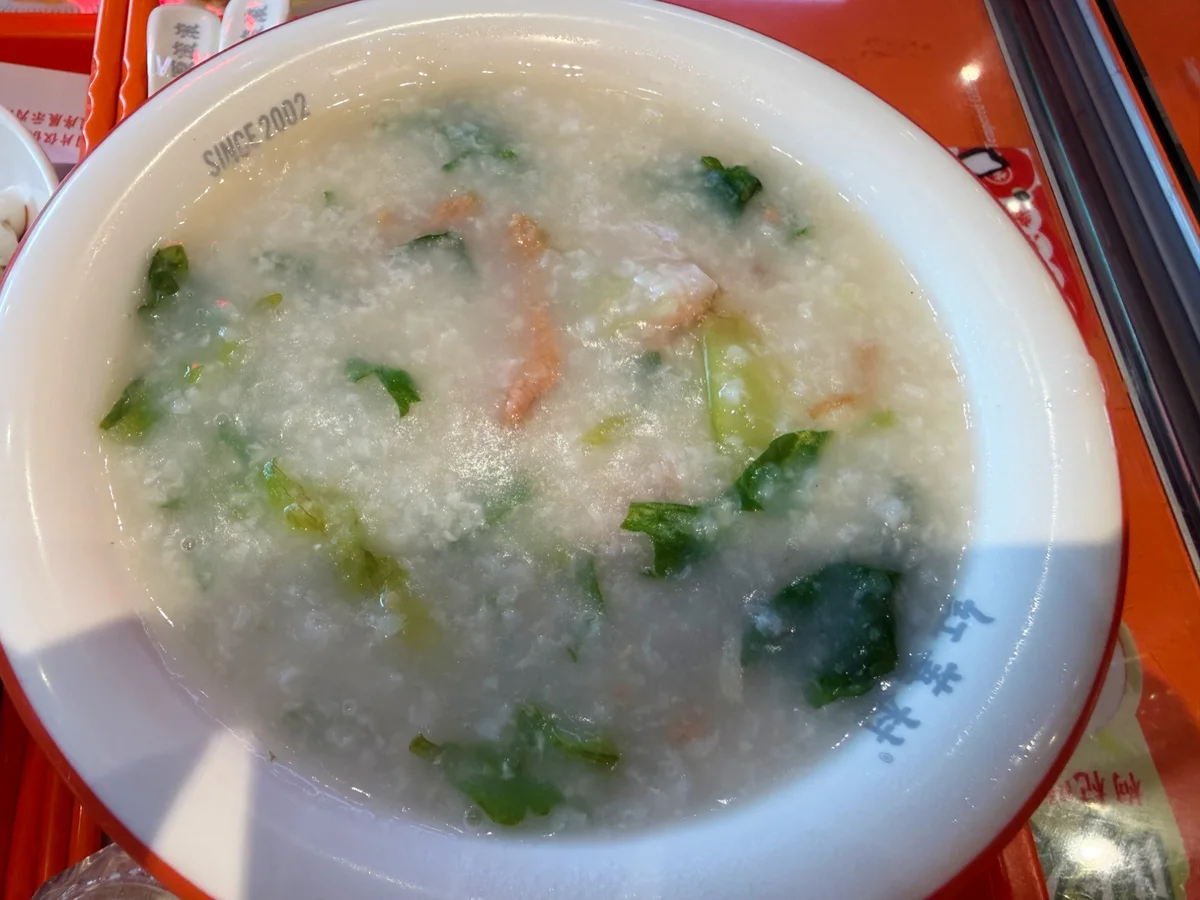
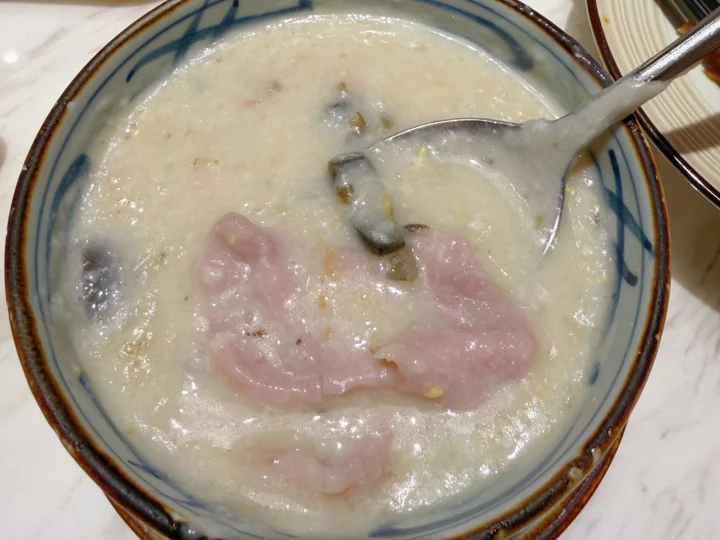
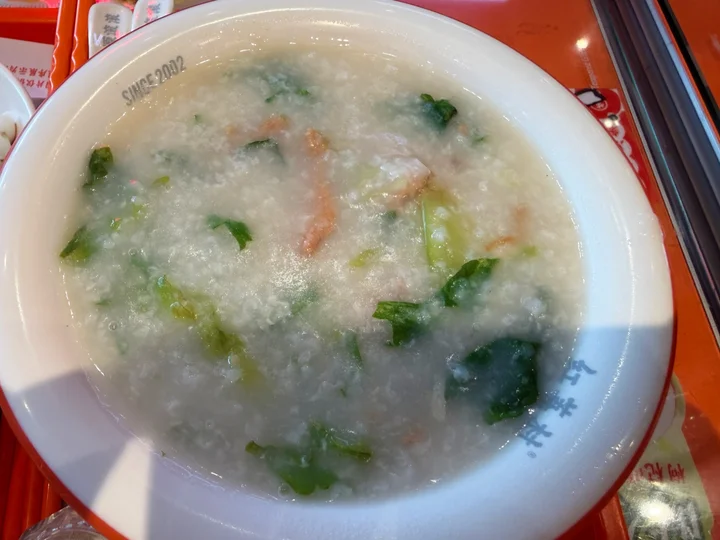
Two bowls of Cantonese congee in Shenzhen, 2026
Our own photographs from two meals in Shenzhen in 2026: century egg and pork congee at Tao Tao Ju, and lean pork and greens congee at Honglicun.
06
How to order
Choose the kind, then the topping, then something crisp to go with it.
Ask whether the shop’s congee is shenggun: a raw topping cooked to order should arrive tender, the liver still soft, fish slices just set. Century egg and pork is the safest first bowl; boat congee gives you a little of everything; fish slice congee shows off a good base. Add something crisp, fried dough sticks, crisp fish skin or a plate of rice rolls, and eat it hot, because congee thickens as it cools. In a Chaoshan restaurant, order a pot of baimi and choose the pickles, or a claypot congee for the table.
07
Century egg and pork congee at home: the quick version
For 3 to 4 bowls: 150 g rice, about 1.2 liters water, 2 century eggs, 150 g lean pork, ginger, scallion, salt, a little Shaoxing wine, white pepper, a pinch of cornstarch, a few drops of oil.
- 1. Soak the rice
Rinse the rice and soak it, 15 minutes at least or up to three hours for a smoother base.
- 2. Start the base
Bring rice and water to the boil in a heavy pot or clay pot, stirring until it boils so nothing catches. Add a few drops of oil, half-cover and simmer, stirring now and then, 25 to 40 minutes or longer for a Cantonese texture.
- 3. Prepare the pork
Cut the pork into thin shreds, rinse and drain. Mix with shredded ginger, salt, a splash of wine, a pinch of sugar and white pepper until slick, then a little cornstarch slaked in water.
- 4. Prepare the egg
Steam the century eggs for two or three minutes to set the yolk and soften the alkaline smell, peel and dice them.
- 5. Finish
Add the egg and simmer five minutes. Season with salt. Drop in the pork a little at a time, stirring so it does not clump; turn off the heat as soon as it changes color and let the hot congee finish it.
- 6. Serve
Scatter scallion and a few drops of sesame oil. Eat at once.
Congee keeps thickening off the heat. To reheat it, loosen it with boiling water first. For a creamier Cantonese base, the century egg page has a slow version boiled uncovered for about 70 minutes.
08
More for a Cantonese morning
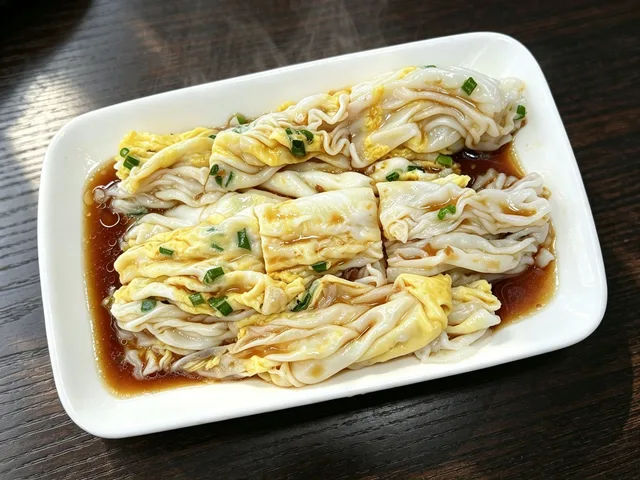
Rice noodle rolls
The other half of the Guangzhou breakfast set.
Read about rice noodle rolls →Cantonese yum cha
Tea, dim sum and a bowl of congee in a teahouse.
Read about yum cha →Chaoshan beef hot pot
Another Chaoshan table, built on fresh beef.
Read about Chaoshan beef hot pot →Guangdong classics
- Cantonese Yum Cha
Yum cha · Morning tea, weekends with family
- Rice Noodle Rolls
Steamed rice rolls · Breakfast, lunch, dinner or a late-night snack
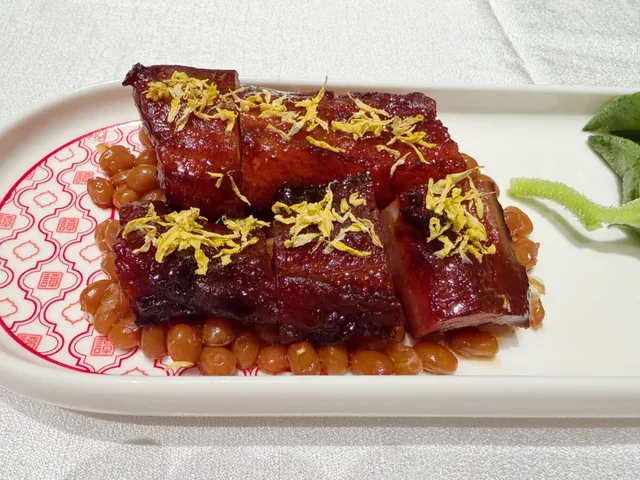
- Char Siu
Roast pork · Lunch or dinner, with rice
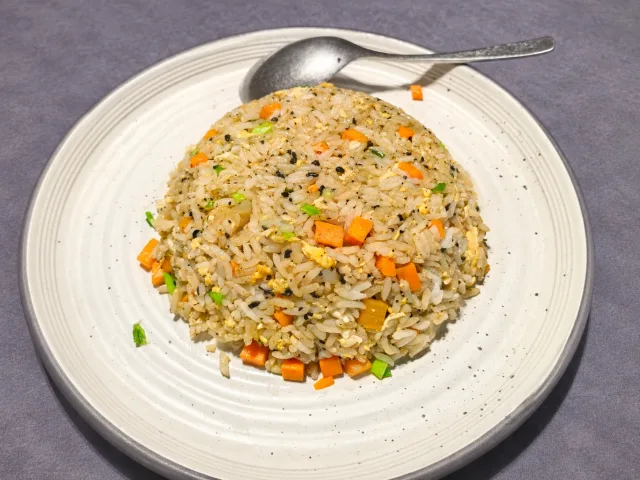
- Egg Fried Rice
Fried rice · Lunch, dinner, end of a meal
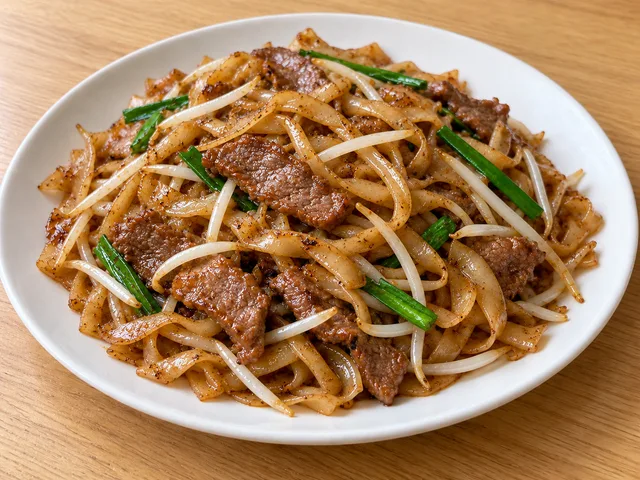
- Beef Chow Fun
Fried rice noodles · Lunch, dinner or late-night supper
- Mooncake
Festival pastry · Mid-Autumn Festival
FAQ
Questions about Congee
What is congee?
Rice simmered in plenty of water until the grains break down into a smooth porridge, often cooked with fish, meat or century egg.
What is the difference between shenggun and lou fo congee?
Lou fo congee has its ingredients cooked into the base; shenggun congee has raw fish or meat cooked to order in a finished base.
What is boat congee?
Ting zai juk, a Guangzhou congee first sold from boats by the Tanka boat people, with fish, squid, roast duck, jellyfish, pork skin and peanuts.
What is century egg and pork congee?
Cantonese congee with diced century egg and shredded lean or salted pork, one of the most common congee bowls.
Where does the word congee come from?
From Tamil kañci, “water from cooked rice.” In Chinese it is zhou, and in Chaoshan mi.
How is Chaoshan congee different?
Chaoshan baimi is thin and clean, with intact grains, and is eaten with many salty pickles; Cantonese congee is thick and smooth.
What is the rice-to-water ratio for congee?
About one part rice to seven or eight parts water for home congee, up to one to ten for a long-cooked Cantonese base.
How long does Cantonese congee cook?
A traditional base takes about four hours; a home pot is ready in 30 to 40 minutes.
What do you eat with congee?
In Guangzhou, rice noodle rolls or fried dough sticks; in Chaoshan, salty pickles, radish omelet and braised meats.
Is congee a breakfast food?
Yes, and also a late-night one: in Guangzhou it comes with rice rolls in the morning, and Shantou is known for night congee.
Sources
Sources and further reading
- 1 Sheng Hui, Yuecai Ji (粤菜记), chapters “A pot of congee like a clear breeze and bright moon” and “Congee with zaxian” (in Chinese)People’s Literature Publishing House (2023)
- 2 Huang Tianji, “A bowl of congee and a city,” in Fei Yong and Han Bangwen (eds.), Guangzhou She Hua Lu (广州舌华录) (in Chinese)Guangzhou Publishing House (2019)
- 3 Zhongguo Yuecai Gushi (中国粤菜故事), chapters on boat congee, rice noodle rolls and Chaoshan claypot congee (in Chinese)Guangdong Vocational and Technical Teaching Research Office; Guangdong Science and Technology Press (2022)
- 4 Trusty Congee King: shining a light on Cantonese congeeThe MICHELIN Guide Hong Kong and Macau (2018) ↗
- 5 Congee: definition and etymologyMerriam-Webster Dictionary ↗
- 6 A Cantonese chef’s century egg and pork congee: the four-hour base, soaking, salted or fresh pork (video, in Chinese)Fan Da Chu Lai Le (范大厨来了), Bilibili (2024) ↗
- 7 Century egg and pork congee at home: quantities and timing (video, in Chinese)Pin Wei Chu Ji (品味厨记), Bilibili (2022) ↗
- 8 Breakfast at a Guangzhou morning market: 8-yuan boat congee, 2025 (video, in Chinese)Dan Niu Shi Zou Qi (丹牛食走起), Bilibili ↗
Last updated November 2026