Crisp skin begins long before the final roast
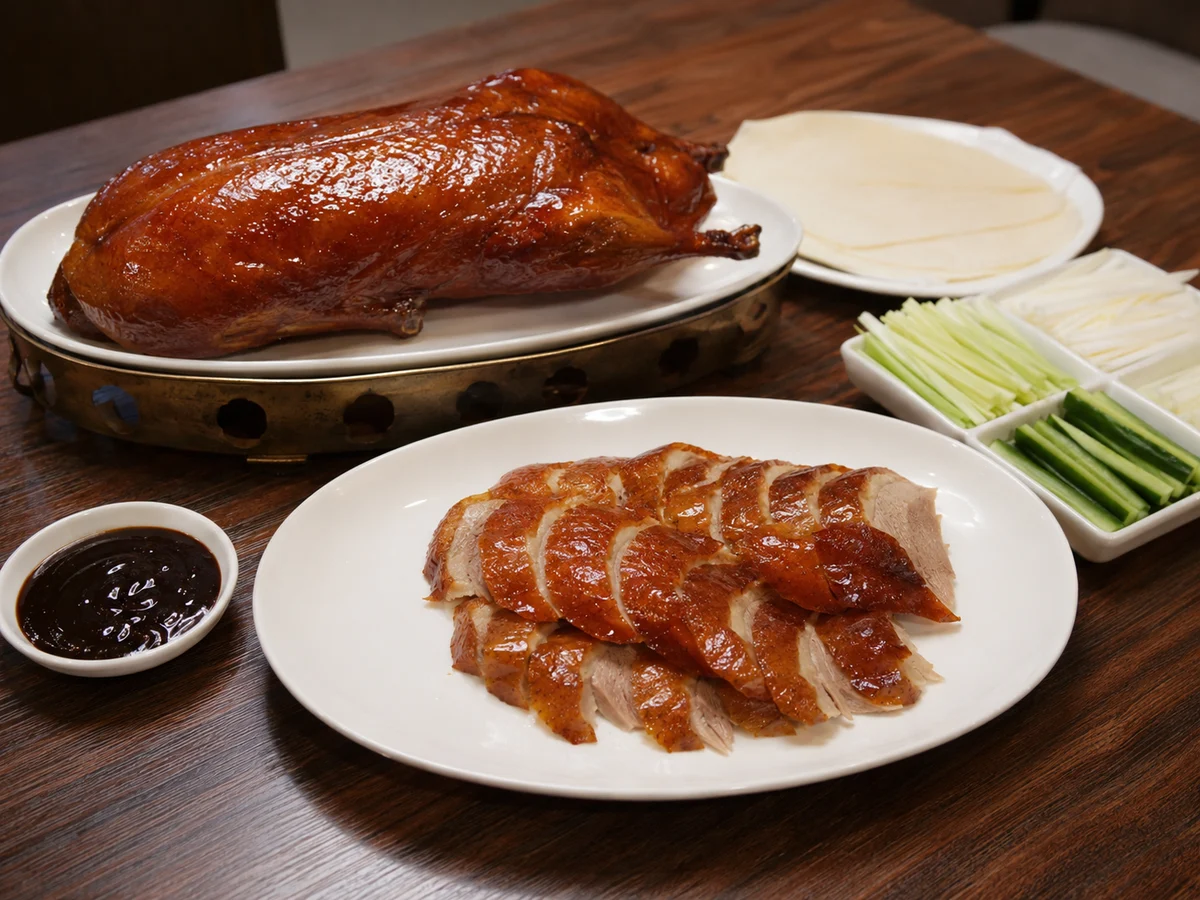
Beijing roast duck, widely called Peking duck in English, is a specialist restaurant tradition built around the controlled separation and crisping of skin. A prepared duck is inflated so the skin lifts from the body, scalded, glazed with maltose, thoroughly air-dried and roasted whole. The finished bird should have a glossy date-red surface, paper-thin crisp skin and juicy meat. It is carved in front of diners and eaten immediately in thin pancakes with scallion, cucumber and sweet fermented-flour sauce.
Common ingredientsA whole meat duck, air and hot water for skin preparation, maltose-based skin wash, thin pancakes, scallion, cucumber and sweet fermented-flour sauce; sauce and pancakes contain wheat.
01
Plan the booking, carving and second use of the duck frame
How to order it
Reserve at famous or busy specialist restaurants and ask whether ducks are roasted to order. Confirm whether your group needs a whole or half duck before choosing the rest of the meal. Ask whether the house uses a hanging oven or closed oven; both are historic Beijing schools. Eat the first carved pieces promptly—the skin loses its special brittleness as steam and sauce reach it. Use sauce sparingly at first so you can taste the duck and rendered skin. Ask whether the frame can become soup or another course and whether that service costs extra.
How to eat and pair it
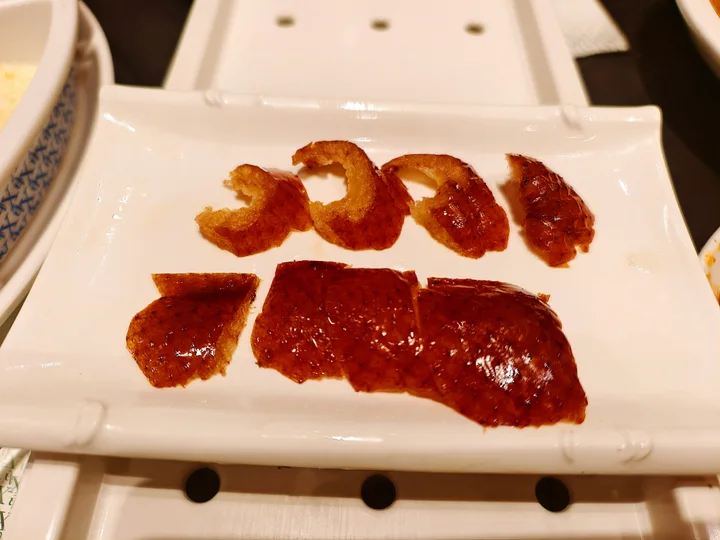
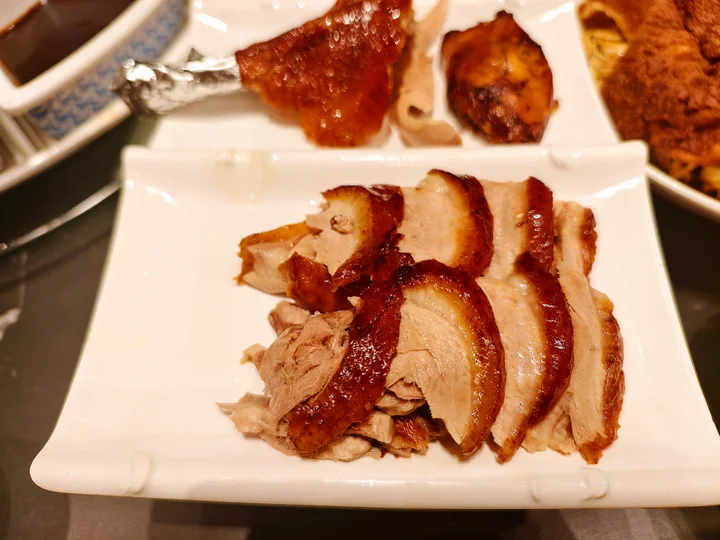
A Beijing roast-duck dinner unfolds in stages. The whole bird may be shown before a carver works beside the table. Skin-forward pieces often arrive first; some diners touch them to white sugar to notice their fragile crispness. Slices combining skin and meat follow with warm pancakes, sauce and vegetables. Diners build small wrappers rather than overstuffed rolls, preserving the contrast between hot duck, cool cucumber and pungent scallion. Some restaurants then return the bones as a pale soup or another cooked dish. The craft is as much about timing and service as roasting.
Easy mix-ups
Misconception: Peking duck is simply Cantonese roast duck served with pancakes. In practice: Beijing roast duck has distinct preparation, oven schools, carving and wrapper service. Cantonese roast duck is seasoned and served within the southern siu-mei tradition. Misconception: Only hanging-oven duck is authentic. In practice: Hanging-oven and closed-oven roasting are both historic Beijing traditions with recognized heritage lineages.
Set the duck portion before filling the rest of the table
Confirm half or whole, carving, pancakes, condiments and frame use first. Only then add vegetables, soup or another staple according to the actual number of diners.
Follow the carving sequence while the skin is hot
Skin-focused pieces and the first slices lose crispness fastest. Build thin pancakes as carving continues instead of spreading every wrapper open or waiting for a long photo session.
02
Judge the skin, rendered fat, meat, carving and pancakes together
Service timing is part of roast-duck quality
A well-roasted bird can still arrive poorly if carving is slow, pancakes are cold or sliced meat waits under steam. The dining room must protect the oven’s work.
Piece count matters less than useful carving
House traditions may advertise a number, but coherent skin pieces and slices that keep skin, fat and meat connected reveal more than hitting a numerical target.
Two platters can explain the duck more clearly
Some services separate crisp skin or skin-rich pieces from meatier slices. Tasting in that order makes rendering and carving choices visible before sauce and wrappers dominate.
Beijing-type duck
Specialist kitchens seek a plump bird with an even fat layer that can render beneath the lifted skin.
Air and hot-water preparation
Inflating and scalding the carcass separates and tightens the skin before drying.
Maltose glaze
A thin sugar glaze supports the lacquered date-red color and brittle surface; it should not become a candy coating.
Fruitwood or retained oven heat
Hanging ovens expose ducks to an open fruitwood fire, while closed ovens cook with stored heat after the fuel has burned.
Hanging-oven roast duck
The duck hangs in a doorless oven over an open fire, traditionally fueled by fruitwood. Strong radiant heat renders fat and produces an especially crisp, aromatic skin; the Quanjude tradition is its most famous representative.
Closed-oven roast duck
The oven is preheated, the fire dies down and the duck cooks in retained heat without an open flame. This older Beijing school, represented by Bianyifang, is often valued for especially tender, juicy meat.
Skin-first service
Carvers may separate especially crisp skin pieces for dipping in sugar before serving slices that combine skin and meat.
- A glossy date-red bird shown and carved while hot
- Skin that breaks cleanly rather than bending like leather
- Rendered fat without greasy, flabby layers beneath the skin
Two plates explain the carving sequence
At many specialist restaurants, the carver serves the crispest skin first, followed by slices that keep skin, fat and meat together. White sugar commonly comes with that first plate. The warm, brittle skin carries both savory roast flavor and rich duck fat; the sugar melts against it, creating one of the most memorable bites of the meal. The meatier slices then go into thin pancakes with sweet fermented-flour sauce, scallion white and cucumber.
03
From inflation to carving: how crisp skin is built step by step
The skin is inflated away from the body, scalded, glazed and dried under controlled conditions. Hanging ovens use an open fruitwood fire, while closed ovens use retained heat; the hot duck is then carved into skin-forward and skin-with-meat slices for immediate wrapping.
Inflation, scalding and drying prepare the skin together
Air separates skin from flesh, hot water tightens the surface and drying removes moisture that would become steam. The final roast can only crisp what these earlier steps prepared.
Hanging and closed ovens are different systems, not a simple ranking
They manage stored and direct heat differently and support distinct restaurant lineages. Both should be judged by rendered fat, crisp skin and moist meat rather than brand mythology alone.
04
Imperial kitchens, city restaurants and two oven lineages shaped the dish
Roast duck became a defining Beijing banquet dish through imperial and commercial kitchens. Modern Beijing recognizes both the retained-heat closed-oven menlu lineage associated with Bianyifang and the open fruitwood-fired gualu lineage associated with Quanjude; neither school cancels the other.
Tableside presentation and carving extend the oven craft into service. Skin-forward pieces may come first, followed by skin-and-meat slices wrapped sparingly in warm pancakes with scallion, cucumber and sweet flour sauce; the frame may return as soup or another separately priced course.
05
How to say Beijing Roast Duck—and what the name tells you
Pronounced běi jīng kǎo yā. Menus may call it Peking duck, Beijing duck, hanging-oven roast duck, closed-oven roast duck.
Běijīng names the city, kǎo means roast or bake, and yā means duck. Peking duck remains deeply established on English menus, while Beijing roast duck follows modern pinyin. Neither name specifies the oven school, so a specialist restaurant may still explain whether it uses a hanging oven or a closed oven.
The English word “duck” can also cause confusion with Cantonese roast duck. Beijing service emphasizes skin separation, drying, whole roasting, tableside carving, thin pancakes and sweet fermented-flour sauce. Cantonese roast duck belongs to the southern siu-mei tradition, is seasoned differently and is usually chopped bone-in. Similar lacquered color does not make the two dishes interchangeable.
Peking duck and Beijing roast duck name the same city tradition
Peking reflects an older English romanization. Generic crispy duck and Cantonese roast duck describe other techniques, so the names are not automatic synonyms.
Tianmianjiang is not always the same as hoisin sauce
English menus often use familiar shorthand, but Beijing service commonly uses a sweet fermented-flour sauce with its own composition. Diners with wheat or soy restrictions should ask about the actual condiment.
The restaurant sequence protects the work of the oven
At a specialist restaurant, confirm the reservation, duck size and half-or-whole options before building the rest of the meal. One whole duck can anchor a table of three or four when vegetables and another light dish are present, but restaurant birds and appetites vary. Ordering several other rich centerpieces at the same time leaves the carved duck cooling while the table struggles to finish everything.
Once carving starts, eat in the order the restaurant presents. Skin-forward pieces may be served first, sometimes with white sugar, so diners can notice their brittle texture before steam softens them. Later slices combine skin and meat for pancakes. Use a thin layer of sweet fermented-flour sauce and a little scallion and cucumber; an overfilled wrapper hides both the roast aroma and the carver’s work. Ask in advance whether the frame can become soup or another course and whether that service is included.
- The whole bird should be shown hot with an even date-red surface, not a wet or painted-looking glaze.
- A deliberate carve produces both skin-focused and skin-with-meat pieces rather than thick, ragged chunks.
- Warm flexible pancakes and promptly replenished garnishes matter because the duck should not wait for its accompaniments.
Sources
Sources and further reading
- Technical standards for traditional hanging-oven and closed-oven Beijing roast duckPeople’s Government of Beijing Municipality ↗
- Beijing national intangible-cultural-heritage directoryPeople’s Government of Beijing Municipality ↗
- Bianyifang closed-oven roast duckPeople’s Government of Beijing Municipality ↗
- Quanjude hanging-oven roast duck heritagePeople’s Government of Beijing Municipality ↗