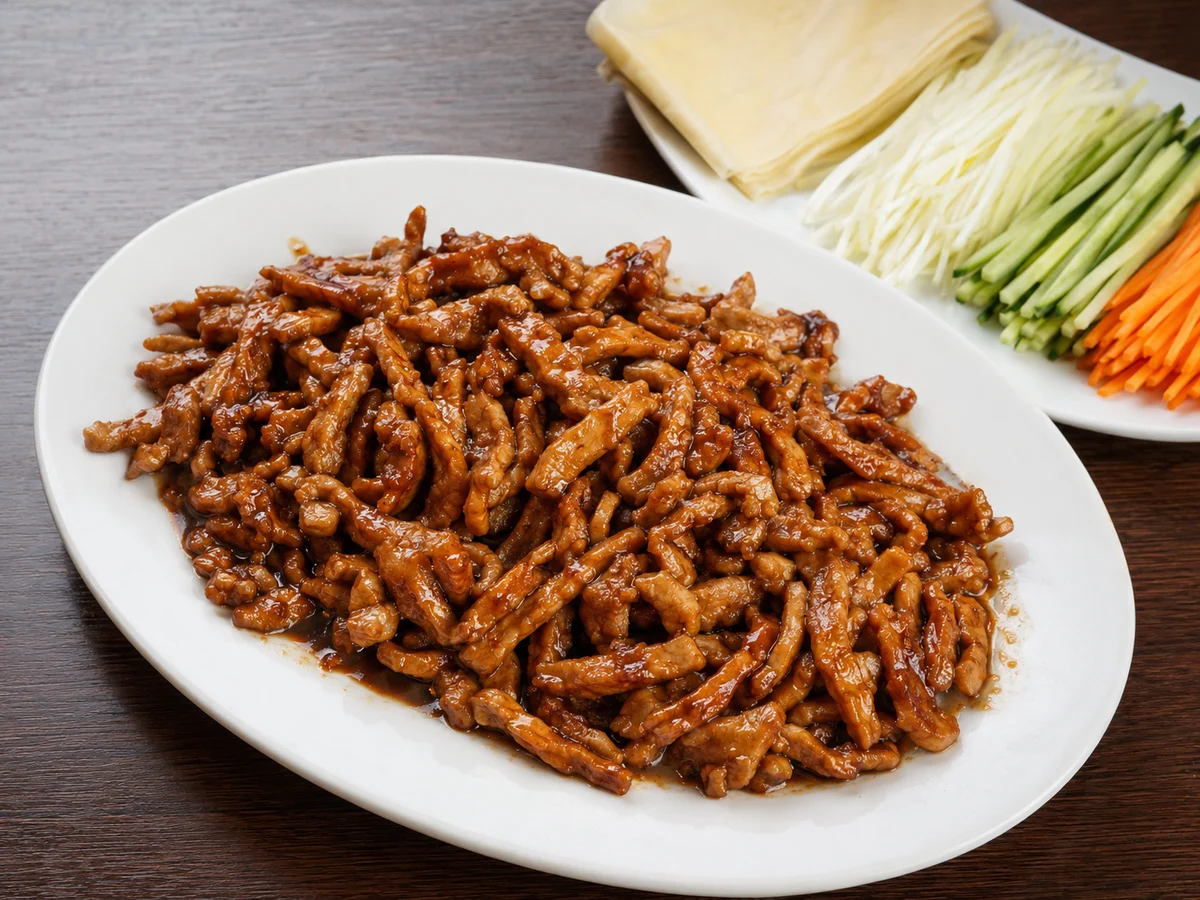
Meet shredded pork in Beijing-style sweet bean sauce
Fine pork shreds are rapidly stir-fried, then glazed with tianmianjiang, the sweet fermented wheat-flour sauce that gives the dish its mahogany sheen. Raw scallion shreds and tofu-skin wrappers turn the rich meat into crisp, aromatic hand-held bites.
Common ingredientsPork tenderloin, sweet flour sauce, scallion, oil and tofu skin or thin pancakes.
01
Confirm four details before ordering
How to order it
Wrap a small amount rather than overfilling. Confirm whether the wrapper is tofu skin or a wheat pancake. Take pork and raw scallion together so sweetness and pungency balance. Order a fresh vegetable or clear soup beside the concentrated sauce. Ask about wheat and soy if allergies matter: both the sauce and wrapper can be relevant.
How to eat and pair it
The plate is assembled at the table. Beijing tourism sources describe it as both Beijing-style and connected with Shandong sauce-explosion technique, which fits the capital’s broader culinary history. Each diner lays scallion and pork on a wrapper, making proportion part of the enjoyment. The meat should remain in distinct tender shreds while the sauce clings in a thin glaze. A large sweet puddle or very thick wrapper makes the dish feel heavy and erases the clean scallion contrast.
Easy mix-ups
Misconception: The name means shredded pork from Jiangsu’s Jingjiang city. In practice: jingjiang here refers to a capital-style sweet fermented sauce. The dish is also distinct from yuxiang shredded pork, whose seasoning is tangier and chilli-driven.
Order it as a shared savory dish and account for wrappers, allergens and neighboring flavors
A standard plate serves best with rice or wrappers plus a green vegetable, light soup or sharper cold dish. Avoid building a meal around several sweet brown sauces; pairing it with sweet-and-sour pork and candied yam makes the Beijing dish harder to read. If wrappers are included, ask whether refills cost extra and whether the listed portion assumes two or four diners. Families with children may appreciate the mild heat level, but “not spicy” does not mean low in sugar, sodium or allergens.
03
Hot pork, cooked sauce, raw scallion and wrappers create the contrast
A good wrapper is assembled for contrast, not packed like an oversized burrito
Start with a tofu-skin square or thin wheat pancake laid flat. Add a modest bundle of scallion and a narrow line of pork, then fold or roll firmly enough to contain the filling. The ideal bite has tender meat, warm fermented-sauce sweetness, raw scallion snap and a wrapper that contributes either soybean savoriness or soft wheat chew. Overfilling makes sauce run out and turns the wrapper into an obstacle. It also prevents diners from controlling the ratio, which is the point of serving the components separately. Taste one strip of pork before adding extra sauce. In a well-finished plate, tianmianjiang already coats the meat in a thin glaze; spooning more onto the wrapper can bury the pork and make every bite salty-sweet. Likewise, scallion is not a decorative pile. Its cool pungency cuts the glaze and keeps the dish from feeling heavy. Diners sensitive to raw allium can use less, but removing it entirely changes the structure. Cucumber sometimes appears as a milder crisp counterpoint, especially in modern service, though it should not release enough water to dilute the wrapper.
Pork tenderloin
Even fine shreds cook quickly and stay tender; slicing with the grain creates a different chew from cutting across it.
Tianmianjiang
Sweet fermented-wheat-flour sauce provides the defining color and savory sweetness. It commonly contains wheat.
Scallion
Raw white scallion shreds provide pungency and crunch rather than functioning as a decorative garnish.
Tofu skin or wheat pancakes
Restaurants use thin qianzhang sheets, small pancakes or another local wrapper; the menu should identify which.
Tofu-skin wrapper
Thin qianzhang sheets add a mild soybean aroma.
Pancake wrapper
Some restaurants use small wheat wrappers in a roast-duck-like format.
No-wrapper family plate
The pork and scallion can be eaten directly with rice, though tableside wrapping is the most recognizable restaurant presentation.
- Distinct pork shreds, not clumped meat
- Tender surface without raw starch
- Glossy sauce without a sugary puddle
04
Shredding, velvet stir-frying and sauce cooking must connect quickly
Pork is velveted and stir-fried, then coated quickly in glossy sauce and served over scallion.
Separated shreds and a glossy film distinguish the dish from pork simmered in brown sauce
Pork is cut against the grain into similar slender pieces so it cooks quickly and stays easy to wrap. A light marinade and starch coating can protect moisture during a brief oil pass or stir-fry. Finished shreds should remain distinct rather than clumping into a starch-bound mass, and lean meat should bend without feeling cottony. Very thick batons cook unevenly; hair-thin strands dry before the sauce is ready. The cook’s knife work therefore shapes both tenderness and how evenly each piece carries seasoning. Tianmianjiang is fermented and savory as well as sweet. Kitchens may loosen it, fry it briefly to deepen aroma and balance it with sugar, soy or stock, but the result should not taste like candy, ketchup or generic bottled hoisin. The final sauce must be reduced enough to cling without forming a puddle. A scorched aftertaste suggests the paste caught on an overheated wok; watery runoff suggests it never emulsified around the pork. Ask for less sweet only if the restaurant can rebalance the sauce, since simply halving the paste also removes fermentation and salinity.
Fast cooking and separate storage preserve what makes the plate worth ordering
At home, prepare wrappers, sliced scallion and serving plates before the pork enters the wok. The meat cooks in a short window, and the sauce needs only enough time to become fragrant and cling. Holding the finished pork over low heat dries it and tightens the glaze. Restaurant service follows the same logic: begin assembling wrappers while the plate is hot rather than waiting for every dish to arrive. If the pork reaches the table in one solid mound, loosen it gently with serving chopsticks instead of pouring liquid over it.
05
“Beijing sauce” is a flavor clue, not proof of palace origins
Jingjiang rousi is a recognized Beijing-style dish listed within the broader Jing cuisine repertoire. Thin pork is stir-fried in a glossy sweet fermented-flour sauce whose “jing” refers to the capital style.
Diners wrap the pork with shredded scallion in tofu-skin sheets or thin pancakes. The contrast is sweet-savory meat, pungent raw scallion and soft wrapper.
06
How to say Jingjiang Shredded Pork—and what the name tells you
Pronounced jīng jiàng ròu sī. Menus may call it Beijing shredded pork, jing jiang rou si, jīngjiàng ròusī, pork with sweet flour sauce.
Sources