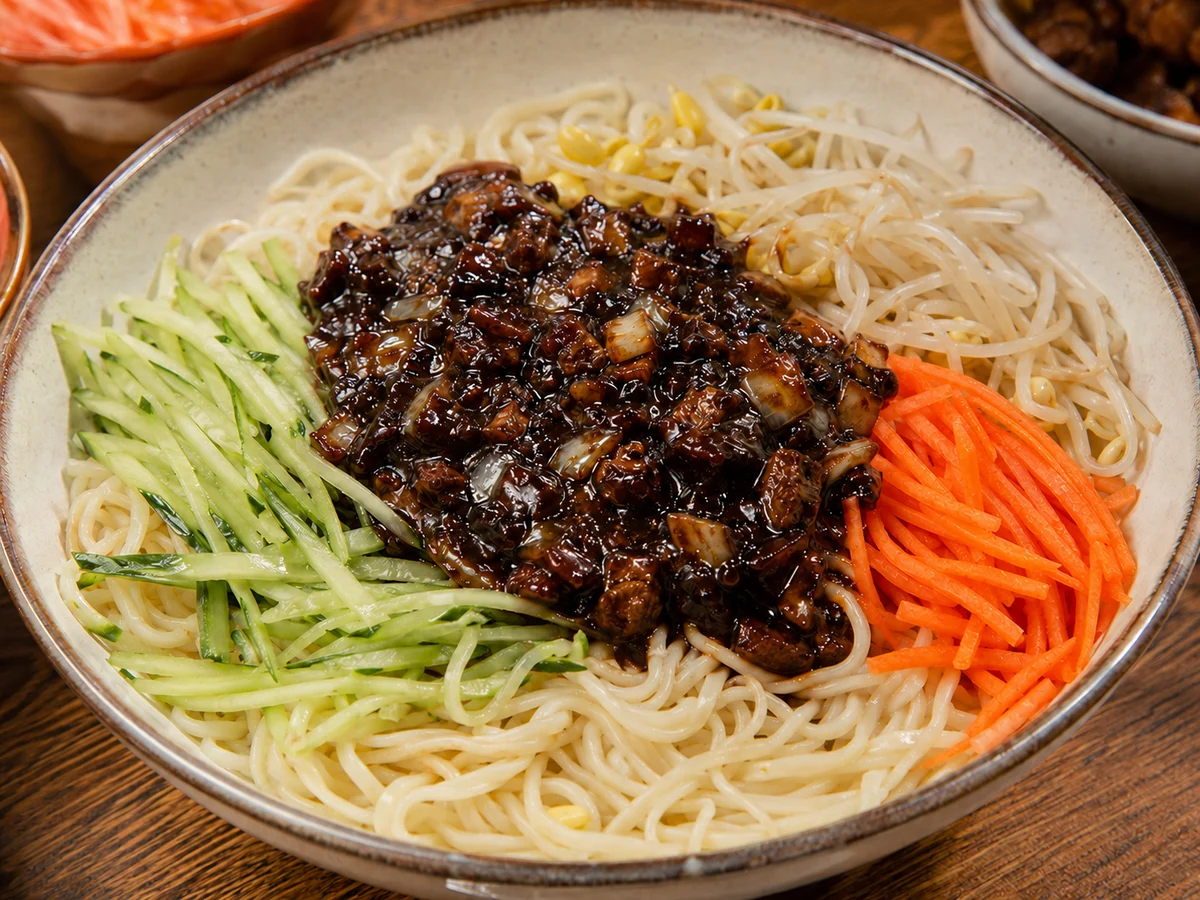
Noodles, fried sauce and vegetable garnishes form one bowl
A bowl of Beijing zhajiang noodles combines fresh wheat noodles, a small portion of pork-and-fermented-paste sauce and seasonal cai ma. Diners mix it themselves, adjusting sauce and vegetables bite by bite.
Common ingredientsFresh wheat noodles, yellow soybean and/or sweet fermented-flour paste, diced pork, oil and seasonal raw or blanched vegetable cai ma.
01
Choose the noodle temperature, then add sauce and garnishes gradually
How to order it
Add the sauce a spoonful at a time; a small bowl of “dry-fried” sauce is intentionally concentrated. Choose guo’er tiao—hot noodles straight from the pot—or ask for rinsed noodles in warm weather if the shop offers the distinction. Mix thoroughly, lifting from the bottom until sauce lightly coats every strand. Ask whether the sauce contains pork, lard or stock; a vegetable-heavy bowl is not automatically vegetarian. Confirm wheat and soy ingredients when allergies matter: both the noodles and common fermented pastes can be relevant. Use the vegetable codes for freshness and crunch rather than treating them as decorative side dishes. If raw garlic is offered, take a small bite between mouthfuls instead of mixing a large amount into the whole bowl.
How to eat and pair it
Zhajiangmian is deeply domestic: families argue amiably over paste ratios, pork dice and which seasonal vegetables belong in the bowl. Beijing tourism sources describe hot “guo’er tiao” noodles that are not rinsed, and summer noodles rinsed and thoroughly drained. Elaborate restaurant “seven plates and eight bowls” presentations display abundance, but a modest home bowl with one cucumber is no less culturally real. Overseas bowls are often compared with Korean jajangmyeon. The two are historically related through northern Chinese migration, but modern Korean jajangmyeon normally uses Korean chunjang, a sweeter black sauce and its own garnishes; it should not be used as the texture or flavor benchmark for Beijing zhajiangmian.
Easy mix-ups
Misconception: The darkest bowl or largest sauce portion is automatically the best. In practice: the concentrated sauce should be added gradually, seasoning the noodles without hiding their wheat aroma or the vegetables’ freshness.
02
Good zhajiang noodles are not a contest for the darkest or largest sauce portion
Fresh wheat noodles
Hand-rolled, stretched and cut pieces all appear in Beijing accounts. The essential quality is a smooth, resilient bite that survives vigorous mixing.
Zhajiang
Dry yellow soybean paste and/or sweet fermented-flour paste are cooked in oil, commonly with diced fatty and lean pork. Household ratios are not fixed, and the pastes commonly introduce soy and/or wheat allergens.
Cai ma
Cucumber, radish, bean sprouts, cabbage, green soybeans, celery, Chinese toon and other raw or blanched vegetables change with season.
Garlic and Laba vinegar
Raw garlic is a traditional optional accompaniment; Laba garlic or vinegar may appear in winter and around the New Year.
Small-bowl dry-fried sauce
A concentrated pork-and-paste sauce served separately so the diner controls salinity and richness. “Dry” describes concentration, not an absence of oil.
Guo’er tiao
Noodles are lifted straight from the cooking pot without cold rinsing, especially welcome in cool weather.
Guoshui mian
Cooked noodles are rinsed for a cooler, firmer summer bowl, then drained well before sauce is added.
- Noodles are smooth and resilient, not bloated or broken
- Sauce is glossy and concentrated with no watery pool, scorched bitterness or stale-oil smell
- Pork dice, when used, contain both lean and rendered fatty pieces
03
In zhajiang, “frying” means patiently cooking the sauce in oil
Fatty and lean pork dice are rendered before the fermented paste is fried slowly until its raw edge disappears and the sauce becomes glossy and concentrated. Vegetables are prepared separately, noodles are served hot or rinsed, and the diner adds and mixes the sauce gradually.
04
A Beijing family meal before it became a visitor favorite
At a Beijing family table, a shared bowl of sauce and separate vegetable garnishes let each person season the same batch of noodles differently. That adjustable service makes the dish practical across households rather than a single restaurant performance.
05
How to say Beijing Zhajiang Noodles—and what the name tells you
Pronounced běi jīng zhá jiàng miàn.
Here zhá describes cooking fermented paste patiently in oil until it loses its raw edge and becomes concentrated and aromatic. The noodles are boiled, not deep-fried, and the pork is diced into the sauce rather than battered.
Korean jajangmyeon shares a historical connection through northern Chinese migration, but it developed around Korean chunjang, a sweeter black sauce and its own garnishes. It is now a distinct noodle tradition, not the standard by which a Beijing bowl should be judged.
Sources