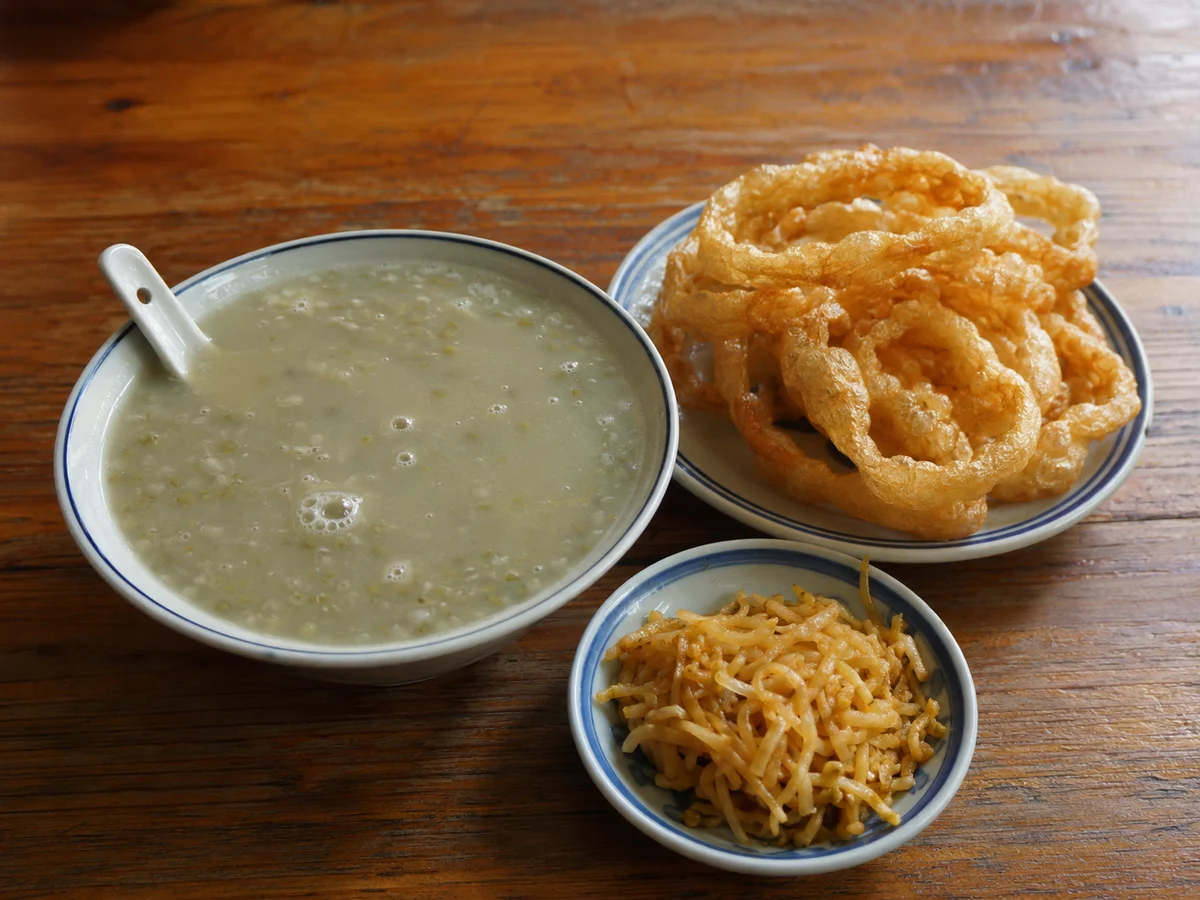
Meet Beijing’s douzhir-and-jiaoquan breakfast set
Douzhir is a warm, pale-grey fermented mung-bean drink with a distinct sour aroma. Beijingers traditionally alternate sips with crisp fried jiaoquan rings and strips of salty-spicy pickle, creating a breakfast of fermentation, fat and crunch.
Common ingredientsFermented liquid from mung-bean starch production, jiaoquan fried rings and pickled vegetables.
01
Build the rhythm with a small bowl, fried rings and pickles
How to order it
Start with a small bowl rather than committing to a large breakfast. Try it warm with alternating bites of jiaoquan and pickle. Do not add sugar before tasting the traditional combination. Choose a busy specialist where the drink is heated gently and the fried rings remain crisp. If gluten matters, remember that jiaoquan is a wheat food even though douzhir itself is mung-bean-based.
How to eat and pair it
Douzhir is culturally beloved but not universally liked, even in Beijing. Beijing tourism sources describe the classic three-part breakfast as hot douzhir, crisp jiaoquan and fine pickled strips. Its resourcefulness matters: a liquid from mung-bean starch production becomes a valued fermented food. Presenting it respectfully means explaining the complete balance, not reducing it to a smell challenge or insisting that every visitor must enjoy it. A first sip can be surprising; the fried and salty accompaniments make the intended rhythm clearer.
Easy mix-ups
Misconception: It is soy milk that has spoiled. In practice: It is intentionally fermented liquid from mung-bean processing, unrelated to ordinary soy milk. Misconception: Anyone who dislikes it simply does not understand Beijing food. In practice: Taste is personal, and many Chinese diners also find it challenging. Respectful tasting does not require pretending to enjoy it.
A small sip, a bite of jiaoquan and a little pickle reveal the intended breakfast rhythm
Order the smallest bowl with a few fresh jiaoquan and a modest dish of crisp pickle. Begin with one unhurried sip; swallowing quickly to “get it over with” magnifies the shock and teaches little. Then take a piece of the brittle fried ring and return to the warm liquid. Fat and toasted wheat round the acidity, while the pickle resets the mouth with salt and crunch. Alternate rather than soaking every ring at once. A quick dip is possible, but a long bath destroys the very crispness that makes the pairing work. Sugar is not the default correction. Sweetening may create a more confusing combination without removing fermented aroma. If the first sip is too intense, pause, eat another bite and decide honestly whether to continue. No local etiquette requires visitors to finish a large bowl or perform enjoyment. Sharing a tasting portion is sensible when the shop permits it, though each diner should use a clean spoon. The useful goal is to recognize why the sour drink, fried ring and pickle balance one another, even if douzhir never becomes a personal favorite.
02
A fair tasting separates preference from evidence of quality
You may dislike a correctly made bowl. Describe what happened precisely—cultured-grain acidity, earthy mung bean, warm thin body—rather than declaring that all douzhir is rotten. Equally, local fame should not pressure anyone to excuse stale frying oil or unclean service. Preference and production quality are two separate judgments.
If curiosity remains, return at breakfast to a specialist with strong turnover rather than sampling a bottled novelty cold. Temperature and the fresh fried pairing materially change perception. One careful retaste is informative; repeatedly forcing a food you dislike is not a requirement for understanding Beijing.
03
Controlled sourness and freshly fried crispness are both essential
Douzhir is easier to understand as a warm fermented grain drink than as a culinary dare
The liquid comes from the mung-bean starch-making stream and develops acidity through controlled fermentation. Its aroma can suggest sour grain, cultured batter or aged vegetables, with an earthy bean undertone. That profile is genuinely challenging for many first-time diners, but ammonia, sewage or putrefaction are not quality goals. A specialist shop should serve a batch that tastes intentionally tart and coherent, not one defended by the claim that any unpleasant odor proves authenticity. Approach it with the same attention you would give sourdough or a fermented dairy drink: smell, sip and notice how aroma changes after swallowing. Douzhir is not soy milk that has spoiled, and it should not be recreated by leaving bean milk at room temperature. Its flavor comes from a particular mung-bean starch by-product, an established fermentation and heating before service.
Judge the drink, ring and pickle separately before judging the set
Fresh jiaoquan are thin, brittle and fragrant, with layered bubbles that shatter rather than bend. A greasy coating, leathery chew or paint-like oil aroma points to poor holding or tired frying oil. Douzhir should pour smoothly and feel light enough to drink; heavy starch lumps or a scorched bottom flavor indicate weak heating control. Shops must warm it carefully because suspended solids can settle and catch. The best bowl remains unified from the first spoon to the last instead of separating into watery liquid above and paste below. Pickles vary, but their job is clarity rather than sheer salinity. A small amount of spicy shredded vegetable or preserved mustard adds a clean, crisp edge. A huge pile can numb the palate and raise sodium without helping the drink. Observe turnover: a breakfast shop frying rings in small batches and ladling continuously from a managed pot offers better odds than a counter displaying a mountain of cold rings. Fame alone cannot compensate for stale oil or inattentive temperature.
Fermented mung-bean liquid
The liquid separated during mung-bean starch or noodle making is fermented and then heated for service; it is not soy milk.
Jiaoquan
Thin fried wheat rings provide crispness and richness. Recipes may contain wheat, alkali and other leavening ingredients.
Pickled vegetables
Fine salty-spicy strips, often dressed with chilli oil, sharpen and reset the palate.
Warm specialist bowl
The canonical service with jiaoquan and pickle.
Takeaway douzhir
Packaged versions exist, but temperature and freshness affect aroma.
Douzhir without the pair
It can be sold alone, but omitting jiaoquan and pickle removes the traditional contrast that helps explain the drink.
- Pale grey-green liquid served hot but not violently boiling
- Controlled sour fermented aroma without spoilage notes
- Jiaoquan crisp and freshly fried
04
Fermented douzhir and fried jiaoquan follow separate processes
Douzhir is simmered gently and served hot; jiaoquan and pickles are eaten between sips.
The set looks simple, yet wheat, legumes, frying oil and fermentation all need attention
Jiaoquan are wheat-based and may share oil with other snacks. Douzhir is made from mung beans, so people with relevant legume allergies need to ask rather than confusing it with soy. Pickles can contain chilli, sesame, soy sauce or other seasonings depending on the shop. Vegan diners should still confirm frying oil and side-dish ingredients instead of relying only on the absence of visible meat. Fermentation does not remove allergens, and heating does not make a medically unsuitable ingredient safe. Takeaway weakens the pairing because steam softens the rings and the drink continues changing temperature. Separate packaging protects the contrast, but jiaoquan cannot be fully restored once stale; the hot drink and crisp ring at the counter remain the reference experience.
05
The place of douzhir in old-Beijing breakfast culture
Douzhir is a fermented drink made from the liquid by-product of producing mung-bean starch or noodles. In Beijing it is traditionally paired with crisp ring-shaped jiaoquan and salty pickled vegetables.
Its sour, fermented aroma is famously challenging even to many Chinese visitors. It should be introduced as a living breakfast tradition, not a dare; small sips with jiaoquan make the balance clearer.
06
How to say Douzhir and Jiaoquan—and what the name tells you
Pronounced dòu zhīr yǔ jiāo quān. Menus may call it Beijing douzhir, dou zhi er, douzhi, dòuzhīr.
Sources