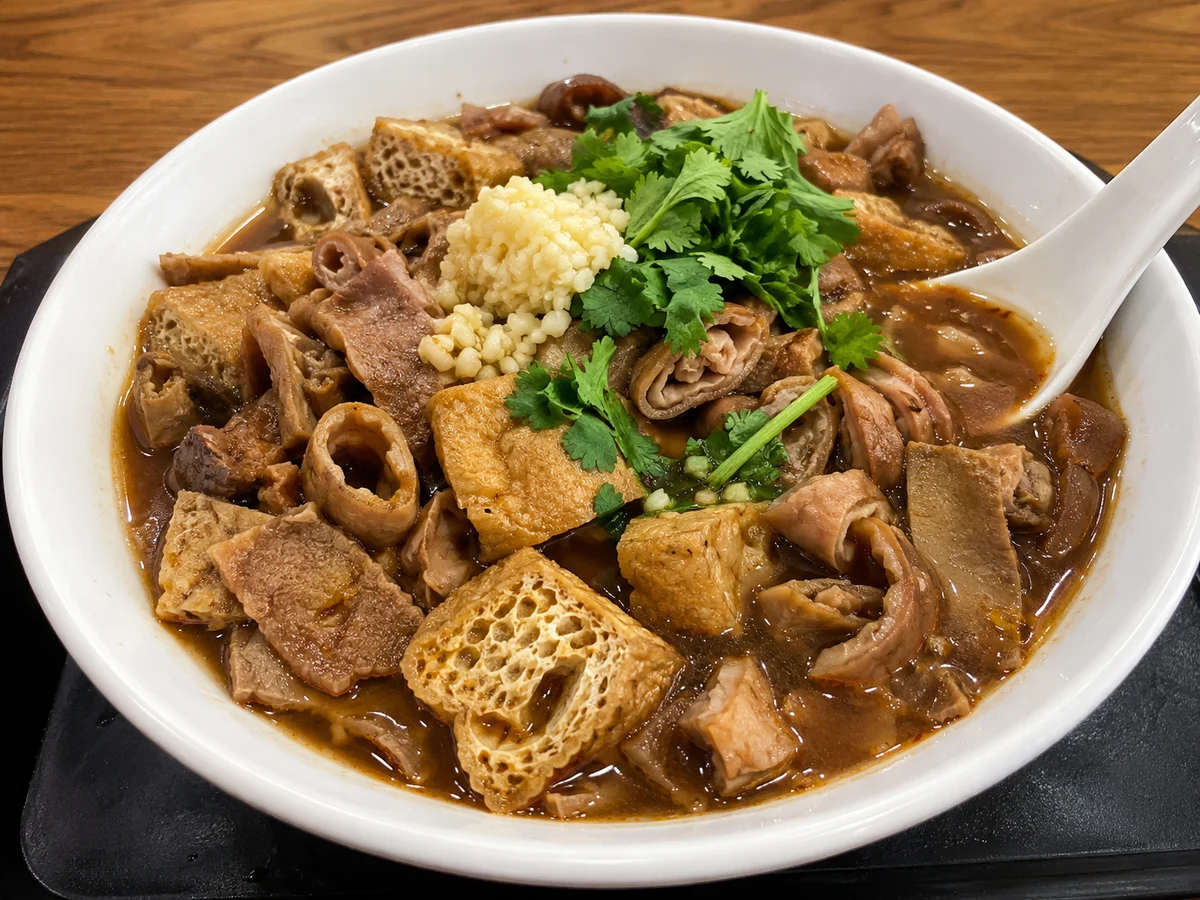
Meet Beijing’s offal-and-bread braise
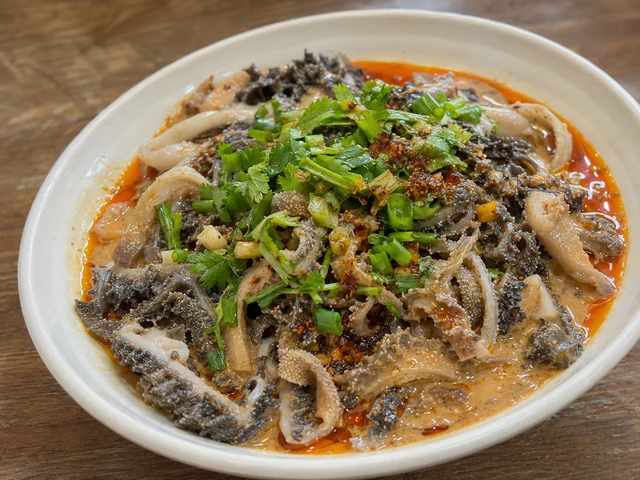
Luzhu huoshao simmers dense wheat breads with pork intestines, lung, fried tofu and a seasoned stock until every component absorbs the broth without disintegrating. Chopped to order, it arrives with garlic, coriander, fermented tofu and chilli for a powerful one-bowl meal.
Common ingredientsHuoshao wheat breads, pork intestine, pork lung, fried tofu, braising broth, garlic juice, fermented tofu and cilantro.
01
Set the balance of bread, intestine, lung and tofu
How to order it
Choose a busy specialist known for offal handling. Ask for less intestine or extra tofu if preferred. Confirm that the standard bowl includes both intestine and lung if either is a concern. Add garlic, vinegar and chilli only after tasting the broth. Eat the bread and offal while hot, before fat sets and the bread loses its resilient texture. Order a small bowl if it is your first offal-heavy Beijing meal.
How to eat and pair it
This is resourceful urban food: bread and pork offal transformed by patient cleaning, braising and a well-maintained stock. Beijing tourism sources connect the dish with the city’s southern neighborhoods and working people, while court-origin stories involving cheaper adaptations are common but difficult to prove in every detail. The observable craft is enough: components are cleaned and cooked appropriately, then chopped to order so bread, intestine, lung and tofu reach the bowl with different textures. Regulars may customize ratios and finishing condiments.
Easy mix-ups
Misconception: Luzhu is random scraps boiled together. In practice: Specialists separately prepare components and control cutting, braising and assembly to achieve precise textures. Misconception: Every luzhu shop descends directly from one imperial dish. In practice: Popular stories connect it with cheaper adaptations of court food, but the exact lineage is debated and should not be stated as settled fact.
Ask what is standard, then customize by component rather than vague requests for “less offal”
First-time diners should identify whether intestine and lung are non-negotiable parts of the house bowl. If you eat intestine but not lung, say so specifically; if you avoid all organ meat, choose another dish instead of expecting huoshao in broth to represent luzhu. Specialist counters often allow extra intestine, extra bread or a leaner portion, sometimes at different prices. Confirm before cutting begins because the vendor may assemble bowls rapidly from a shared station. A small or regular bowl can be more satisfying than the largest size. Bread continues swelling, and a very large serving may become heavy before the diner reaches the bottom. Ask for garlic, chilli oil, coriander and fermented tofu seasoning separately when possible, then add one at a time. Garlic cuts richness, chilli adds aroma and heat, and fermented bean curd deepens salt and savoriness; they are not interchangeable. Taste the stock first so seasoning corrects your preference rather than concealing the kitchen’s work.
Eat from firm to absorbent, use sharp sides for relief and be conservative with leftovers
Begin while the bowl is hot, tasting intestine and bread before they soften further. Rotate between solid pieces and broth rather than drinking all the liquid first. Pickled garlic or a crisp vegetable side brings acidity and crunch; another braised offal plate usually adds weight without contrast. One bowl is commonly a complete meal, so a table exploring Beijing snacks can share smaller portions of other foods instead of treating luzhu as a starter. Huoshao changes fastest after it enters the broth: the torn bread continues swelling while fried tofu releases absorbed liquid. A separated takeaway can preserve some contrast, but the specialist-shop bowl eaten immediately remains the meaningful benchmark.
02
A short conversation at the counter makes an offal bowl less opaque
Ask which organs are included, whether the bowl contains pork belly, and which condiments are already added. Also confirm portion size and whether substitutions cost extra. These are ordinary ordering questions, not disrespect toward a traditional shop. Clear answers let diners avoid waste and let the cutter assemble the intended bowl once instead of remaking it.
After seasoning, keep a small area of broth relatively plain for comparison. If garlic or fermented tofu becomes too strong, adding more chilli rarely restores balance. Eat a bite of bread with intestine, then one with lung or tofu, so the bowl functions as a combination rather than a sequence of isolated dares.
03
Each component absorbs the broth differently
Knowing the components turns a crowded brown bowl into a readable meal
Huoshao provides dense wheat chew and absorbs broth; pork intestine contributes springy richness; lung is softer and more porous; fried tofu carries liquid in its honeycombed interior. Some shops add pork belly or other house components, so ask rather than assuming every bowl follows one inventory. Take an early bite of each item before chilli oil, garlic paste or fermented tofu sauce dominates it. The aim is not to prove comfort with offal, but to understand why cooks combine pieces that absorb and resist broth differently. Use a spoon to support slippery pieces and chopsticks to separate them. Intestine rings should be clean-tasting and resilient, not rubbery or mushy. Lung should be fully cooked and tender without dissolving into grit. Huoshao needs broth at its center but enough structure at the edge to chew. Fried tofu may be extremely hot inside, so open it or let it cool briefly. A bowl in which every component has become the same soft brown texture has lost the contrast that justifies the mixture.
Huoshao bread
Firm wheat rounds withstand simmering and become soft-chewy rather than dissolving.
Pork offal
Intestines and lung require meticulous cleaning, separate preparation and thorough cooking.
Fried tofu
Porous pieces absorb broth and provide a mild contrast to the offal.
Master stock
Soy, spice and repeated braising create depth; good stock tastes maintained rather than stale.
Standard mixed bowl
Bread, intestine, lung and tofu provide the complete range of textures.
Customized bowl
Specialists commonly adjust the ratio of bread, intestine and tofu.
Intestine-forward bowl
More small intestine produces a richer, springier serving and is best for diners already comfortable with offal.
- Offal with a clean aroma
- Intestine tender but still resilient
- Bread saturated but holding shape
04
Prepare offal separately and add bread by absorption speed
Cleaned offal is braised until tender; breads and tofu simmer in the broth before chopping and garnishing.
Dark stock is not proof of age or quality; clean preparation and controlled replenishment matter more
Pork organs require repeated cleaning, trimming and preliminary cooking before they enter service stock. Strong spice cannot repair inadequate cleaning. A good bowl can smell rich and unmistakably porky without fecal, sour or stale-fat notes. The stock should be hot enough for service and seasoned enough to penetrate the bread, yet not so salty that the final spoon is impossible. Color comes from soy, spices, ingredients and reduction; it cannot reveal how responsibly a so-called master stock has been cooled, filtered or replenished. Choose a shop with visible turnover, orderly separation of raw and cooked work and staff who can name the components. Offal is especially unforgiving of casual temperature control. A century-themed sign or claim of perpetual broth does not replace current hygiene. Diners with gout, sodium restrictions or other medical dietary needs should evaluate the bowl as a rich offal meal, not as harmless soup. Pregnancy or immunocompromise calls for fully cooked, steaming food from a reliable kitchen and individualized medical guidance where needed.
05
A complete meal from old southern Beijing
Luzhu huoshao is an old-Beijing working-class dish in which wheat breads simmer with pork intestines, lung, tofu and a seasoned master stock. Popular origin stories connect it to adaptations of more expensive court dishes, but exact lineages are debated.
The cook chops bread and offal to order, ladles over broth and finishes with garlic, fermented tofu, coriander or chilli. Its appeal is soft-chewy bread and thoroughly cleaned offal saturated with savory stock.
06
How to say Luzhu Huoshao—and what the name tells you
Pronounced lǔ zhǔ huǒ shāo. Menus may call it Beijing offal stew, lǔzhǔ huǒshāo, Beijing pork intestine soup, old Beijing luzhu.
FAQ
Quick answers to common searches
What is luzhu?
In Beijing food contexts, luzhu usually means luzhu huoshao: dense wheat breads simmered with pork intestine, lung and fried tofu in a seasoned broth, then finished with garlic, fermented tofu or herbs.
Are luzhu and luzhu huoshao the same dish?
Usually, yes. Luzhu is a common short name for luzhu huoshao in Beijing. Ask what offal, tofu and bread the shop includes because the bowl and portion can vary.
What is normally in luzhu huoshao?
A typical bowl contains huoshao wheat bread, pork intestine, pork lung, fried tofu and braising broth, with condiments such as garlic juice, fermented tofu, chive-flower sauce, coriander or chilli.
What should good luzhu huoshao taste like?
The bread should absorb the broth while retaining some structure, and the offal should be thoroughly cleaned, fully cooked and tender without a dirty or stale smell. The broth can be rich but should not taste only salty.
Sources