Lanzhou Beef Noodles兰州牛肉面
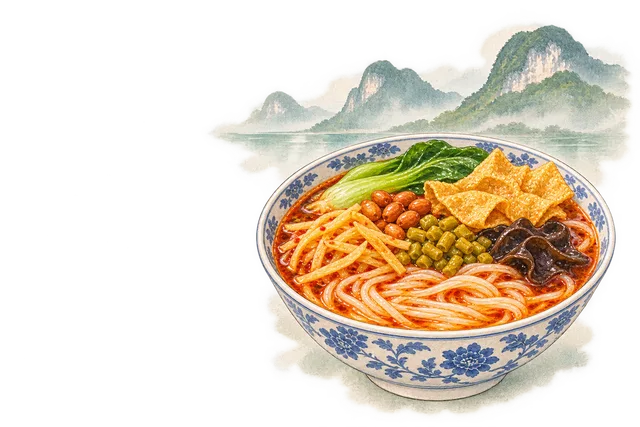
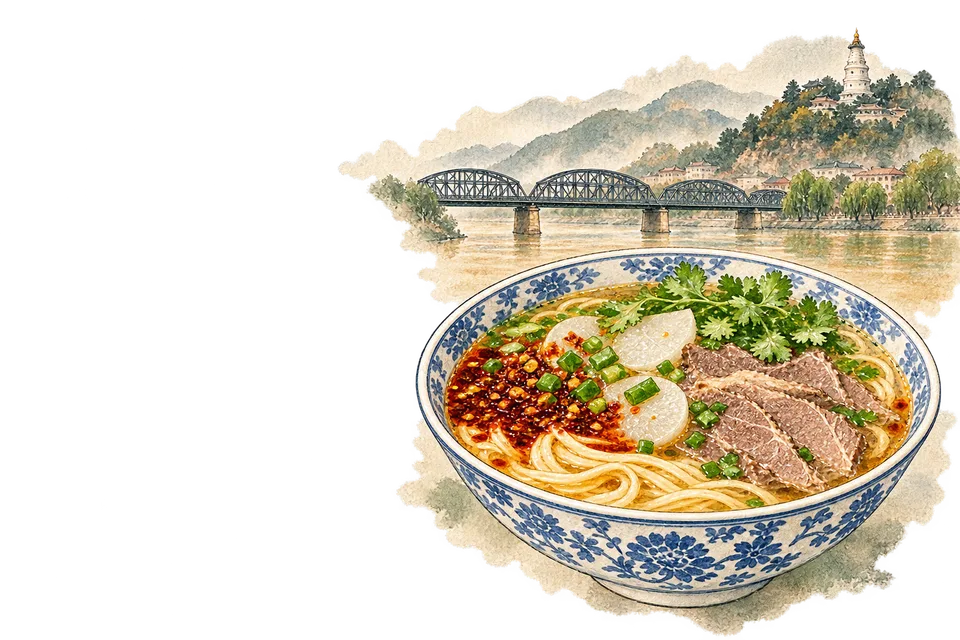
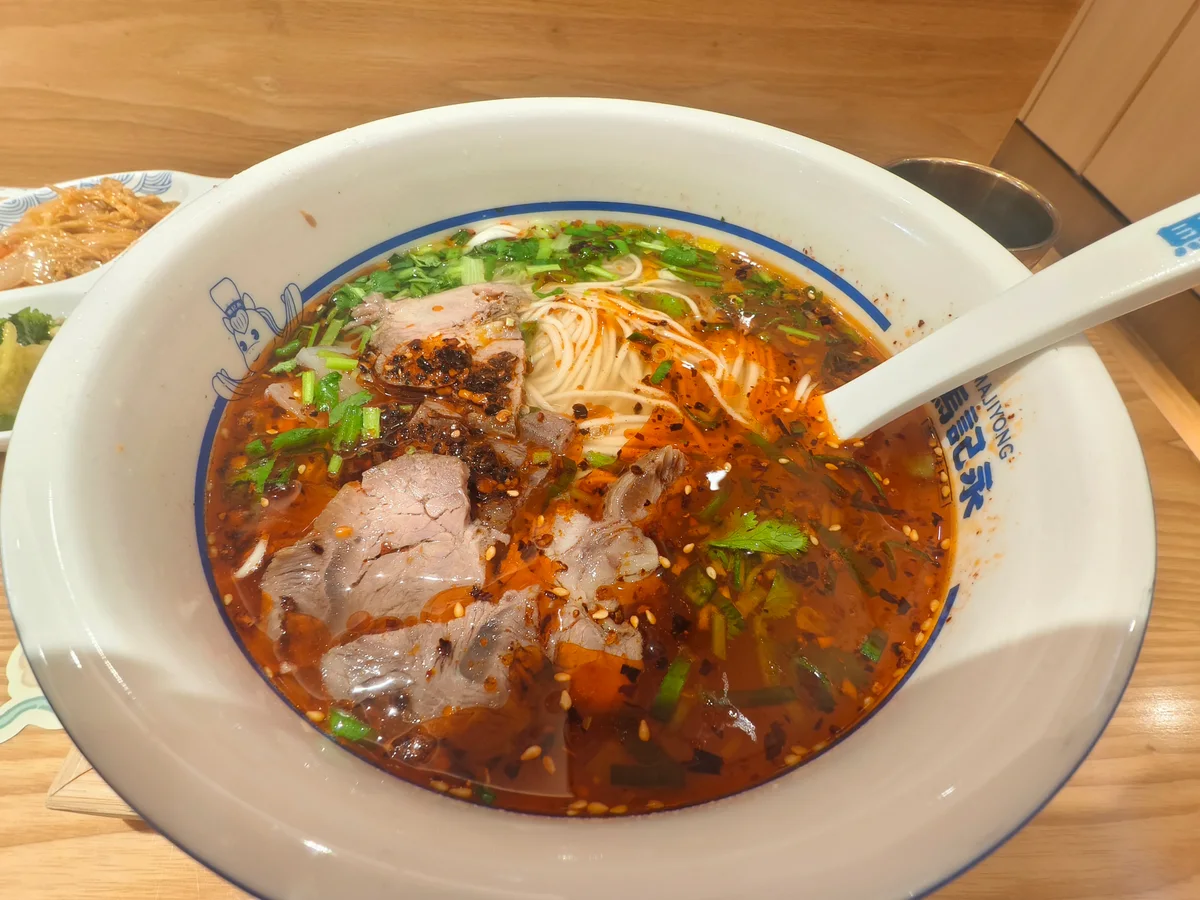
Noodles pulled to order in a clear spiced beef broth with radish, chili oil, garlic shoots and coriander; Lanzhou’s breakfast, not quite the “Lanzhou lamian” sold elsewhere.
Regional food guide
Beef noodles for breakfast, sour jiangshui, and mutton along the Silk Road
Gansu is a long, narrow province of wheat fields, loess hills, grassland and desert that follows the Silk Road from the Yellow River to Dunhuang, and its food is noodles and mutton. Lanzhou, the capital, eats beef noodles for breakfast and cold sweet grain and pea soups in summer. Tianshui in the southeast lives on fermented jiangshui noodles and buckwheat guagua, and its chili-heavy malatang went viral across China in 2024. Hui and Dongxiang villages share whole sheep, Tibetan Gannan eats tsampa and butter rice, and the Hexi Corridor out west has lamb with flat noodles and Dunhuang’s donkey-meat noodles. Start with a bowl of beef noodles in Lanzhou, then follow the noodle westward.
Start with the classics
Noodles pulled to order in a clear spiced beef broth with radish, chili oil, garlic shoots and coriander; Lanzhou’s breakfast, not quite the “Lanzhou lamian” sold elsewhere.
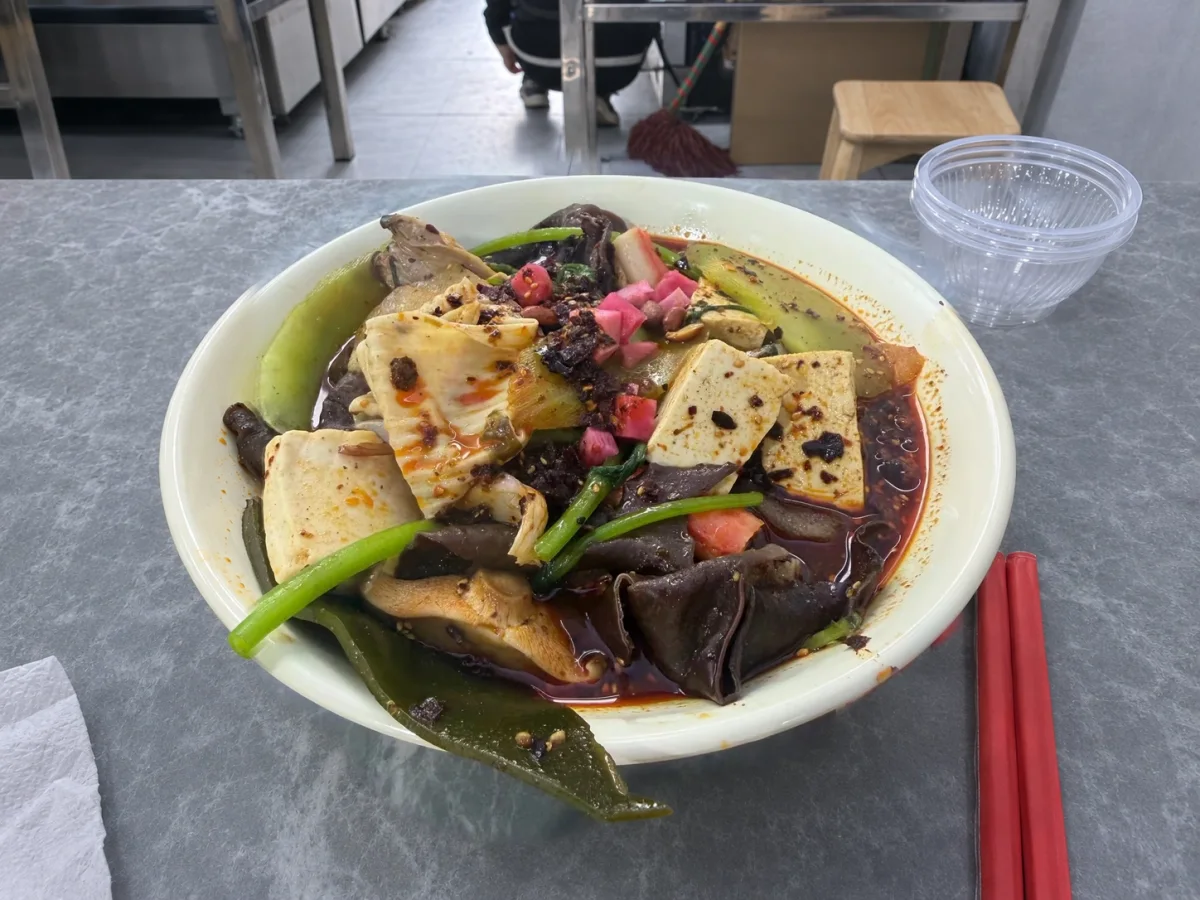
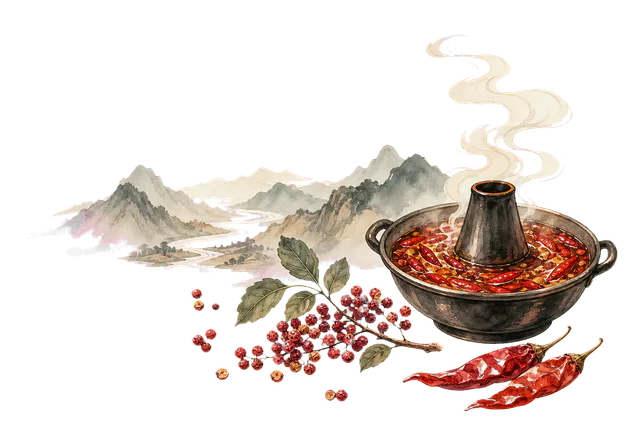
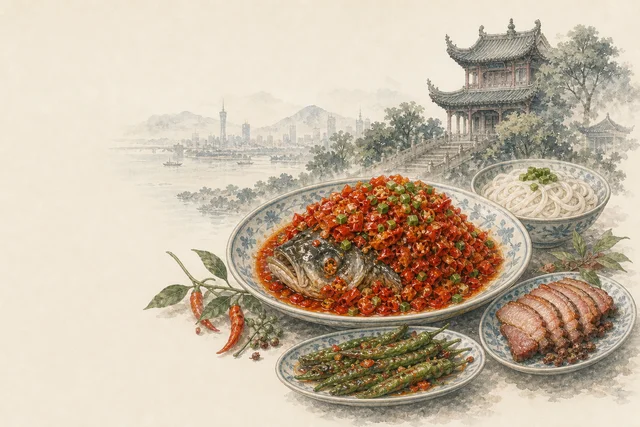
Skewers boiled and tossed on a big plate under Gangu chili oil and Sichuan pepper, with hand-rolled potato noodles; the bowl that went viral in 2024.
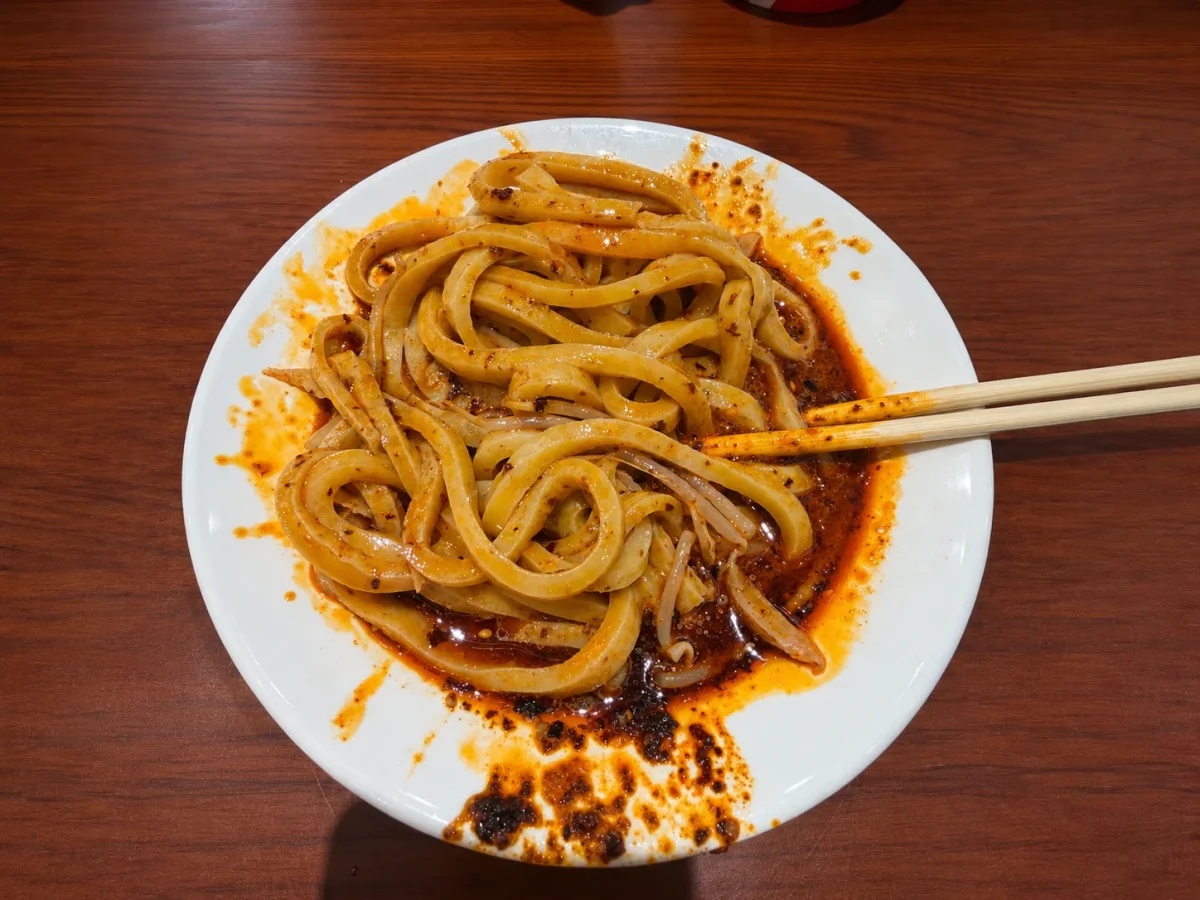
Steamed wheat sheets cut into thick strips and dressed at the counter with chili oil, vinegar, garlic water, mustard and sesame paste. Gaodan is unwashed, alkaline, soft and yellow; shuixi is washed and springy.
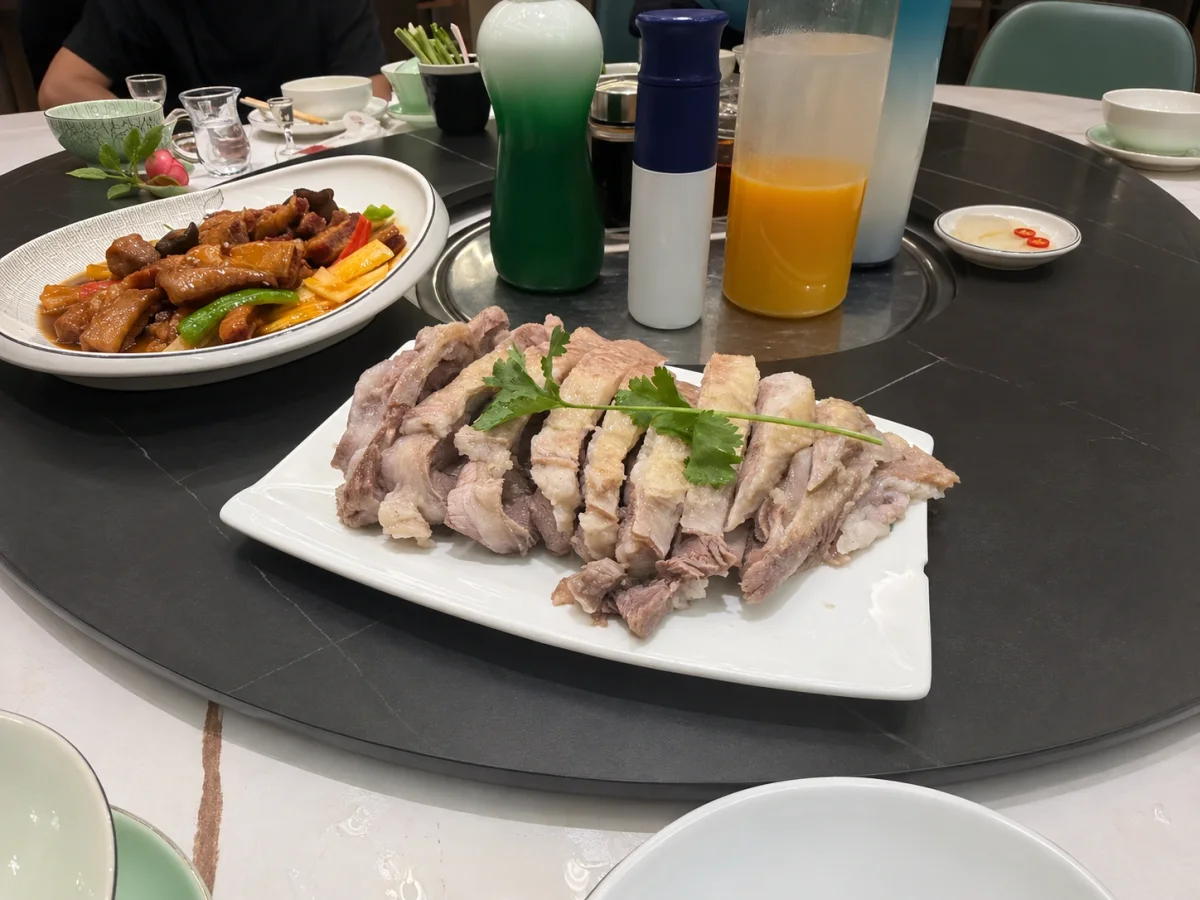
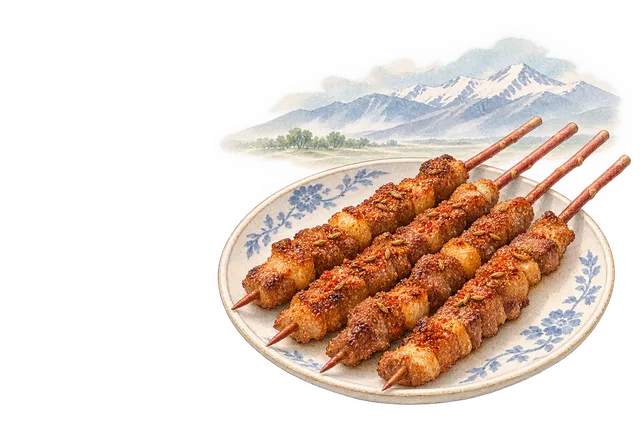
Lamb boiled on the bone with salt, Sichuan pepper and tsaoko, weighed by the jin at the shop door, chopped and eaten hot with your hands, raw garlic, spiced salt and chili.
01
Gansu’s cooking is northern wheat cooking stretched along more than 1,500 kilometers of the Silk Road, and every town along it has its own noodle.
Gansu runs from the green hills of Tianshui and Longnan in the southeast, through the loess plateau and the Yellow River city of Lanzhou, up into the Tibetan grasslands of Gannan and along the Hexi Corridor, a strip of oases between the Qilian Mountains and the Gobi that leads to Dunhuang. The food changes with the land: wheat and buckwheat in the hills, mutton and beef in the Muslim towns and on the grassland, and potatoes nearly everywhere.
What ties it together is dough. The Tianshui-born writer Ye Zi, whose book on Gansu food goes county by county, admits that Shanxi is China’s noodle heaven but insists that Gansu’s noodles are just as varied, with every place keeping its own: beef noodles in Lanzhou, hele pressed noodles in Pingliang, “pole noodles” in Xihe, rubbed and stir-fried chaopao in the Hexi Corridor and yellow noodles with donkey meat in Dunhuang.
Sources [1]
02
Gansu’s capital starts every day with a bowl of beef noodles.
Lanzhou beef noodles, pulled to order in a clear spiced broth with radish, chili oil, garlic shoots and coriander, are the city’s breakfast and its most famous export; the industry built around them earned 80 billion yuan in 2025. In Lanzhou a bowl costs about 8 yuan, and a plate of beef and an egg on top make it 19. They have their own page.
The rest of the day belongs to the old Muslim quarter’s snacks. Lanzhou’s summer foods are sweet and cooling: 灰豆子 (huidouzi), a dark purple soup of peas and jujubes, and 甜醅子 (tianpeizi), fermented oats or barley thinned with warm water and faintly boozy. 酿皮子 (niangpizi), cold sheets of wheat starch steamed or poured and cut into strips with chili and vinegar, are judged on how chewy they are. In summer the noodle shops sell cold pulled noodles with vinegar, garlic and mustard, mixed with grilled lamb skewers, and restaurants along the Yellow River serve hand-held boiled mutton, while sheepskin rafts still carry visitors across the river. Lanzhou also grows lilies: its lily bulbs are as big as a fist, and a Gansu saying puts them alongside Tianshui apples and Zhangye pears.
03
Southeastern Gansu eats sour, and its signature snack is named after the burned bit at the bottom of the pot.
浆水 (jiangshui) is the sour, fermented water in which vegetables are pickled, and it is the taste of southeastern Gansu. In Ye Zi’s home village near Tianshui the meals of a poor childhood were jiangshui soup in the morning, jiangshui noodles at noon and jiangshui soup again at night; the only alternative was 醋饭, “vinegar meal,” the local name for saozi noodles in a sour meat broth. Jiangshui noodles are noodles served in that sour liquid, the plainest and most common meal of the region.
Tianshui’s famous snack is 呱呱 (guagua), whose name is the local word for the crust at the bottom of a pot. Buckwheat grits are soaked and rubbed until the starch runs out, then the starch is stirred slowly into boiling water over a fire for a long time; the longer it cooks, the thicker the golden crust on the pan, and the crust is the best part. Cooled, it is torn into pieces and dressed with chili oil. The city’s old pig and sheep market gave it two cuisines side by side: mutton dishes from its Hui families and pork dishes from its Han families.
Sources [1]
04
In spring 2024 a bowl of street malatang went viral and filled Tianshui with visitors.
Malatang, vegetables, tofu and noodles boiled in broth and dressed with chili, is eaten all over China, but in early 2024 short videos of Tianshui’s version spread across Chinese social media. By 28 March, Gansu’s information office counted 16.77 billion views and plays of related videos, and from 1 to 28 March the city received 3.89 million tourists and 2.25 billion yuan in tourism income.
What makes it Tianshui’s is the chili. Diners pick skewers of greens, tofu products and potato, about one or two yuan each in 2024, which are boiled and then served either in broth or drained and tossed, both under a thick layer of oil-fried chili and Sichuan pepper. Gansu grows both: Gangu county’s chilies, recorded in a county gazetteer of 1627, and Sichuan pepper from Wudu in Longnan. The noodles are wide sheets of potato starch from Dingxi, Gansu’s potato country, which soak up the oil and chew like rice cake. A shop in 2024 sold a plate for two by weight for 32 yuan, with a 6-yuan portion of wide noodles; for all its color the dressing is more fragrant than hot. Further northwest, in Zhangye and Jiuquan, malatang comes with less soup and thicker, sweeter sauces.
05
The eastern hill counties eat winter food built for snow.
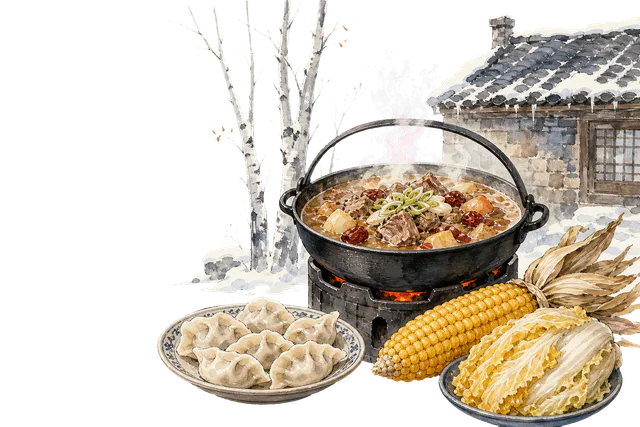
In Zhuanglang and the villages around Pingliang, a clay pot of white radish, bean sprouts, vermicelli, tofu and carrot topped with a layer of fried pork belly is set in the middle of the table in the snow.
In Xihe in Longnan, a stiff dough is pressed with a heavy wooden pole into noodles eaten for breakfast; by tradition only men make them.
Pingliang’s noodles pressed through a perforated press straight into the pot.
Cured pork from pigs grazed in spring and penned in autumn in the herb-rich hills of Min and Zhang counties, steamed rather than boiled before it is sliced.
Jingning county’s roast chicken, one of the best-known local specialties of eastern Gansu.
Sources [1]
06
Gansu’s Hui and Dongxiang Muslims make mutton the center of every celebration.
十三花, “thirteen flowers,” is not a dish but a whole table: the traditional banquet of thirteen dishes in the Hui communities of the northwest. Among the Dongxiang people of Linxia, a mountain prefecture southwest of Lanzhou, friends hold 吃平伙, “eating shares”: on a slack day or in snow several men pool their money for a sheep, one household slaughters and cooks it in exchange for not paying, and the group eats it together. Hand-held mutton, 手抓羊肉, boiled on the bone and eaten with salt and garlic, is the everyday version across the province.
Linxia also has 羊肉筏子, “mutton rafts,” which locals call 发子面肠. A fresh sheep’s large intestine is stuffed with finely chopped heart, liver, kidney and meat, seasoned with scallion, ginger, salt and pepper, tied with hemp string and steamed until it swells like an inflated sheepskin raft on the Yellow River. Ye Zi ate it only once, at a night-market stall in Linxia, where the Hui stallholder fried the cut pieces with scallion and ginger and dressed them with garlic and chili oil.
Sources [1]
07
South of Lanzhou the land rises onto the Tibetan plateau, and the food changes with it.
Gannan is a Tibetan autonomous prefecture of high grassland and monasteries. Herding families eat hand-held mutton, milk tea, tsampa (roasted barley flour mixed with tea and butter) and small bowls of mutton noodle soup. A breakfast for a traveler is 蕨麻哲则: rice mixed with yak butter, topped with boiled 蕨麻, the sweet little roots of silverweed, a sprinkle of sugar and a pour of melted butter; zhezei is the Tibetan word for rice.
Sources [1]
08
West of Lanzhou the corridor of oases has its own trio: lamb, chewy noodles and the food of Dunhuang.
羊肉垫卷 (lamb dianjuan) is eaten all the way from Lanzhou to Dunhuang: young lamb stewed with potatoes and chili, then covered with rolled-up sheets of dough that steam in the juices. Ye Zi traces it to the culling of lambs in winter and spring, when herders kill some young animals to protect the pasture, and likes it best in Yongchang and Shandan. 炒炮 (chaopao) is dough rubbed into ropes as thick as chopsticks, pinched into short pieces, boiled, fried with a braised tofu broth and covered with braised meat. In Zhangye, chaopao is the town’s own dish: locals call it 炮杖子, “firecrackers,” after the shape of the short pieces, the flour comes from wheat grown along the Heihe, China’s second-longest inland river, and people claim they can taste whether it grew there. What matters most to them is the braised pork on top, simmered in old stock with a dozen spices and medicinal herbs; Ye Zi ate it at Sun Ji, the town’s best-known chaopao shop.
At the western end, Dunhuang’s calling card is 驴肉黄面, donkey-meat yellow noodles: hand-pulled noodles made from a local flour that turns yellow when cooked, eaten with sliced braised donkey. A Dunhuang rhyme lists them among the town’s oddities, and the pages of the city’s cultural expo say a Mogao mural of the late tenth century already shows hand-pulled noodles and quote the saying “dragon meat in the sky, donkey meat on the ground.” In recent decades the researcher Zhao Chang’an has developed a “Dunhuang cuisine” of banquet dishes inspired by the manuscripts found in the Mogao Caves, with names like nine-colored deer and snowy-mountain camel paw.
09
Gansu is long enough that each stretch has its own table.
| Area | Cities | Character | Eat |
|---|---|---|---|
| Lanzhou | Lanzhou | Hui and Han; noodles and summer snacks | Beef noodles, niangpizi, huidouzi, tianpeizi, hand-held mutton |
| Southeast | Tianshui, Longnan | Sour jiangshui, buckwheat, chili and Sichuan pepper | Malatang, jiangshui noodles, guagua, gangzi noodles |
| East | Pingliang, Qingyang | Loess hills, winter pots | Nuanguo, hele noodles, Jingning chicken |
| Southwest | Linxia, Gannan | Hui, Dongxiang and Tibetan | Shishanhua, shared sheep, tsampa, butter rice |
| Hexi Corridor | Wuwei, Zhangye, Jiuquan, Dunhuang | Oases and grassland | Lamb dianjuan, chaopao, donkey-meat yellow noodles |
Sources [1]
10
Plan your days around noodles.
Go early to an old beef noodle shop and order erxi; many close by mid-afternoon.
Try huidouzi and tianpeizi in Lanzhou and niangpizi anywhere in the province.
Order jiangshui noodles and a plate of guagua, and pick a bowl of malatang with wide potato noodles.
In Linxia or the Hexi Corridor, order hand-held mutton or lamb dianjuan for the table.
Donkey-meat yellow noodles are the local lunch after the Mogao Caves.
11
The clear broth, the noodle shapes and why they are not “Lanzhou lamian.”
Read about Lanzhou beef noodles →Shaanxi’s cold noodle sheets, cousins of Lanzhou’s niangpizi.
Read about liangpi →Gansu’s own malatang: skewers tossed on a big plate in Gangu chili oil, with hand-rolled potato noodles.
Read about Tianshui malatang →Gansu’s eastern neighbor, another wheat-and-mutton kitchen.
Explore Shaanxi food →FAQ
Northern wheat cooking with plenty of mutton and beef: hand-pulled and pressed noodles, sour jiangshui, potatoes and buckwheat, with Hui, Dongxiang and Tibetan influences.
Lanzhou beef noodles for breakfast, niangpizi and huidouzi in Lanzhou, jiangshui noodles in Tianshui, and lamb dianjuan in the Hexi Corridor.
A sour fermented liquid made by pickling vegetables in water, used as the broth for cold jiangshui noodles in southeastern Gansu.
A Tianshui snack of buckwheat starch cooked slowly until a crust forms on the pan, torn into pieces and dressed with chili oil.
Moderately. Chili oil is everywhere, but most dishes are savory, sour or mutton-rich rather than very hot.
A Hexi Corridor dish of young lamb stewed with potatoes, covered with rolled dough sheets that steam in the juices.
Donkey-meat yellow noodles, lamb, and a modern “Dunhuang cuisine” inspired by the Mogao Cave manuscripts.
Beef noodles in Lanzhou, jiangshui soup in Tianshui villages, gangzi noodles in Xihe.
A traditional Hui banquet table of thirteen dishes in the northwest.
The beef noodles are from Lanzhou in Gansu, but most “Lanzhou lamian” shops elsewhere are run by families from Qinghai.
Sources
Last updated November 2026
Keep exploring