
01
A steamed sheet, cut thick and dressed at the counter
Liangpi is the family name. In Gansu the cold sheet is called niangpi, and Lanzhou cuts it thick.
Liangpi, literally cold skin, covers a whole class of foods across northwestern China: a starchy batter is steamed into a thin sheet, cooled, and cut into strips to eat cold with a sharp, spicy dressing. Once you cross from Shaanxi into Gansu the name changes to niangpi or niangpizi, and the food changes with it. Tianshui, near the Shaanxi border, still calls it liangpi and makes it much as Shaanxi does, thin and translucent. Lanzhou, further west, has its own version.
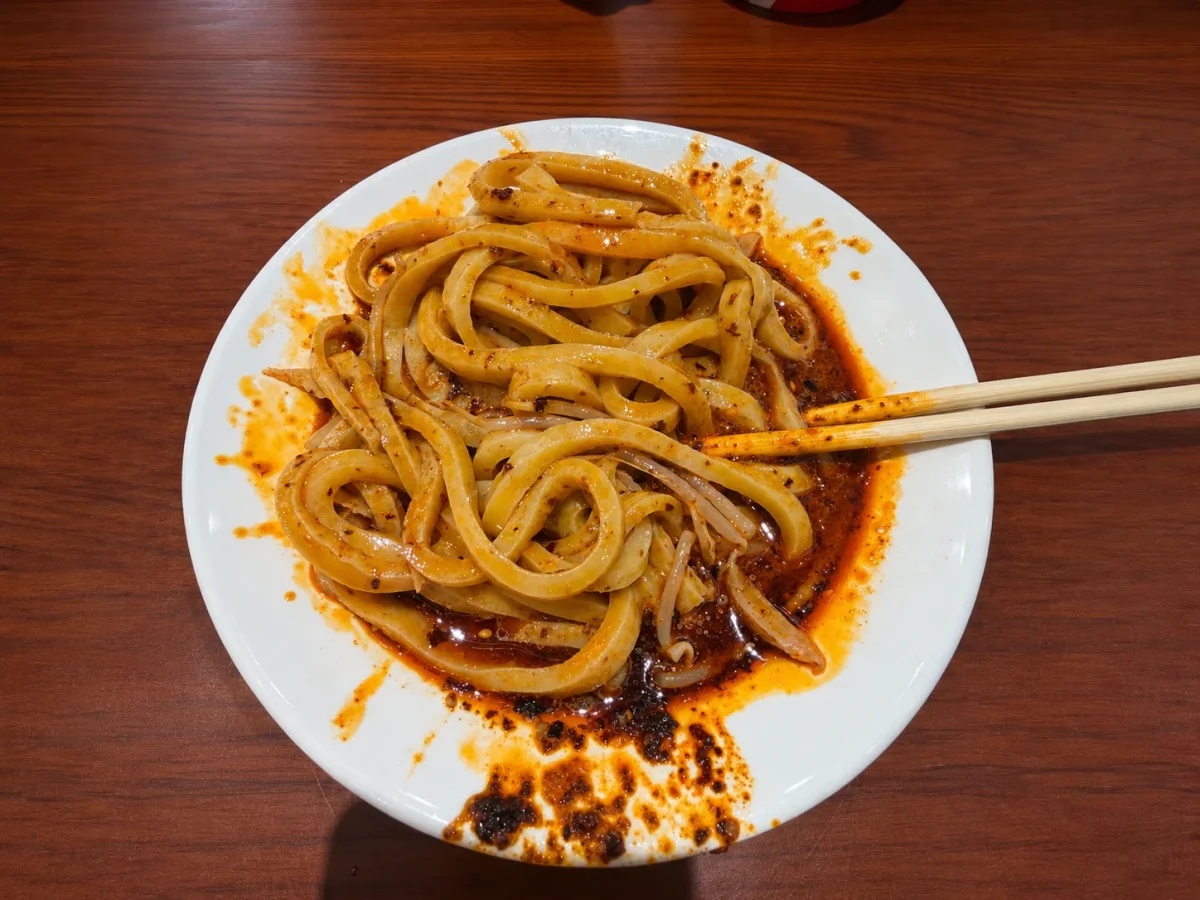
A Lanzhou niangpi stall steams a big sheet at a time, brushes it with rapeseed oil as it comes out so the layers do not stick, and cuts it into strips about as thick as a little finger. The strips go into a plate with bean sprouts or cucumber. The cook then works along a row of small bowls, adding salt, vinegar, garlic water, mustard, sesame paste and a big spoonful of chili oil, and the customer mixes it all at the table.
The texture is the first surprise for anyone who knows Xi’an liangpi. Lanzhou’s gaodan niangpi is softer and smoother, almost tender, with a clean wheat flavor. Versions made from washed starch, which Lanzhou also sells, are springier and bounce back when you bite.
02
Gaodan and shuixi: two ways to make the sheet
Lanzhou shops sell two kinds of niangpi, and many offer both.
Shuixi (水洗), washed niangpi, starts like Shaanxi liangpi. A firm wheat dough is rested and then kneaded in water, again and again, until the starch has run out into the water and what is left in the hand is a spongy lump of gluten. The starchy water settles for hours; the clear water on top is poured off, and the thick starch below becomes the batter. The gluten is steamed separately and served in chunks alongside.
Gaodan (高担) skips the washing. Flour, water and a little alkali are mixed straight into a batter; one Lanzhou stall now whips it with a paddle on an electric drill, where the owner once used a wooden stick. Each ladle of batter becomes one sheet. The alkali is what turns the finished sheet the creamy yellow of mutton fat and makes it soft and smooth rather than chewy.
| Gaodan 高担 | Shuixi 水洗 | |
|---|---|---|
| Batter | Flour, water and a little alkali, not washed | Starch washed out of a wheat dough and left to settle |
| Color | Creamy yellow | Paler, more translucent |
| Texture | Soft, smooth, tender | Springy, bouncy |
| Served with | Bean sprouts or cucumber | Often with steamed gluten |
| Dressing leans on | Sesame paste | Garlic water and mustard |
03
Why it is called the tall pole
Gaodan means a tall carrying pole.
Nobody has a firm record of where the name comes from. The common explanation is that the first sellers carried their stock through the streets on a shoulder pole, with the sheets in a basket at one end and the seasonings at the other, and that their pole stood taller than other hawkers’. Lanzhou stall owners still tell the story of an old woman who sold niangpi that way. Whether or not the details are right, the name stuck to the unwashed, alkaline style.
Niangpi is not only street food. Lanzhou families put a plate of it on the table at New Year and other festivals, alongside the meat dishes, because it is quick to cut and dress, cool, sharp and liked by everyone.
04
Chili oil, mustard, sesame paste and the soup at the bottom
The dressing is where Lanzhou shops compete.
Every shop makes its own chili oil, and it is the part people judge first. One home cook in Lanzhou pounded dried chilies in a stone mortar, keeping most of the chili coarse and grinding about a tenth of it to a fine powder, then added a handful of sesame seeds and poured smoking-hot rapeseed oil over it in stages. Garlic water is simple but essential: garlic pounded to a paste with salt and thinned with cooled boiled water, so it seasons the strips evenly.
Mustard is the seasoning Lanzhou people insist on. It is a sharp, nose-clearing heat rather than a chili burn, and many locals consider niangpi without it incomplete. Sesame paste softens everything and clings to the thick gaodan strips. Vinegar and a little soy finish the bowl. Watch the cook ladle a little from each bowl and say what you want: more chili, less mustard, extra vinegar.
When the strips are gone there is a pool of red, sour dressing left. Lanzhou people used to finish it to the last drop, either drinking it like soup or wiping it up with a piece of steamed bread, and some still do.
06
Ordering, prices, and buying it by the jin
A bowl of niangpi is one of the cheapest things to eat in Lanzhou.
Street stalls and small shops in Lanzhou charged about ¥6 a bowl in 2024 and again in 2026, and ¥7 for a plate of about half a jin, roughly 250 grams, in 2022. Tell the cook which kind you want, gaodan or washed, or ask for a mix. The phrase làzi duō xiē, “a bit more chili,” works at any stall; ask for less mustard if you are not used to it.
Many locals take niangpi home rather than eating in. One shop in a lane beside the Shanzishi church sells it by the jin, with half a jin of dressing for every jin of strips, and says it moves more than a thousand jin a day. Its owner starts work at half past two in the morning, because sheets are not kept over from one day to the next. Buy it fresh and dress it just before you eat.
07
Making washed niangpi at home
Washed niangpi takes most of a day, mostly waiting.
For about five large sheets: 500 g plain flour and about 250 ml water for the dough, plus water for washing. To serve: chili oil, black vinegar, garlic pounded with salt and thinned with cooled boiled water, mustard (prepared Chinese mustard or mustard oil), sesame paste thinned with water, and shredded cucumber or blanched bean sprouts.
- 1. Rest and wash the dough
Mix a firm dough and rest it for about an hour. In a large bowl of water, squeeze and knead it until the water turns milky. Pour that water into a basin, add fresh water and repeat until the water stays clear and only a spongy ball of gluten is left.
- 2. Let the starch settle
Leave the starchy water for 3–4 hours. Pour off the clear water on top and stir the thick starch below into a smooth batter, straining it once.
- 3. Steam the sheets
Line a steamer tray with two layers of wet gauze, or oil a flat round tray. Pour in a thin, even layer of batter, cover and steam over boiling water for about 5 minutes, until translucent and puffed.
- 4. Oil and cool
Lift the sheet out, brush it with oil and let it cool before stacking the next one on top. Steam the gluten separately and cut it into pieces.
- 5. Cut and dress
Fold the cooled sheets and cut them into thick strips. Add cucumber or sprouts, then garlic water, vinegar, mustard, sesame paste and chili oil, and mix well.
Eat it the same day. Dress each plate just before serving, and drink or mop up what is left.
Gansu classics
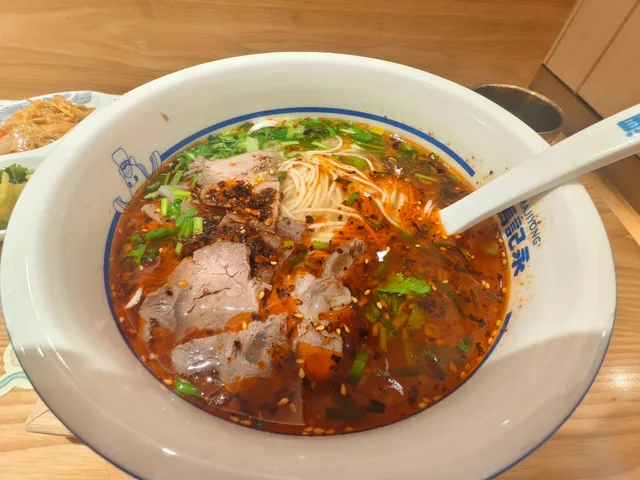
- Lanzhou Beef Noodles
Hand-pulled noodle soup · Breakfast and lunch
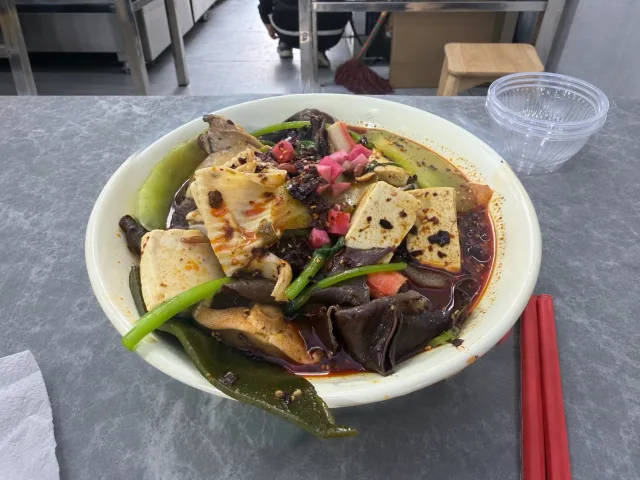
- Tianshui Malatang
Boiled skewers tossed in chili oil · Lunch, dinner, street food
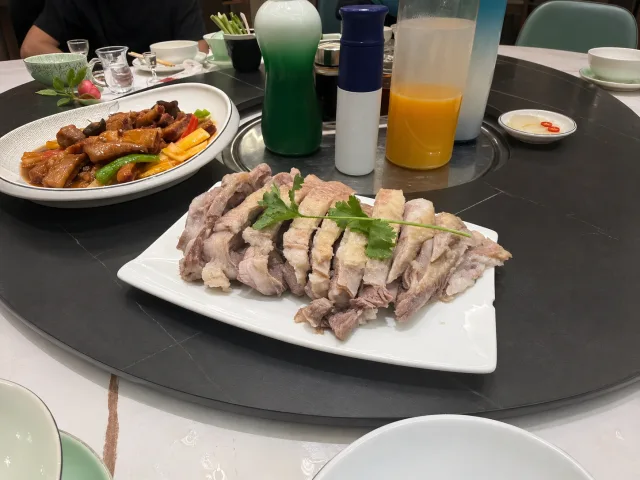
- Lanzhou Hand-Grabbed Mutton
Boiled lamb on the bone · Lunch or dinner, banquets and weddings
FAQ
Questions about Lanzhou Niangpi
What is Lanzhou niangpi?
A steamed wheat sheet from Gansu, cut into strips and eaten cold with chili oil, vinegar, garlic water, mustard and sesame paste.
Is niangpi the same as liangpi?
They are the same family. Liangpi is the general name; in Gansu it is called niangpi, and Lanzhou’s gaodan version is made without washing, with alkali, and cut thick.
What does gaodan mean?
A tall carrying pole. The usual story is that early sellers carried niangpi and seasonings on a pole taller than other hawkers’.
What is the difference between gaodan and shuixi niangpi?
Shuixi is made from starch washed out of a dough and is springy. Gaodan is mixed straight from flour, water and alkali and is softer and yellower.
Why is Lanzhou niangpi yellow?
A little alkali in the gaodan batter turns the steamed sheet a creamy yellow and softens it.
How much does niangpi cost in Lanzhou?
About ¥6–7 a bowl or plate at street stalls and small shops in recent years.
Is niangpi spicy?
It usually has a generous spoonful of chili oil, plus sharp mustard. Ask for less chili or less mustard when you order.
Is niangpi vegetarian?
Usually yes: wheat, vegetables and seasonings. Check whether the chili oil or dressing at a particular stall uses any meat stock.
Sources
Sources and further reading
- 1 Niangpizi, Gansu’s own liangpi: Tianshui, Lanzhou’s gaodan and Wuwei’s alkaline blocks (in Chinese)Chihuo Yanjiusuo (Guokr), via The Paper (2024) ↗
- 2 Lanzhou is not just beef noodles: an aunt’s niangpi, from washing the dough to the chili oil (in Chinese)Jiang Yi, Shipin yu Shenghuo, via The Paper (2020) ↗
- 3 Shihezi liangpi, a Xinjiang heritage snack built on northwestern niangpi (in Chinese)Junken Wenshi, NetEase (2022) ↗
- 4 Gansu gastronomy: five must-try Lanzhou specialties, including shuixi and gaodan niangpizieChinacities ↗
- 5 A ¥6 bowl of gaodan niangpi on a Lanzhou street: batter, steaming and the tall carrying pole (video, in Chinese)Ai Chi de Mai Zong (爱吃的麦总), Bilibili (2026) ↗
- 6 Gaodan niangpi at Ma Laotai on Wuquan Road for ¥6, and drinking the dressing (video, in Chinese)Jincheng homie, Bilibili (2024) ↗
- 7 A Lanzhou gaodan niangpi shop that sells by the jin: a jin of sheets, half a jin of dressing (video, in Chinese)Lao Yang Liu Yaosu (老杨六要素), Bilibili (2022) ↗
- 8 Eight Lanzhou niangpi shops: gaodan, washed and buckwheat (video, in Chinese)Lao Yang Liu Yaosu (老杨六要素), Bilibili (2023) ↗
Last updated November 2026