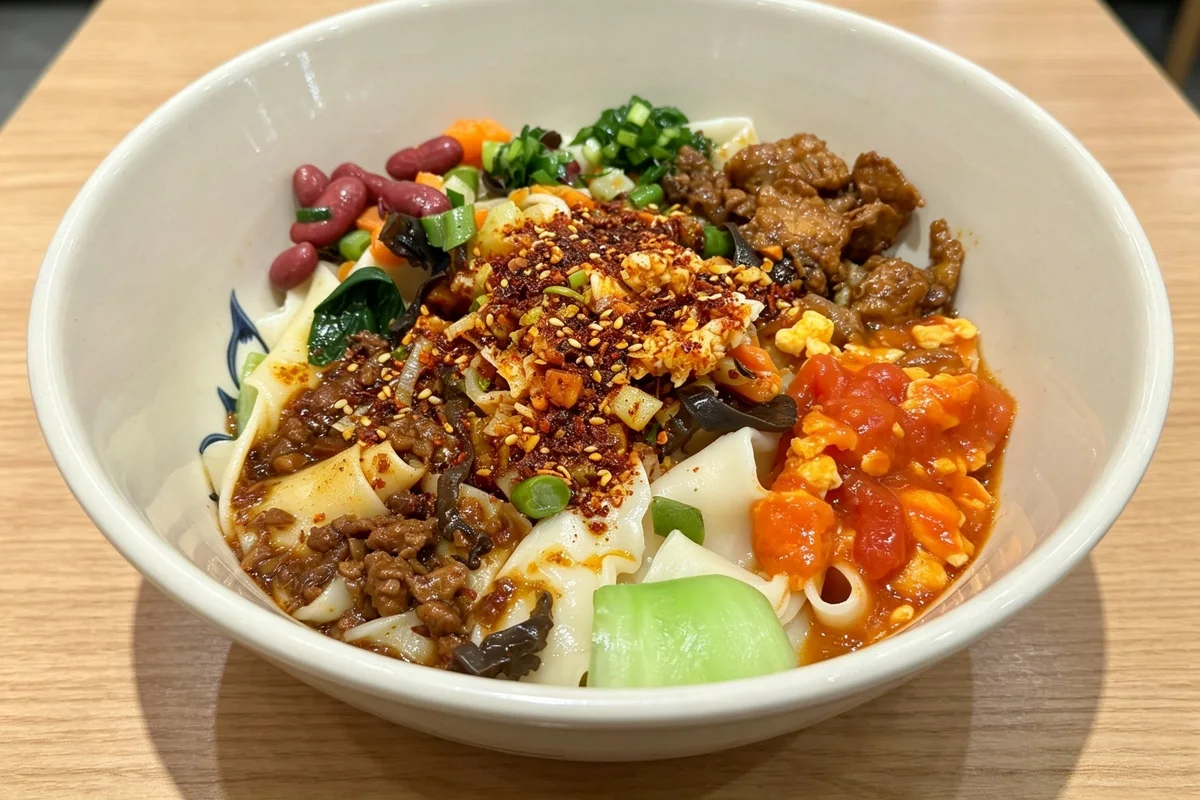
Meet the broad wheat noodles of the Guanzhong plain
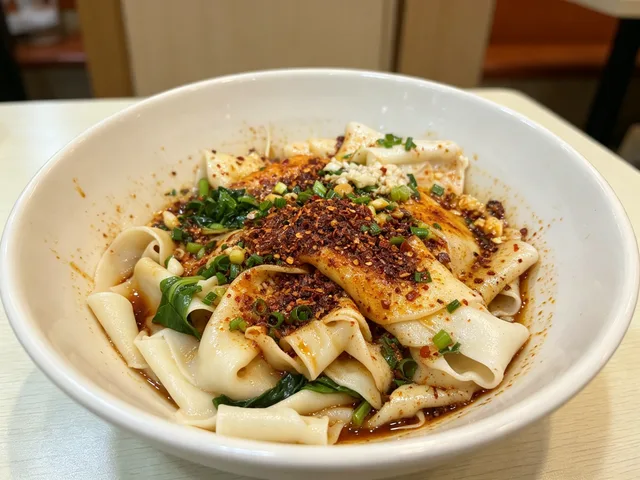
Biang biang noodles are a signature hand-stretched noodle of Shaanxi’s Guanzhong Plain—the local “noodles like a belt.” Rested dough is rolled and stretched into long, wide ribbons with naturally uneven thickness. They may be served with hot oil alone or topped with tomato and egg, pork saozi or vegetables, but wheat remains the focus, framed by vinegar, raw garlic and chilli bloomed in hot oil. The name is commonly linked to the biang, biang sound of dough striking the bench; the elaborate folk character is its cultural emblem.
Common ingredientsWheat flour and salt; pork belly, potato, tofu, bean sprouts and greens; garlic, ground chilli, sesame, soy sauce, vinegar and rapeseed oil.
01
Choose noodle width, dressing and heat level first
Order
For a first bowl, choose between two useful starting points. A plain oil-poured version uses chilli, vinegar, garlic and hot oil to show the noodle most clearly; tomato and egg, pork saozi or vegetables make a fuller meal. Ask for less chilli if needed, and say so early if you do not eat raw garlic. Some shops serve a clove of garlic on the side. Ribbon width and thickness usually follow the house style, although a small shop may be willing to make the noodle slightly thicker for more chew.
Mix
Do not stir only the chilli and topping on the surface. Send the chopsticks to the bottom and lift broad sections upward so vinegar, soy and aromatic oil reach every fold. Repeat until the ribbons are evenly coated. Because the noodles are thick and long, this bottom-to-top mixing is what turns separate layers of wheat, acid, garlic and chilli into one coherent bite.
Eat
Eat the noodles while they are hot and elastic. Fold or separate a long ribbon into a manageable length, then notice the order of sensations: wheat and chew first, followed by toasted chilli, bright vinegar and fresh garlic. If you enjoy raw garlic, take a small bite alongside the noodles. As the bowl cools, the ribbons firm and begin to stick while the just-bloomed aroma fades, so timing matters more than a table crowded with side dishes.
02
One broad noodle must carry hot oil, vinegar and aromatics
The noodle is the lead; the seasonings are there to frame it. In a good bowl, the first impression is the broad ribbon’s chew, followed by vinegar’s brightness, raw garlic’s fresh bite and the toasted aroma released when hot oil strikes dried chilli.
Broad noodles: the structure
After the dough has rested, portions are rolled and stretched by hand. The edges rise and fall naturally, while the center stays thick enough to chew. Width and length vary with each shop’s technique. That belt-like shape is the most immediate sign of biang biang noodles—and it gives the sauce more folds and surface to cling to than a fine noodle.
Vinegar: the balancing edge
Vinegar does more than make the bowl sour. It pulls the weight of chilli and hot oil back into balance and brightens the wheat and garlic. Used well, it leaves the bowl fragrant and clean rather than sharply acidic or greasy.
Chilli and hot oil: aroma at the last moment
Dried chilli, garlic and scallion are laid over the hot noodles before very hot rapeseed oil is poured on top. The heat releases toasted chilli and fresh garlic aromas just before the bowl reaches the table. This oil-poured finish is one of the dish’s strongest sensory signatures.
Flexible toppings: more body, not a new identity
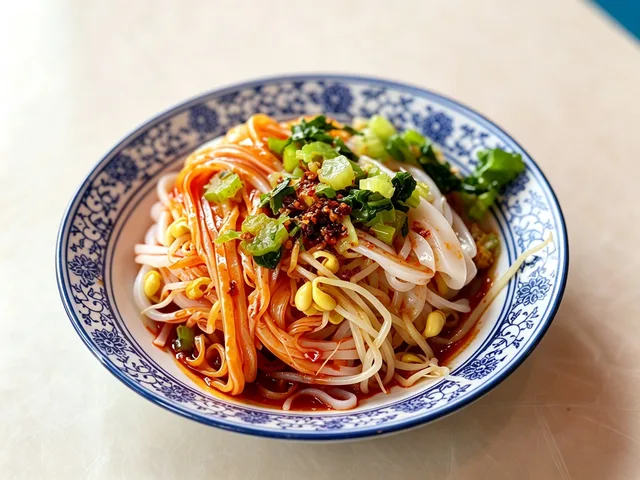
A plain oil-poured bowl is the most direct version, but tomato and egg, pork saozi, beef or seasonal vegetables are also familiar toppings. Biang biang names the broad hand-stretched noodle rather than one compulsory sauce, so both lighter and richer bowls can belong to the family.
These parts are not separate decorations. The noodle supplies texture, vinegar opens the flavors, hot oil wakes the aromatics and the topping decides whether the bowl feels lean or generous. Whatever the version, the wheat aroma and resilient ribbon should still be recognizable at the end.
03
From resting the dough to pulling one wide belt of noodle
Flour ratios, resting time and ribbon thickness differ by shop, but the essential path is consistent: build extensibility in the dough, stretch it into broad ribbons, boil it, then add the base seasonings and finish the aromatics with hot oil.
Mix and rest
Flour, water and salt are worked into an elastic dough and left to rest. That pause relaxes the gluten so the next pull can lengthen the dough without tearing it. Water, salt and resting schedules are part of each cook’s method rather than one universal formula.
Roll, stretch and slap
Rested portions are rolled into thick strips; some cooks press a shallow line through the middle so a stretched ribbon can be split into narrower lengths. Holding both ends, the cook pulls outward and lets the dough strike the work surface as it lengthens—the sound most often linked to the name “biang.”
Boil the ribbons
The noodles go into plenty of boiling water, often with greens added near the end. Because hand-stretched pieces vary in thickness, doneness is judged by the noodle itself: cooked through and elastic, neither raw at the center nor soft and collapsing.
Build the base, then finish with hot oil
Vinegar and soy sauce commonly season the bottom of the bowl. The hot noodles are topped with garlic, scallion and chilli, then splashed with very hot rapeseed oil. Tomato and egg, pork saozi or vegetables can be added, but the plain oil-poured version makes the relationship between noodle, vinegar and chilli easiest to read.
04
Guanzhong wheat farming and the drama of hot-oil finishing
The noodle’s structure grows out of the wheat-food culture of the Guanzhong Plain. Wheat has long been a central staple here, shaped into buns, dumpling skins and noodles that may be rolled, cut, pulled or torn. Biang biang noodles concentrate that familiarity with dough into one unusually broad ribbon: the cook must judge resting time, elasticity and hand pressure well enough to stretch the dough without losing its resilient bite. Shaanxi local records use the image “noodles like a belt” for the province’s broad-noodle tradition, and this is one of its clearest examples.
Its seasoning follows an equally local logic. Wheat provides the base; vinegar lifts it; raw garlic adds a fresh, direct pungency; and chilli with rapeseed oil creates aroma under heat. The flavors may be forceful, but they should not erase the noodle. Even without an elaborate topping, oil, vinegar, garlic and chilli can turn a few broad ribbons into a complete meal.
That directness suits the everyday rhythm of Guanzhong. Broad noodles are substantial, and once they are boiled, a bowl can be finished quickly with seasonings and a pour of hot oil. The slap of dough against the bench and the sudden fragrance when oil meets chilli belong as much to neighborhood noodle shops and home kitchens as to tourist checklists.
Oil-poured hand-pulled noodles now travel far beyond Shaanxi, but the combination of broad stretched dough, the rhythmic slap, the hot-oil finish and the folk character still points back to the province. The making of Xianyang biang biang noodles also appears on Shaanxi’s intangible-cultural-heritage list—recognition of a continuing craft and food custom, not of one frozen recipe.
05
How to say biang—and why the name is memorable
Biáng is one rising-tone syllable, roughly “byahng”; say it twice for biáng biáng. The most intuitive explanation hears the name in the sound of a cook stretching dough and slapping it against a wooden bench: biang, biang. The finished ribbons are so broad and long that menus may also call them “belt noodles.”
The dish’s rare compound written form is a folk creation and its most visible cultural emblem. Many menus use Roman letters because that form is hard to type or display. Its popular writing rhyme gathers pieces of Guanzhong imagery—river bends, horses, a cart and a journey toward Xianyang—into a memory aid. It is better enjoyed as living food folklore than treated as documentary proof of the noodle’s invention.
Folklore one: noodles for an army on the move
One Shaanxi story places an early form of the noodle with Qin soldiers. Without the tools or time for careful rolling, army cooks supposedly salted firm dough, stretched and slapped it into broad pieces, then boiled and seasoned them for a quick, filling meal. The story neatly explains the noodle’s practical shape, but it survives as legend rather than verified military history.
Folklore two: a scholar pays with a character
The best-known tale follows a penniless scholar who finishes a bowl near Xianyang and cannot pay. The shopkeeper offers to waive the bill if he can invent a written form for “biang.” The scholar folds local landscape, horses and travel into an elaborate character and recites a rhyme to remember it; the shop adopts it as a sign, and the name spreads. It is a good story about local imagination—not a dated record of who first made the noodles.
06
Remember the noodle, not only the character
You do not need to write a fifty-plus-stroke folk character to understand biang biang noodles. Remember instead the sound of a ribbon meeting the bench, the way vinegar lightens hot oil, and the moment garlic and chilli wake under a sizzling pour. The bowl is everyday Guanzhong food and a meeting point of hand skill, speech and local imagination. In Xi’an, look past the most overloaded topping: the more telling bowl has noodles stretched with confidence, enough chew to hold sauce, and wheat flavor that remains present after everything is mixed.
Sources
Sources and further reading
- Noodles of ShaanxiChina Daily Government Services ↗
- Xi’an cuisine and snacksChina Daily Government Services ↗
- Shaanxi food customs: biangbiang and oil-splashed noodlesShaanxi Provincial Local Records Office ↗
- Shaanxi intangible cultural heritage list: biangbiang noodle craftPeople’s Government of Shaanxi Province ↗
- Biangbiang noodles: the belt-wide delicacy of Xi’anPeople’s Government of Shaanxi Province ↗
- The popular writing rhyme and scholar legendBaidu Baike ↗