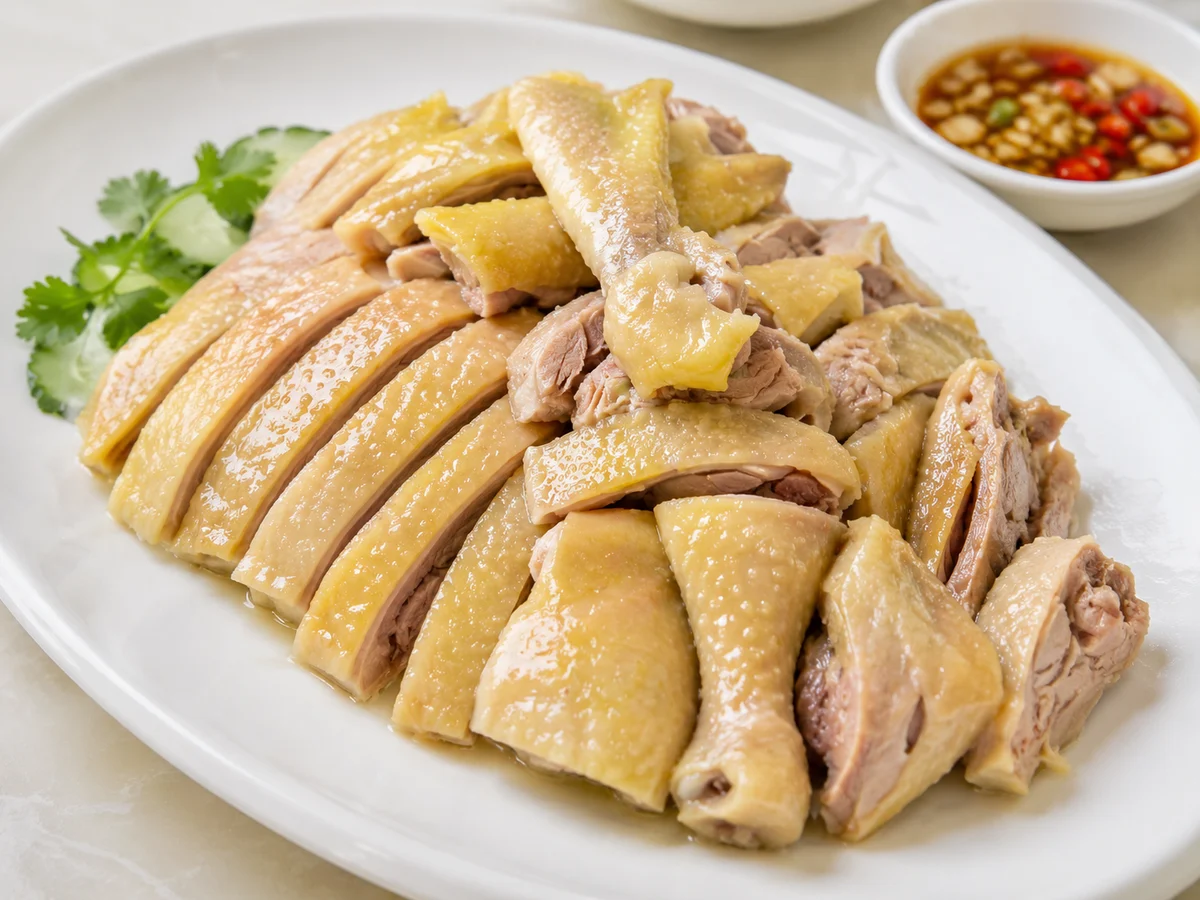
Meet this classic dish from Qionghai
Jiaji duck is a specialty of Jiaji Town in Qionghai and one of Hainan’s traditional four famous dishes. The classic white-cut form highlights a thin skin, a narrow translucent layer of fat and meat that should be tender yet retain a satisfying bite. A savory, sweet and sour garlic-based dip supplies the sharper seasoning.
Common ingredientsJiaji duck, ginger, garlic, vinegar, soy sauce and aromatics; seasonings vary by preparation.
01
Confirm the duck and the cooking method first
How to order it
Confirm whether the menu means genuine Jiaji duck or duck prepared “Jiaji style.” Expect bone-in pieces and ask whether a half portion is available. Taste both lean meat and skin before adding much dip. Ask whether the restaurant serves white-cut, braised or dry-fried Jiaji duck.
How to eat and pair it
The white-cut plate is shared and dipped piece by piece, often alongside rice, greens and another Hainan dish. Quality is judged less by a heavy sauce than by how cleanly the meat, skin and fat have been cooked. Qionghai restaurants may also serve richer braised or salt-dry-fried preparations, but those should not be used to redefine the restrained white-cut benchmark. For a small group, ask for half a duck before ordering other centerpieces. A piece combining skin, a restrained fat layer and meat gives a fairer reading than lean breast alone, and the aroma should remain clean before any garlic-vinegar dip is added.
Easy mix-ups
Misconception: Jiaji duck is always roasted. In practice: White-cut cooking is the best-known traditional presentation; other preparations also exist. Misconception: The dip is optional decoration. In practice: Its sweet-sour garlic brightness is designed to balance the duck’s richness.
Serve breast first, check bone-in pieces and cool leftovers promptly
Use serving chopsticks, distribute both breast and leg, and keep a side plate for bones. Children need meat removed from chopped bone by an adult. Pair duck with rice, greens and a light soup; adding Wenchang chicken and coconut chicken at the same meal may create an interesting Hainan poultry tasting, but otherwise repeats gentle meat textures and makes portioning difficult.
A specialist counter protects the short window between chopping and drying
Look for whole cooked birds held under controlled conditions and chopped in modest batches, with separate boards for cooked poultry and staff able to name the portion. Exposed breast edges lose moisture quickly, while sealed hot trays soften skin. A steady flow of orders helps, but cleanliness and temperature still matter. Ask for sauce separately and begin with breast slices as soon as the platter arrives. If comparing white-cut and braised versions, use the same duck portion size and eat white-cut first. Its lighter seasoning exposes meat and skin; braising leaves a stronger aftertaste. This sequence prevents soy and spice from making the gentler plate seem blank.
02
A careful Hainan poultry comparison separates species, cooking and sauce instead of ranking tenderness alone
If the table also orders Wenchang chicken, taste both white-cut meats plain before using dip. Chicken is usually lighter and finer-grained; duck offers darker flavor, more assertive fat and a firmer leg. Neither should be judged by which feels most like boneless chicken breast. Compare breast with breast, leg with leg and note how each skin carries sauce. This turns a famous-dish checklist into a useful lesson about species and husbandry.
Coconut chicken hot pot belongs to another service system because the meat cooks at the table and shares its flavor with broth. Roast or braised duck adds browning or soy-spice concentration. A restaurant offering several Hainan poultry icons should explain those differences and recommend portions. Ordering every full bird for two people creates leftovers before any fair comparison is possible.
When the platter arrives, check that breast slices have not dried at their exposed edges and that leg joints are fully cooked. A small amount of clear juice is normal; a pool of watery purge or sauce hiding underneath deserves attention. Good service keeps chopped pieces orderly enough that diners can identify what they are eating.
03
Skin, fat and firm duck meat must stay in balance
The meat should taste of duck, with skin and fat supporting rather than greasing every bite
A mature or active duck can have firmer, darker meat than industrial chicken. Firm does not mean dry or rubbery. Breast slices should stay moist, leg meat should yield with a deeper chew and skin should be clean, supple or lightly springy according to preparation. A thick cold fat layer, bloody joint or stale poultry aroma is not a desirable rustic trait. Dark breed pigmentation also does not excuse uncertain doneness. Hainan dipping sauces may bring ginger, garlic, chilli, citrus-like acidity or soy seasoning. Taste one piece plain, then dip only an edge. Sauce should brighten duck richness rather than hide source or overcooking. Ask about the house dip, since sesame, peanut, soy and wheat can appear. If a white-cut platter arrives with sauce poured over it, the skin softens and diners lose control of salt and heat.
Jiaji duck
The local duck and feeding tradition are part of the name; ordinary duck does not automatically become Jiaji duck.
Controlled cooking
Gentle poaching and resting aim for tender meat, intact skin and a clean layer of fat.
Garlic-vinegar dip
Savory, sweet and sour notes cut through the richness of skin and duck fat.
White-cut Jiaji duck
The signature form, chopped and served with a tart aromatic dip.
Braised or dry-fried duck
Stronger seasoning and rendered edges create a different expression of the same regional ingredient.
- Skin that is thin rather than rubbery
- Meat that is moist but not cotton-soft
- A dip bright enough to balance duck fat
04
Gentle cooking must suit both breast and leg
The duck is gently cooked or braised, cooled enough to set its texture, then chopped and served with a sharp dipping sauce.
Ask about the duck, cooking method and portion before treating Jiaji duck as one fixed plate
Jiaji duck, associated with Qionghai’s Jiaji area and Hainan’s celebrated food traditions, is commonly linked with a locally raised type of Muscovy duck. Restaurant sourcing, age and breed descriptions vary, so ask what the house means by the name rather than expecting a protected label to answer every question. The duck may appear white-cut, braised or in another local preparation. A menu translation that only says “Hainan duck” needs clarification. Confirm whether the order is a quarter, half or whole bird, how it is priced and whether head, feet, neck or offal are included. Bone-in chopped duck yields less meat than its visual platter size suggests. White-cut service puts most attention on meat, skin and dip; braised versions emphasize sauce and spice. First-time diners should choose the house signature and avoid ordering two large versions unless making a deliberate comparison.
Feed stories matter less than traceable husbandry, clean processing and accurate cooking
Local accounts often emphasize how Jiaji ducks are raised or finished, sometimes with grain-based feeding. Practices change across farms and time. A restaurant should be able to name a supplier or basic sourcing without turning every detail into a romantic legend. Humane, legal husbandry and cold-chain handling are more meaningful than a claim that one special feed automatically guarantees tenderness. For white-cut duck, cooks manage gentle heat and resting so thick legs are safely cooked without drying breast meat. Braising must soften connective tissue while leaving pieces intact. Chopping after cooking should create clean bone cuts, not showers of splinters. A busy specialist that portions to order offers better evidence than a pre-chopped platter drying under display lights.
05
Why Jiaji duck is more than “Hainan white-cut duck”
Jiaji duck is named for Jiaji Town in Qionghai and is one of Hainan’s traditional four famous dishes.
The white-cut form foregrounds local duck, skin and meat texture, with the table dip supplying sweet-sour sharpness. Braised and dry-fried forms show that the ingredient supports more than one canonical plate.
06
How to say Qionghai Jiaji Duck—and what the name tells you
Pronounced qióng hǎi jiā jī yā. Menus may call it Jiaji duck, Kachek duck, jiājī yā, Hainan duck.
Sources