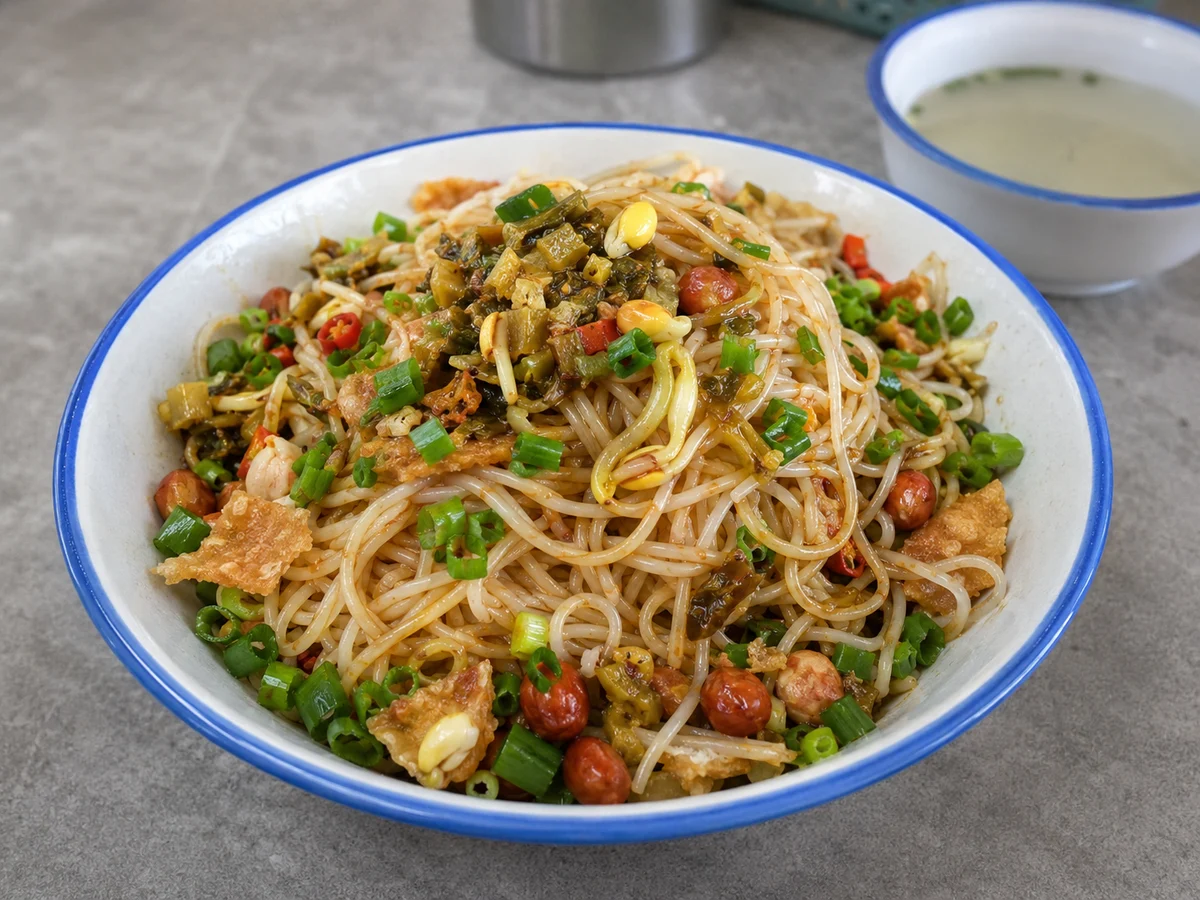
Meet Haikou’s classic dressed rice noodles
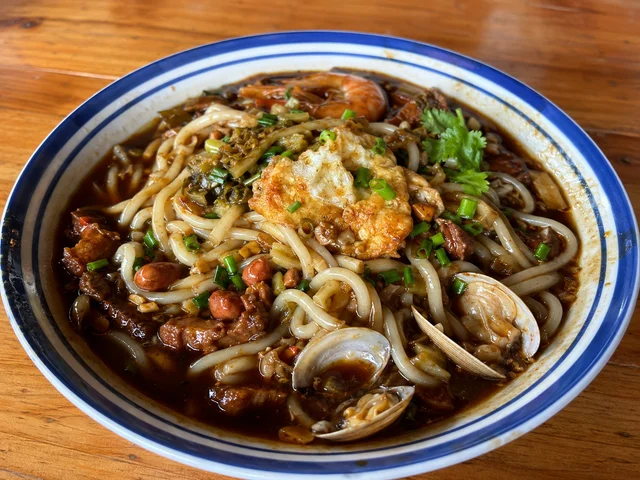
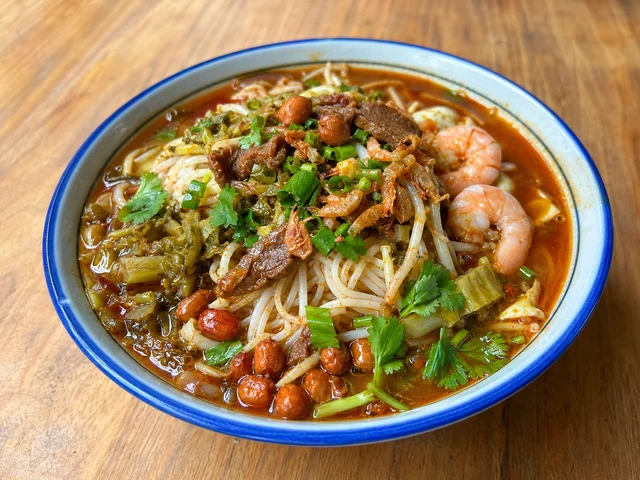
Hainan rice noodles, usually called Hainan fen or Hainan yanfen on the island, are fine rice noodles associated especially with Haikou, Chengmai and Ding’an. The classic bowl is mixed rather than soupy: a glossy savory-sweet gravy, garlic oil and dark soy season the noodles, while peanuts, sesame, bamboo shoots, pickles, bean sprouts, dried beef or braised pork create layers of chew and crunch.
Common ingredientsFine rice noodles, savory gravy or light broth, shredded pork, beef jerky, pickled vegetables, roasted peanuts, scallions and optional chilli.
01
Look for fine noodles and a dry-mixed structure
How to order it
Ask whether the shop serves gravy-mixed or dry-mixed Hainan fen. Mix from the bottom before eating so the dressing reaches every strand. Confirm beef jerky, pork and peanuts if you have dietary restrictions.
How to eat and pair it
A bowl is assembled quickly, mixed vigorously and eaten before the fine noodles absorb too much dressing. Some diners add chilli or a spoonful of clear broth, but the recognizable form is dressed noodles with many small toppings rather than a large soup bowl.
Easy mix-ups
Misconception: Hainan fen means every rice-noodle dish from Hainan. In practice: It names a particular dressed-noodle tradition; Baoluo, Hou’an and Lingshui noodles have their own local structures. Misconception: The bowl must always contain one fixed topping set. In practice: Shops vary, while fine noodles, seasoned dressing and layered toppings remain the useful identifying pattern.
Ask about toppings, then mix from the bottom before the fine noodles absorb unevenly
Confirm meat, seafood, peanuts, sesame, pickles and chilli. “Vegetable Hainan fen” can still use meat stock or dried seafood in its sauce. Order a small breakfast portion if comparing other island noodles. Sauce and toppings often settle beneath the white strands, so lift and turn rather than pressing the bowl into paste. Taste after a complete mix, then add chilli or sour condiment in small amounts. Fine noodles soften quickly. Eat once mixed instead of waiting through a long photo session. Takeaway works best with sauce and crisp toppings separate; otherwise peanuts soften and pickles release water. At home, combine only what will be eaten. Cold fine noodles may break when forced apart, so let the sauce loosen them gently instead of adding excess oil.
The pale noodles conceal a complex allergen and stock system
Rice noodles may be gluten-free in isolation, yet soy sauce can contain wheat; peanuts, sesame, shellfish, fish products and pork may appear in small quantities. Shared strainers and prep surfaces create cross-contact. Ask about the dressing and garnish tray, not only the noodles. Removing visible peanuts after mixing is not suitable for a serious allergy.
A controlled comparison separates noodle, dressing and garnish quality
At two shops, order the standard portion with similar chilli. Before mixing, note noodle thickness, the amount of dressing beneath it and whether crisp toppings are protected from moisture. Mix completely and take a bite containing noodle, pickle, nut and savory topping. The better bowl is not necessarily the one with more ingredients; it is the one where each texture remains identifiable and no single sauce buries the rice. Next taste a few strands with only dressing. This exposes raw starch, excessive thickener and salt that a loaded bite may hide. Finish with the broth if served alongside and ask whether diners normally add it to the bowl or sip it separately. Following the house rhythm avoids turning a carefully mixed dish into generic noodle soup. Record the form on a menu photo—dry-mixed, gravy-dressed or accompanied by broth—rather than remembering only “Hainan noodles.” That practical detail helps travelers find the style again and prevents confusion with the island’s town-named soup and sour noodles.
02
The fine dressed noodle in Hainan’s wider fen family
Hainan fen is the fine-stranded, dressed member of the island’s rice-noodle family. Its center is not a large bowl of soup but the way a savory gravy or dry soy-and-garlic dressing coats soft noodles and binds many small toppings. That makes mixing essential: peanuts, pickles, bamboo shoots, bean sprouts and meat should be distributed through the bowl rather than eaten as a garnish from the top.
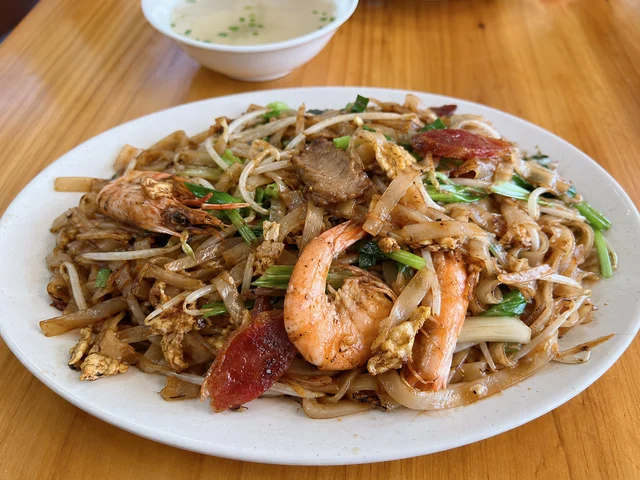
The neighboring names describe different structures. Baoluo fen uses a thicker, more resilient noodle and may arrive in broth or a richer mixed gravy. Hou’an fen is a Wanning breakfast soup whose pork-rich broth carries the meal. Lingshui suanfen is mixed with a bright sour dressing and coastal toppings, while Hainan fried rice noodles are worked in a hot wok. If a menu translates all five simply as “Hainan rice noodles,” the Chinese name and the presence of broth, dressing or wok frying are the fastest ways to identify what you are ordering.
03
How a thin gravy coats fine noodles and many small toppings
Hainan fen is a mixed rice-noodle composition, not a generic clear noodle soup
A representative bowl uses fine rice noodles combined with a savory dressing or gravy and a layered set of toppings that can include peanuts, sesame, pickled vegetables, bamboo shoots, herbs, fried shallot, meat or dried seafood. Recipes vary by town and shop. Ask whether the house serves it dry-mixed, with a thick sauce or with broth on the side. An English menu that lists only “Hainan noodles” hides the form that matters most. The bowl should move from soft noodles to crunchy nuts, sharp pickle, aromatic garnish and small savory toppings. No single topping needs to dominate. A huge ladle of starch-thickened brown sauce can glue everything together; too little dressing leaves dry clumps. First taste the standard mix before requesting removals, then identify which components provide acid, crunch and umami.
Fine rice noodles
Thinner than Baoluo or many soup noodles, they soften readily and carry the dressing.
Gravy or dry dressing
Warm-gravy yanfen and drier soy-and-garlic versions are both established; neither is the only valid form.
Contrasting toppings
Peanuts, sesame, pickles, bamboo shoots, bean sprouts and meat make texture as important as sauce.
Warm-gravy yanfen
A thickened savory gravy binds noodles and toppings into a soft, glossy bowl.
Dry-mixed Hainan fen
Dark soy, garlic oil and seasonings coat the noodles without a starchy gravy; this style appears in tea houses and restaurants as well as shops.
- Fine noodles coated rather than flooded
- A balanced mix of soft, crisp, nutty and pickled textures
- Dressing with savory depth but no heavy sugary stickiness
04
Prepare fine noodles, gravy and crisp toppings on separate tracks
The noodles are briefly warmed, dressed with gravy and layered with crisp, pickled and meaty toppings; some shops serve a light broth alongside.
05
Why Hainan breakfast has a town-by-town noodle map
Hainan fen is associated particularly with Haikou and the northern island counties of Chengmai and Ding’an. It belongs to a wider Hainan rice-noodle world but names a distinct fine, dressed-noodle tradition.
Often called yanfen, or mixed/marinated noodles, it appears at breakfast shops, snack counters and laoba tea tables. Warm-gravy and dry-mixed forms both have strong local followings.
A balanced bowl stays light enough for breakfast while carrying many small flavors
Good noodles are smooth, pliable and separate, without a raw-rice center or sour spoilage. The sauce should cling as a thin savory layer, not taste like flour paste. Pickled bamboo or vegetables provide intentional acidity; that clean sharp note differs from a whole bowl turning unexpectedly sour. Nuts need fresh roasted aroma, while fried shallots should be crisp rather than rancid. Hainan fen should not be collapsed with Lingshui sour noodles, Baoluo noodles, Hou’an noodles or fried rice noodles. They share rice and island geography, but differ in noodle thickness, broth or sauce, toppings and town associations. A useful shop labels each style and can explain whether its bowl is mixed, sour-sauced, soup-based or wok-fried.
06
How to say Hainan Rice Noodles—and what the name tells you
Pronounced hǎi nán fěn. Menus may call it Hainan fen, Hainan yanfen, Haikou rice noodles, hǎinán fěn.
Sources