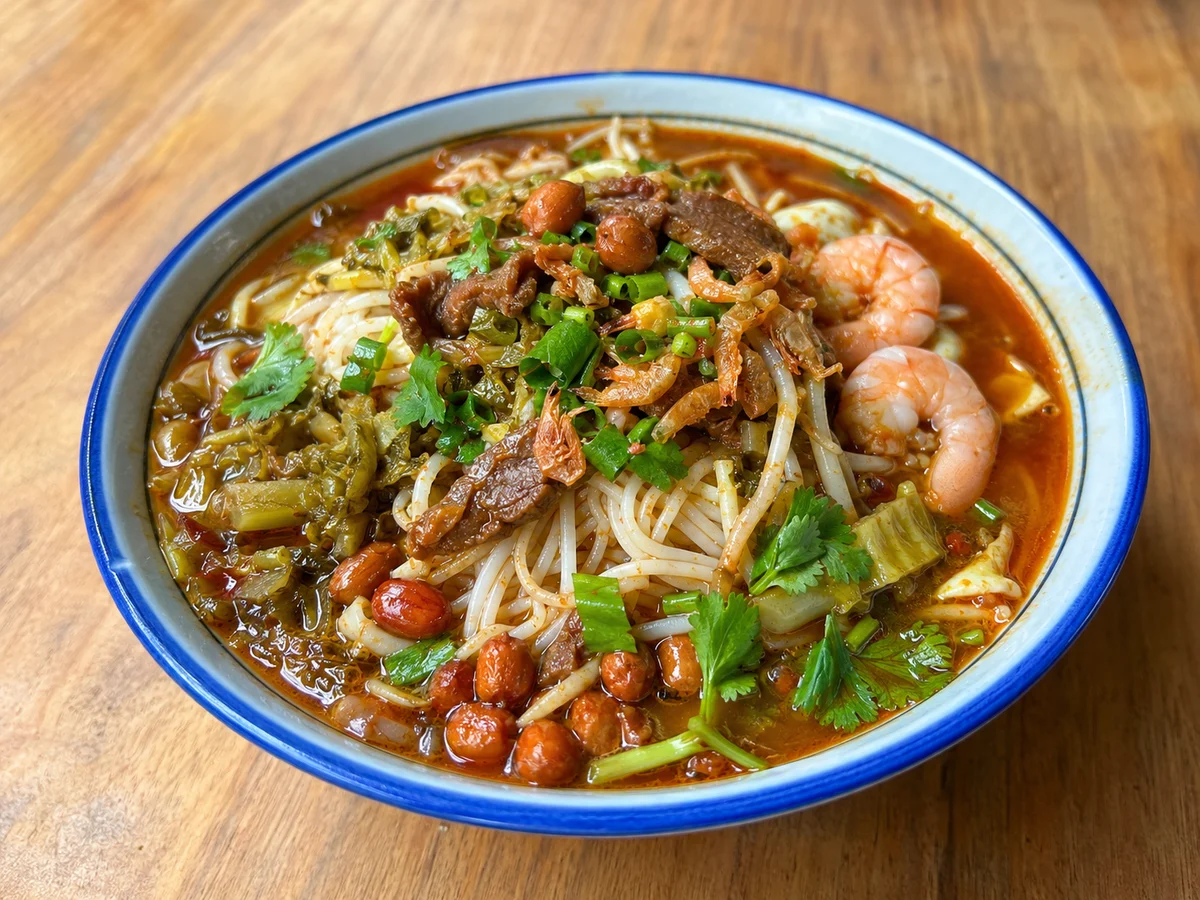
Meet southern Hainan’s tart dressed rice noodles
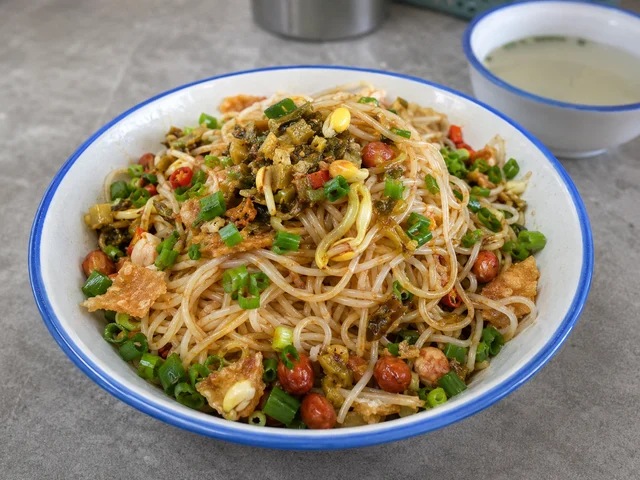
Lingshui sour rice noodles are thin, tender noodles built around a glossy sour dressing whose flavor is also sweet, savory and sometimes hot. The bowl can be remarkably elaborate: fried fish, fish cake, dried beef, dried sandworm, shredded squid, peanuts, pickles, coriander and Chinese chives may all appear before the sauce is mixed through.
Common ingredientsThin rice noodles, sour dressing, savory gravy, pickled vegetables, herbs, peanuts, chilli and optional seafood or meat toppings.
01
Confirm that this is a sour dry-mixed bowl
How to order it
Mix completely from the bottom before judging the sauce. Ask which dried seafood, fish products and meat toppings are included. Request Hainan yellow-lantern chilli separately if you are unsure of its heat. If you dislike sweetness, ask whether the shop can reduce sweet sauce rather than expecting a purely vinegar-sour bowl.
How to eat and pair it
In Lingshui, shops and market stalls assemble the bowl to order and serve it as a mixed snack, not as a bowl of sour soup. Diners value the way one mouthful can carry tart sauce, soft noodles, crunchy peanuts, herbs and savory dried toppings. It is refreshing, but not minimalist, and the exact topping set often reflects the stall’s price and house style.
Easy mix-ups
Misconception: Suanfen is only sour noodles with vegetables. In practice: Traditional Lingshui bowls may include a broad set of dried seafood, fish and meat toppings. Misconception: It must be extremely spicy. In practice: Sourness leads; chilli level varies and can often be adjusted.
Identify seafood and nuts before mixing, then distribute every topping through the bowl
Ask whether the serving contains peanuts, sesame, shellfish, fish cake, dried fish, beef jerky or pork. Small chopped toppings can disappear once mixed, so dietary restrictions must be discussed first. Choose a normal sour level for the first bowl and request extra sauce separately. “Less sour” may require a different ratio, not simply rinsing the noodles. Mix from the bottom with lifting motions so the fine noodles stay intact and every diner receives topping. Taste a complete bite before adding chilli. During a noodle crawl, order a small portion and compare it with Hainan fen: Lingshui’s intentionally sour sauce should be the organizing feature, not an accidental variation in garnish.
Compare sauce direction before comparing topping quantity
Order Lingshui sour noodles and Hainan fen on different mornings with similar basic toppings. In the Lingshui bowl, acid should organize the entire bite; in Hainan fen, savory dressing and mixed textures take the lead. If one shop piles on extra meat or peanuts, mentally separate abundance from style. The useful question is which sauce best supports the rice noodle, not which bowl looks most crowded.
02
Lingshui’s mixed noodle is defined by sourness, not soup
Lingshui suanfen is a mixed rice-noodle snack from Lingshui Li Autonomous County. Its defining move is the sour dressing: bright, lightly sweet and often warm with chilli, then balanced by peanuts, herbs, pickles and combinations of dried seafood, fish products, beef or other local toppings. The bowl can be cool or warm, but it is tossed so the sauce reaches the noodles; it is not identified by a clear broth.
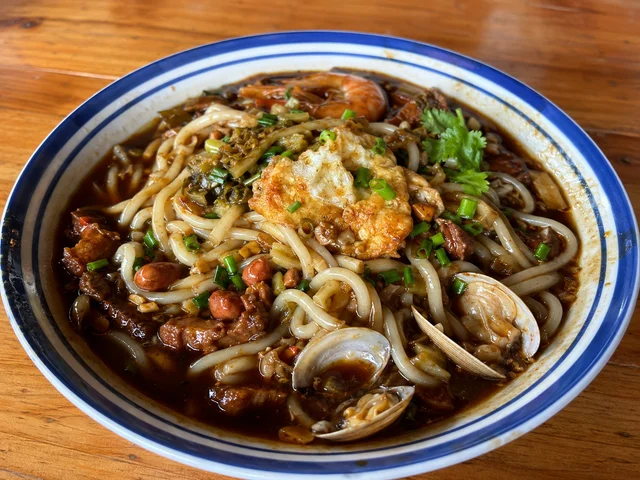
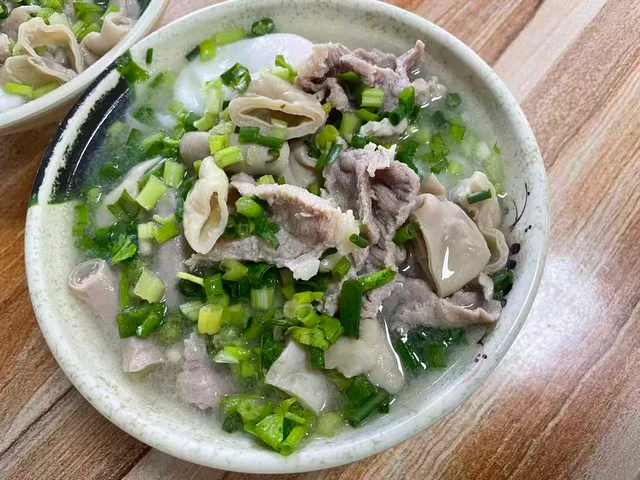
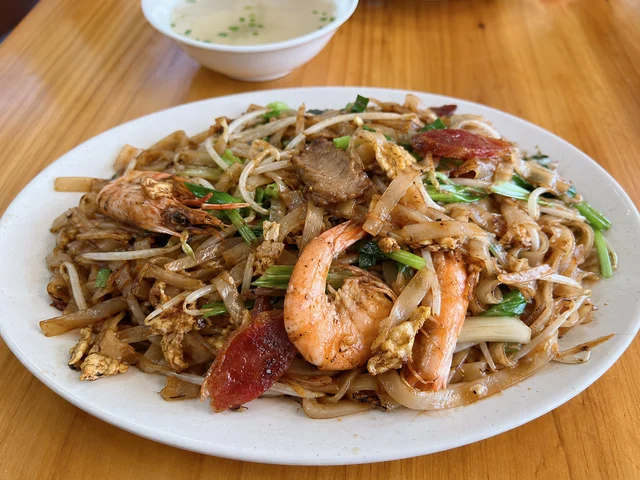
That acid-led structure separates it from the island’s other familiar fen. Hou’an fen depends on a long-simmered pork broth, Baoluo fen on thicker noodles served in soup or gravy, and fine Hainan fen on savory dressing without the same pronounced sour center. Hainan fried noodles go through the wok and should show aromatic browning. When ordering Lingshui suanfen, ask about the day’s seafood, peanuts and chilli, then mix before deciding whether it needs more acidity—the standard bowl may already be sharper than its pale appearance suggests.
03
Acid, sweetness, savor and crisp toppings arrive in sequence
The sauce should be layered, refreshing and savory—not simply vinegar poured over rice noodles
Lingshui sour noodles combine rice noodles with a sweet-sour-savory sauce and varied toppings that may include peanuts, vegetables, herbs, seafood products, fish cake or dried meat depending on the shop. The sour component can involve vinegar, pickled ingredients or a house liquid balanced with sugar and stock. Ask what creates the acidity. A sharp raw-vinegar burn without savory depth is not the only or best expression. Good sauce wakes the palate, then lets roasted nuts, herbs and marine or meat toppings emerge. Sweetness rounds the acid without turning the bowl into dessert. Thickened versions should remain pourable; a gluey coating hides noodle texture. Chilli is optional or adjustable, and adding more heat cannot repair flat sourness.
Judge sourness over several bites because cold, sugar and chilli can disguise its balance
The first cold bite may feel sharply refreshing, while sugar emerges as the sauce warms and chilli accumulates. Eat three or four mixed bites before requesting more acid. A balanced bowl remains appetizing rather than becoming sweeter, harsher or saltier toward the bottom. If all sauce settled underneath, incomplete mixing—not the recipe—may explain a late shock. Compare clean acid with spoilage through context. Vinegar and pickles should taste intentionally the same across the bowl; deterioration may bring gas, slime, package swelling or a new yeast-like smell. Acidic food still needs protected toppings and cold handling. A vendor should not answer every storage question by pointing to the word “sour.” For children or acid-sensitive diners, a smaller standard bowl is more informative than one heavily diluted after service. Choose another Hainan noodle if the defining sour profile is unsuitable; the goal is not to remove the feature and then decide the dish lacks character.
Sour dressing
The signature sauce should be tart and appetite-opening, but usually carries sweetness and savory seasoning too.
Thin rice noodles
Soft noodles absorb the dressing and contrast with crisp or chewy toppings.
Sea-and-land toppings
Fish products, dried seafood, beef jerky, peanuts and herbs make the bowl more complex than a simple sour noodle salad.
Classic mixed sour noodles
A full topping set with fish, meat, dried seafood, peanuts and herbs creates the most layered bowl.
Simplified stall bowl
Vendors may use fewer toppings or adjust sweetness, sourness and chilli to local taste and price.
- Thin noodles evenly glossed with sauce
- Sourness balanced by sweet, savory and aromatic notes
- Several distinct textures rather than one soft mass
04
The sour dressing and fine noodles should meet only at service
Cool or warm noodles are layered with the toppings, dressed to order and mixed thoroughly; this is a mixed-noodle dish rather than a bowl of sour soup.
05
Why acidity defines Lingshui sour rice noodles
Lingshui suanfen is the signature noodle snack of Lingshui Li Autonomous County in southeastern Hainan. Specialist stalls and long-running shops have helped turn a local mixed noodle into an island-wide name.
Its generous sea-and-land toppings reflect Lingshui’s coastal setting. The sour dressing is refreshing in tropical heat, while dried seafood, fish products, beef and peanuts make the bowl substantial.
Separate wet sauce from crisp toppings and remember the town name points to a specific style
For takeaway, packing sauce, noodles and dry garnishes separately preserves the intended contrast. Combine them immediately before eating rather than judging a fully mixed bowl after the fine strands have absorbed the dressing.
06
How to say Lingshui Sour Rice Noodles—and what the name tells you
Pronounced líng shuǐ suān fěn. Menus may call it Lingshui suanfen, Hainan sour noodles, língshuǐ suānfěn, Hainan rice noodle salad.
Intentional acid does not make every sour smell safe
Fresh rice noodles smell mild and feel smooth with light resilience. Pickles and sauce deliver a clean expected tartness. Fermented gas, slime, package swelling or an odor that changed during warm holding can signal spoilage even when the dish is called “sour.” Strong vinegar and chilli can mask early warning signs, so storage history remains essential.
Sources