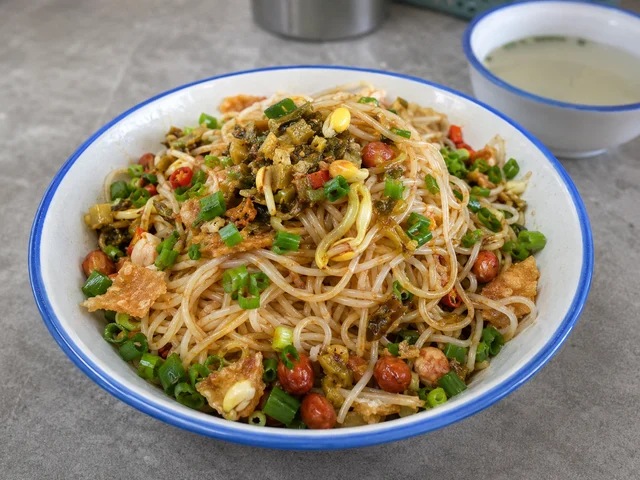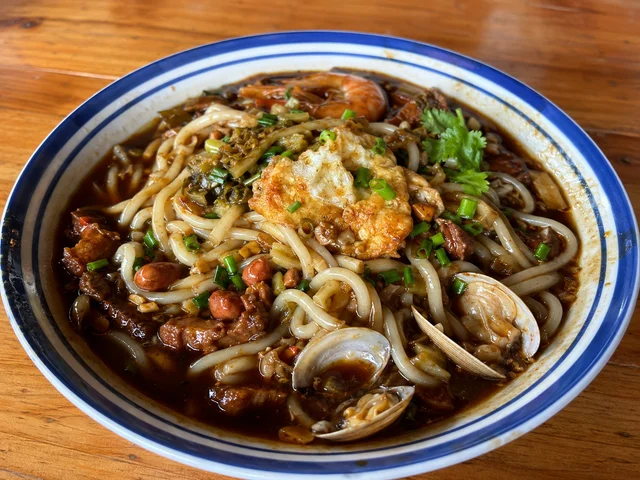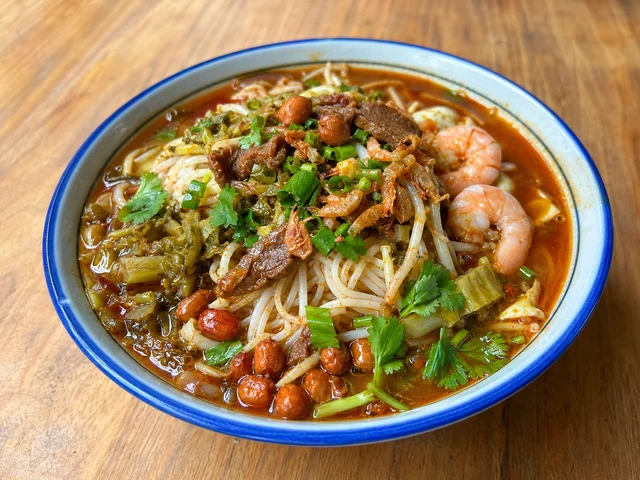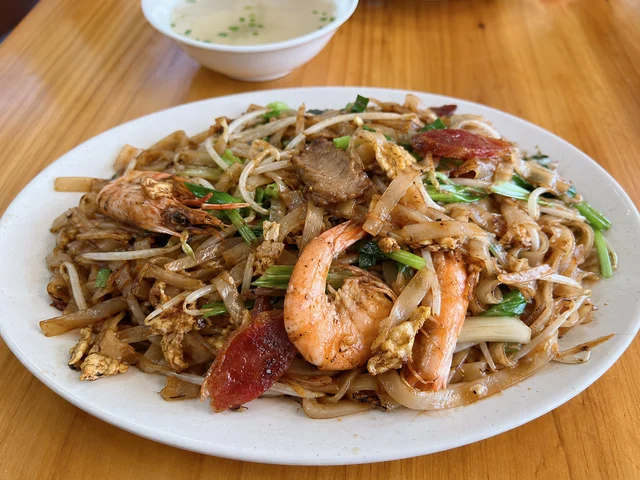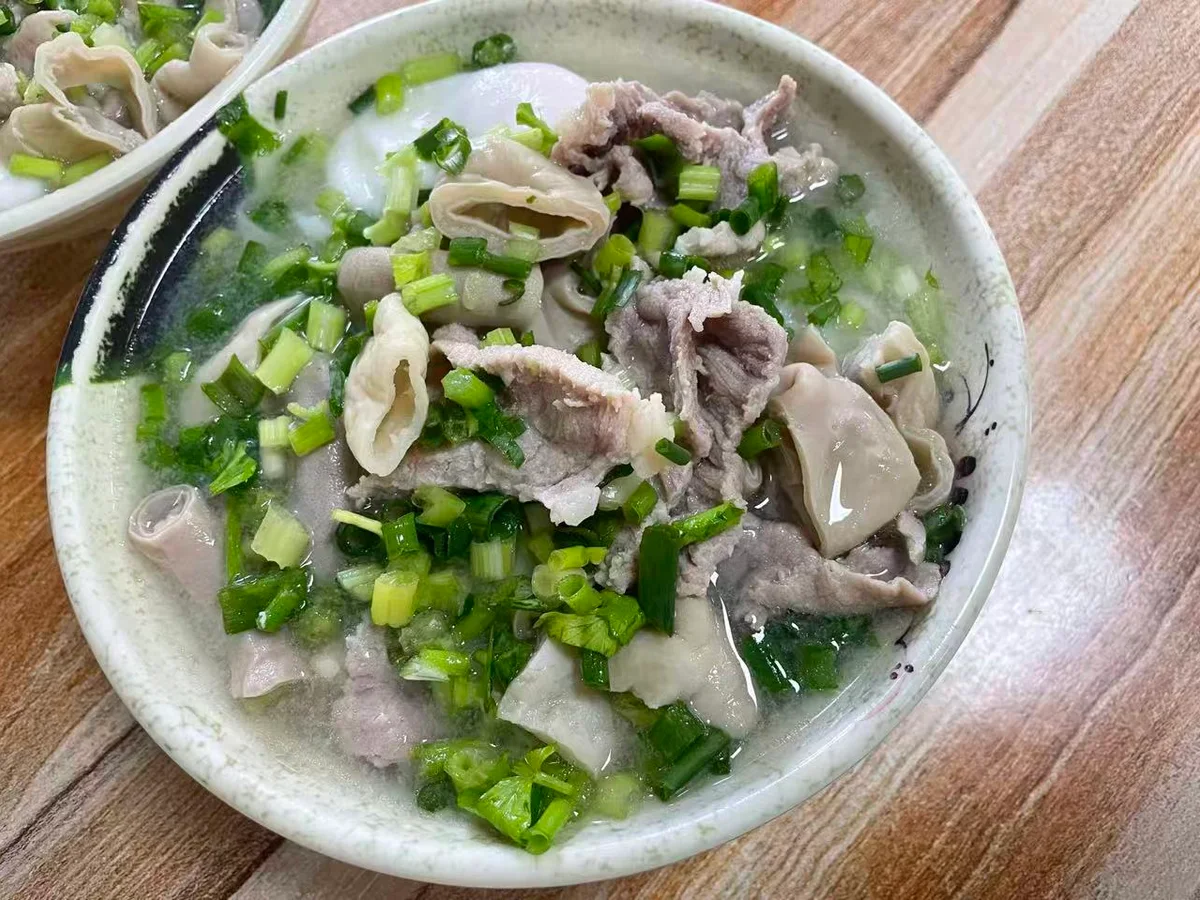
Meet Wanning’s breakfast noodle soup
Hou’an rice noodles are the celebrated breakfast soup of Hou’an Town in Wanning. Their character comes from a long-simmered pork broth rather than a delicate clear consommé: pork bones, intestines and other cuts contribute a rounded, peppery savoriness, poured over soft handmade-style rice noodles with meat, scallion or celery and crisp fried shrimp batter in some shops.
Common ingredientsRice noodles, pork-bone broth, sliced pork and optional intestines or other traditional pork toppings, scallions and fried garlic.
01
Choose the bowl and eat it while the broth is lively
How to order it
Go early; breakfast specialists may sell their best broth and toppings quickly. Ask which intestine, offal and pork cuts come standard, and whether the broth itself contains offal. Choose a small bowl first if you are also sampling Wanning snacks. Taste before adding extra pepper or chilli.
How to eat and pair it
Hou’an fen is designed for speed without tasting rushed. Noodles and toppings are portioned into a bowl, boiling broth finishes or reheats them, and breakfast reaches the table in minutes. Diners often add a little chopped chilli only after tasting the white-pepper warmth. In Wanning, the broth—not an overloaded topping display—is the reputation of the shop. Morning turnover is a practical part of the experience: a specialist moving broth, noodles and pork continuously is easier to assess than a general restaurant holding one assembled bowl for late service. If intestine is included, it should be fully cooked, clean and resilient rather than masked by pepper.
Easy mix-ups
Misconception: Hou’an fen is a light clear-broth noodle. In practice: The traditional identity comes from a concentrated pork-bone and offal broth, even when the liquid looks pale. Misconception: Offal is only an optional modern topping. In practice: Pork intestine and other cuts are closely tied to how many traditional shops build both broth and bowl.
A breakfast counter succeeds through hot stock, quick noodles and protected toppings
At a Hou’an specialist, watch how the bowl is assembled: fine noodles are loosened, individual pork or seafood toppings are timed separately, and boiling broth brings the components together. This sequence matters more than an oversized display of garnishes. Compare Hou’an noodles with Baoluo or Hainan fen using form: Hou’an’s broth-centered bowl differs from thicker Baoluo strands and mixed fine Hainan fen. Town names are useful map coordinates, not interchangeable branding. Small portions across different mornings preserve attention better than three full bowls in one sitting.
Fine rice noodles can sit in a broth containing wheat, pork and shellfish
Soy sauce may contain wheat; fish cake can contain starch or egg; seafood and pork may share stock and ladles. Serious allergies and religious restrictions require a separate confirmed preparation. A scoop with visible meat removed is not vegetarian or allergen-free. If the bowl must travel, separating noodles and broth protects the feature that defines Hou’an fen: a hot, pork-led stock surrounding fine strands that have not yet swollen. Pepper and pickles should be added only after tasting that base.
02
In Hou’an fen, the pork broth carries the breakfast
Hou’an fen is the breakfast soup of Hou’an Town in Wanning. Although the broth may look pale, traditional shops build it from pork bones, meat and often intestine or other cuts, giving it more body and white-pepper warmth than a delicate clear consommé. Smooth noodles and freshly prepared pork toppings support that broth; an overloaded garnish display is less important than aroma, temperature and the clean handling of offal.
The soup format is the quickest distinction within Hainan’s noodle family. Fine Hainan fen is usually dressed and mixed, Lingshui suanfen is driven by sour sauce, and fried rice noodles are dry-cooked in a wok. Baoluo fen can also be served in broth, but its thicker noodle and Wenchang identity remain different. At a Hou’an specialist, ask which pork cuts enter both the stock and the finished bowl. Removing visible intestine may not make the broth suitable for someone avoiding offal, while a small plain-looking bowl may still be the shop’s most concentrated expression.
03
Broth, noodles and pork flavor must stay in balance
A single-topping bowl can show the stock more clearly than the mixed special
The mixed bowl is useful for variety but creates many competing cooking windows. On a return visit, order pork slices, offal or seafood alone if the shop offers it. With fewer solids, it becomes easier to judge whether the broth has its own depth and whether the fine noodles were timed well. The comparison also helps identify which ingredient contributed an aroma you liked or disliked in the special.
Taste in a sequence that reveals stock, noodle and topping rather than only pepper
Begin with broth from a clear area, then noodles alone, a muscle-meat piece and finally any offal or seafood. This sequence reveals whether one clean stock connects the bowl and whether each topping was cooked separately. A mixed bowl should offer variety without making every organ and shellfish taste like the same long-held broth. Ask for pepper and pickles on the side during a first visit. White pepper can make a weak stock seem lively and pickles can conceal excess fat. Add them after the plain sequence. If the bowl remains clean and savory, condiments become accents rather than rescue tools. When comparing with another Wanning shop, order the same topping category. A pork-only bowl cannot fairly be ranked against a seafood-and-offal special by intensity. Note stock direction, fine-noodle timing and staff knowledge; those qualities travel beyond one changing garnish list.
Pork-rich broth
Pork bones and offal may simmer together for hours, creating body and deep aroma.
Rice noodles
Soft, smooth strands are designed to take on the rich broth without becoming heavy.
White pepper and fresh herbs
Pepper gives warmth while scallion or celery brightens the pork broth.
Pork and intestine bowl
The robust local form combines sliced pork, small intestine or other offal with the long-cooked broth.
Lighter simplified bowl
Shops outside Wanning may reduce offal or use a cleaner broth, producing an easier but less characteristic version.
- Broth with pork aroma and body
- Noodles that remain smooth rather than dissolving
- Fresh pepper and herb fragrance without greasy staleness
04
How a bowl of Hou’an noodles reaches the counter quickly
A clear pork broth is simmered until flavorful, then ladled over tender rice noodles and freshly prepared toppings.
05
How Hou’an in Wanning shaped this breakfast noodle soup
Hou’an fen originated in Hou’an Town, Wanning, and remains one of eastern Hainan’s best-known breakfast soups.
Specialist shops build loyalty around broth simmered from pork bones and offal. The fast morning service disguises hours of preparation before the first bowl is sold.
Hou’an noodles are defined by a hot local broth and fine rice noodles, not just their Wanning town name
Associated with Hou’an in Wanning, the bowl commonly sets fine rice noodles in a savory broth with pork, offal, seafood or mixed toppings depending on the vendor. Ask what builds the day’s stock and which solids are standard. A pale broth may still contain bones, meat and shellfish. The place name does not answer dietary questions. The best bowl has clean stock aroma, fine noodles that remain separate and toppings cooked to their own textures. Pepper, scallion and pickled condiments can lift it, but should not be needed to hide cloudy stale broth. Taste before adjustment and identify whether the house style leans porky, marine or mixed.
06
How to say Hou’an Rice Noodles—and what the name tells you
Pronounced hòu ān fěn. Menus may call it Houan fen, Wanning rice noodles, hòu’ān fěn, Hainan pork noodle soup.
Name what you will eat because “mixed” can span meat, organs and the sea
Ask whether a mixed bowl includes intestine, liver, blood, pork slices, fish cake, shellfish or dried seafood. Request only muscle meat or a seafood-free broth before the order is assembled if needed; picking toppings out later cannot remove their stock contribution. Confirm small or large size and whether extra toppings are charged individually. Offal must taste clean and be fully cooked, liver moist but not raw, intestine tender rather than rubbery. Shellfish should smell fresh, never ammonia-like. Fine noodles cook quickly, so eat promptly and take topping with each bundle rather than leaving all protein until the bottom.
Sources