The broth is coconut water—not a coconut-milk dessert
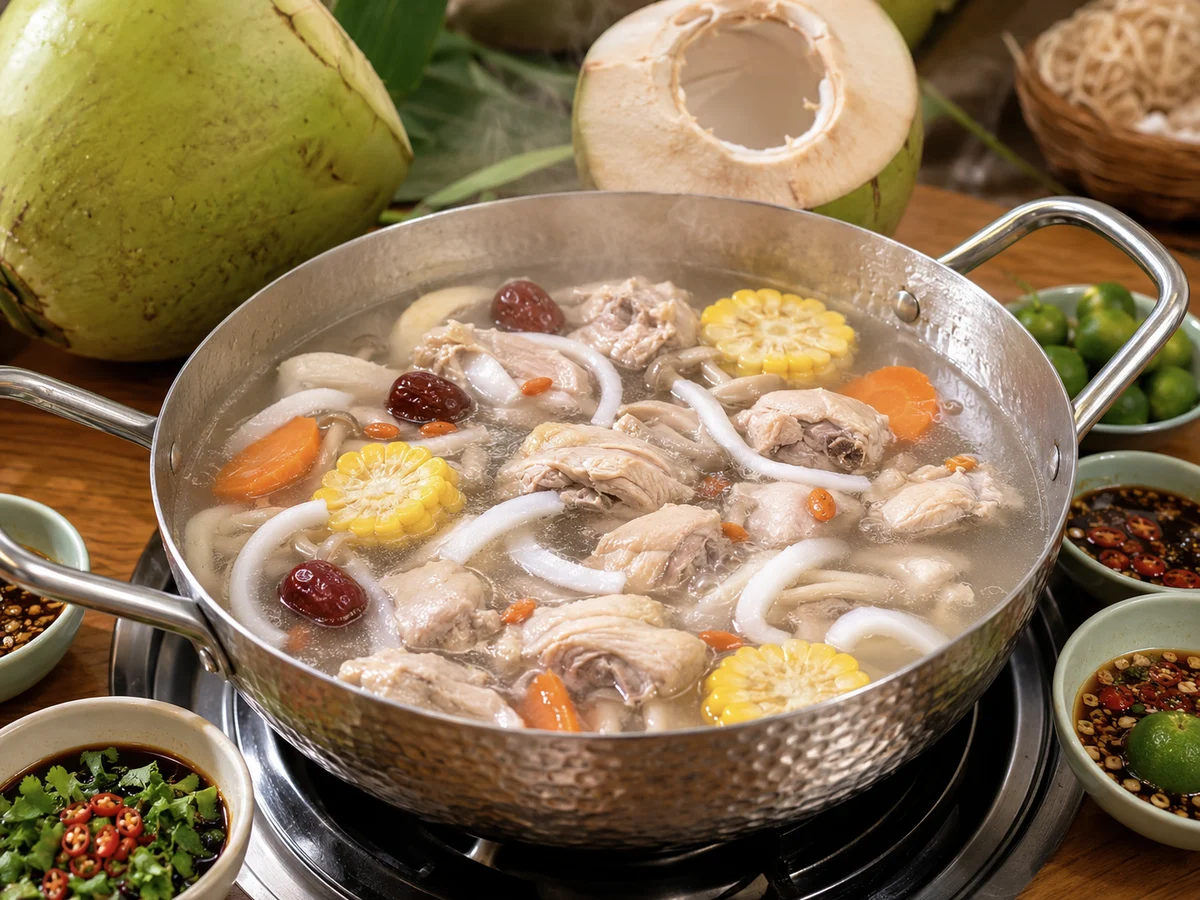
Coconut chicken hot pot pairs fresh young-coconut water and flesh with chopped chicken, often Wenchang chicken, in a clear table-cooked broth. Its appeal is modern and ingredient-led: natural coconut sweetness, clean poultry flavor and a bright calamansi-soy dip. Although now strongly marketed with Hainan ingredients and island imagery, the restaurant hot-pot format should not be given an invented ancient Hainan origin.
Common ingredientsUnsweetened young-coconut water and flesh, bone-in chicken—sometimes verified Wenchang chicken—plus small citrus, soy, garlic and chilli dip, mushrooms, vegetables, tofu and starches.
01
Cook the chicken first, taste the broth, then add ingredients in rounds
How to order it
Ask whether the broth is fresh unsweetened coconut water, a concentrated base or a sweetened mixture. Keep raw-chicken tongs separate from eating chopsticks and follow staff timing so every bone-in piece is fully cooked. Drink the first broth only after the chicken has reached safe doneness, then taste it before adding vegetables or sauces. Use the citrus-soy dip on individual pieces rather than pouring it back into the shared pot. Add mushrooms and vegetables after the chicken course; save strongly flavored ingredients for last. Confirm Wenchang chicken sourcing rather than assuming that every Hainan-themed restaurant serves the protected product.
How to eat and pair it
Chicken goes into the coconut broth first. Once it is fully cooked, diners taste the broth, eat chicken pieces with the citrus-soy dip, then add mushrooms, vegetables, tofu and a starch. The broth changes through the meal, moving from clear coconut and poultry flavor to a fuller hot-pot stock. Strong ingredients are usually saved until later so they do not erase the coconut.
Easy mix-ups
Misconception: Coconut chicken hot pot is an ancient canonical Hainan dish. In practice: It is better described as a modern restaurant format built around Hainan coconut and often Wenchang chicken; origin claims vary. Misconception: The broth should taste like a sweet dessert. In practice: Natural sweetness should remain gentle and be balanced by poultry savoriness and tart dip.
02
Clarity, sweetness, savor and doneness define the pot
Fresh coconut water
Unsweetened young-coconut water creates the broth; canned coconut milk would make a different dish.
Chicken
Wenchang chicken is prized for texture, but restaurant sourcing should be confirmed rather than assumed.
Calamansi-style dip
Tart small citrus, soy, garlic and chilli provide contrast after the gentle broth.
Coconut flesh
Tender strips reinforce fresh coconut aroma and provide a soft, lightly chewy element after simmering.
Fresh three-coconut style
Restaurants may open several young coconuts at the table and use little beyond coconut water, flesh and chicken.
Herbal or enriched broth
Red dates, goji, water chestnut or additional stock may add sweetness and body.
Wenchang-chicken specialist version
A restaurant may identify the bird and its source explicitly; the firmer texture suits short controlled cooking.
- A clear broth rather than opaque coconut cream
- Coconut opened fresh or sourcing explained clearly
- Gentle natural sweetness instead of a soft-drink or dessert level
Chicken first, other hot-pot ingredients later
Coconut chicken hot pot usually begins with chicken cooked in a broth based on fresh coconut water. Let the chicken cook for the time given by the restaurant, then taste the meat and the first round of broth before adding strongly flavored vegetables, meat or seafood. This keeps the early broth focused on coconut sweetness and chicken savoriness.
03
How a clear broth changes over the course of the meal
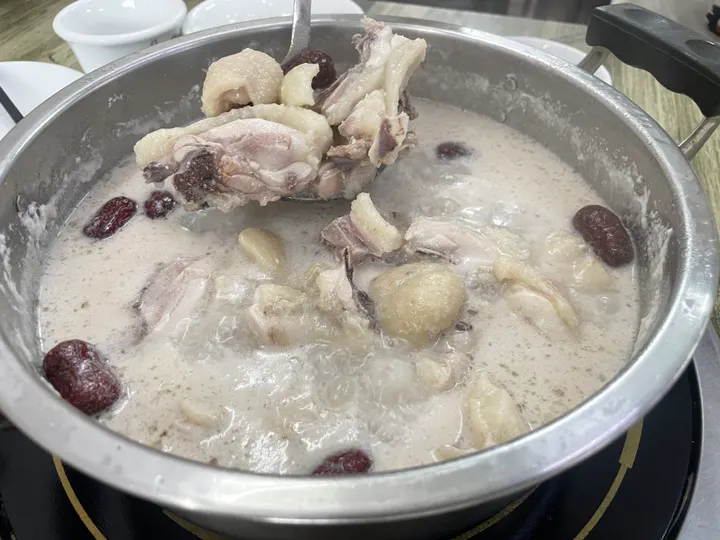
Filtered coconut water and flesh form the clear base. Chicken is cooked first under controlled table timing with separate raw-meat utensils; only after complete doneness is the broth tasted and later vegetables, mushrooms, tofu and starches added.
04
How Hainan ingredients shape a modern hot-pot format
Coconut and chicken have clear Hainan ingredient roots, while the now-familiar table-timed hot-pot format, standardized citrus dip and urban chain service are modern developments. It is more accurate to call it a contemporary Hainan-identified restaurant meal than to invent an unchanged ancient origin.
Clear young-coconut water—not coconut milk—cooks the chicken first. Diners drink the broth only after poultry reaches safe doneness, use citrus-soy dip on individual pieces and add mushrooms, vegetables and starches later. Wenchang chicken and additive-free fresh broth are separate sourcing claims that require confirmation.
05
How to say Coconut Chicken Hot Pot—and what the name tells you
Pronounced yē zi jī huǒ guō. Menus may call it Hainan coconut chicken, yēzi jī huǒguō, coconut water chicken hotpot.
The defining broth uses clear liquid from young coconuts. Coconut milk is an opaque emulsion processed from coconut flesh and would create a richer, entirely different soup.
The name does not guarantee Wenchang chicken, a fixed number of coconuts or an additive-free base. Those ingredient claims should be confirmed separately rather than inferred from tropical décor.
Fresh coconut water creates a clear broth, not a creamy curry
Hainan coconut chicken hot pot uses fresh coconut water as the broth’s defining liquid, often with coconut flesh and minimal supporting ingredients. Coconut milk would produce a white, fatty soup with a different flavor; sweetened canned coconut beverage would make the pot dessert-like. The intended broth is clear, gently sweet and aromatic enough to support chicken without hiding it.
Restaurants may open coconuts at the table or show the liquid being poured, but spectacle is less important than freshness. Coconut water can vary naturally in sweetness and minerality. A small amount of water or stock may be part of a house formula, yet a syrupy or strongly seasoned broth loses the clean contrast that attracts diners to the dish.
Taste a spoonful only after the raw chicken has been safely handled and the restaurant says the broth is ready. The first cooked stage captures the clearest coconut-and-chicken balance. As vegetables, mushrooms and noodles enter later, the broth grows more savory and less purely coconut-like; that change is part of the meal.
Cook the chicken first, use a bright dip and add other ingredients later
Chicken pieces normally go into the fresh broth before vegetables. They must cook completely, especially bone-in joints, and diners should follow the restaurant’s timer or staff guidance. Do not drink around raw pieces or treat pinkness as proof of a special Hainan texture. Separate raw-food tools from eating chopsticks and let the pot return to a boil after additions.
The dipping sauce often combines light soy with small citrus such as calamansi, garlic, chilli and local aromatics. It supplies acid and salt that the gentle broth intentionally lacks. Mix lightly and taste the chicken before building a very hot sauce. Soy, wheat and shared condiment tools require confirmation; the clear broth itself may also include stock beyond coconut water.
After the chicken course, add vegetables, tofu, mushrooms and noodles in rounds. Leafy greens and starch can absorb sweetness and chicken fat quickly, while strongly flavored ingredients can dominate the pot. One or two additions at a time preserve the broth’s progression and make cooking easier to track.
The modern hot-pot meal connects Hainan produce with social dining
Coconut and chicken are both central to Hainan food identity, and contemporary coconut-chicken restaurants turn them into a communal meal that is now popular far beyond the island. The format differs from white-cut Wenchang chicken and from Southeast Asian coconut curries. Naming it yezi ji or coconut-water chicken hot pot sets a clearer expectation than generic coconut chicken.
For two to four diners, start with one chicken portion, confirm whether the price includes coconuts and broth refills, then order a small set of vegetables and a starch. Portions and chicken size vary. The broth’s sweetness makes over-ordering easy at first, but cooked coconut water and chicken fat become richer through a long meal.
Ask whether the chicken is Wenchang chicken or another bird rather than assuming every Hainan pot uses a protected local product. A firmer specialty bird and a standard tender chicken produce different textures. Either can be cooked well when accurately named, safely handled and matched to the pot.
Refills should preserve the broth’s direction rather than dilute it blindly
Ask whether refills use coconut water, plain water or house stock. Each changes sweetness and concentration. A pot that has reduced after chicken may need liquid before vegetables, but repeated plain-water refills can leave the final noodles bland. Staff can balance volume better than diners emptying beverages into the pot.
Coconut flesh can be eaten once tender, though mature pieces remain chewy. Treat it as one texture among the meal rather than proof that more coconut is always better. At the end, noodles absorb the accumulated chicken and vegetable flavor; add a small amount, cook completely and stop if the broth has become too salty or fatty.
Leftover broth has held raw chicken and many table utensils. Take it away only if the restaurant supports that practice, chill it promptly and reboil safely. Clear appearance does not make a long-held communal broth shelf-stable. If the restaurant portions raw chicken in more than one tray, keep later trays chilled until the pot is ready for them. Do not place cooked pieces back on a plate that previously held raw poultry, even when the table is crowded.
Sources