Place it within Hunan red-braised pork and Shaoshan restaurant culture
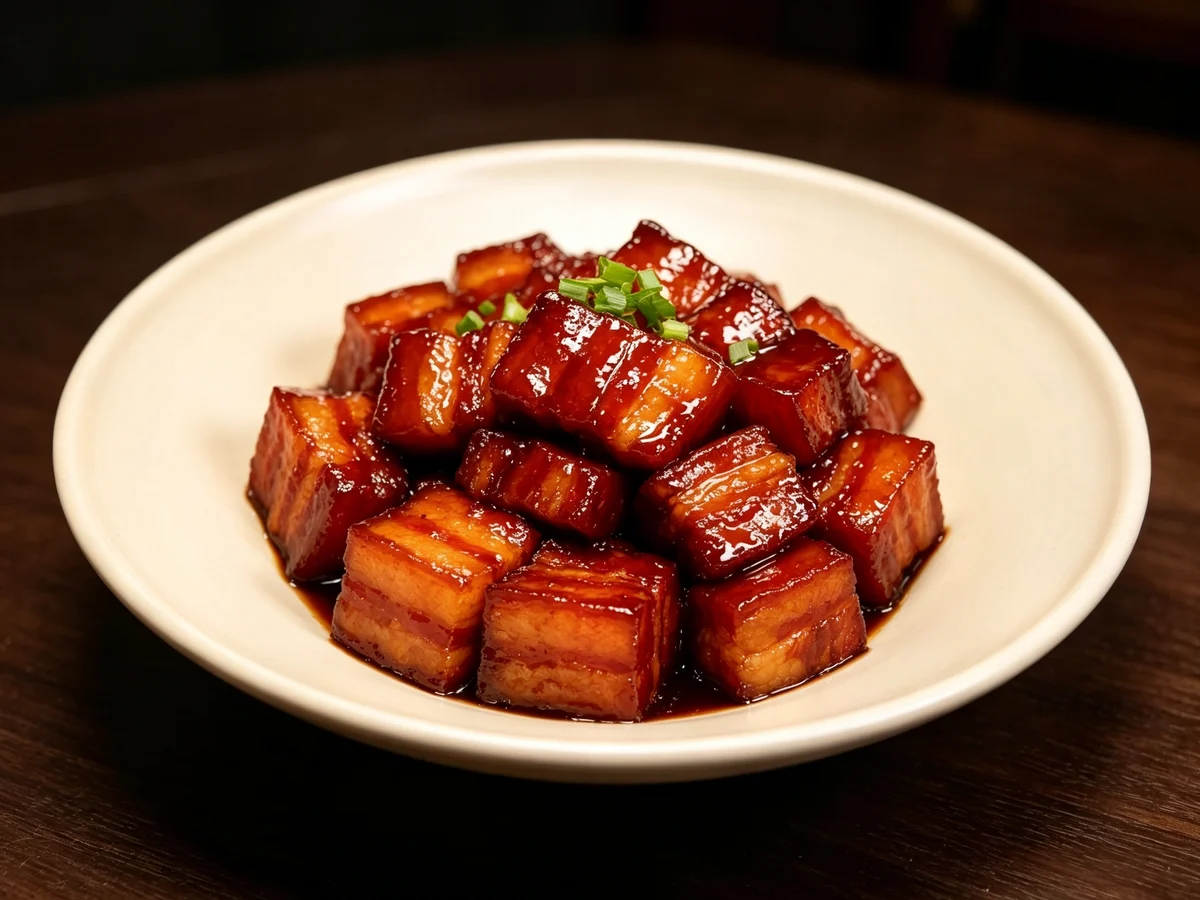
Mao-style red-braised pork is a Shaoshan-associated Hunan branch of the broad Chinese hongshaorou family. Cubes of layered pork belly are cooked until the lean meat yields and the fat becomes soft, while caramelized sugar supplies a red-brown gloss. Ginger, dried chilli and whole spices give many Hunan versions a warmer, less purely sweet profile. Soy sauce is used in some homes and restaurants, while a well-known Shaoshan presentation relies on caramel for color; neither choice alone proves authenticity.
Common ingredientsPork belly, caramelized sugar, Shaoxing wine, ginger, dried chilli and whole spices; soy use varies by version.
01
Treat it as a rich shared dish, not a large solo portion
How to order it
Share one portion among several people; the richness is designed to be distributed across a meal. Order plain rice and at least one crisp or lightly cooked green vegetable. Expect pork belly with visible fat. If you want lean meat, choose another dish rather than asking the kitchen to remove the defining layers. Ask whether the house version is sweet-forward, chilli-warmed or strongly spiced. In Shaoshan, distinguish a polished “Mao family cuisine” restaurant presentation from ordinary household hongshaorou; both can be locally meaningful.
How to eat and pair it
The name has strong symbolic weight in Hunan, especially in Shaoshan, Mao Zedong’s birthplace. Official and local culinary sources document the dish as a recognized Hunan standard and restaurant specialty. Popular stories about Mao’s exact preferences—especially the claim that he rejected soy sauce after a childhood incident—appear in several conflicting forms and do not establish a complete origin history. The Shaoshan association is real and culturally important, while the dish still belongs to Hunan’s broader red-braised-pork tradition. Households vary in cube size, sugar, soy, chilli and cooking vessel.
Easy mix-ups
Misconception: There is one fully documented recipe personally invented by Mao Zedong. In practice: The association is culturally important, but recipes and biographical stories vary; it belongs to the wider red-braise tradition. Misconception: Mao-style red-braised pork never contains soy sauce. In practice: That rule describes a prominent Shaoshan restaurant lineage and its accompanying story. Hunan households and other restaurants do use soy in some versions.
02
Layering, tenderness and caramel color define a good plate
Layered pork belly
Alternating skin, fat and lean meat create the signature one-bite progression. Hunan standards and specialist cooks emphasize the quality and cut of the pork.
Caramelized sugar
Sugar color gives gloss, gentle bitterness and a red-brown tone; it should not turn the dish into candy.
Ginger, chilli and whole spices
Common Shaoshan restaurant versions use warming aromatics to keep the rich pork from tasting flat.
Soy sauce
Some household versions use it for seasoning or color; the frequently repeated “no soy at all” rule belongs to one influential story and restaurant style, not every local kitchen.
Shaoshan specialist style
Neatly cut cubes, caramel color, ginger, chilli and warm spices are cooked and reduced into a glossy restaurant presentation.
No-soy caramel-colored style
An influential version uses caramel rather than soy sauce for color. Stories connecting this choice to Mao’s personal preferences come from oral and popular history rather than one definitive record.
Household Hunan hongshaorou
Home cooks may use soy sauce, change the cube size, add more chilli or reduce sweetness. Local variation does not disappear because a restaurant standard exists.
- Cubes hold a clean shape but yield easily to chopsticks
- Skin and fat look translucent and soft rather than rubbery
- Sauce forms a thin glossy coating instead of a sticky candy shell
03
Caramelizing, cleaning the meat and slow braising work in sequence
Pork belly is blanched or browned, then slowly braised with caramel, wine and aromatics until glossy and tender.
04
From Shaoshan tables to Hunan’s broader red-braised pork tradition
Mao-style red-braised pork is a Hunan interpretation of hongshaorou associated in popular memory with Mao Zedong, a native of Shaoshan. Precise biographical origin stories vary, so the safer claim is a twentieth-century regional association.
Compared with many eastern versions, Hunan preparations commonly bring dried chilli and warming spice into the sweet-savory braise. It is rich banquet or family food, served in modest portions with rice.
05
How to say Mao-Style Red-Braised Pork—and what the name tells you
Pronounced máo shì hóng shāo ròu.
The Mao association is culturally powerful, but the plate is best judged through pork and braising
Mao-style red-braised pork is linked in popular accounts with Mao Zedong and Hunan, often distinguished from other hongshaorou by local chilli, spices or a preference about soy sauce. Stories differ across restaurants and publications. A menu should not turn anecdote into a provable personal recipe. Diners can acknowledge the political association while focusing on what is observable: pork belly, caramelized color, aromatics and a Hunan seasoning direction.
It belongs to the wider Chinese family of red-braised pork, so no single trait makes every neighboring version false. Ask what the house adds—dried or fresh chilli, spices, sugar color, soy—and how sweet it runs. The answer matters more than a portrait on the wall.
A good cube lets skin, fat and lean yield together without dissolving
Pork belly is cut into substantial pieces so the skin softens, fat becomes translucent and lean remains moist. Pressing with chopsticks should show tenderness, yet the cube should travel intact to the bowl. Hard skin means insufficient braising; dry lean with disappearing fat suggests excessive heat; a mouthful of unrendered waxy fat is not automatically luxurious.
The sauce should be glossy and concentrated enough to coat rice, with caramel depth, pork savoriness and optional chilli warmth. It should not become candy syrup, burnt sugar bitterness or a bowl of loose oil. Taste skin, fat and lean in one bite, followed by rice or a vegetable. Picking out only lean defeats the cut’s intended balance.
Order a modest shared portion and build the table around its richness
Ask cube count or weight and how many people the dish serves. Belly is dense; a smaller plate can anchor a meal with rice, greens, tofu and clear soup. Adding steamed cured meats and another braised belly repeats salt and fat. Chilli may cut perception of richness but does not remove it.
Diners managing fat, sugar or sodium should use a portion compatible with individual professional guidance rather than assuming long braising makes the dish light. Share with serving chopsticks and distribute cubes fairly. Sauce is a condiment for rice, not a soup that must be finished.
Sugar color, staged liquid and gentle time build gloss without scorching
Cooks may blanch or sear pork, develop caramel color, add aromatics and braising liquid, then cook gently until connective tissue softens. Sugar color has a narrow window: pale syrup gives sweetness without depth; blackened caramel spreads bitterness. Chilli and spices should enter at times that release aroma without burning.
A small amount of sauce can connect the meal without saturating it
Place one cube beside plain rice and spoon only enough glaze to season a few bites. Add a green vegetable before taking another piece. This sequence lets caramel, chilli and pork fat remain vivid without turning the whole bowl sweet and oily. If the sauce needs to be poured heavily to make the meat enjoyable, the belly itself may be underseasoned or dry.
Compare seasoning direction while holding pork cut and tenderness constant
When trying another regional red-braised pork, choose similarly sized belly pieces and taste before adding rice. Note whether color comes mainly from sugar caramel or soy, whether chilli or spice appears, and how sweet the sauce finishes. Only after confirming that both meats are equally tender is it fair to discuss regional flavor; dry pork cannot be rescued by an interesting origin story.
The most useful Mao-style description names what the restaurant actually does. A claim of “no soy,” extra chilli or a particular spice can be tasted and discussed. A claim that the exact plate was a leader’s single favorite recipe is harder to verify and should remain context rather than proof.
Sources
Sources and further reading
- Local standard DB43/T 423.1-2015: Mao-style red-braised porkNational Public Service Platform for Standards Information ↗
- Shaoshan cooks explain Mao-style red-braised pork and household variationsHunan Provincial Department of Culture and Tourism ↗
- How Hunan dish standards describe chilli-fried pork and Mao-style red-braised porkPeople’s Government of Pingjiang County ↗
- A taste of Hunan cuisine and its representative dishesHunan Provincial Department of Culture and Tourism ↗