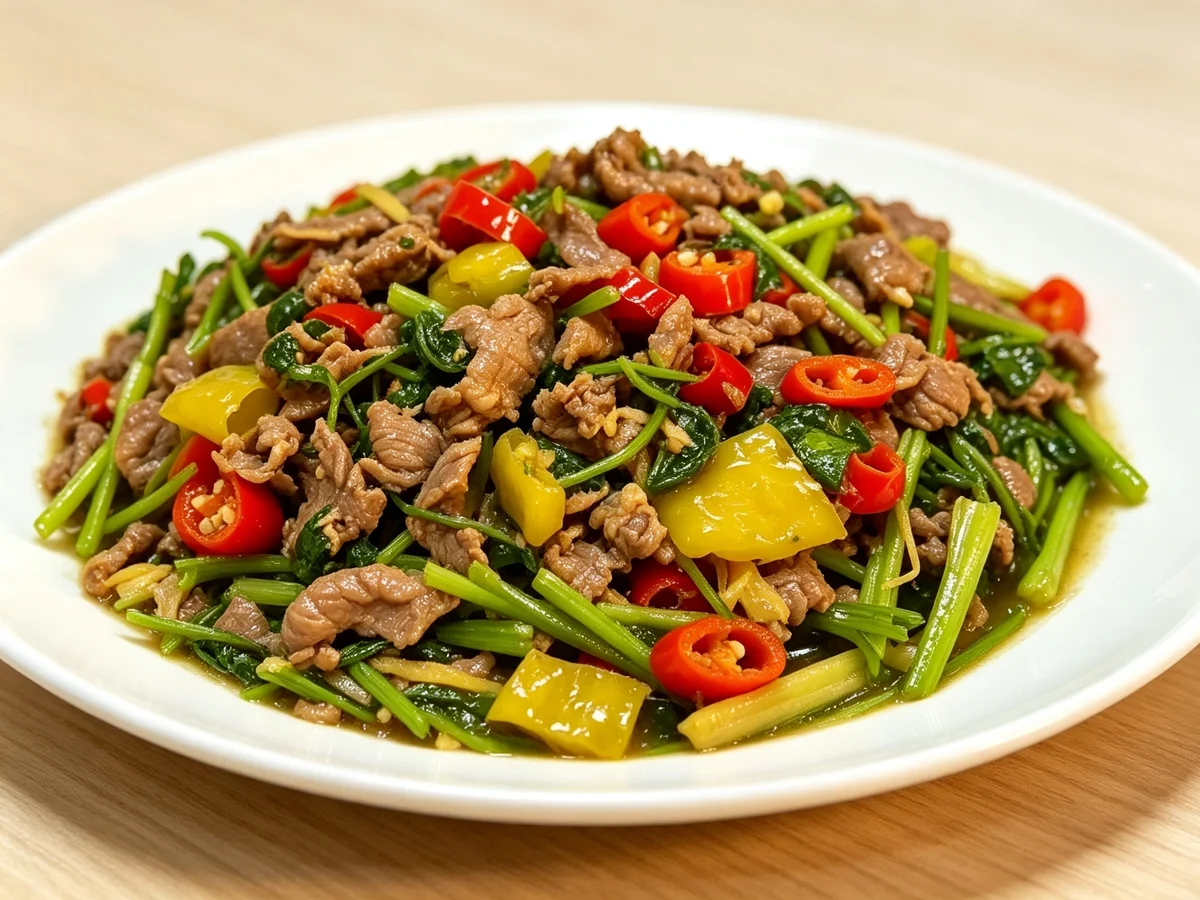
This is a Hunan quick stir-fry, not beef in sweet brown sauce
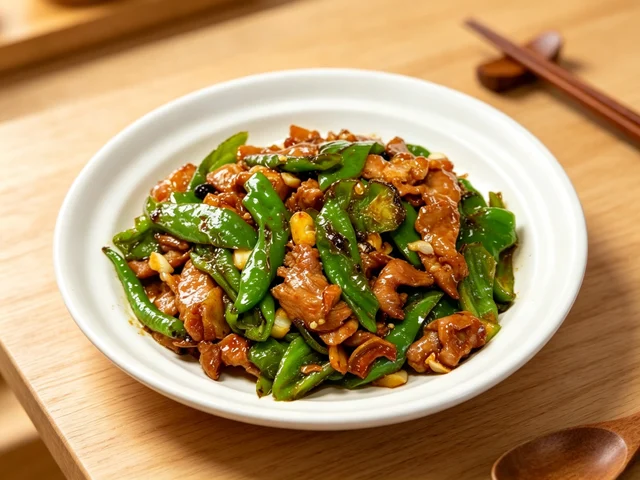
Xiaochao huangniurou is a fast, high-heat stir-fry of thin beef, fresh and pickled chillies, garlic, celery or coriander. Small pieces maximize seasoning and tenderness; the dish should reach the table immediately while the herbs are bright and the beef still juicy.
Common ingredientsThinly sliced beef, fresh green and red chillies, optional pickled chilli, garlic, ginger, cilantro or celery, soy, a little starch and cooking oil.
01
Ask about heat, cilantro and the beef used by the kitchen
How to order it
Tell the server your heat tolerance and ask whether the day’s fresh peppers are especially hot. Eat it immediately; thin beef and fresh herbs lose their best texture as the plate sits. Order plain rice and at least one mild dish such as steamed egg, greens or a clear soup. If you dislike coriander, ask before ordering rather than removing it after cooking; it can be structurally important. Do not expect the sweet brown gravy common in some overseas “Hunan beef” dishes.
How to eat and pair it
This is classic xiaochao: a compact stir-fry made in a very hot wok and sent out fast. Official Hunan material describes it as a frequent restaurant choice and emphasizes short, rapid cooking. The cook must season small slices, evaporate surface moisture and stop before the beef tightens. Fresh and pickled chilli, celery and coriander vary by shop, but the plate should feel vivid and dry-fried rather than syrupy. The name huangniu is often mistranslated as “yellow beef”; it refers to cattle, not yellow sauce or curry.
Easy mix-ups
Misconception: Huangniu means the beef is cooked in a yellow sauce. In practice: It refers to yellow cattle; the finished stir-fry is usually red-green with chillies and herbs. Misconception: Any dish called Hunan beef is the same thing. In practice: Overseas menus use Hunan beef broadly. Xiaochao huangniurou is specifically a fast, chilli-and-herb-led stir-fry without a heavy sweet gravy.
02
Good Hunan stir-fried beef preserves three distinct states
Yellow-cattle beef
Huangniu names a category of Chinese cattle, not the color of the finished dish. Restaurants outside Hunan may use another tender beef cut while retaining the name.
Mixed chillies
Fresh green and red chillies lead; pickled peppers may add acidity and dried chilli may deepen aroma. The exact combination is a house choice.
Celery or coriander
Abundant stems and leaves bring a green, cooling aroma and should remain recognizable after the brief stir-fry.
Garlic and ginger
Aromatic pieces season the oil quickly without becoming a thick sauce.
Fresh-chilli style
Green and red peppers dominate with crisp, direct heat.
Pickled-chilli style
Sour peppers bring a more appetite-opening edge and a slightly wetter seasoning.
Coriander-forward style
Leaves and stems are folded in at the end for a pronounced green aroma.
- Beef moist rather than grey and dry
- Fresh chilli pieces remain distinct
- Herbs still green and recently wilted
03
Small slices, a hot wok and short cooking protect tenderness
Beef is cut for tenderness and lightly marinated. Chillies and aromatics are brought to fragrance in a very hot wok, the beef cooks in a small fast batch, and herbs are folded in just before immediate service.
04
How speed and fresh chilli define Hunan stir-frying
Xiaochao huangniurou belongs to Hunan’s quick-stir-fry tradition. Huangniu describes a Chinese cattle category rather than a yellow-colored sauce, and the menu term alone does not prove one breed or protected origin.
Small batches, fierce heat and immediate service keep beef tender, fresh and pickled chillies vivid, and coriander or celery green. The dry, herb-led plate is distinct from the sweet brown-gravy “Hunan beef” found on many overseas menus.
05
How to say Stir-Fried Hunan Beef—and what the name tells you
Pronounced xiǎo chǎo huáng niú ròu. Menus may call it Hunan beef with chilli, xiaochao huangniurou, xiǎochǎo huángniúròu, yellow cattle beef.
Xiaochao describes a fast, compact wok style rather than guaranteeing a small portion. Huangniu is a Chinese cattle category in the dish name; it does not describe yellow curry, yellow bean sauce or the finished color.
Overseas “Hunan beef” often means beef, bell pepper and onion in sweet brown gravy. That adaptation is distinct from this fresh-chilli, pickled-chilli and herb-led Hunan stir-fry.
Hunan beef is built around fresh chilli aroma, tender slices and a fast savory wok
A representative Hunan stir-fried beef uses thin beef with generous fresh green or red chilli, garlic and local savory seasonings. It differs from cumin beef, black-pepper beef and Sichuan dishes centered on dried chilli and numbing peppercorn. Overseas menus often use “Hunan beef” for a broad brown-sauce stir-fry, so ask whether the house version uses fresh chillies and what vegetables are included.
The plate should smell green, sharp and beefy before it simply feels hot. Fresh peppers vary in heat, water and skin, allowing a cook to combine mild fragrant volume with smaller hot amounts. A mountain of bell pepper in sweet sauce may be an adaptation, while pure chopped bird’s-eye chilli can become a dare. Balance is the goal.
Ask about today’s peppers and specify heat without asking the kitchen to remove aroma
Pepper batches change, so an exact universal spice number is unreliable. Ask whether today’s plate is especially hot and request mild, medium or house style. A thoughtful reduction keeps some fragrant fresh chilli, garlic and fermented savoriness. “No chilli” turns the method into another beef stir-fry and may not be possible from a prepped batch.
Ask which beef cut is used and whether celery, coriander, pickled chilli or fermented black beans appear. Slice size matters more than prestige: pieces should be thin across the grain and proportioned to the peppers. Extra beef can overcrowd the wok and lower heat, so a larger plate is not always more tender.
Beef and peppers need separate moments before their brief reunion
Beef is marinated lightly and seared in a hot wok, often removed or pushed aside before aromatics and peppers cook. Recombining at the end protects tenderness and pepper freshness. Putting everything in a cool crowded pan releases water, boiling beef grey and collapsing chillies. More oil or sauce cannot recreate high-heat separation.
Finished beef should bend and release juice, not feel velveted into an anonymous soft gel. Pepper skins may blister while flesh retains snap. Sauce clings lightly with no sweet brown puddle. Charred garlic and black chilli fragments taste bitter, not smoky. Begin eating immediately because lean slices dry and peppers wilt as the plate sits.
Rice and a cool vegetable balance the plate; leftovers lose the fresh-pepper advantage
Serve with rice, a mild soup or cool cucumber. Avoid another fresh-chilli meat dish unless comparing beef with pork deliberately. Soy sauce and fermented black beans may contain soy and wheat; oyster sauce or stock may appear in some kitchens. “Beef and vegetables” does not guarantee gluten-free or shellfish-free.
The first minute is part of the cooking method
Clear a place before the dish arrives and take one beef-and-pepper bite immediately. Residual heat continues cooking thin slices, while fresh chilli aroma escapes quickly. Waiting under a cloche for photographs can turn tender beef firm and lively peppers soft. If several dishes are ordered, ask the kitchen to stagger this stir-fry toward the moment the table is ready.
A side-by-side order reveals what the protein changes in a fresh-chilli stir-fry
Use similar chilli levels and share small plates. Pork belly or pork slices release fat that coats peppers and can carry fermented seasoning deeply. Lean beef contributes mineral savoriness and demands a shorter, more precise cooking window. The pepper may be similar, but its relationship with fat, juice and browning differs. This is more informative than ranking one dish by heat.
Taste a pepper with each meat before eating rice. In the beef plate, it should still smell green and help lift the meat rather than sit as garnish. In the pork plate, it may feel more integrated with rendered fat. If both plates taste identical because of a thick bottled sauce, the kitchen has lost the comparison.
Ordering them together is useful once, not necessary for every meal. Build the rest of the table with soup, tofu or vegetables and choose modest portions. Fresh-chilli aroma fades quickly, so compare while both are hot rather than saving one plate for later.
Sources