Read “hot,” “dry” and “noodles” literally
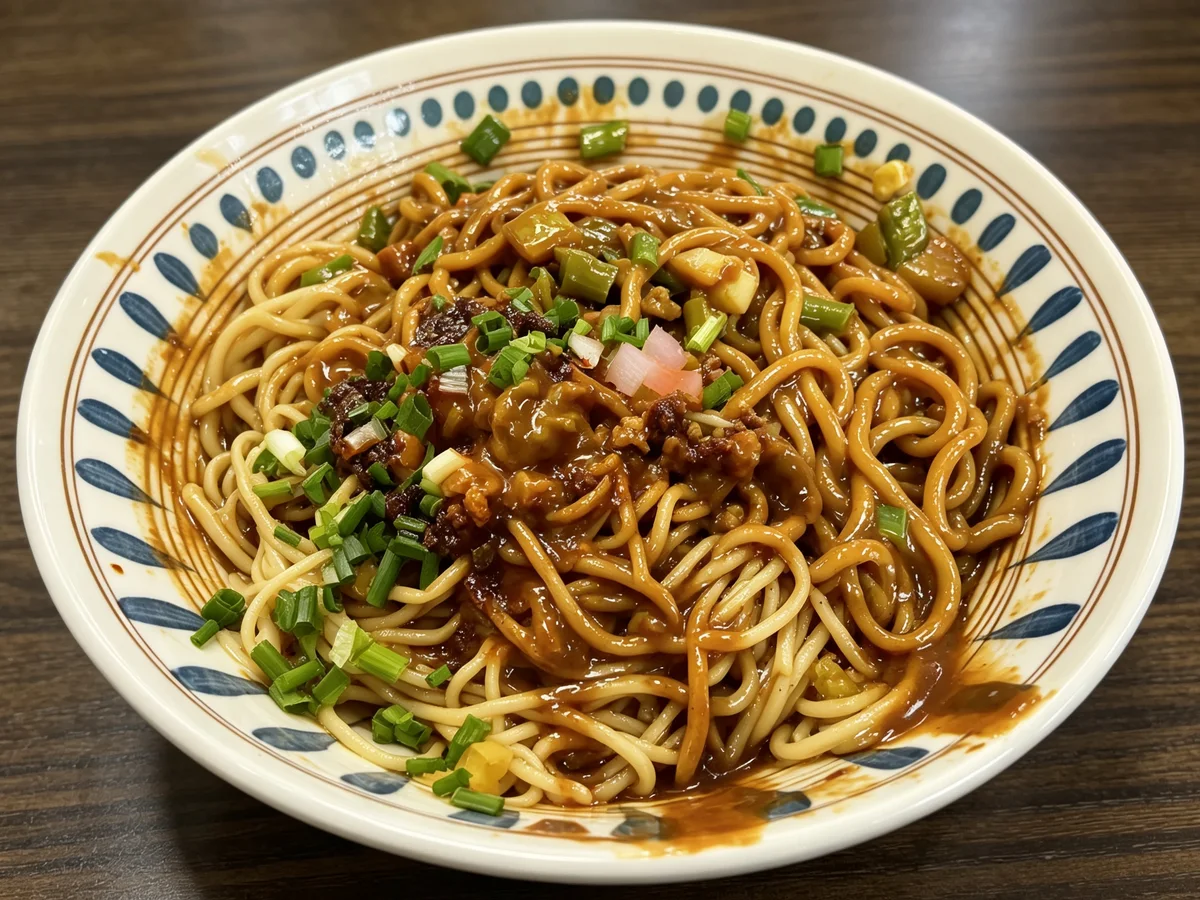
Wuhan hot dry noodles, rè gān miàn, are hot alkaline wheat noodles dressed rather than served in soup. The noodles are precooked, oiled and reheated to order, then mixed with sesame paste, soy-based seasonings, aromatic oil, scallion and crisp pickles such as spicy radish. “Dry” describes the absence of broth; it does not mean cold or dehydrated noodles.
Common ingredientsAlkaline wheat noodles, sesame paste, soy-based seasoning, aromatic oil, scallions and pickled vegetables such as spicy radish or long beans; vinegar and chilli oil vary by shop. Wheat, sesame and soy are standard allergens, and peanut may appear in some sauce blends.
01
Mix all the way to the bottom as soon as the bowl arrives
How to order it
Order one bowl per person and mix from the bottom immediately. Taste before adding chilli: the sesame, pickle and noodle texture should remain legible. If the sauce looks stiff, ask for a little seasoned liquid rather than letting the noodles clump. Pair it with egg, soy milk, doupi or another Wuhan breakfast item when you want a fuller guozao meal.
How to eat and pair it
In Wuhan, hot dry noodles belong to guozao—the city’s habit of eating a hot, savory breakfast out. A bowl is mixed briskly and eaten straight away, sometimes at a small counter or on the move. The noodles should remain springy and separate while the sesame dressing coats rather than drowns them. Origin stories involving one named vendor are widely repeated, but generations of shops shaped the modern city breakfast and no single surviving biography accounts for every detail.
Easy mix-ups
Misconception: “Dry” means the noodles are served cold or dehydrated. In practice: They are served hot. “Dry” distinguishes the dressed bowl from a noodle soup. Misconception: It is simply noodles with peanut sauce. In practice: Wuhan-style bowls are built around sesame paste, alkaline noodles and pickled vegetables; peanut-heavy sauces create a different balance.
02
Four checks for a good bowl of hot dry noodles
Alkaline wheat noodles
Alkali gives the strands their yellow tone, firm bite and resistance to softening. They are cooked and oiled in advance, then quickly reheated for service.
Sesame paste
The dressing should be fragrant and loose enough to coat the noodles. Peanut-heavy sauce may appear outside Wuhan but changes the defining aroma.
Savory seasoning
Soy sauce, aromatic oil and sometimes vinegar or a seasoned liquid loosen the paste and balance salt, richness and acidity.
Pickles and scallion
Diced spicy radish or other preserved vegetables add the crisp, salty-sour interruption that keeps the bowl lively.
Neighborhood stall style
The everyday Wuhan version is compact and fast, with sesame paste, soy-based seasoning, scallions and crunchy pickles. Chilli is commonly adjusted by the diner.
Richer restaurant bowls
Some shops loosen the sesame paste more heavily or add extra toppings. These can be satisfying, but the dish is still defined by coated noodles rather than a pool of sauce.
Home and packaged versions
Convenience versions reproduce the seasoning idea, although freshly reheated alkaline noodles provide the characteristic bounce that packets often miss.
- Firm alkaline noodles with a noticeable spring
- Sesame sauce clinging evenly to the strands
- A salty-sour crunch from pickled vegetables
03
Why pre-cooking and reheating are separate steps
The alkaline noodles are cooked partway, drained, lightly oiled and spread out so they cool without clumping. For each order they are briefly returned to boiling water, drained well and immediately mixed from the bottom with loosened sesame dressing, savory seasonings, pickles and aromatics.
04
Why hot dry noodles belong to Wuhan’s guozao breakfast
Hot dry noodles are inseparable from Wuhan and its guozao breakfast culture. Popular accounts credit individual vendors with an accidental invention, but their details vary; the better-supported story is a citywide method refined across generations of breakfast shops.
For many Wuhan residents, hot dry noodles are daily routine rather than a ceremonial specialty. The fast individual bowl suits a river-port city’s morning pace, but quality still depends on staged noodle preparation, immediate mixing and a balance of sesame, alkaline wheat and pickle crunch.
05
How to say Hot Dry Noodles—and what the name tells you
Pronounced rè gān miàn. Menus may call it Wuhan hot dry noodles, reganmian, re gan mian, Wuhan breakfast noodles.
Rè means hot: the precooked noodles are briefly returned to boiling water for each order. Gān means dry in contrast with soup noodles: sesame dressing and seasoned liquid coat the strands, but there should be no large pool of broth. Miàn identifies the alkaline wheat noodles themselves.
English menus use hot dry noodles, Wuhan hot dry noodles, reganmian and re gan mian. The literal translation can sound unappetizing if “dry” is mistaken for stale or unseasoned, so the most useful explanation is “hot, brothless sesame-dressed noodles.”
The noodle’s pre-cooking routine makes Wuhan breakfast speed possible
Hot dry noodles use alkaline wheat noodles with a firm, yellowish structure. Shops commonly cook them partway, drain and lightly oil them so strands can cool without fusing, then reheat a portion quickly in boiling water when ordered. This is not careless precooking: it is a workflow designed for Wuhan’s fast breakfast trade. If the first cook goes too far or the noodles sit poorly, the final bowl becomes soft, greasy or clumped.
Reheating should warm the center and restore flexibility without washing away all surface character. The drained noodles go immediately into a bowl with sesame paste, soy-based seasoning, pickled vegetables and aromatics. Some shops thin sesame paste with oil or seasoned liquid so it coats rather than sits in one dense lump. The diner completes the process by mixing before the noodles cool and tighten again.
“Dry” distinguishes the bowl from noodle soup, but a good serving is not dusty. Sauce and a small amount of moisture should cover every strand while leaving no large pool at the bottom. A spoonful of soup may be served separately at some shops; pouring it all into the noodles changes the intended texture. Judge the mixed bowl by fragrance, chew and coating rather than expecting broth.
Hot dry noodles belong to Wuhan’s public morning rhythm
Wuhan calls its breakfast habit guozao, “passing the morning.” Hot dry noodles are one famous part of a wider scene that includes doupi, mianwo, dumplings and fish-based soups. The bowl is designed to be fast, filling and portable enough for commuters, yet specialist counters develop loyal followings through noodle texture, sesame aroma and pickle balance. Eating while standing or carrying the bowl reflects city rhythm, not a lack of culinary seriousness.
Shops vary in sesame-paste thickness, soy seasoning, chilli, pickled long beans, preserved radish and fresh scallion. A dark bowl is not automatically richer, and a pale bowl is not automatically bland. Mix first, then adjust vinegar or chilli. If you dislike cilantro or pickles, ask before assembly; removing all acidic and crisp elements can make sesame paste feel heavier than the house intended.
Sesame is a defining allergen, and peanuts may appear in some blends or shared preparation areas. Wheat is present in the noodles, while soy and preserved vegetables are common in the sauce. A meat-free-looking bowl may still use lard or meat-based seasoning, so vegetarian diners should confirm. Eat promptly: takeaway containers trap steam, while an unmixed bowl dries into sesame-coated knots that are difficult to separate.
Vinegar is useful when the sesame paste feels heavy, but it should brighten rather than turn the bowl into a sour noodle salad. Pickled long beans and preserved radish add both acidity and crunch, so taste after complete mixing before correcting the seasoning. If the bowl remains pasty, the issue may be an under-thinned sesame blend or poorly drained noodles rather than a simple lack of vinegar. A good counter develops a house balance that needs only personal fine-tuning.
Lift from the bottom repeatedly
Sauce settles below the noodles. Turn the bowl until no pale strands or dense pockets of paste remain.
Start with the standard bowl
Beef, offal and oversized toppings can make a meal, but the plain version best reveals the noodle-and-sesame structure.
Pair across textures
A crisp mianwo or layered piece of doupi gives more contrast than ordering a second heavy sesame bowl.
The bowl should smell strongly of toasted sesame without tasting like sweet peanut butter. Overseas menus sometimes translate reganmian as sesame noodles, a much broader label that can include cold, sweet or peanut-based dishes. Look for the Wuhan or Hubei name, alkaline wheat noodles, no soup, pickled vegetables and immediate mixing. Those signals identify the breakfast structure more clearly than sesame alone.
Sources
Sources and further reading
- Wuhan’s guozao breakfast cultureDepartment of Commerce of Hubei Province ↗
- Ten signature foods of WuhanDepartment of Culture and Tourism of Hubei Province ↗
- Wuhan hot dry noodles abroad: local routine and overseas adaptationDepartment of Commerce of Hubei Province ↗
- Food-safety standard for convenience-style Wuhan hot dry noodlesHealth Commission of Hubei Province ↗