Meet Wuhan’s comforting slow-simmered soup
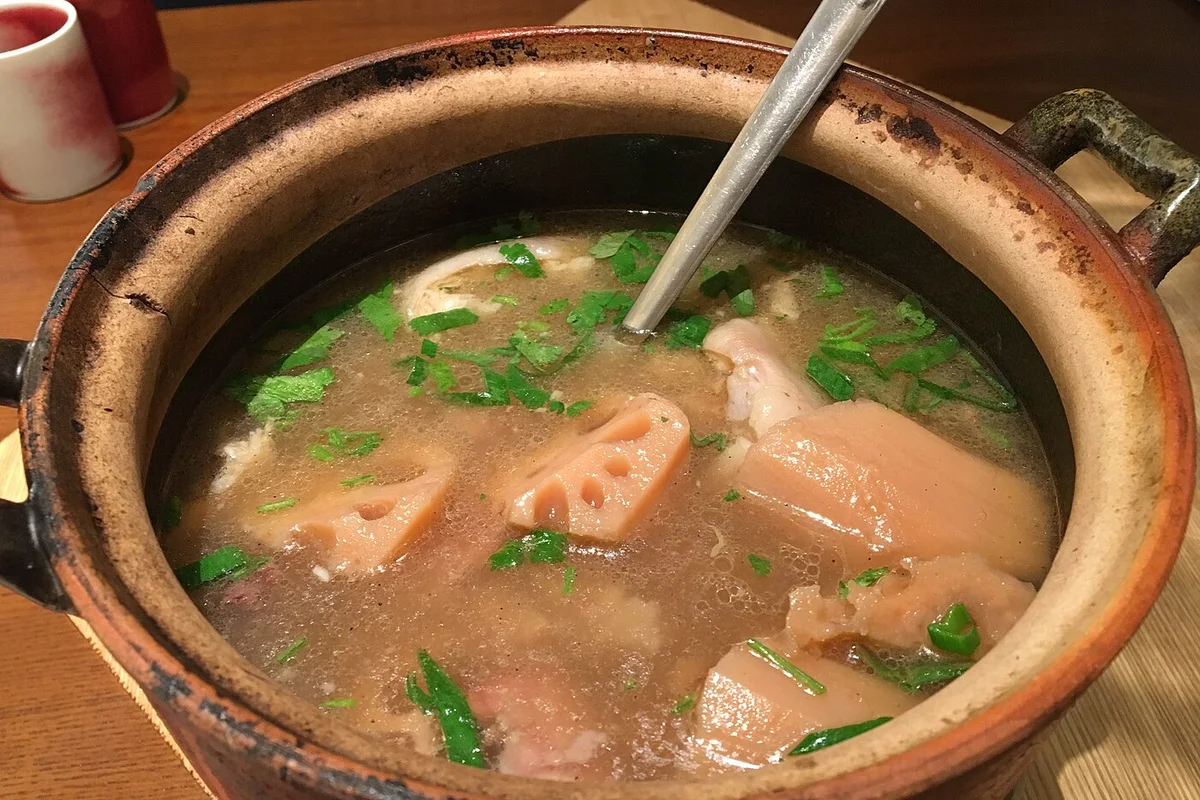
Pork-rib and lotus-root soup is a Hubei home-style classic built from an ingredient the lake region knows especially well. Pork ribs simmer slowly with mature lotus root until the broth becomes round and savory and the root changes from crisp and pale to tender, starchy and gently sweet.
Common ingredientsPork ribs, lotus root, ginger, scallions, salt and water or light stock.
01
Ask about portion size and whether the lotus root cooks to a floury texture
How to order it
Ask whether the kitchen uses a starchy soup variety of lotus root; crisp slices signal a different cooking result. Order one pot for the table rather than treating it as a small individual starter. Taste before adding salt because long reduction and the ribs can concentrate seasoning. Expect bone-in rib pieces and take care with small fragments when serving children.
How to eat and pair it
The soup appears in a central pot and is ladled into small bowls throughout the meal. Diners eat both the broth and the substantial pieces of rib and root. In Hubei, where lotus is part of the agricultural landscape as well as the table, the transformation of the root is the point: long simmering creates a soft, almost chestnut-like break rather than the watery crunch of a salad or stir-fry. Leftovers are often even more integrated after resting and reheating thoroughly.
Easy mix-ups
Misconception: Any lotus root will become powdery if boiled long enough. In practice: Variety and maturity matter. Young crisp roots can stay watery or firm even after extended cooking. Misconception: Lotus-root soup is a sweet dessert. In practice: The root contributes gentle sweetness, but this Hubei dish is a savory pork-rib soup.
The best bowls depend on a floury soup lotus root, not just any crisp salad variety
Lotus roots differ in starch, water content and intended use. The kind prized for Hubei soup softens during long simmering, develops a powdery chestnut-like bite and releases enough starch to give the broth body. A crisp root suited to quick stir-frying may remain glassy and firm no matter how long it cooks. Diners cannot always identify cultivar from a menu, but the finished piece should break easily under chopsticks while retaining its holes and shape. It should not be crunchy like a cold salad or dissolved into fibrous strands. The broth is usually cloudy to amber from pork ribs, root starch and long cooking rather than dairy or a flour slurry. It should smell of clean pork and earthy-sweet lotus root, with pepper or ginger supporting rather than dominating. A thick oil cap, harsh bouillon aftertaste or excessive salt can hide weak ingredients. Taste a spoon from below the surface fat, then bite root and rib together; the point is mutual exchange, not a meat stock with decorative vegetables.
Confirm pot size, rib quantity and whether the soup is served family-style
Restaurants may sell an individual bowl, a clay pot for two or a large tureen for a banquet table. Ask how many people the listed size serves and whether refills are broth only. A root-heavy pot can look full while containing relatively few rib pieces, so diners seeking meat should clarify rather than discovering at the bottom. Bone-in ribs provide flavor but require careful eating; transfer one piece to a small bowl and place clean bones on a side plate instead of searching through the shared pot with personal chopsticks. This soup pairs well with rice and a sharper green or cold dish. It is already a slow-cooked meat course, so another heavy stew creates repetition. In a Hubei meal, share the tureen throughout dinner rather than drinking all the broth first. Lotus root absorbs salt as it rests, and diners who need lower sodium can favor solid pieces and a smaller volume of broth, subject to their individual dietary guidance.
Cool a large pot deliberately because dense roots and bones retain heat
A deep tureen cools slowly at its center. Transfer leftovers to shallow containers, refrigerate promptly and keep bones and root covered with broth so exposed surfaces do not dry. Reheat only the portion needed until fully steaming. Each cycle softens the lotus root further and concentrates salt, so add hot water only when necessary and rebalance deliberately rather than repeatedly topping up an old communal pot.
02
Season and cultivar affect the pot, so a good restaurant can explain the day’s root
Ask whether the lotus root is expected to stay crisp or cook floury and where the kitchen sources its soup variety. Staff may not name a cultivar, but they should understand the desired texture. Outside peak local seasons, properly stored or sourced root can still make good soup; a romantic claim of same-day lake harvest is less useful than honest information and a fully tender result.
Lotus root naturally contains holes where mud can lodge, so thorough washing and trimming matter before it enters a clear soup. Dark debris inside the channels is not extra earthiness. A clean cut surface, no sour raw odor and an evenly cooked center are more persuasive than an unpeeled rustic presentation.
03
Floury lotus root, pork ribs and a rounded broth define the bowl
Mature lotus root
Cooks seek a starchy, powdery-cooking type—often called fen ou—rather than the young, crisp root preferred for quick stir-fries.
Pork ribs
Bone-in pieces contribute gelatin and meat flavor during the long simmer. Blanching and rinsing can keep the broth cleaner.
Ginger
A small amount rounds out the pork aroma; too many spices would hide the lotus root’s gentle sweetness.
Water and time
The soup depends on patient extraction rather than a heavily seasoned commercial stock. Clay pots are admired, but a suitable heavy pot also works.
Clay-pot long simmer
A traditional-style earthenware pot delivers gentle, steady heat and is prized for a rounded broth.
Pressure-cooked home version
Modern households shorten the process, though care is needed to keep the root intact and the broth from becoming muddy.
Peanut or corn additions
Some families add peanuts, corn or other mildly sweet ingredients; these are household variations rather than requirements.
- Lotus root that breaks softly and looks slightly floury inside
- A savory but not aggressively salty broth
- Tender meat still attached to the rib
04
Clean the ribs first, then settle the lotus root into the simmer
Ribs and thick-cut lotus root are slowly simmered until the broth is rich and the root turns tender.
Blanching, simmer control and the order of seasoning keep a long-cooked soup clean
Ribs are commonly rinsed or blanched to remove blood and loose proteins before simmering. Skimming early foam produces a cleaner aroma; violent boiling breaks fat and impurities into the liquid, making it greasy rather than naturally rich. Lotus root is peeled and cut into substantial pieces so it survives long heat. Some cooks salt or season it in advance, while others add salt later; either way, the final root must be seasoned inside without the broth becoming briny. Clay or earthenware pots hold gentle heat and suit slow service, but vessel material is not magic. A metal pot with attentive low simmering can outperform a picturesque crock left boiling dry. Water additions should be hot enough not to shock the cook, and ingredients must remain safely heated. Pink color can sometimes develop in lotus root through natural reactions, but an unfamiliar color, sourness or damaged root should be discussed with the kitchen rather than automatically romanticized.
05
Hubei lotus country and the tradition of long-simmered soup
Pork-rib and lotus-root soup is a representative Hubei home-style soup, rooted in a region of lakes and extensive lotus cultivation.
Cooks often seek mature, starchy lotus root that becomes tender and powdery after long simmering. The soup is gently seasoned and should not be confused with a sweet lotus-root dessert.
06
How to say Pork Rib and Lotus Root Soup—and what the name tells you
Pronounced pái gǔ ǒu tāng. Menus may call it pork rib lotus root soup, lotus root rib soup, Wuhan lotus root soup, Hubei lotus soup.
Sources
Sources and further reading
- Hubei soup traditions and pork-rib lotus-root soupHubei Provincial Department of Culture and Tourism ↗
- Hubei local food-safety standard for pork-rib lotus-root soupHubei Provincial Health Commission ↗
- Wuhan lotus-root soup season and the preferred powdery root textureWuhan Municipal Bureau of Commerce ↗
- Hubei lotus-root varieties selected for soup textureHubei Provincial Department of Agriculture and Rural Affairs ↗