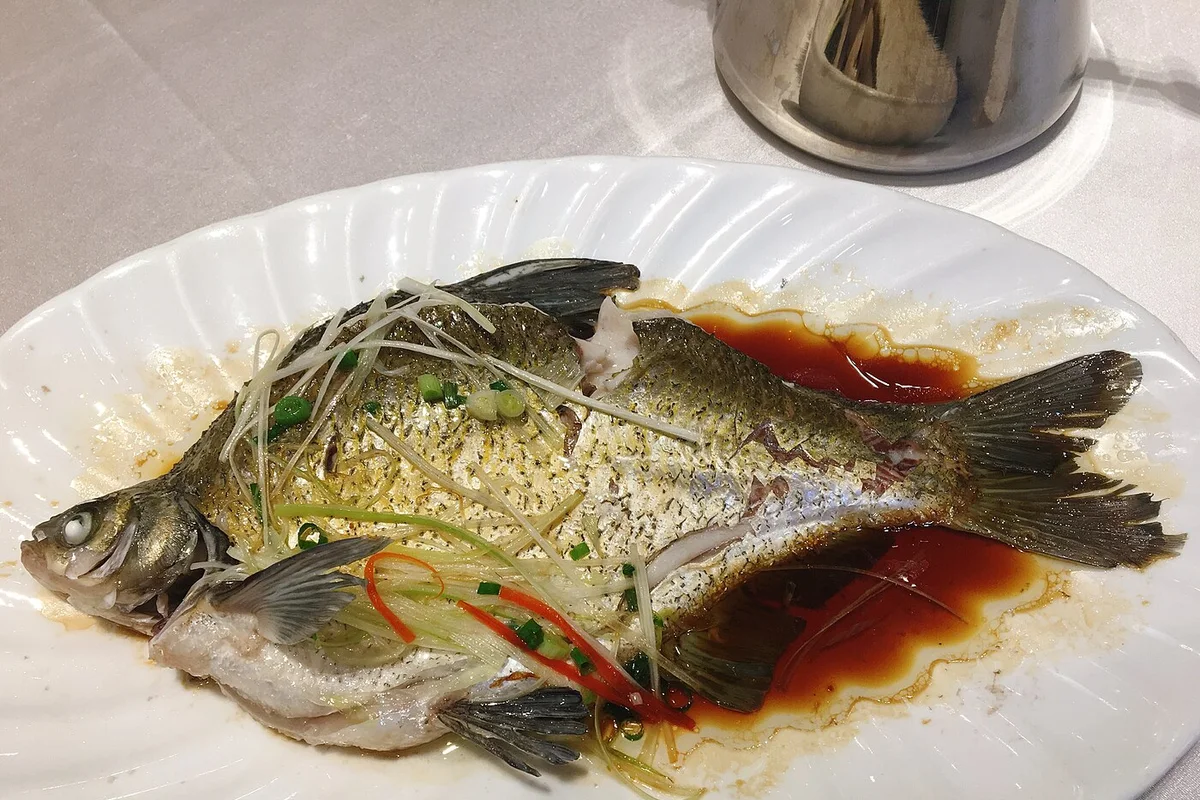
Separate the fish, the historical place-name and the finished dish
Wuchang fish is the blunt-snout bream, Megalobrama amblycephala, associated with the waters around Ezhou in Hubei. Its fame rests on delicate freshwater flesh and a name whose geography is often misunderstood: historical Wuchang refers to Ezhou, not only the modern Wuhan district that now carries the name.
Common ingredientsA verified blunt-snout bream, ginger, scallion and light seasoning; established banquet versions may add mushrooms, bamboo shoots, ham or chicken stock.
01
Confirm the species, weight and cooking method before ordering
How to order it
Confirm that the restaurant is serving actual Wuchang fish rather than another whole fish prepared “Wuchang style.” Ask for the approximate weight before ordering because whole-fish prices may be calculated by weight. Choose steaming for the clearest view of freshness, or ask about a more elaborate traditional banquet preparation. Move slowly around the fine bones and help children or inexperienced diners portion the fish safely.
How to eat and pair it
The whole fish is placed at the center of the table and shared. Diners lift the upper fillet in small portions, leaving the skeleton intact until the top side is mostly finished; the fish is often opened or the spine removed rather than flipped messily. Rice absorbs the light juices. Because the seasonings are restrained, the dish exposes both strengths and flaws: moist, sweet flesh is memorable, while stale or overcooked fish has nowhere to hide.
Easy mix-ups
Misconception: Wuchang fish means any whole fish steamed with scallion and ginger. In practice: the name identifies a particular freshwater bream tradition, so confirm the species as well as the cooking method.
Serve the fish deliberately and refrigerate leftovers before the banquet lingers
Assign one diner or server to portion the first fillet so everyone is not probing the fish at once. Offer cheek or belly pieces without treating them as compulsory status bites. Pair with rice, a green vegetable and a lighter soup; several whole fish in different heavy sauces can overwhelm a small table. Freshwater fish must be fully cooked, regardless of claims about pristine water or traditional preferences.
02
Transparent weighing is part of the dining experience for a whole fish
If fish is sold by weight, ask to see the weight and unit price before cooking, then confirm the preparation fee and any minimum. This is routine, especially when the display tank contains several sizes. A reputable restaurant can explain the species and farm or supplier in practical terms without inventing a famous-lake story for every fish.
Sustainability and legal sourcing matter more than the romance of “wild.” Wild capture can be restricted or environmentally sensitive, while responsible aquaculture supplies consistent fish. Choose documented lawful sourcing and avoid menus that treat rarity as proof of flavor. The cook’s timing still determines whether that fish reaches the table moist.
03
Judge freshness and steaming before reputation
Blunt-snout bream
The species has a deep, laterally compressed body and fine flesh. Menu descriptions should identify the fish rather than using Wuchang merely as a cooking style.
Ginger and scallion
These control freshwater aroma without masking the fish; light soy or hot oil may finish modern steamed versions.
Banquet garnishes
Mushrooms, bamboo shoots, chicken stock and other ingredients appear in established Hubei presentations, showing that plain steaming is not the only valid form.
Bones
The fish is usually served whole and contains many bones. Delicate flesh and careful eating belong together.
Steamed Wuchang fish
The best-known modern presentation uses ginger, scallion and a light finishing sauce to foreground freshness.
Banquet-style fish
Mushrooms, bamboo shoots and a richer stock create a more elaborate Hubei dish without abandoning the fish’s delicate character.
Braised preparations
Restaurants may braise the whole fish for a deeper sauce, trading some delicacy for stronger savory flavor.
- A clearly identified blunt-snout bream
- Moist flakes that separate cleanly
- A fresh aroma without muddiness
04
How whole-fish steaming handles a thick back and thin belly
The fish is scaled, gutted and cleaned of gills, blood and bitter membrane before whole-fish steaming. Positioning or scoring helps the thick back cook evenly; finishing sauce and garnishes are added without masking the delicate flesh.
Clear eyes and a dramatic platter matter less than moist flakes and accurate timing
A common preparation steams the cleaned whole fish with aromatics, then adds soy seasoning and hot oil. Flesh along the back should lift in moist flakes; the belly is richer and the cheek offers a small prized piece. Cottony dryness means overcooking, while translucent raw flesh at the thickest point is unsafe. Soy sauce should season the juices without turning the plate into a salty bath, and hot oil should release scallion and ginger aroma rather than leave a greasy slick. Freshwater bream contains fine bones. Use serving chopsticks to lift meat parallel to the skeleton, begin with broad upper fillets and move slowly toward the belly and tail. Place bones on a side plate and never mix a spoonful blindly for a child. Turning the entire fish is often unnecessary; once one side is served, the central skeleton can be lifted to expose the lower fillet. Ask staff for help rather than crushing it into fragments.
Steaming is a useful benchmark, while braising and pan-frying answer different fish conditions
Steaming reveals the fish most directly and is ideal for comparing freshness and natural sweetness. Braised versions use soy, aromatics and longer heat, making a warmer, more robust sauce that pairs strongly with rice. Pan-fried or dry-pot adaptations emphasize browned skin. These are not automatically inferior, but heavy chilli and salt make species and freshness harder to evaluate. First-time diners should choose a simple preparation at a restaurant confident in live or properly chilled fish. If a restaurant offers fillets, confirm whether they come from the named fish and whether bones have actually been removed. “Boneless” reduces risk but cannot promise zero pin bones. Whole steamed fish usually provides the clearest regional presentation, yet a small table may reasonably choose a cut portion to avoid waste. The cooking method should be settled before weighing because sauces and preparation fees may affect the final price.
05
From the old Wuchang place-name to a representative Hubei fish
Wuchang fish is the blunt-snout bream associated with Ezhou, whose historical name was Wuchang. The geographic name therefore does not mean any fish from today’s Wuchang District of Wuhan, and species or protected-origin claims should be stated separately.
Whole-fish steaming foregrounds freshness, careful cleaning and even doneness, though classic Hubei banquet recipes may use mushrooms, bamboo shoots, ham or chicken stock rather than only modern soy and hot oil. Fine bones require slow shared eating.
Wuchang fish names a regional fish tradition, while menus may use the label with different precision
The fish most closely associated with the name is blunt-snout bream, a freshwater species linked with Hubei waters and aquaculture. Restaurant translations may shorten this to bream, freshwater fish or simply Wuchang fish. Ask what species is being served, whether it is farmed or wild-sourced through legal channels, and whether the menu price is per fish or by weight. The geographic name does not guarantee that every specimen was caught in one historic lake, nor does distant sourcing automatically prevent a kitchen from preparing the recognized dish well. Size affects texture and bone structure. A very large fish may offer thick flesh but require longer steaming; a small one cooks quickly yet has less meat between fine bones. Confirm weight before the kitchen starts and ask how many diners it serves. Whole-fish presentation includes head, tail and central skeleton, so the edible yield is lower than the listed weight. This prevents both surprise bills and over-ordering.
06
How to say Wuchang Fish—and what the name tells you
Pronounced wǔ chāng yú. Menus may call it steamed Wuchang fish, blunt-snout bream, Megalobrama amblycephala, wǔchāng yú.
Wuchang is an inherited geographic name, while fish identifies the regional freshwater category. On a precise menu, the name should be paired with blunt-snout bream or Megalobrama amblycephala and an honest statement of the day’s source.
Sources
Sources and further reading
- Wuchang fish: Ezhou origin and culinary developmentHubei Provincial Department of Commerce ↗
- Wuchang fish and blunt-snout bream aquaculture in EzhouHubei Provincial Department of Agriculture and Rural Affairs ↗
- Steamed Wuchang fish and established Hubei preparationHubei Provincial Department of Culture and Tourism ↗
- Ezhou Wuchang fish geographical indication and species identityHubei Provincial Department of Agriculture and Rural Affairs ↗