Its name says “noodle,” but wheat dough is not the main ingredient
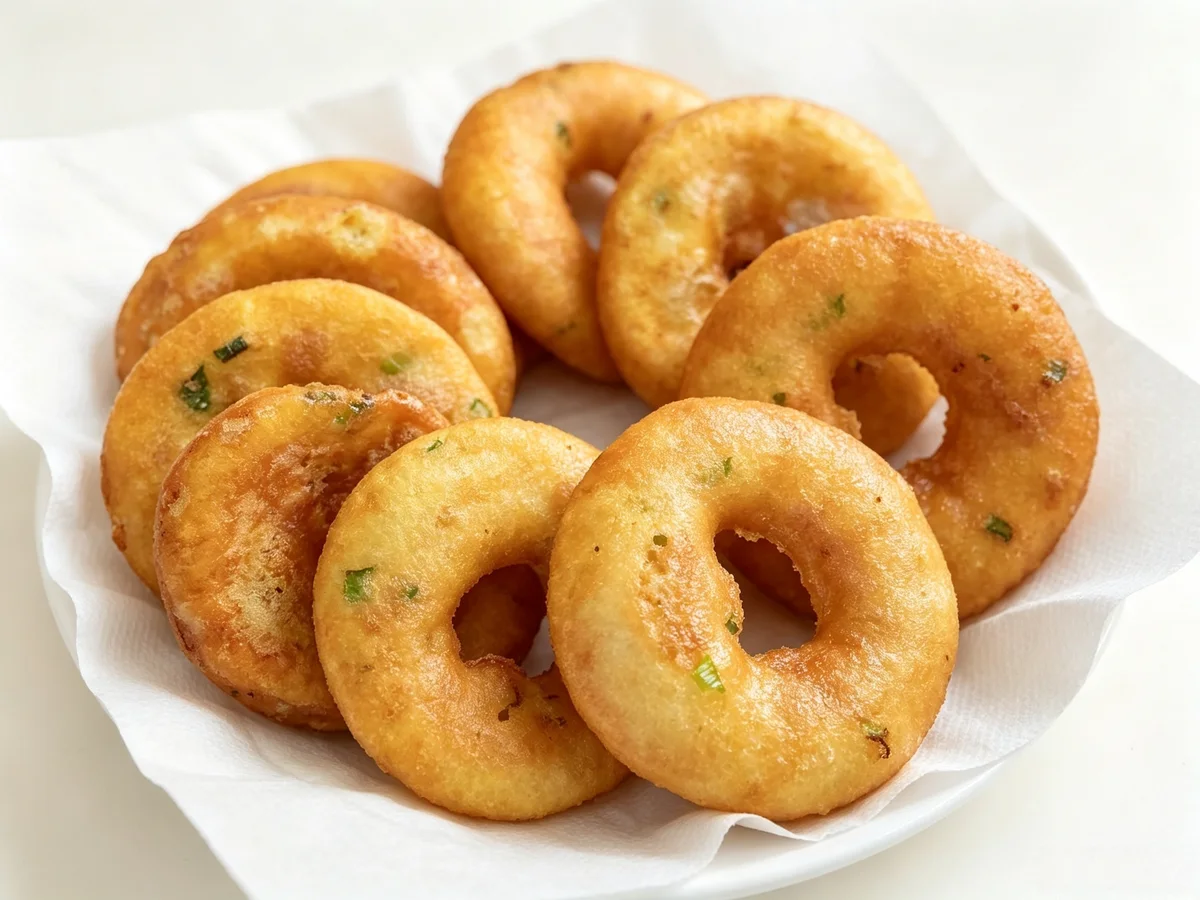
Mianwo is a savory Wuhan breakfast fritter with a fragile crisp center and a thicker, tender rim. It is best eaten in a small batch straight from the fryer.
Common ingredientsSoaked and ground rice and soybeans, water, scallion, ginger, sesame and salt, plus fresh frying oil; shop formulas may vary.
01
Choose a small batch straight from the fryer with a Wuhan breakfast
How to order it
Choose a piece that has just left the oil and drained briefly; a golden surface and clean grain aroma matter more than very dark color. One mianwo is enough within a mixed Wuhan breakfast, and diners avoiding soy should ask about the batter and shared fryer.
How to eat and pair it
Eat mianwo as soon as it has drained, using the paper sleeve to keep steam from collecting. Alternate it with hot-dry noodles, doupi or a light soup so the fried grain aroma remains a crisp accent within breakfast.
Easy mix-ups
Misconception: The convenient English nickname “rice doughnut” means mianwo is sweet or cake-like. In practice: it is a savory rice-and-soy breakfast fritter seasoned with scallion and ginger.
02
Judge grain aroma, clean frying and a fresh savory finish together
Rice
Soaked and ground rice forms the main body of the batter and gives the freshly fried rim a tender, lightly chewy interior.
Soybeans
A smaller proportion of soaked soybeans adds fragrance, color and structure; recipes and rice-to-bean ratios vary by shop.
Scallion and ginger
Finely chopped aromatics are distributed through the batter so each bite tastes savory rather than like a plain rice cake.
Classic scallion mianwo
The everyday Wuhan version is savory and aromatic, with sesame sometimes scattered over the batter.
Sweet mianwo
Some vendors make a lightly sweet form, but it should be ordered explicitly and does not replace the savory breakfast standard.
Shop-specific thickness
A wider rim creates more tender interior, while an especially thin pour emphasizes crispness. Regulars often have a preferred balance.
- A distinct hole or very thin center
- Golden crisp edges without a burnt taste
- A tender, rice-fragrant thicker rim
03
How soaked rice batter becomes a crisp mianwo
The seasoned batter is poured around the raised center of a preheated special ladle. It sets in the mold, releases into the oil and fries until the center becomes lacy and crisp while the thicker outer ring cooks through but stays tender.
04
A crisp-and-soft bite within Wuhan’s guozao breakfast
Mianwo belongs to Wuhan’s guozao breakfast rhythm, where commuters combine small portions from specialist counters rather than treating one item as the entire meal.
Its crispness works especially well beside hot-dry noodles, doupi or a light soup. Ordering one fresh piece preserves that contrast better than stacking several fritters while the rest of breakfast arrives.
05
How to say Mianwo—and what the name tells you
Pronounced miàn wō. Menus may call it Wuhan mianwo, rice soybean fritter, miànwō, Wuhan breakfast fritter.
The Wuhan name is conventionally rendered mianwo. The character wo evokes a nest-like form, while the familiar “rice doughnut” translation is only visual shorthand: the usual batter is savory, rice-and-soy based and aromatic with scallion and ginger.
Order from an active fryer, let the oil drain and eat the fragile center first
Look for small batches leaving the oil, with the vendor allowing each piece to drain before stacking. Begin with one because mianwo is light in appearance but fried and surprisingly filling. Eat it promptly rather than asking the vendor to refry an older piece, which only deepens color and oil absorption.
A paper sleeve should absorb surface oil without sealing in steam. For a short takeaway trip, request a vented paper pack and keep the fritter away from wet noodles. A dry oven can revive some crispness later, while a microwave turns it soft and emphasizes oil.
Grinding, resting and ladle technique control whether the ring releases cleanly
Rice and soybeans are soaked, ground with water and rested into a pourable batter. The mixture needs enough cohesion to set cleanly without becoming bready; coarse particles tear it, while excessive fermentation creates uncontrolled sourness. Scallion, ginger and salt should be distributed evenly.
A clean release depends on a preheated mold, the right batter thickness and oil hot enough to set the exterior without scorching it. Repeated small batches, debris skimming and fresh oil management matter more than deep color, which can hide a raw interior or stale-oil flavor.
Use mianwo as the crisp accent in a Wuhan breakfast, not the only source of starch
One ring beside a small bowl of noodles creates contrast between dry crunch and sauced chew. Ordering several rings plus a full doupi and noodles can become monotonously heavy. Share during a breakfast crawl, taste fried items first, and use tea or soup between them. Chilli sauce can be enjoyable but should not cover the scallion-ginger batter before you have tasted it plain.
Rice does not make mianwo automatically gluten-free. Batter may include other flour, seasonings may contain wheat, and fryers can be shared with wheat foods. Soybean is a major allergen, while scallion and ginger matter for other restrictions. Ask the vendor about batter and shared oil.
Sources