
01
Little dragon shrimp, by the basin
Xiaolongxia are freshwater crayfish, and in China they are eaten by the kilo, late at night, in summer.
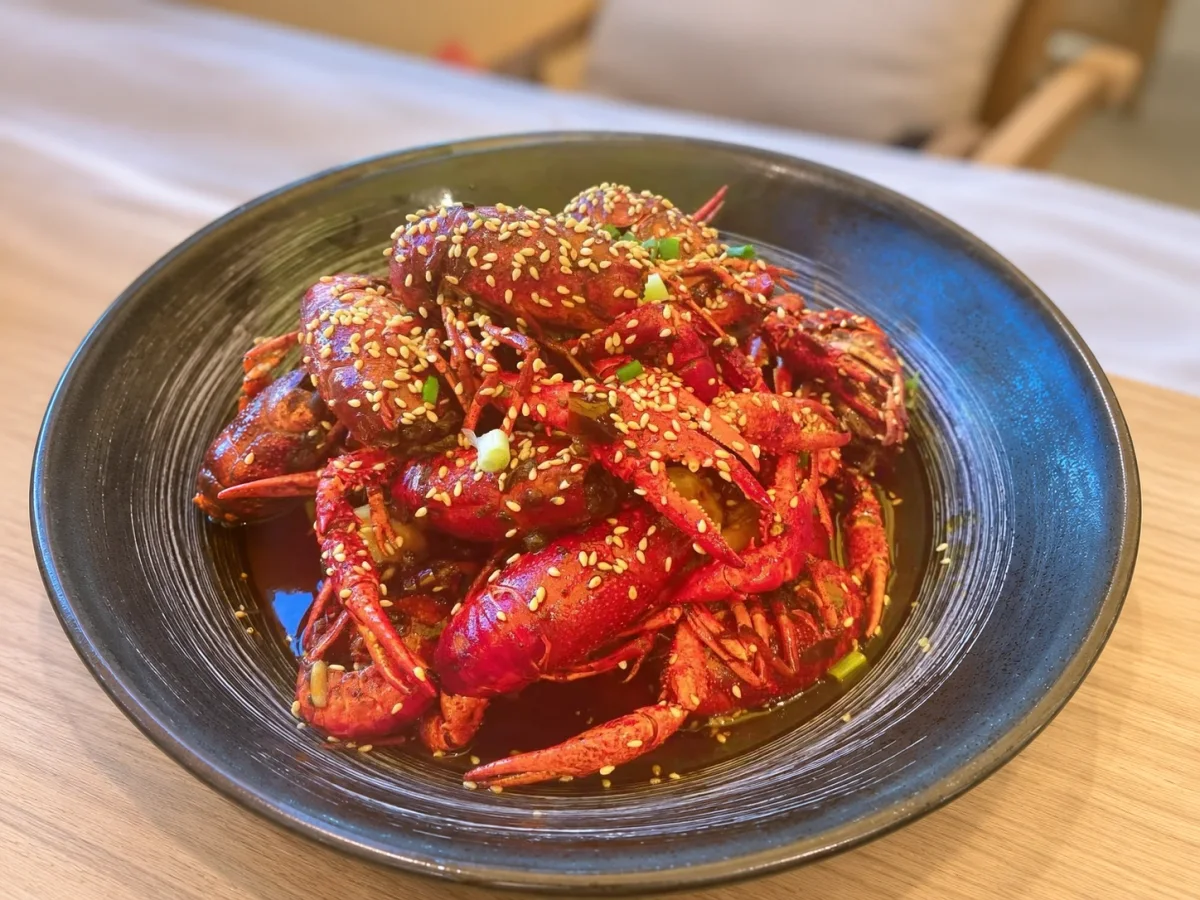
The animal is the red swamp crayfish, Procambarus clarkii, a small freshwater crustacean with a hard red shell and two big claws, native to the American South. In Chinese it is 小龙虾, “little dragon shrimp,” a name that distinguishes it from the spiny lobster, 龙虾. It is cooked whole in its shell, in a wok or a big pot, and served heaped in a basin or tray; diners pull off the head, suck it, crack the tail shell and eat the white tail meat, a mouthful at a time, wearing plastic gloves.
It is a seasonal, social food. The traditional season is May to July, when the crayfish are plentiful and cheap; the classic flavors are 麻辣, numbing and hot, 蒜蓉, garlic, 十三香, “thirteen spices,” and Hubei’s 油焖, oil-braised, with steamed, braised and salt-and-pepper versions alongside. Most tables order at least a kilo, and drink beer with it. China eats around nine tenths of all the crayfish in the world.
02
An American crayfish, by way of Japan
China’s favorite summer food arrived as bullfrog feed.
The red swamp crayfish is not native to China. According to the Hong Kong anthropologist Sidney Cheung, who has studied the trade for two decades, it was taken from the United States to Japan in the 1930s as food for farmed bullfrogs, and was brought to China around the Second World War, where many were kept as pets. It is hardy, breeds fast and has few predators, and it spread through the ditches, lakes and rice fields of the middle and lower Yangtze. Farmers treated it as a pest that burrowed into paddy banks; in Qianjiang, in central Hubei, it was first noticed in the rice paddies in 1988.
For decades almost nobody ate it. Cheung says the crayfish’s association with Japan and the war put people off, and in the 1990s it was still a cheap, low-value catch. Then cooks along the Yangtze learned to drown it in spices, and migrant workers moving to cities took their taste for heavy, hot Sichuan and Hunan flavors with them. China ate about 6,700 tons of crayfish a year in the early 1990s and more than 870,000 tons in 2016.
03
Oil-braised crayfish: a couple, a chicken pot and 1996
The recipe that made crayfish famous was invented in a ten-square-meter restaurant beside an oilfield.
Part of Qianjiang is the town of the Jianghan oilfield. In 1996 Li Daijun, an electrician at the oilfield, quit his job and rented a ten-square-meter shopfront for 5,000 yuan in Wuqi, the oilfield’s town; he waited tables and called himself Xiao Lizi, “Little Li,” while his wife He Fengzhen cooked. Her specialty was 油焖仔鸡, young chicken braised in a lot of oil and spice. One day in the summer of 1996, by Li’s account, they dropped two whole crayfish into the chicken pot, liked the result, and worked out 油焖大虾, oil-braised “big shrimp.” Others were selling crayfish at 10 yuan a basin; theirs cost 12.
They developed a seven-cut method for cleaning each crayfish, snipping the head, removing the stomach sac, trimming the small legs, pulling the vein and cutting the back so the sauce gets in, and a spice mix of more than a dozen aromatics including angelica root, white cardamom and cloves. In 2003 they moved into the Wuqi night market under the name Xiao Lizi Oil-Braised Crayfish, and from there the dish spread. One newspaper account dates the first dish to 1998; Li himself says 1996. In December 2019 Hubei named Qianjiang oil-braised crayfish one of its ten great dishes, and in July 2024 Li’s technique was added to Qianjiang’s list of intangible heritage. The original shop is at No. 2 Zuanqian Road in Wuqi, and Li says he has taught more than ten thousand apprentices.
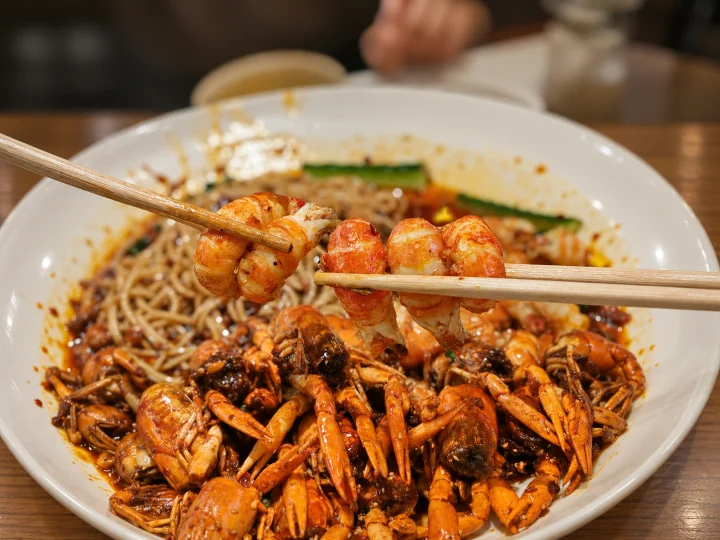
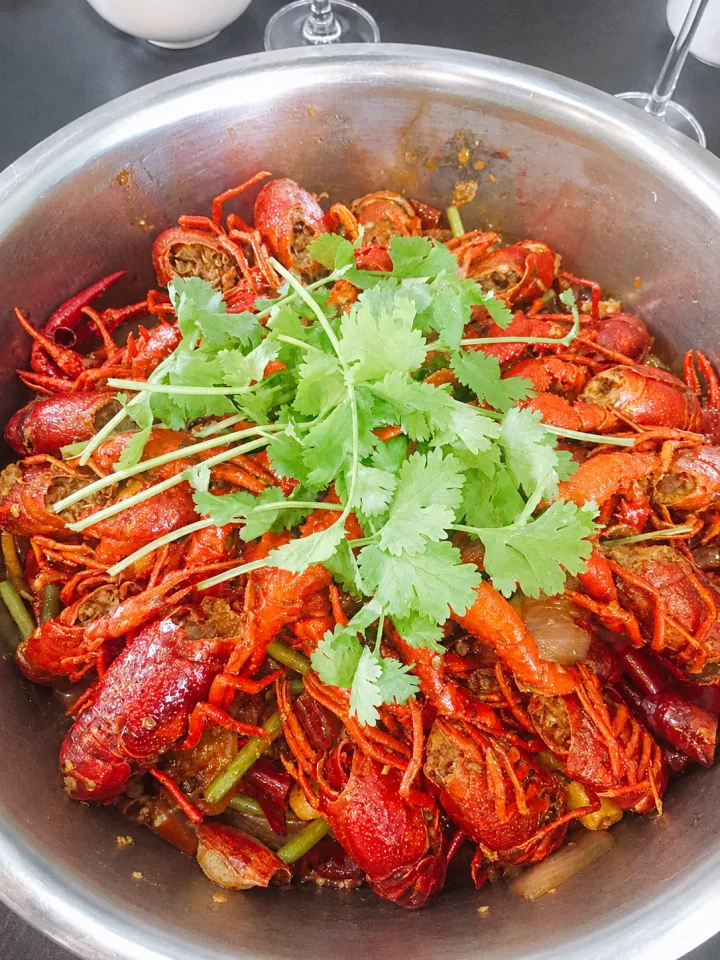
Oil-braised, in two kitchens
Our own photographs of oil-braised crayfish from two meals.
04
Oil-braised, thirteen-spice, garlic or steamed
Each crayfish city has its own flavor, and most restaurants offer all of them.
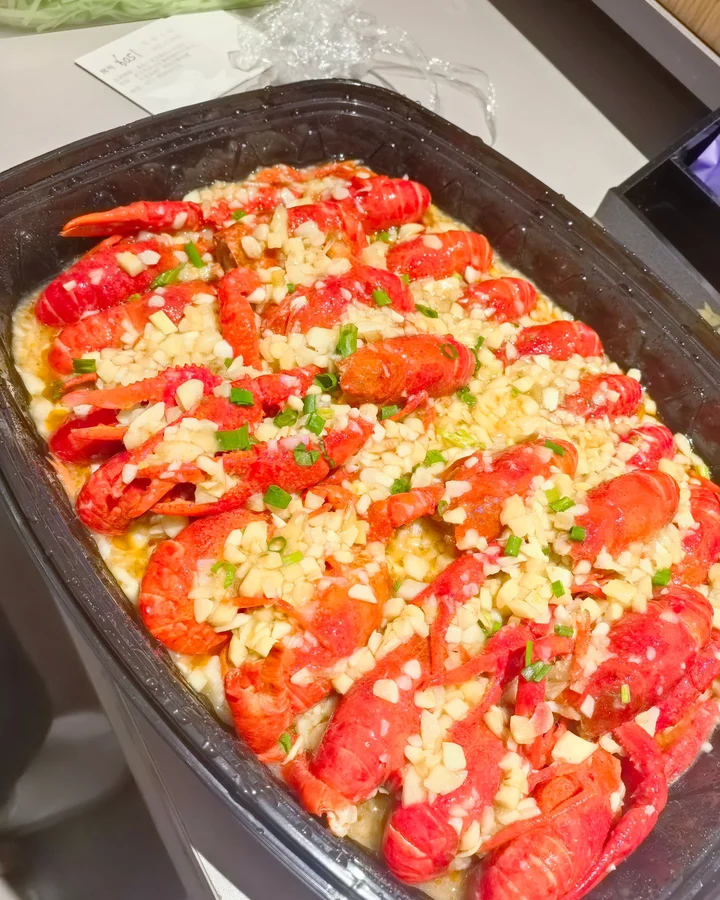
Qianjiang’s oil-braised crayfish is cooked in a generous amount of oil with chili bean paste, dried chilies and whole spices, then simmered until the sauce clings; it is red, salty, savory and moderately hot. Downriver, Xuyi in Jiangsu, which also calls itself a crayfish capital, made its name in the 1990s with 十三香, “thirteen-spice” crayfish, cooked with a blend of star anise, cinnamon, bay leaf, angelica, cardamom and other aromatics, more fragrant than hot. Garlic crayfish, smothered in fried and raw garlic, is the mild favorite; Wuhan is known for steamed crayfish, which needs the best, freshest animals and is served with a sour-hot dip.
| Flavor | How it is cooked | Associated with |
|---|---|---|
| Oil-braised 油焖 | Fried and braised in oil with chili bean paste, chilies and spices, often with beer | Qianjiang, Hubei |
| Thirteen-spice 十三香 | Braised with a mix of warm spices, aromatic rather than very hot | Xuyi, Jiangsu |
| Mala 麻辣 | Plenty of dried chili and Sichuan pepper | Everywhere |
| Garlic 蒜蓉 | Braised or steamed under fried and raw garlic | Everywhere; the mild choice |
| Steamed 清蒸 | Steamed plain and dipped in a sour-hot sauce | Wuhan |
| Newer styles | Lemon “bubble” crayfish, perilla crayfish, chilled braised crayfish | Hubei restaurants |
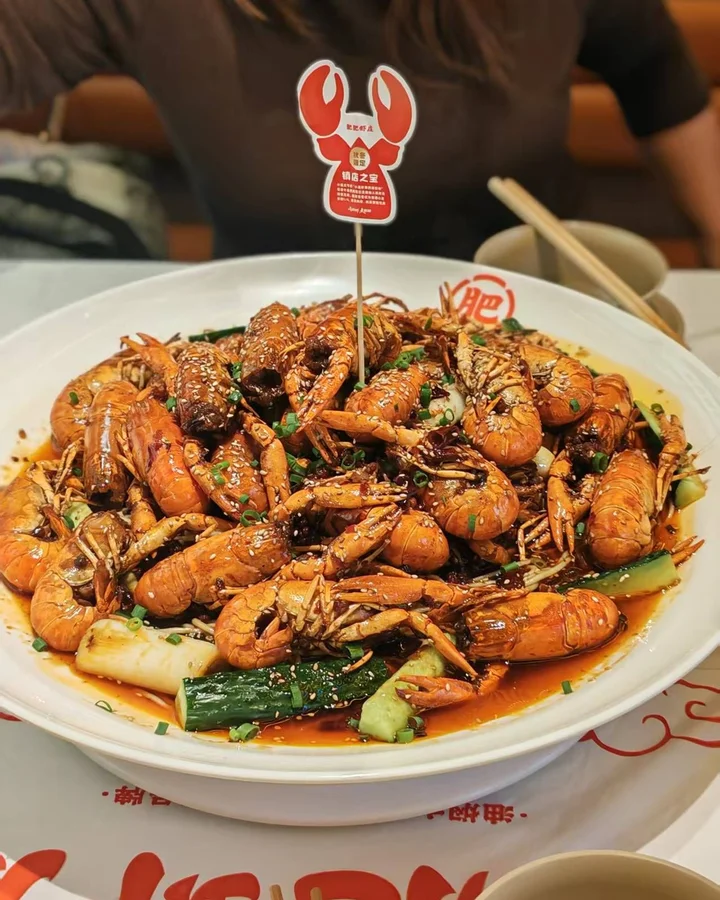
Two more ways with crayfish
Our own photographs of crayfish cooked two other ways. The chili-red bowl at the top of this page is the third.
05
Wuhan’s crayfish nights
Hubei’s capital eats crayfish on a scale nowhere else matches.
Wuhan’s crayfish began as late-night street food. After the SARS epidemic of 2003, small eateries near the city’s building sites started frying crayfish for workers, and in April 2008 a couple, Chai Biao and Zhang Yanli, opened a crayfish restaurant called Feifei Xiazhuang in Shipailing in Hongshan district. Brands like theirs moved crayfish from the roadside into proper restaurants; by 2023 Feifei Xiazhuang had nearly fifty branches, and the city counts four big local names: Feifei Xiazhuang, Bali Longxia, Liangliang Zhengxia, known for steamed crayfish, and Yitang Longxia.
According to delivery-platform figures, Wuhan eats more than ten thousand tons of crayfish in two months of summer. The old saying sends you to Hubu Lane for breakfast and to Jiqing Street for late supper, and the crayfish streets now include Wansongyuan and Xuesong Road in Hankou. In 2026 a rooftop crayfish restaurant facing the Yellow Crane Tower, with 108 tables, had queues from six in the evening and served 800 to 1,300 people a night. More than sixty percent of crayfish diners are people born in the 1990s.
06
Crayfish in the rice paddies
Most Chinese crayfish are raised in flooded rice fields, alongside the rice.
Around 2001, Qianjiang farmers started catching baby crayfish in the ditches and selling them at markets for about 20 fen each. Within a few years they were stocking them in their rice fields: the crayfish eat weeds and pests, their droppings feed the rice, and the farmers use fewer chemicals. Qianjiang calls itself the birthplace of rice-crayfish rotation, and by the 2020s it had about 900,000 mu of crayfish farms, 850,000 of them in co-culture, with one crop of rice and two harvests of crayfish a year: the first from mid-April to late May, the second from August to the end of September. Hubei produces more crayfish than any other province, and Qianjiang’s promotional saying runs: for the world’s crayfish look to China, for China’s look to Hubei, for Hubei’s look to Qianjiang.
Farming has also stretched the season. Since late 2022 Qianjiang has raised crayfish for winter sale, and from December 2024 to February 2025 it put 24,000 tons of winter crayfish on the market.
07
Sizes by the qian, prices by the jin
In China crayfish are graded by how much a single one weighs.
The trade sorts crayfish by the weight of one animal in qian, a traditional unit of 5 grams: small ones under 4 qian, medium 4 to 6, large 7 to 9, and the prized 两虾, “liang crayfish,” over one liang, 50 grams. Prices move with the season. They are lowest in May and June, when the paddies are full, and highest in winter and early spring. In the first half of 2025, live crayfish of 2 to 4 qian averaged 18.9 yuan a jin (half a kilo) in Qianjiang and those of 4 to 6 qian 26.5 yuan; at the 2025 Spring Festival large crayfish reached 54 yuan a jin, three times the summer price. Restaurants price their menus the same way, by the size of the crayfish rather than the flavor, so a basin of big ones costs far more than the same weight of small ones.
08
A 458-billion-yuan industry
Two thirds of the money in China’s crayfish trade is made in restaurants and the trade around them.
By an industry estimate, China’s crayfish business was worth 458 billion yuan in 2022: 96 billion from farming, about 50 billion from processing, and 312 billion, 68 percent of the total, from restaurants and trade. Factories processed 1.2 million tons, and China exported about 9,200 tons, mainly to Europe, the United States and Japan. Qianjiang alone reported 87 billion yuan of crayfish business in 2024 and 220,000 jobs; its trading center ships more than 2,800 tons of live crayfish a day at the summer peak, reaching more than 600 cities within 4 to 14 hours. More than 3,000 restaurants across China trade under the Qianjiang crayfish name.
09
How to order and eat them
Order by weight, wear the gloves and twist.
Order by the jin
Restaurants sell crayfish by the jin (500 g) or by the basin. Most tables order at least a kilo, with a cold dish and noodles or rice.
Pick a size and a flavor
Bigger crayfish cost more per jin. Oil-braised and mala are hot; garlic and thirteen-spice are milder; steamed is for the freshest crayfish.
Twist off the head
Hold the head in one hand and the tail in the other and twist. The yellow fat in the head is a delicacy; suck it if you like.
Crack the tail
Squeeze the sides of the tail shell until it cracks, peel back the first two rings and pull the meat out by the tail fan. The dark vein should already be gone.
Go in season, at night
May to July is the cheapest and fullest season, and crayfish are an evening food, eaten late with beer.
Finish with the sauce
Many diners stir the last of the garlic and sauce into rice or noodles.
10
Cooking crayfish at home
Most of the work is in the cleaning.
For 1 kg of live crayfish: a head of garlic, a thumb of ginger, scallions, a handful each of dried chilies and Sichuan pepper (about one to one), two bay leaves, two spoons of chili bean paste, light soy sauce, sugar and a can of beer.
- 1. Brush them clean
Brush each crayfish under running water, especially the belly and mouth, where the dirt collects; soaking alone does not clean them.
- 2. Pull the vein
Grip the middle fin of the tail fan, twist and pull: the dark vein comes out with it. Snip off the front of the head and cut away the grey gills; discard any dark, grey head fat, which is bitter, and keep the pale yellow fat.
- 3. Fry until red
Fry the crayfish in plenty of oil at about 150 to 180°C until they are red all over, then drain. At home you can stir-fry them in a few tablespoons of oil instead.
- 4. Build the sauce
In fresh oil fry the garlic, ginger and scallion, then the chili bean paste until the oil turns red, then the chilies, Sichuan pepper and bay until fragrant but not dark.
- 5. Braise
Return the crayfish, splash soy sauce down the side of the wok and pour in the beer. Season with sugar; the paste is salty, so add no salt. Simmer 5 to 10 minutes until the sauce clings, and serve hot.
11
More from Hubei
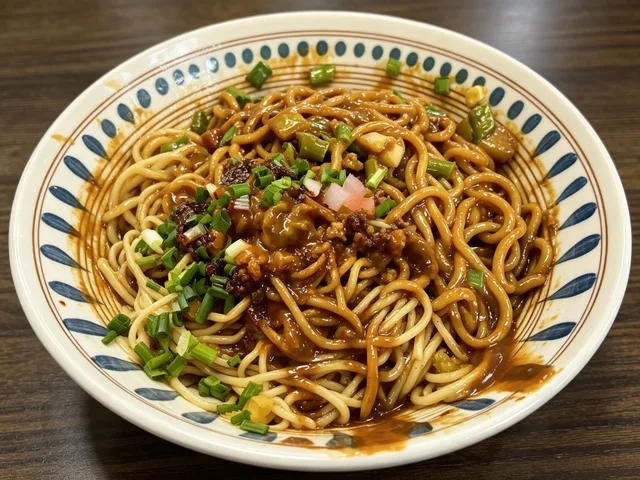
Hot dry noodles
Wuhan’s sesame-paste breakfast noodles.
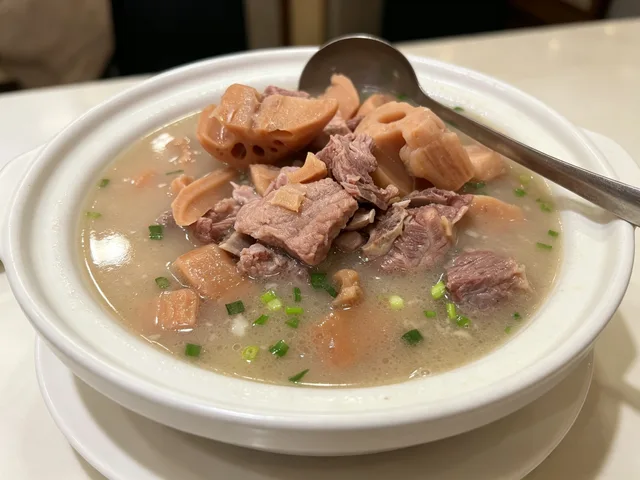
Read about hot dry noodles →Pork rib and lotus root soup
The slow-simmered soup of Hubei’s lake country.
Read about the soup →Hubei
Wuhan breakfasts, lake fish and lotus root.
Explore Hubei food →Hubei classics
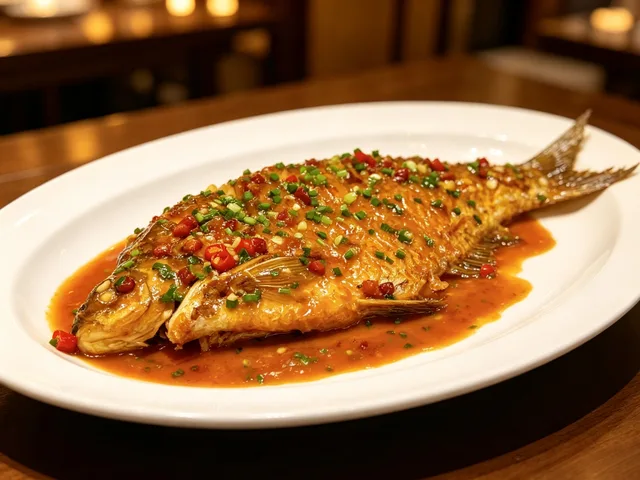
- Wuchang Fish
Steamed whole fish · Lunch, dinner or banquet
- Hot Dry Noodles
Breakfast noodles · Breakfast
- Pork Rib and Lotus Root Soup
Soup · Cold days, winter solstice and New Year’s Eve
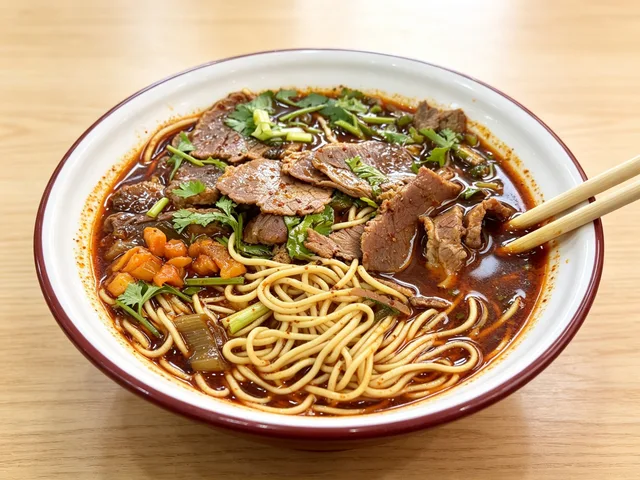
- Xiangyang Beef Noodles
Beef noodle soup · Early breakfast
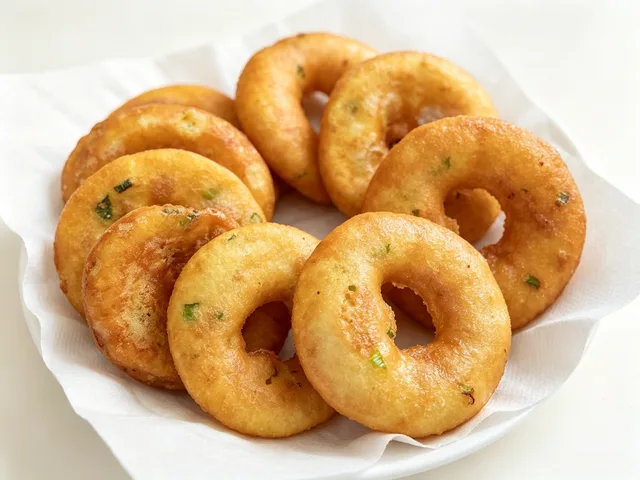
- Mianwo
Breakfast fritter · Breakfast
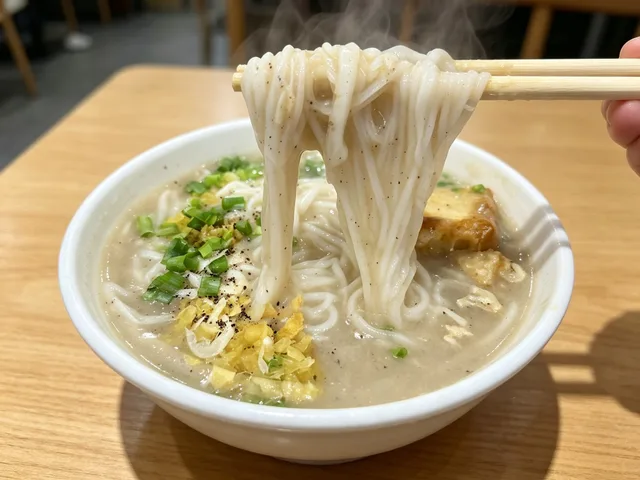
- Hutang Rice Noodles
Rice-noodle soup · Breakfast, best on cold mornings
FAQ
Questions about Crayfish
What is xiaolongxia?
The red swamp crayfish, Procambarus clarkii, a freshwater crayfish cooked whole in spicy, garlic or spiced sauces and eaten as a summer night food in China.
Is xiaolongxia native to China?
No. It is a North American species that reached China through Japan in the twentieth century and spread through the Yangtze basin.
What is youmen daxia?
Oil-braised crayfish, Qianjiang’s signature: crayfish fried and braised in oil with chili bean paste, dried chilies and spices. Li Daijun and He Fengzhen first made it in 1996.
What is thirteen-spice crayfish?
A Xuyi, Jiangsu, style braised with a blend of warm spices such as star anise, cinnamon, bay leaf and cardamom; more aromatic than hot.
When is crayfish season in China?
Traditionally May to July, when they are plentiful and cheapest; farmed crayfish are now sold all year.
How much does crayfish cost in China?
Live crayfish in Qianjiang averaged about 19 to 27 yuan a jin in the first half of 2025, depending on size; big ones reached 54 yuan at the Spring Festival. Restaurants charge more and price by size.
How do you eat crayfish?
Twist off the head, suck the yellow fat if you like, squeeze the tail shell to crack it and pull out the meat. Wear the gloves the restaurant gives you.
Where is the best place to eat crayfish in China?
Hubei, especially Qianjiang and Wuhan, and Xuyi and Nanjing in Jiangsu.
Are crayfish safe to eat?
Farmed crayfish from clean paddies are; buy them live, brush them, remove the vein and gills, discard dark head fat and cook them through.
Sources
Sources and further reading
- 1 Xu Qiongfang and Xu Liya (eds.), Xiaolongxia Chanye Qixiang Fuwu yu Yanjiu (小龙虾产业气象服务与研究), chapters 1–3: the species, China’s crayfish industry in 2022, Qianjiang and rice-crayfish farming (in Chinese)China Meteorological Press (2024; WeChat Read edition)
- 2 Zou Zhiping, Zeng Xiangyun and Fang Aiping (eds.), Chucai Luncong (楚菜论丛), vol. 1: the ten great Hubei dishes of 2019 and Qianjiang’s crayfish titles (in Chinese)Hubei Science and Technology Press (2021; WeChat Read edition)
- 3 China’s first oil-braised crayfish man, and why he stayed out of sight for thirty years: Li Daijun, 1996 and the Wuqi night market (in Chinese)Liu Zhenxiong, Wang Qin and Huang Lu, Hubei Daily, via Jimu News (2026) ↗
- 4 One crayfish cooks up a summer: Hubei’s night-time crayfish scene, from a Yellow Crane Tower rooftop to Qianjiang’s trading hub (in Chinese)Deng Nan, Xinhua (2026) ↗
- 5 The wet, hot crawfish summers of QianjiangZong Chen, Sixth Tone (2018) ↗
- 6 Rise of the red crustacean: Sidney Cheung and Ding Ling’s Crayfish TemptationLi Yingxue, China Daily (2026) ↗
- 7 Qianjiang’s crayfish chain: 87 billion yuan, 220,000 jobs, 128 dishes and the price of each size (in Chinese)Zhou Fang, Yicai (2025) ↗
- 8 China’s night economy, the Wuhan sample: crayfish restaurants, Feifei Xiazhuang since 2008 (in Chinese)Wu Mianqiang, Yicai (2024) ↗
- 9 How Louisiana crayfish became China’s national dishLia Yi, Goldthread (2019) ↗
- 10 Cleaning and cooking mala crayfish: brushing, the vein, the bitter dark head fat, the gills, frying and beer (video, in Chinese)Mei Shi Zhuang Yuan Ge (美食状元哥), Bilibili (2021) ↗
- 11 A Wuhan crayfish restaurant with thirty tables waiting: garlic, spicy and steamed, priced by size (video, in Chinese)Li Ge Wo E Le (李哥我饿了), Bilibili (2025) ↗
Last updated November 2026