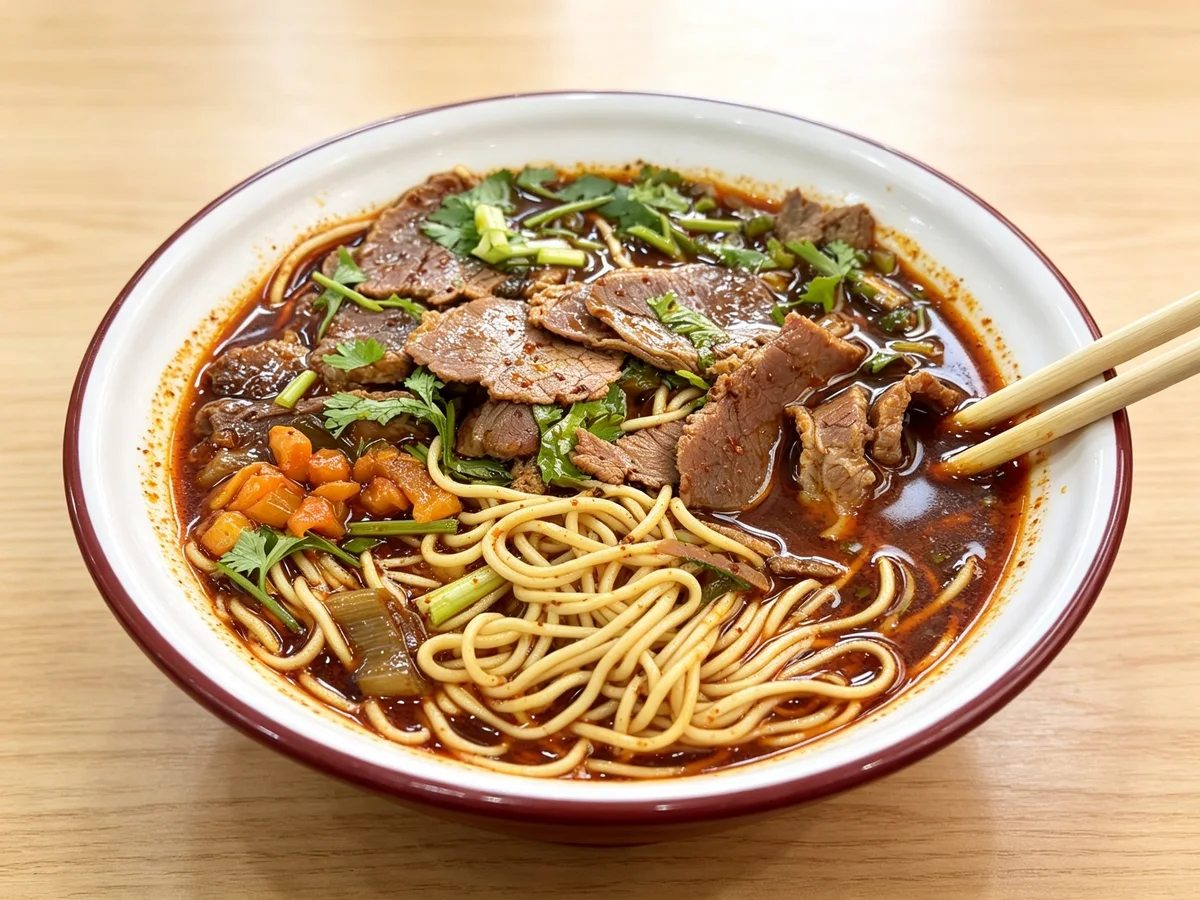
Meet northwest Hubei’s robust breakfast
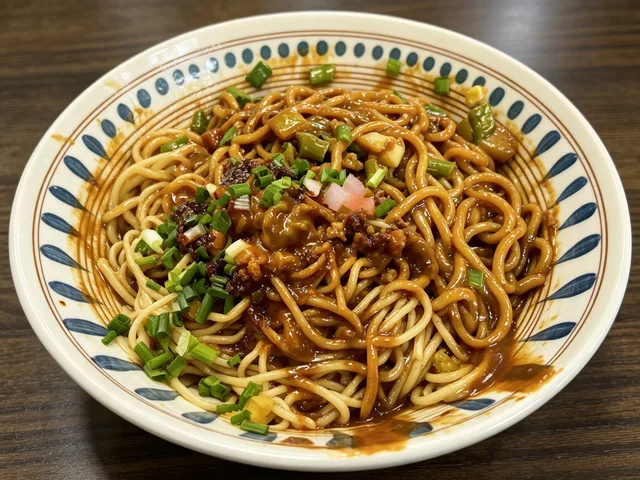
Xiangyang beef noodles are a forceful breakfast from northwestern Hubei: alkaline wheat noodles and bean sprouts are blanched to order, then covered with beef or beef offal and an aromatic broth. Red-broth versions use chilli and numbing spices for a robust morning bowl, while local accounts also recognize lighter white broth.
Common ingredientsAlkaline wheat noodles, braised beef or beef offal, beef stock, chilli, Sichuan pepper, aromatics and often bean sprouts and scallions.
01
Choose beef or offal, then set the heat level
How to order it
Choose beef noodles for meat pieces or beef-offal noodles for a wider range of textures. Ask for red or white broth and confirm spice level before ordering. Mix sprouts upward from the bottom so their crunch is distributed through the bowl. Eat soon after serving; the noodles are selected for bounce but still soften in hot broth.
How to eat and pair it
Xiangyang’s noodle shops begin work before dawn, preparing broth and braised toppings for commuters and neighborhood regulars. A bowl may be accompanied by raw garlic or a local rice wine, although habits vary. Diners value speed, heat and intensity: noodles are blanched, topped and handed over within minutes, making the dish part of the city’s daily rhythm rather than an occasional specialty.
Easy mix-ups
Misconception: It is simply Lanzhou beef noodles made spicy. In practice: Xiangyang has its own breakfast culture, alkaline noodle texture, toppings and red/white broth traditions. Misconception: Only the red broth is locally authentic. In practice: Red soup is iconic, but Hubei cultural sources also describe a lighter white-broth branch.
Choose beef, offal and chilli levels separately instead of treating “beef noodles” as one setting
A Xiangyang counter may offer beef, mixed beef offal or added tendon in a deeply seasoned red broth. Ask which bowl contains only muscle meat, what organs appear in a mixed order and whether extra beef is priced separately. The broth is commonly chilli-forward and oily, so “less spicy” should be discussed before ladling; removing red oil from the top after service cannot remove heat and spices already cooked into the stock. First-time diners can request the house medium level rather than stripping the bowl of character. Noodle width and firmness may be adjustable. Choose a normal portion first because beef, broth and alkaline wheat noodles are substantial, especially at breakfast. Add bean sprouts, scallion or coriander only after tasting the base. Pickled garlic can cut richness, but a whole dish of salty pickles may overwhelm the broth. If the shop offers a dry mixed noodle and a soup noodle under similar names, confirm which one you are ordering before paying.
Red broth hides ingredients, so ask about wheat, offal, stock and shared chilli oil
The noodles contain wheat and may be alkaline. Broth can include beef bones, rendered fat, soy sauce containing wheat and spice blends the counter cannot fully modify per bowl. A “vegetable noodle” made from the same broth is not vegetarian. Sesame, peanut or shared utensils may occur in condiments. Diners with allergies or religious restrictions need a direct conversation about meat cuts, offal and preparation rather than relying on an English label.
02
Compare two bowls through aroma, meat and noodle timing—not a contest for the reddest oil
At the first shop, note the scent before stirring, taste broth below the oil and check how much identifiable beef accompanies the noodles. At the second, order the same meat type and similar spice level. Only then is it meaningful to compare. One counter may emphasize fragrant chilli fat, another deeper beef stock or firmer alkaline noodles; the strongest bowl is not automatically the most complete.
If a local recommends adding garlic, pickles or vinegar, reserve a few plain bites first. Condiments can reveal a neighborhood style, but they can also make two distinct broths converge. A useful memory records meat cut, noodle texture, pepper aroma and breakfast atmosphere rather than a single heat score.
03
Alkaline noodles, bean sprouts and a beef-forward red broth
A strong bowl is aromatic and layered, not merely red, salty and hot
The broth may combine beef bones or meat stock with chilli, aromatics and a seasoned fat layer. Good versions release beef savoriness beneath the pepper, then leave warmth rather than burnt bitterness. A thick slick of red oil is not proof of concentration; it should carry aroma and coat noodles lightly, not make every sip greasy. Excessive salt can feel exciting in the first spoon and exhausting by the bottom. Taste below the surface before adding vinegar or garlic. Noodles should lift as separate strands with an elastic bite. A chalky center indicates undercooking, while swollen strands that break on lifting have waited too long. Beef pieces should be tender enough to bite without dissolving into dry fibers, and offal should have clean, cut-specific textures. Tiny meat fragments in a huge bowl of oil do not satisfy simply because the broth is intense. The balance is noodles, stock, fat and beef in every few bites.
Alkaline wheat noodles
Their firm, springy texture stands up to hot broth and the concentrated beef topping.
Beef or beef offal
Shops commonly distinguish niuroumian from niuzamian; offal versions may include tripe and other braised cuts.
Red or white broth
The famous red soup is spicy and aromatic, while lighter broth is an established local option rather than a foreign adaptation.
Bean sprouts and scallions
Briefly blanched sprouts add crunch and freshness beneath the rich topping.
Red-broth beef noodles
The most visually recognizable style combines a red, aromatic broth with braised beef and alkaline noodles.
White-broth noodles
A paler, cleaner soup foregrounds beef and aromatics without the same chilli intensity.
Beef-offal noodles
Niuzamian adds tripe or other braised cuts, giving more texture and a deeper organ-meat character.
- Noodles that remain springy in hot broth
- Tender beef or carefully cleaned offal
- Broth with beef depth beneath the spice
04
Broth, noodles and toppings follow separate timelines
The shop maintains broth and braised toppings on separate timelines, then blanches each noodle portion and its bean sprouts to order. Fast assembly keeps the wheat strands resilient while letting diners choose beef, offal and broth style independently.
05
A bowl of noodles and yellow rice wine in Xiangyang’s morning
Xiangyang treats the bowl as a robust breakfast rather than a late-night challenge. Specialist counters open early, serve quickly and build neighborhood followings around broth aroma and consistent noodle timing.
Yellow rice wine is a familiar local companion for some diners, but it is optional rather than a test of belonging. Tea, water and a slower pace suit visitors who need to travel, drive or work after breakfast.
Breakfast intensity makes sense in a working city, but visitors can pace it thoughtfully
Xiangyang diners commonly eat rich beef noodles in the morning, sometimes alongside rice wine or another local drink. That does not make alcohol a compulsory pairing, and visitors should not imitate a drinking custom before travel, driving or work. Hot tea, water or a mild grain drink can serve the practical purpose of clearing chilli and fat. What matters culturally is the quick, sustaining bowl and neighborhood counter rhythm, not a performance of how early one can tolerate heat. Eat soon after pickup. Stir enough to distribute seasoning, but keep a small area less mixed so you can compare broth beneath the oil. Lift shorter bundles and alternate noodles with beef; waiting for the bowl to cool allows alkaline noodles to absorb salt and soften. If the heat builds beyond comfort, pause and eat plain food rather than adding cold water to the communal seasoning jar or drinking broth as a dare.
06
How to say Xiangyang Beef Noodles—and what the name tells you
Pronounced xiāng yáng niú ròu miàn. Menus may call it Xiangyang niurou mian, xiāngyáng niúròu miàn, Hubei beef noodles.
Sources
Sources and further reading
- Xiangyang beef noodlesHubei Provincial Department of Culture and Tourism ↗
- A Xiangyang breakfast business built around beef noodlesHubei Provincial Department of Agriculture and Rural Affairs ↗
- Representative foods of Hubei and Wuhan breakfast cultureHubei Provincial Department of Culture and Tourism ↗