
Plan the morning
Build a guozao route around appetite, texture and walking distance
Wuhan breakfast is a city rhythm rather than one required plate. Use these foods to decide how many stops fit one morning and which textures should be eaten immediately.
01
Guozao is an urban action
Dense breakfast shops, focused menus and fast service use morning turnover to preserve quality.
Wuhan breakfast may be eaten seated, standing or on the move. Specialists often do one or two things: noodles are prepared for quick reheating, large sheets of doupi are fried and cut, mianwo go continuously into oil, and fish broth stays hot.
Do not visit one tourist street and order ten items at once. Watch where local people queue and when fresh batches appear, then divide the foods across two or three mornings so mixed noodles, soup and fried items reach you in the state intended.
02
The first action with hot dry noodles is mixing
Sesame paste, alkaline noodles and temperature determine whether the bowl stays smooth.
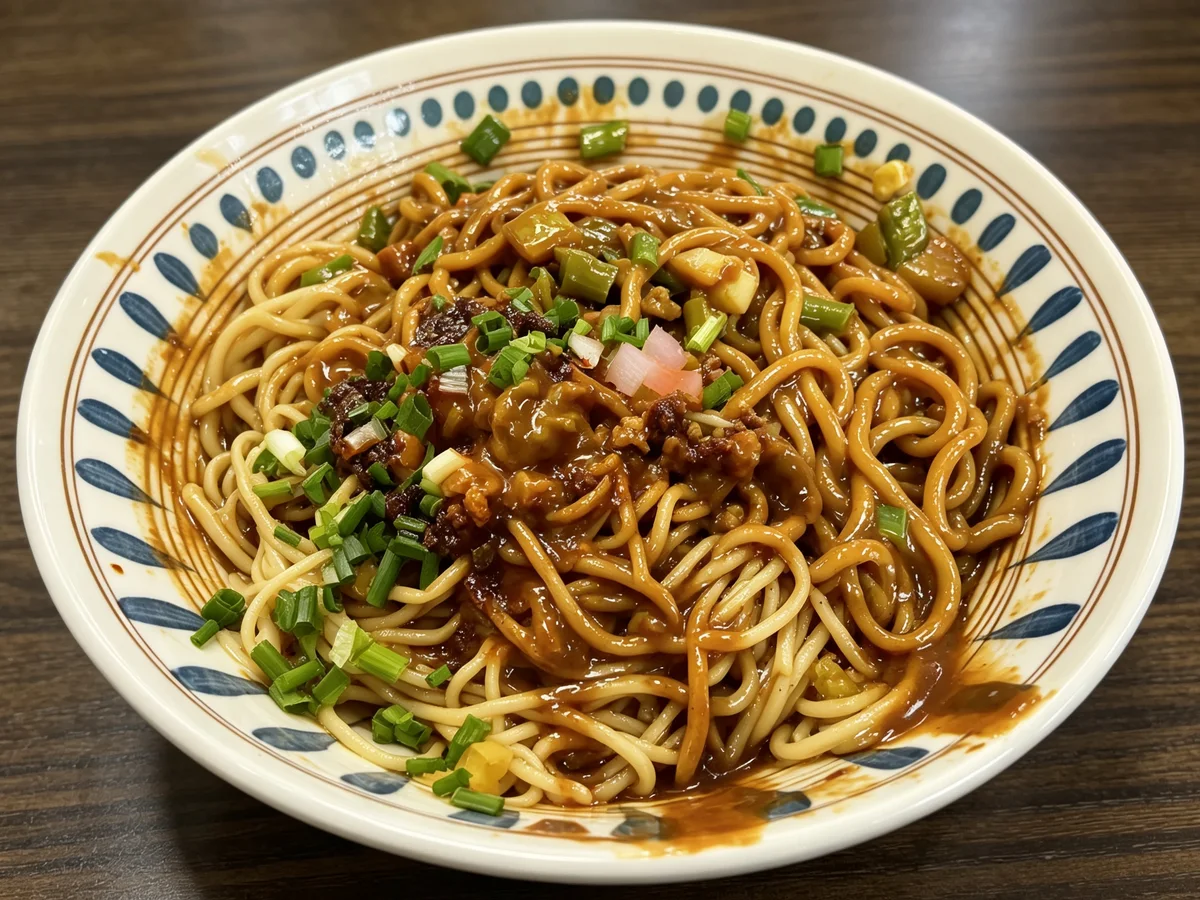
Hot dry noodles are not ordinary soup noodles without broth. Prepared alkaline noodles are reheated and dressed with sesame paste, soy, pickles and other seasonings, then must be lifted from the bottom immediately until evenly coated.
Taste the house seasoning before adding vinegar or chilli. As the bowl cools, the sauce tightens and the strands clump; a bowl left untouched for photographs cannot fairly show the original texture. It is a staple portion, so plan later snacks accordingly.
03
Doupi and mianwo provide two essential contrasts
One is layered and substantial; the other depends on a freshly fried edge structure.
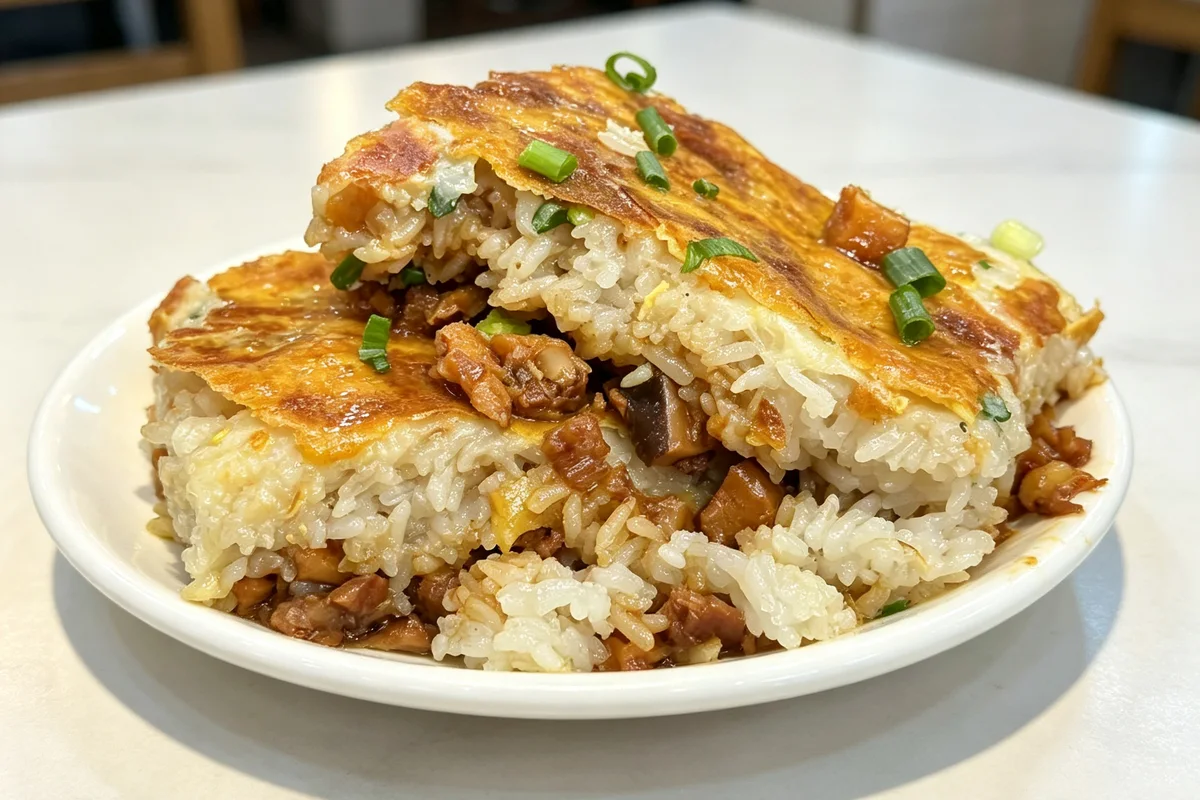
Three-delicacy doupi wraps seasoned sticky rice, pork, mushroom and bamboo shoot beneath an egg-and-bean batter skin, then fries the sheet and cuts it into blocks. Crisp edges, soft rice and savory filling make it closer to a compact meal than a light side.
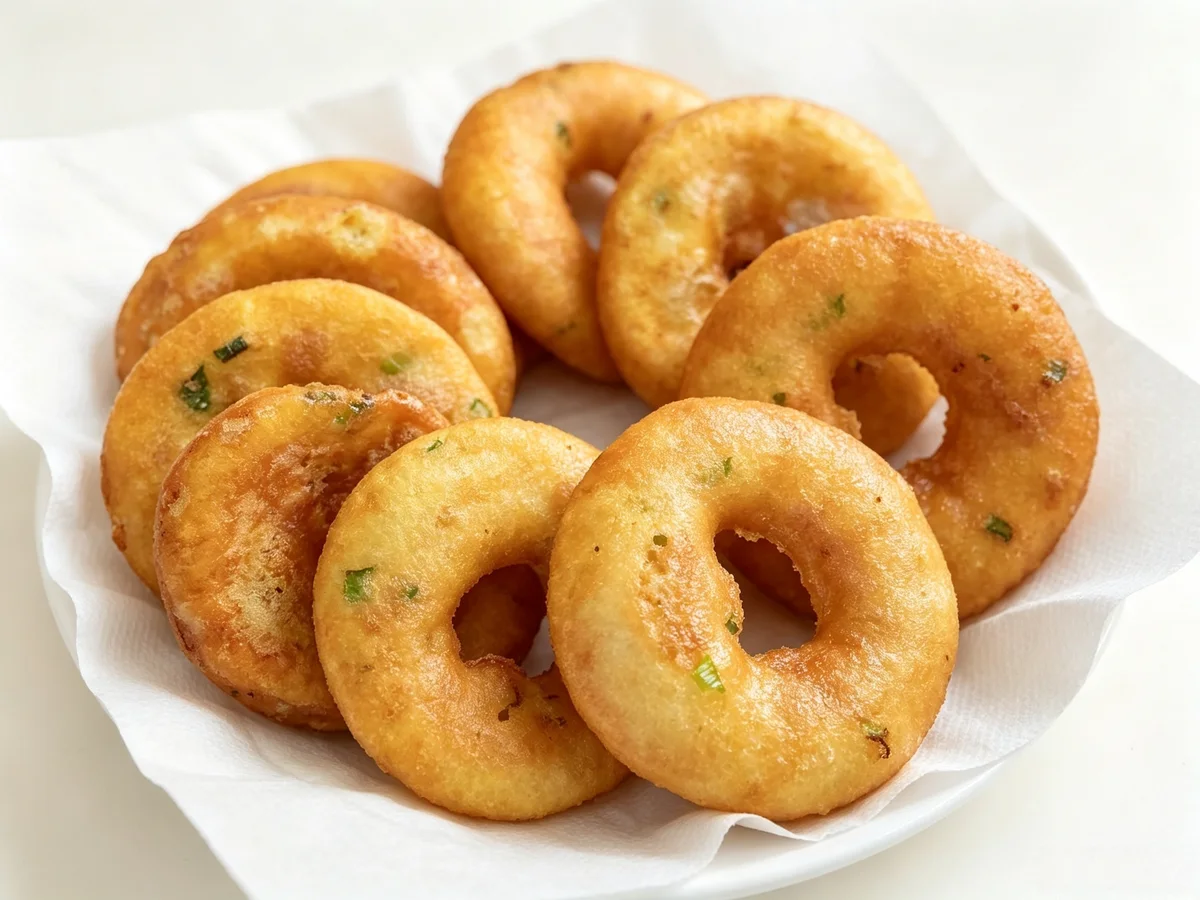
Mianwo fries a rice-and-soy batter into a ring with a thin crisp center and thicker tender rim. Buy from a fresh batch. Once held too long, the whole piece becomes leathery or oily and loses the contrast that defines it.
04
Reserve a separate appetite for hutang rice noodles
Peppery fish broth, fine rice noodles and youtiao form a complete structure.
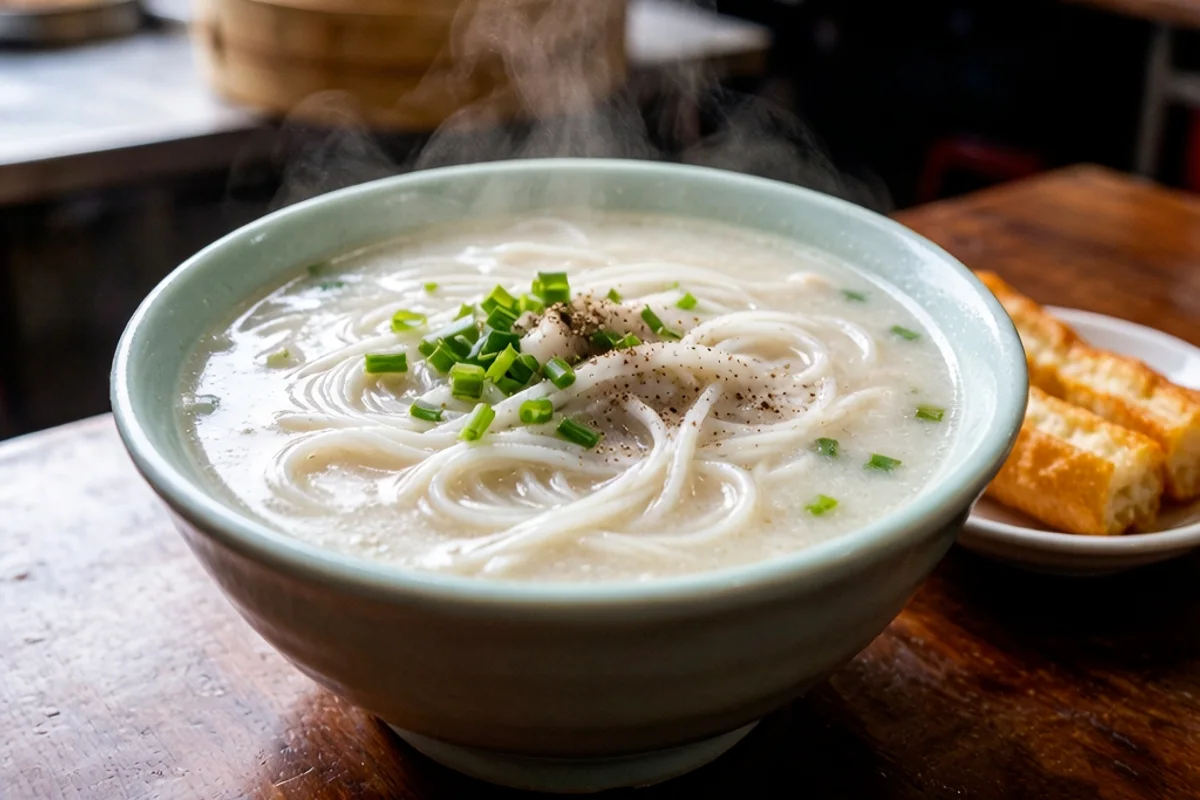
Fine rice noodles sit in thick, pepper-forward fish broth, with fresh fried dough for dipping. It supplies seafood savoriness, heat and breakfast satiety; it is not a small soup beside hot dry noodles.
Two people can share hot dry noodles and one doupi or mianwo, but hutang rice noodles are clearer on another morning. Ask about fish, pepper strength and whether the youtiao is fresh; allergy questions should cover fish and shared utensils.
With only two mornings, pair hot dry noodles with fresh mianwo on the first, then choose either doupi or hutang rice noodles as the second day’s anchor. Sesame, peanut, wheat, egg, pork, fish broth and dried shrimp may appear. If a busy stall cannot confirm a serious allergen, visible absence is not evidence of safety.
Quick-reference tool
What the counter says, when to go and how much to order
Exact shop hours change, but Wuhan breakfast culture rewards an ordinary morning visit before signature items sell out or the breakfast rush ends.
| Chinese on the sign | What it is | Satiety and first-order use |
|---|---|---|
| Guozao | The Wuhan expression for having breakfast | A social urban routine, not the name of one dish |
| Hot dry noodles | Sesame-coated dry noodles with pickles and seasoning | A full individual breakfast; mix immediately |
| Three-delicacy doupi | Crisp egg-bean skin over glutinous rice and savory filling | Dense and filling; one portion can anchor breakfast |
| Mianwo | Rice-and-soy fritter with a crisp ring | Best shared beside noodles unless appetite is high |
| Hutang rice noodles | Fine rice noodles in peppery fish-based soup | Warming, savory and substantial despite the fine noodles |
For one person, choose one anchor and add a small fritter only if hungry. For two, order two different anchors and share one mianwo; trying four full portions at once defeats the morning pace.
A two-morning route
Morning one
Each diner gets hot dry noodles; share one fresh mianwo and pay attention to mixing speed and sesame balance.
Morning two
Make doupi the main item and share a small bowl of hutang rice noodles only if the counter permits practical sharing.
Timing
Go during a normal breakfast window rather than near lunch; avoid publishing one shop’s hours as a citywide rule.
Public life
Notice queues, standing counters, takeaway packaging and the speed of service—the system is part of guozao.
Field method
Follow guozao through several morning routines
Wuhan breakfast is fast, local and filling. Several mornings reveal more contrast among hot dry noodles, doupi, mianwo and soup noodles than one overloaded tray.
Choose one anchor per morning
Each major item can carry breakfast by itself.
Hot dry noodles depend on prompt mixing of sesame paste, seasoning and pickles; doupi layers a crisp egg-and-bean skin over glutinous rice and filling; mianwo is a fried rice-and-soy ring; hutang rice noodles use a peppery fish-based soup. Their starch and richness quickly accumulate.
Order at a busy time, watch the local queue and have payment ready. Mix noodles before the sauce tightens, eat fried items while crisp and avoid blocking a compact counter while photographing every step.
Build comparison over time
Temperature and ordinary appetite are part of the evidence.
On day one choose hot dry noodles and perhaps share one mianwo. On day two make doupi the anchor. Use peppery soup noodles on a cooler morning or when you want liquid. Add soy milk or another drink according to the stall’s offerings.
Ask about sesame, peanut, wheat, egg, pork and fish as relevant. Busy breakfast stalls may share tools and surfaces, so severe allergies require more controlled communication than a queue allows.
Worked example
Worked example: two Wuhan mornings for two people
The visitors want four classics without wasting breakfast.
- Step 1 · Morning one
Each orders hot dry noodles and the pair shares one fresh mianwo.
- Step 2 · Observe
Note mixing speed, sesame balance and the fritter’s crisp center.
- Step 3 · Morning two
Share doupi and order one bowl of hutang rice noodles if sharing is accepted.
- Step 4 · Compare roles
Separate dry noodle, layered rice parcel, fried snack and peppery soup in the notes.
Two mornings keep every item near its proper temperature and show that guozao is routine, not a competitive tasting.
FAQ
Frequently asked questions
Does guozao simply mean eating breakfast in Wuhan dialect?
Yes, but the word also points to Wuhan’s fast, public and unusually varied breakfast culture.
Is hot dry noodles enough for a first guozao?
It is an important entry, but doupi, mianwo and hutang rice noodles show different ingredients and techniques. Compare them over several mornings.
Why is there so little broth in hot dry noodles?
It is designed as a mixed noodle dish in which alkaline noodles carry sesame paste and seasoning, not as soup noodles with broth removed.
Sources
Sources and further reading
These sources support the food names, regional context, techniques and dining practices used in this guide. Individual restaurants, households and cities still vary.