Meet a signature Wuhan breakfast
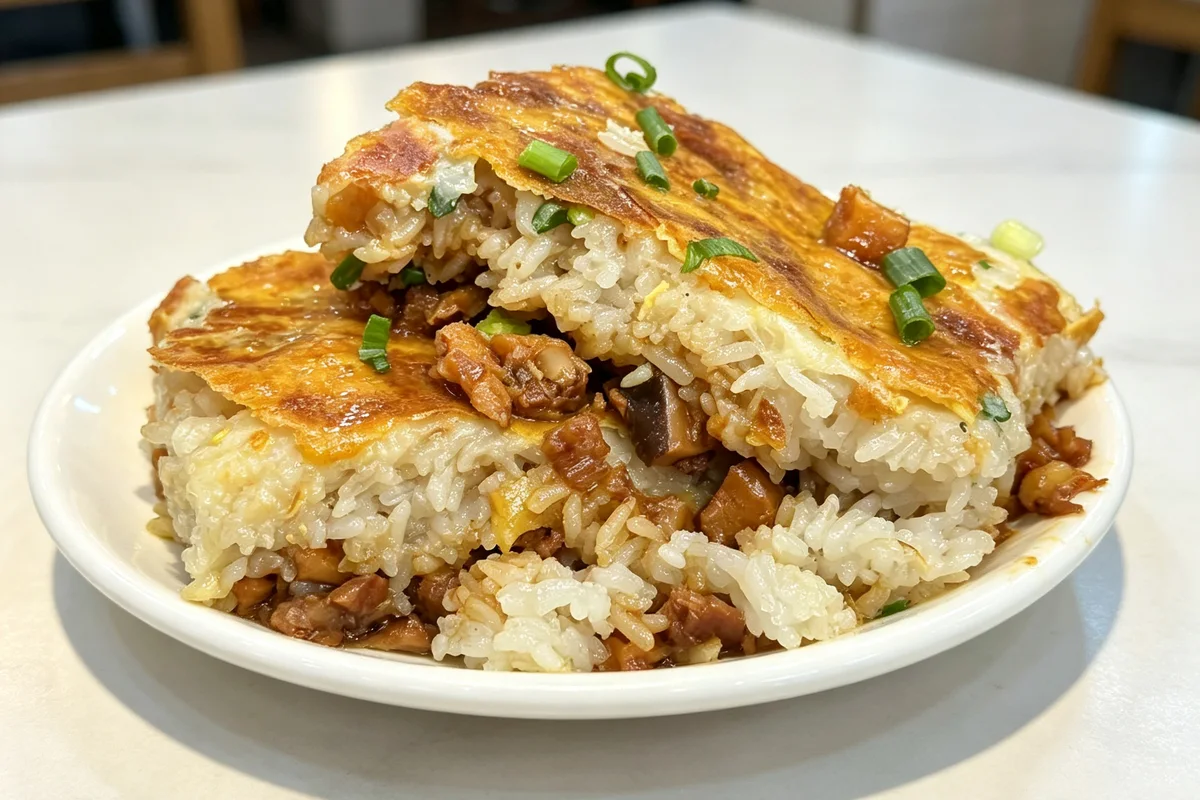
Three-delicacy doupi is one of Wuhan’s defining breakfasts: seasoned glutinous rice and diced pork, mushroom and bamboo shoot are enclosed beneath a thin griddled layer made from rice-and-mung-bean batter and egg. The large round is crisped on both sides, divided into squares and sold hot by the portion.
Common ingredientsMung bean and rice batter, egg, sticky rice, pork, mushrooms, bamboo shoots and seasonings.
01
Look for the Wuhan style with a glutinous-rice layer
How to order it
Ask for a freshly cut portion from a recently griddled batch so the browned surface remains crisp. One portion is filling, so choose a smaller size when sampling several Wuhan breakfasts and eat it before trapped steam softens the exterior.
How to eat and pair it
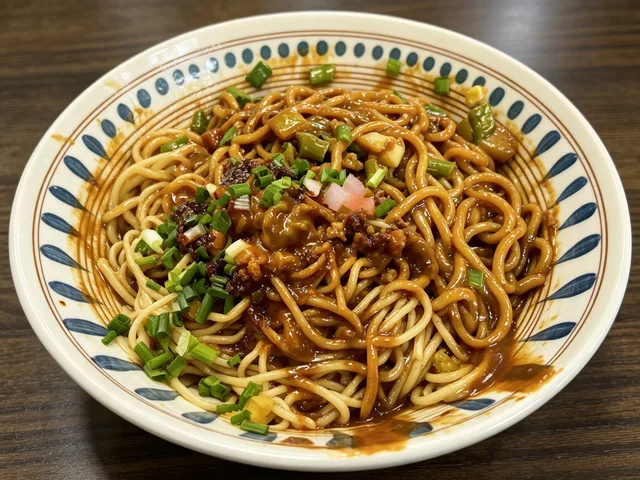
Vendors cook doupi as a broad disc on a flat griddle, building the layers, flipping the whole mass and cutting it into neat squares with a spatula. Customers receive several pieces in a tray and eat them with chopsticks while the surface is still fragrant. It belongs to Wuhan’s generous “breakfast as a real meal” culture and often competes with hot dry noodles for a diner’s morning choice.
Easy mix-ups
Misconception: “Three delicacies” always names one fixed trio. In practice: pork, mushroom and bamboo shoot are common, but historical and shop-specific combinations vary; ask what the day’s pan contains.
Treat doupi as a complete savory breakfast and pair it with something light
Glutinous rice, batter, egg and pork make one or two pieces more filling than their flat shape suggests. Pair with unsweetened soy milk, tea or a light soup rather than another dense fried starch. A Wuhan breakfast crawl works best when people share: one doupi square, a mianwo and a small noodle bowl reveal more range than a full order of each. Taste doupi early while the surface is still crisp, then move to foods that hold better.
02
Compare structure, not fame, when building a Wuhan breakfast crawl
Doupi and mianwo can both arrive as browned, hand-held breakfast pieces, but one encloses sticky rice and diced filling under an egg-batter skin while the other is an open rice-and-soy fritter. Hot-dry noodles bring a third structure: alkaline wheat strands mixed with sesame paste. Ordering small portions of all three creates a useful comparison among griddle, fryer and noodle counter. Calling each one “a carb” misses why local diners choose among them.
A busy doupi pan also tells a story about service. The vendor must coordinate a batch large enough for the queue yet small enough to sell before its crisp face steams soft. Watch whether pieces are cut cleanly, kept with the browned side exposed and replenished rather than buried under a lid. Those practical details predict breakfast pleasure better than an oversized sign promising an inherited secret recipe.
03
A crisp skin, separate grains of rice and fine filling
The square succeeds when crisp skin, sticky rice and savory dice stay legible
Wuhan doupi is built as a broad griddled sheet, covered with seasoned glutinous rice and a diced filling, then turned, browned and cut into rectangles. The first bite should pass through a thin egg-and-batter skin, a cohesive but grainy rice layer and small pieces that release meat, mushroom and bamboo-shoot savoriness. It is not a stuffed pancake with one wet center. If the skin peels off in a rubber sheet, the rice has become paste or the filling runs like gravy, the three-part structure has collapsed even when the portion looks generous. “Three delicacies” does not guarantee one immutable trio. Pork, dried mushroom and bamboo shoot are common reference points, while shops may use fresh meat, cured meat, egg, tofu or other additions. Ask what the day’s pan contains, especially if offal, shellfish or preserved vegetables would matter to you. Quality is easier to judge by the role of each dice—juicy meat, aromatic mushroom, crisp shoot—than by demanding an exact inventory across every Wuhan counter.
Rice-and-mung-bean batter
Ground grains form a thin base; despite the name doupi, this is not a sheet of tofu skin.
Egg
Egg spreads over the batter and helps create the golden, fragrant outer layer.
Glutinous rice
The filling is steamed and seasoned so it remains distinct, chewy and savory rather than becoming a dense paste.
The “three delicacies”
Fresh pork, mushroom and bamboo shoot are a widely cited combination, though shrimp, egg and shop-specific fillings also appear.
Laotongcheng-style three-delicacy doupi
The famous old-brand tradition helped establish a benchmark of thin skin, even batter, crisp exterior and glutinous-rice filling.
Neighborhood breakfast-shop doupi
Fillings, seasoning and thickness vary, and everyday shops may use simpler pork-and-mushroom combinations.
Modern standardized versions
Factories and convenience outlets now reproduce the layered snack, but hand flipping and immediate service remain important to the ideal texture.
- A thin golden surface with crisp patches
- Visible separate grains of glutinous rice
- Finely diced filling distributed evenly
04
Spread, layer, fill and flip in one continuous sequence
A thin egg-and-bean skin is filled with seasoned sticky rice and diced ingredients, then griddled crisp and cut into squares.
Watch the pan, choose a freshly cut edge piece and eat before steam softens it
At a busy breakfast stall, vendors prepare a large rectangle and sell one or more cut pieces. Confirm the unit price and portion size before pointing, since “one” may mean a single square rather than a whole pan. A piece from a newly flipped batch offers the clearest contrast; edge pieces can be especially crisp, while center pieces hold more moisture and filling. Neither is inherently superior, but the choice changes the experience. Ask for moderate chilli or scallion at service rather than trying to remove sauce once it has soaked the rice. Carry the square on its tray and use chopsticks to cut through all layers at once. Picking the skin off first or eating the rice separately misses the intended combination. Takeaway traps griddle steam, so a closed box turns the browned face soft within minutes. If travel is unavoidable, request a vented pack, keep sauce light and eat promptly. A dry pan can refresh the base at home, but it cannot restore the freshly set skin or the aroma released at the breakfast griddle.
The dramatic flip only works because hydration and layer thickness were controlled earlier
The base begins with a thin batter spread across a greased griddle and reinforced with egg. It must set enough to carry the topping without becoming a thick crepe. Cooked glutinous rice is distributed in an even layer: too dry and it scatters during turning, too wet and it compresses into glue. The diced filling needs concentrated seasoning with little free liquid. Excess gravy migrates downward, loosens the skin and prevents crisp browning. Vendors may turn the whole sheet, fold sections or use tools suited to their griddle. The visible move is less important than even contact afterward. Heat must brown the skin and warm the center without scorching egg or drying the rice. Cutting too early drags filling between pieces; holding too long steams the crisp face from within. High turnover is therefore a technical advantage, not only a sign of popularity.
05
Why Wuhan doupi is not tofu skin
Three-delicacy doupi is a celebrated Wuhan form of doupi, historically associated with specialist breakfast shops such as Laotongcheng.
It is not tofu skin: a thin rice-and-mung-bean batter with egg encloses seasoned glutinous rice. The “three delicacies” commonly include pork, mushrooms and bamboo shoots, with shop-specific variations.
06
How to say Three-Delicacy Doupi—and what the name tells you
Pronounced sān xiān dòu pí. Menus may call it three delicacy doupi, Wuhan doupi, sanxian doupi, sānxiān dòupí.
Sources