
01
An open-topped dumpling
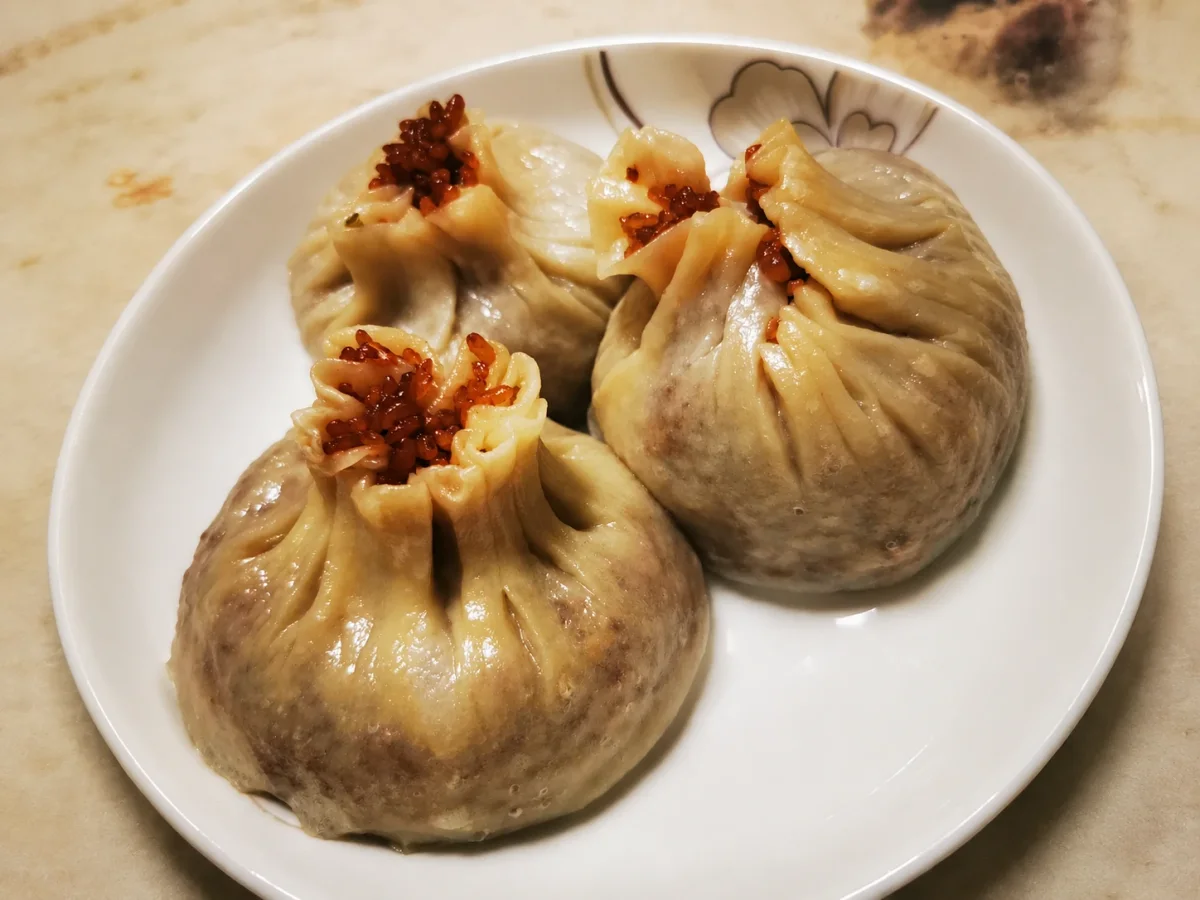
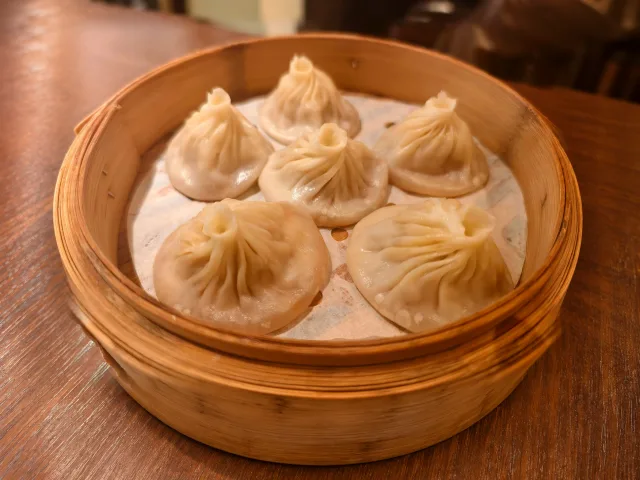
Shaomai are steamed dumplings with an unleavened wrapper that is gathered around the filling but never closed, so the top opens like a flower.
A baozi is a leavened bun pinched shut; a jiaozi is a crescent sealed along its edge. A shaomai is neither. Its wrapper is plain flour and water with no yeast, rolled until the edge is thinner than the middle and frilled like a petticoat, then gathered around a spoonful of filling and squeezed at the waist. The top stays open. The Qing scholar Hao Yixing described it as shaped like a pomegranate, its head split open around the meat, the skin very thin. A Qing anthology of anecdotes, the Qing Bai Lei Chao, called it roughly purse-shaped, open on top with folds, filled with pork, shrimp, crab, bamboo shoot or mushroom, and noted that it was found north and south alike.
That is still true. Henan cuts its filling by hand, Anhui uses duck fat, Hangzhou beef, Linqing in Shandong lamb, Suzhou makes a “three-fresh” version, Changsha shapes a chrysanthemum, and Guangzhou steams dry, shrimp, crab, pork liver, beef and spare-rib versions. The two great divides are the filling, meat in the north and often glutinous rice in the south, and the name.
The name is written 烧麦 or 烧卖, both pronounced shāomài, and older texts use 稍麦 and 稍卖. Hohhot people say 稍美, Datong 稍梅, Fujian 寿迈. English borrowed the Cantonese siu mai and the Japanese shūmai, which is why menus outside China mostly say shumai. Glutinous-rice shaomai are large: soy-browned rice grains spill from the open top, and the dark filling shows through the thin, pleated skin.
02
Seven centuries of records
The dumpling is older than any of the stories told about it.
The clearest early description comes from a fourteenth-century textbook for Koreans learning Chinese, the Piao Tongshi (朴通事), which lists “sour vegetable-filled shaomai” (素酸馅稍麦) for sale in the Yuan capital, today’s Beijing. Its notes explain the word: thin sheets of wheat dough wrapped around meat and steamed, eaten with soup; the top is pinched fine, as if tied with thread, and so it is called 稍麦. The Song-Yuan household encyclopedia Shilin Guangji already lists 稍卖 beside soup-filled buns as a banquet course.
By the Ming and Qing the spelling 烧卖 had taken over, and the dumpling turns up at fictional tables. In The Plum in the Golden Vase, guests at Ximen Qing’s house each get four “peach-blossom shaomai.” In The Scholars, written in the eighteenth century, a banquet is set with a plate of pork-filled shaomai and a plate of goose-fat sugar dumplings moments before a hobnailed shoe, kicked off by a cook chasing dogs, comes flying down and smashes both; later chapters serve shaomai filled with duck and a big plate of meat shaomai. Fengyue Meng, a Yangzhou novel whose preface is dated 1848, sets out a morning spread that includes a plate of ham and glutinous-rice shaomai, so the rice filling was established in Yangzhou by then.
Qing cookbooks and city guides fill in the range. The anonymous Diaoding Ji gives meat, red-bean and lard-and-sugar shaomai; a Daoguang-era poem on Beijing praises crab-meat shaomai at a shop called Xiaoyou Yufang every seventh month; and the 1909 Chengdu Tonglan lists more than a dozen, from pork, lamb and pheasant to sesame and lotus-seed-pod shapes.
03
Where the name came from
Several cities claim the shaomai, and each has a story to go with it.
The most practical explanation comes from Hohhot. According to the Suiyuan Tongzhi Gao, a Republican-era gazetteer of the province around the city, early shaomai were sold in teahouses. A teahouse was too genteel for a smoky kitchen, so it kept only steamed wrappers; tea drinkers brought their own meat to be rolled up and warmed, and paid for the number of wrappers. In time the teahouse supplied the filling too, but kept charging by the wrapper, so the dumpling was “sold on the side,” 捎卖. That habit is said to survive in the way Hohhot still sells shaomai by the liang.
Other stories are less concrete. One says the pleated top looks like the white flowers on ripening wheat, hence 麦. Hohhot tells of two brothers selling buns near the Dazhao temple: the younger made open-topped ones to sell on the side and saved the money to marry. Wuhan’s commerce bureau repeats the same tale but sets it in the Yuan dynasty. Datong in Shanxi says lamb shaomai began there in the early sixteenth century, as a border trading town where nomad mutton met Han wheat cookery, and calls them 稍梅 for the plum-blossom pleats.
None of these can be proved, and the Piao Tongshi shows the word was already in use in Yuan Beijing. What the stories agree on is the route: lamb shaomai belong to the band of country from Shanxi through Datong to Hohhot, and Shanxi merchants carried them east to Beijing and Tianjin.
04
Hohhot: lamb by the liang
In Hohhot the day starts with a basket of lamb shaomai, a pot of brick tea and a dish of vinegar.
Hohhot is the city most identified with shaomai. In 2025 it had more than 3,000 shaomai restaurants, about a quarter of all its 12,000 eateries, and the dumpling supports an industry worth more than five billion yuan a year. In 2022 the China Hospitality Association put Hohhot shaomai on its national list of landmark foods. Most shaomai shops are halal and open early; breakfast is the main meal for them.
The filling is lamb and scallion. The lamb is not minced but cut into cubes about eight millimetres across, from lean cuts such as the hind leg, with a little fat from the tail for richness, seasoned with ginger and water steeped with Sichuan pepper and fennel. The scallions are thick, sweet whites, dressed with oil first so they hold their moisture. Huo Jinling, Lao Suiyuan’s chief shaomai maker, who began learning from her mother at fourteen, says recipes have changed over her fifty years: fillings once padded with starch are now all meat, the scallion is lighter, and every wrapper gets 24 pleats.
The wrapper is high-gluten flour mixed with cold water, so it can be rolled very thin without tearing, and its edge is pressed into ruffles with a heavy, drum-shaped rolling pin called a zouchui. The filling is pushed into the middle with a wooden spoon, the wrapper gathered, and the basket steamed for about eight minutes over a fierce fire. A pan-fried version is cooked in a little oil with a splash of water until the base is golden and crisp.
Shaomai here are sold by the liang, 50 grams, a measure that counts the dough in the wrappers rather than the finished weight: a liang is eight dumplings and one basket. Customers order “two liang,” or “one steamed and one fried.” In 2024 a liang of lamb shaomai cost 13 yuan at one old shop, and the fried version one yuan more. Half a jin, five liang or forty dumplings, is considered a heroic breakfast.
The dumplings are eaten dipped in vinegar, often Shanxi aged vinegar, and with brick tea, a strong pressed tea, which locals say cuts the fat better than any other.
05
Beijing: Duyichu’s 24 pleats
Beijing’s most famous shaomai shop owes its name to a legend and its fame to a rolling pin.
Duyichu (都一处), on Qianmen Street, began in 1738 as a small wine shop run by Wang Ruifu from Fushan county in Shanxi, and took its present name in 1752. The story everyone tells is that the Qianlong Emperor, returning late on New Year’s Eve from a tour incognito, found it the only place still open, ate shaomai, and sent a plaque reading 都一处, “the only place in the capital.” Even the shop’s own storytellers admit an emperor was unlikely to wander about alone; but the plaque hangs in the shop, and its shaomai technique was put on the national intangible heritage list in 2008.
What makes Duyichu shaomai distinctive is the wrapper. The dough is stiff, about four parts water to ten of flour by weight, added a little at a time and rested for forty minutes. It is cut into ten-gram pieces, rolled with a jujube-wood pin so the middle stays thicker than the edge, then several wrappers are stacked and ruffled together with a zouchui. Each wrapper must have at least 24 pleats; skilled makers produce far more. Steamed, the skin turns thin and nearly translucent, the pleats standing up like a layered skirt. Its makers suggest biting from the bottom first, where the juice gathers.
The shop’s heritage listing credits it with more varieties than anywhere else in China: originally pork, beef, vegetable and “three fresh” of pork, sea cucumber and shrimp; then seasonal fish, crab and shrimp, pork paired with cabbage, chives, fennel, pumpkin or zucchini, and since the 1980s hawthorn, goji and multicoloured wrappers, more than thirty in all. Lamb and scallion is still a staple. It is not cheap: in 2021 a basket of lamb shaomai at the Qianmen shop cost 52 yuan, the traditional three-fresh 58, and six crab-roe shaomai 128 yuan.
06
Jiangnan and Yangzhou: glutinous rice
South of the Yangtze the filling changes: the dumpling is packed with glutinous rice.
Glutinous-rice shaomai are the version most people in Shanghai, Jiangsu and Zhejiang grow up with, and the one northerners find hardest to accept. The rice is soaked and steamed, then mixed with a braise of diced pork, bamboo shoot and dried mushroom cooked in lard with light and dark soy sauce and, in the Jiangsu style, a good deal of sugar, so the filling is glossy, savory and slightly sweet. Some cooks add crisp lard crackling for crunch. The wrapper is often made with boiling water, which makes it softer. These are everyday breakfast food: in 2022 a stall selling them charged 1.5 yuan each.
Yangzhou has the best-documented line. A plate of ham and glutinous-rice shaomai appears at a breakfast in the 1848 Yangzhou novel Fengyue Meng, and shaomai are still part of Yangzhou morning tea. Fuchun (富春), founded in 1885 and Yangzhou’s best-known teahouse, is famous for jade shaomai (翡翠烧卖), whose skin is so thin that the green filling shows through; its standard is quoted across the trade. Fuchun celebrated its 140th anniversary in November 2025 with a book on its dim sum.
Not every Jiangnan shaomai is rice. Xiasha in Shanghai’s Nanhui district has made shaomai since the Ming dynasty, filled with spring bamboo shoot, fresh pork and pork-skin aspic that melts into soup as it steams; sweet versions use red bean, walnut and melon seeds. The bamboo-shoot and pork one is the favorite.
07
Wuhan: heavy-oil shaomai
Wuhan’s glutinous-rice shaomai are richer, peppier and proudly greasy.
In Wuhan they are called 重油烧麦, heavy-oil shaomai, and the name is a boast. The filling is glutinous rice with big pieces of pork and mushroom and a large amount of lard, with a strong dose of pepper. The city’s commerce bureau lists them among Wuhan’s traditional snacks and says the Shunxiangju (顺香居) style is held to be the best, later adapted by the Yan family to suit more people.
Heavy-oil shaomai are part of guozao, Wuhan’s habit of eating breakfast out, and locals like to wrap them in something else, such as a crisp fried flatbread. Our Wuhan breakfast guide covers where to find them and what to eat alongside.
08
Guangzhou: siu mai
The Cantonese siu mai is the version most of the world knows.
Siu mai (烧卖, also 干蒸烧卖, “dry-steamed siu mai”) is a fixture of every Cantonese dim sum menu. It is quite unlike the northern shaomai: the wrapper is a thin yellow dough made with egg and lye water, and the filling is pork and shrimp with a little mushroom, packed so full that it rises above the wrapper and the top is pressed flat, often with a dot of crab roe or carrot.
The 1959 Famous Chinese Dishes volume on Guangzhou gives the recipe of Datong Restaurant (大同酒家). Its wrappers were rolled to about four centimetres across, the filling was equal weights of lean pork and shrimp with dried mushroom, and the book insists the pork be diced to the size of rice grains: chopped to a paste or put through a mincer, it loses its springy texture. The filling is pressed level with a bamboo spatula and the dumplings steamed for five minutes. The same chapter’s beef siu mai has no wrapper at all; it is much like the steamed beef balls on dim sum menus today.
09
Shumai in Japan
Japan adopted the dumpling a century ago and now imports Hohhot’s version too.
In Japan, shūmai became a specialty of Yokohama. Kiyoken (崎陽軒), a station caterer, has sold its small shumai since 1928, made with Hokkaido scallops and Japanese pork and designed to taste good cold, so they can be eaten on a train. Its shumai bento sells about 30,000 a day, and a box of six shumai cost 370 yen when we checked in 2026, with a little ceramic soy-sauce bottle packed in each box.
Since 2025 Hohhot’s lamb shaomai have followed. Lao Suiyuan (老绥元) opened in Ikebukuro, Tokyo, in March 2025, with a queue at times stretching from its eighth-floor restaurant down to the seventh floor and nearly half its customers Japanese; it added Osaka later that year. Deshunyuan (德顺源), another old Hohhot name, opened nearby in April 2026 and serves about 300 diners a day, with smaller portions and new fillings such as cheese and corn for Japanese tastes.
10
The main styles side by side
Same shape, very different dumplings.
The quickest way to tell them apart is the filling: meat in the north and in Guangzhou, rice in Jiangnan and Wuhan.
| Style | Filling | Wrapper and serving |
|---|---|---|
| Hohhot lamb shaomai | Diced lamb, scallion, ginger | Thin cold-water dough; sold by the liang, eight a basket; vinegar and brick tea |
| Beijing, Duyichu | Lamb and scallion, pork, three fresh, seasonal | Stiff dough with 24 or more pleats; sold by the basket |
| Jiangnan glutinous-rice | Glutinous rice, pork, bamboo shoot, mushroom, soy, sugar | Softer scalded dough; sold singly at breakfast |
| Wuhan heavy-oil | Glutinous rice, pork, mushroom, lots of lard and pepper | Breakfast, often wrapped in fried bread |
| Cantonese siu mai | Pork and shrimp, mushroom | Yellow egg dough, top pressed flat; dim sum |
| Yokohama shumai | Pork and dried scallop | Small, eaten hot or cold with soy sauce |
11
Where to eat and how to order
Each city has its own way of selling them.
Shaomai are mostly a breakfast food in China, and the best shops sell out or close by late morning.
Hohhot
Order by weight: one liang is eight dumplings, and one or two liang make a breakfast. Ask for steamed or fried (“yi liang jian de”), and expect lamb unless you ask for beef. Shops are mostly halal; vinegar and brick tea are on the table.
Beijing
Duyichu on Qianmen Street sells by the basket; lamb and scallion is the classic, and crab roe the expensive treat.
Yangzhou and Jiangnan
Look for jade shaomai at a Yangzhou teahouse such as Fuchun, and glutinous-rice shaomai at any breakfast stall, usually sold by the piece.
Wuhan
Ask for chongyou shaomai at a breakfast shop; try one wrapped in fried bread.
Guangzhou and Hong Kong
Siu mai is on every dim sum menu, usually four to a basket; tick it on the order sheet.
12
Making glutinous-rice shaomai at home
Glutinous-rice shaomai are the easiest kind to make well at home, because the filling is cooked before it goes in.
This version follows the Jiangnan style, which is sweet; halve the sugar if you prefer it savory, and add more pepper for a Wuhan taste. The hard part is the wrapper edge: roll the middle thicker and the rim as thin as you can, or press the edges with the flat of a rolling pin, so the top ruffles.
For about 40: 500 g glutinous rice; 350 g pork, diced small; a handful each of dried shiitake and bamboo shoots; 200 g lard (or pork fat to render); ginger, scallions; 20 g Shaoxing wine; light and dark soy sauce; up to 80 g sugar; salt; 5 g ground white pepper. Wrappers: 500 g flour and 250 g boiling water.
- 1. Rice
Soak the glutinous rice for about six hours, then steam it for 20 minutes, sprinkling it with water halfway so it does not dry out. Each grain should be soft through but separate.
- 2. Braise
Soak and dice the mushrooms; blanch and dice the bamboo shoots. Fry ginger and scallion in the lard, remove them, then fry the pork until it changes color. Add shoots, mushroom, wine, soy sauces, sugar, salt and a little water; boil, then simmer for 15 minutes.
- 3. Filling
Stir in the pepper, then fold in the rice gently so the grains do not break. Let it cool; the lard will firm it up.
- 4. Dough
Stir the boiling water into the flour with chopsticks, knead once it is cool enough to handle, cover and rest for ten minutes.
- 5. Wrappers
Cut pieces of about 13 g and roll each into a round about 8 cm across, thin and ruffled at the edge.
- 6. Wrap
Cup a wrapper in your hand, pack in a generous spoonful of filling, and squeeze the waist between thumb and forefinger, leaving the top open.
- 7. Steam
Steam over boiling water for about six minutes, spraying the tops with a little water halfway so the exposed edges stay soft.
13
More dumplings and breakfasts
Other pages on the atlas.
Cantonese yum cha
Siu mai with har gow, cheung fun and the rest of dim sum.
Read about yum cha →Wuhan breakfast
Heavy-oil shaomai, hot dry noodles and doupi.
Read the Wuhan breakfast guide →Jiaozi
The sealed, crescent-shaped dumpling of the north.
Read about jiaozi →Across China classics
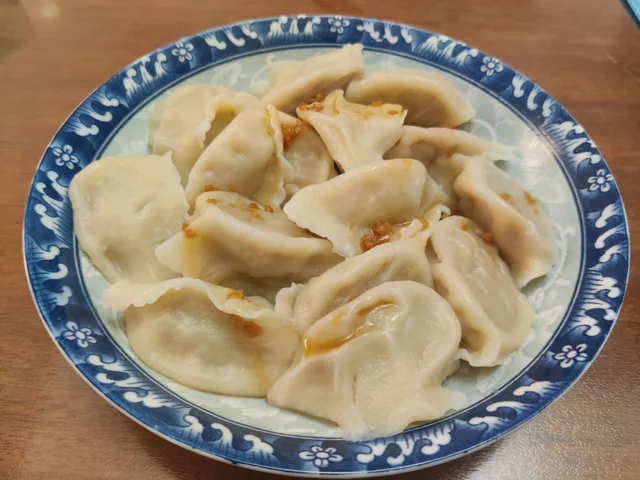
- Jiaozi
Boiled, steamed or pan-fried dumplings · Everyday meals; New Year’s Eve in the north
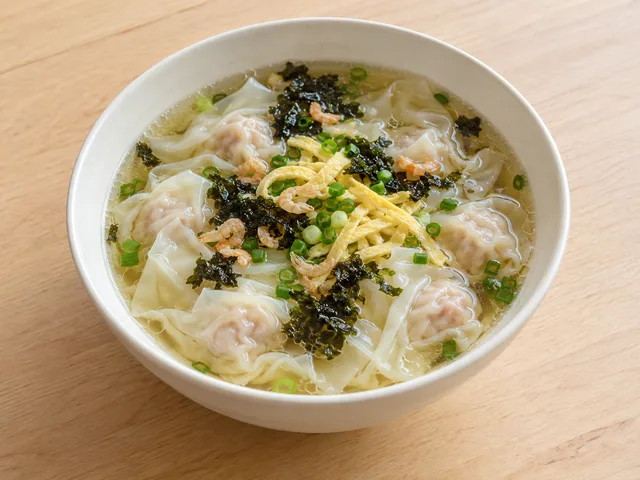
- Wonton
Wontons in broth · Breakfast to late night
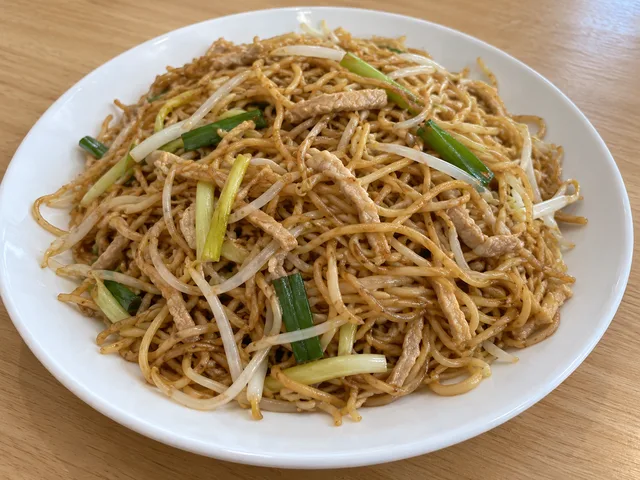
- Chow Mein
Fried wheat noodles · Lunch, late-night meals, takeaway
- Hot and Sour Soup
Thickened soup · With dumplings, at banquets
- Tea Eggs
Tea-marbled boiled eggs · Breakfast and snacks
- Stir-Fried Shredded Potatoes
Stir-fried vegetable side dish · Everyday meals with rice
Dumplings and dim sum from other regions
FAQ
Questions about Shaomai
Are shaomai, shumai and siu mai the same thing?
Yes. Shaomai is the Mandarin name, siu mai the Cantonese and shumai the Japanese; English menus use all three. The fillings differ by region.
What is the difference between shaomai and a dumpling like jiaozi?
Jiaozi are sealed all round; shaomai are left open at the top, and the wrapper is rolled thinner at the edge and pleated.
Why do Hohhot shaomai come by the liang?
The liang, 50 grams, refers to the dough: one liang is eight dumplings. The habit goes back to teahouses that charged by the wrapper.
Do shaomai always have meat?
No. Jiangnan and Wuhan shaomai are filled mostly with glutinous rice, though usually with some pork and lard; vegetable and sweet versions exist.
Are Hohhot shaomai halal?
Most shaomai shops in Hohhot are halal and use lamb or beef. Glutinous-rice and Cantonese shaomai normally contain pork.
How long do you steam shaomai?
About five to eight minutes over high heat: five for Cantonese siu mai, around six for glutinous-rice ones, eight for Hohhot lamb.
Sources
Sources and further reading
- 1 Wu Jingzi, The Scholars (儒林外史), chapters 10, 29 and 47 (in Chinese)Wikisource ↗
- 2 Hanshang Mengren, Fengyue Meng (風月夢), chapter 3; preface dated 1848 (in Chinese)Wikisource ↗
- 3 The Plum in the Golden Vase (金瓶梅), Chongzhen edition, chapter 42 (in Chinese)Wikisource ↗
- 4 Famous Chinese Dishes, vol. 4 (中国名菜谱·第四辑), pp. 89–94: Datong Restaurant’s siu mai and beef siu mai (in Chinese)Catering Services Administration, Ministry of Commerce; Light Industry Press (1959)
- 5 Duyichu shaomai making technique (都一处烧麦制作技艺), national item Ⅷ-171, 2008 (in Chinese)China Intangible Cultural Heritage Network ↗
- 6 “Wuhan food steps up” (武汉美食出战!): heavy-oil shaomai (in Chinese)Wuhan Municipal Bureau of Commerce (February 2, 2024) ↗
- 7 “Hohhot food: the origins and legends of shaomai” (呼和浩特美食——烧麦的起源与传说) (in Chinese)The Paper, government account (December 13, 2020) ↗
- 8 “One basket of shaomai, north and south” (一笼烧麦分南北:风味有别,守味更要留心), with photographs from Datong Daily (in Chinese)Sohu (October 31, 2026) ↗
- 9 Li Jie, “One basket of shaomai, its fragrance carried far” (一笼烧麦,香飘万里) (in Chinese)People’s Daily Overseas Edition, p. 11 (June 10, 2025) ↗
- 10 “Hohhot shaomai included on national delicacy list”China Daily, Hohhot (August 3, 2022) ↗
- 11 Ha Lina, “Inner Mongolia’s traditional shaomai crosses the sea to Japan” (内蒙古传统美食烧麦漂洋过海走红日本) (in Chinese)Xinhua (May 6, 2026) ↗
- 12 “The famous Fuchun Teahouse turns 140” (声名远播的“富春茶社”140岁了) (in Chinese)Yangtse Evening Post / Ziniu News (November 19, 2025) ↗
- 13 Kiyoken: Old-fashioned Shiumai and Shiumai BentoKiyoken, Yokohama (official English page) ↗
- 14 Shaomai, Hohhot’s hard-core breakfast: how many liang can you eat? (video, in Chinese)Xun Wei Nei Menggu (寻味内蒙古), Bilibili (July 7, 2025) ↗
- 15 A flying visit to Hohhot: lamb shaomai by the liang and what it cost (video, in Chinese)Lao Wang Zai Zhongguo (老王在中国), Bilibili (March 22, 2024) ↗
- 16 Thin as paper, shaped like a pomegranate: Duyichu’s 24-pleat shaomai and its recipe (video, in Chinese)Lao Fan Gu (老饭骨), Bilibili (February 4, 2026) ↗
- 17 Duyichu shaomai at Qianmen: what each basket cost (video, in Chinese)Zhen Tan Lai Le (真探来了), Bilibili (December 23, 2021) ↗
- 18 Making Jiangnan glutinous-rice shaomai, the kind northerners shake their heads at (video, in Chinese)Wo De Yangzi Pingping Wuqi (我的样子平平无奇), Bilibili (April 1, 2022) ↗
Last updated November 2026