
01
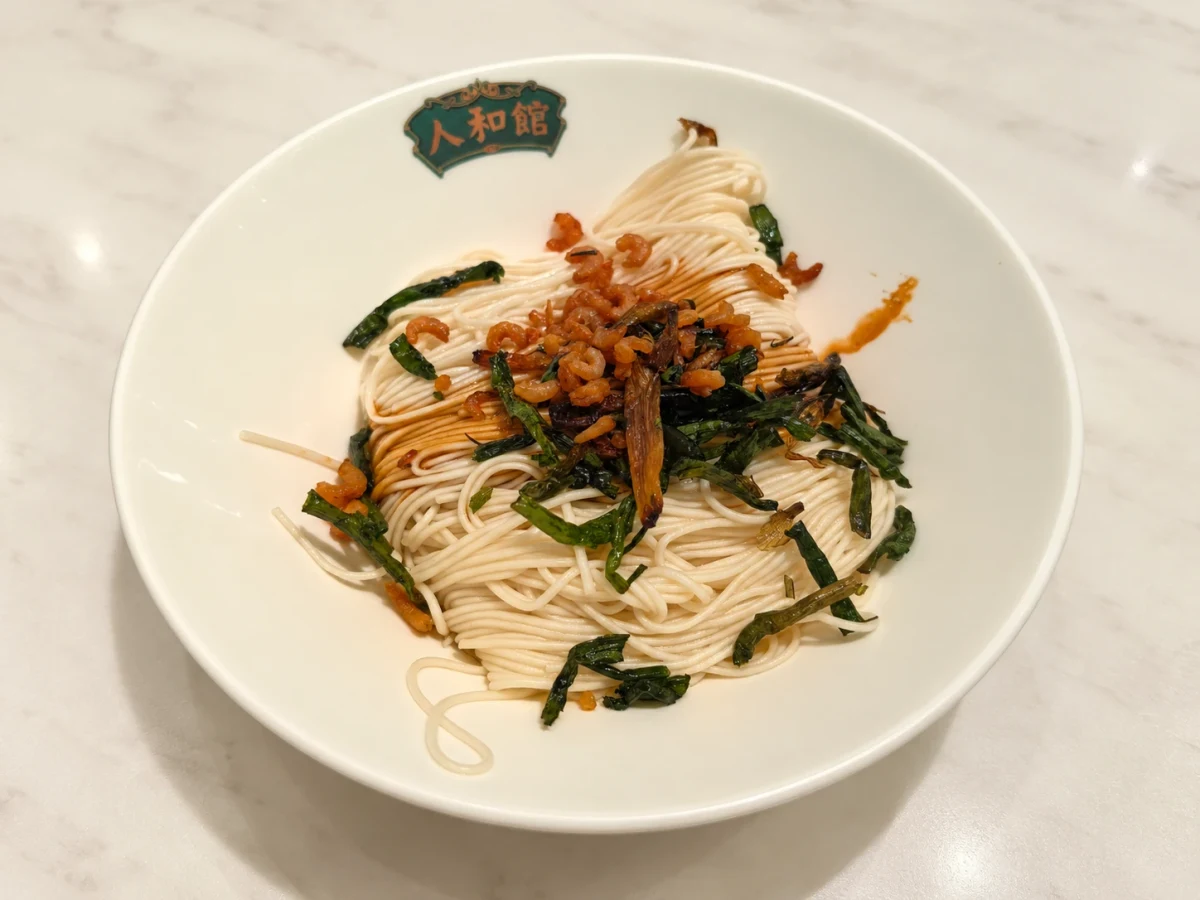
Noodles, fried scallions and soy sauce
Shanghai scallion oil noodles are a three-ingredient dish: noodles, scallion oil and soy sauce, and the oil does almost all the work.
The noodles are plain wheat noodles, fresh-cut and boiled until springy, drained and put into a bowl dry, with no broth. On top goes a spoonful of scallion oil: vegetable oil in which a large bundle of small scallions has been fried over a low flame until the scallions turn dark brown and brittle and the oil takes on their smell. Soy sauce goes in too, usually both light soy for salt and dark soy for color, often with sugar, and a tangle of the fried scallions is laid over the noodles. You stir it all together at the table.
The fuller version, 葱油开洋拌面, adds 开洋 (kāiyáng), plump dried shrimp softened in rice wine, which bring a sweet, sea-salty depth. The dish looks like almost nothing, a pale heap of noodles under a few blackened strands, but the smell reaches the next table. Fuchsia Dunlop, who writes on Chinese cooking in English, calls it impossible to leave out of any list of Jiangnan dishes, and eats it for breakfast, lunch and late at night.
02
“Three liang of conggai”: the name
In Shanghai the dish has a nickname, and using it marks you as a regular.
The full name 葱油开洋拌面 means “scallion oil and dried shrimp tossed noodles.” Shanghainese cut it to two syllables, 葱开 (conggai in Shanghainese), taking the first character of scallion and of dried shrimp. Shen Jialu, a Shanghai food writer, notes that a snack only earns a nickname when it has been around for a long time and everybody knows it. At the old shops, Shen writes, regulars always asked for conggai; anyone who said the full name was not a regular and risked a look from the waitress.
Noodles in Shanghai, like shengjian and wontons, are ordered by the liang, a weight of 50 grams of dry noodles, so “three liang of conggai” is a typical breakfast order. The plain version without shrimp is simply 葱油拌面, and that is what most menus list today.
Sources [1]
03
A City God Temple invention
Every account of the dish begins at the City God Temple, the old heart of Shanghai.
The Shanghai government’s food guide traces the idea of tossed noodles back to the cold noodles of the Tang and Song dynasties, such as 冷淘, and credits the modern dish to a single person: a snack master at the City God Temple named, in its English spelling, Chen Youzhi, in 1889, who is said to have combined southern and northern noodle traditions. No early document is cited for the date. Dunlop repeats the same tradition more cautiously: the dish is said to have been invented by a small vendor near the temple. Either way, scallion oil noodles spread in the early 20th century as Shanghai grew, because they were cheap, quick and needed nothing but a pot of water and a jar of oil.
04
Hubin’s conggai, “its smell carried over the Zigzag Bridge”
For older Shanghainese, the best conggai came from one shop by the temple pond.
Shen Jialu’s choice was the Hubin snack shop (湖滨点心店) in the City God Temple bazaar, next door to the Nanxiang bun shop, in an old building once part of Yu Garden, with a back window over the lotus pond facing the Mid-Lake Pavilion. It used small, slightly wide noodles made to order that stayed springy after boiling. The cooks fried the white parts of small scallions with a little of the thicker Beijing scallion, over a low flame, slowly, and when the old master was frying the oil, visitors on the Zigzag Bridge outside could smell it. That gave the shop its saying: 湖滨葱开面,香飘九曲桥, “Hubin’s conggai, its smell carried over the Zigzag Bridge.” The dried shrimp were that year’s catch, large, soaked in yellow wine and cooked through with light soy sauce.
People queued for it. Shen had a relative who lived in Caojiadu and worked on the Bund and cycled to the temple every morning, in all weather, for a bowl before work, and Shen would skip breakfast before a meeting in Huangpu to have a bowl with a soup of gluten puffs and tofu-skin rolls, a little over ten yuan for both. By the time Shen wrote about it, Hubin had stopped making conggai, and complaints to the management changed nothing. In the book’s preface Shen blames the profit chase: restaurants around the temple all sell crab or matsutake xiaolongbao now, and the cheap scallion oil and dried shrimp noodles have been pushed to the margins.
Not everyone was impressed in Hubin’s heyday. The Taiwanese food writer Lu Yaodong visited in the early 1990s and complained of an oily table and a bowl without a single dried shrimp, much worse, Lu wrote, than the ham and dried shrimp scallion noodles Lu made at home. Shen, who ate there often in those years, thought the visitor was simply prejudiced.
Sources [1]
05
The oil: small scallions, low heat, a lot of patience
Scallion oil is not oil with scallions in it. It is oil that the scallions have been fried out into.
Shanghai uses 小葱, small, thin spring onions, not the thick northern leek-like scallion. They are washed, trimmed and dried well, because water makes the oil spit, then cut into lengths of a few centimeters; Dunlop lightly smashes them with the flat of a knife first. They go into plenty of hot oil and the heat is turned right down. The frying takes a long time on low heat, until the scallions shrink, turn dark brown and crisp, and stop bubbling: too hot and they burn bitter, too short and the oil tastes only of raw onion. Shen insists on good, not too thin scallions and plenty of white part, which carries the most fragrance.
Many cooks then add soy sauce and sugar to the hot oil and let them bubble together, so the sauce and the oil come out of one pot; others keep the soy separate and put it straight into the bowl. Making scallion oil is smoky. Shen jokes that the kitchen looked like a burning oilfield afterwards and earned a scolding at home every time, and one home cook who fried ten jin of scallions in one go needed three hours and three extra bottles of oil. Because it takes so long, most people make a batch: kept in a jar in the fridge it lasts about a week, and Dunlop keeps one ready so a bowl takes ten minutes from frozen noodles.
| Part | What it is | Why it matters |
|---|---|---|
| Noodles | Fresh-cut wheat noodles, thin or slightly wide | They must be springy and dry enough to hold the oil |
| Scallion oil | Oil in which small scallions are fried slowly until dark and crisp | Almost all of the flavor |
| Fried scallions | The dark, brittle scallions from the oil | Crunch and a sweet, roasted smell |
| Soy sauce | Light soy for salt, dark soy for color, usually with sugar | Seasoning and the brown color |
| Dried shrimp 开洋 | Large dried shrimp softened in rice wine | Sweetness and sea-salt depth in the conggai version |
06
Kaiyang: the dried shrimp
Dried shrimp turn a plain bowl into the celebrated one.
Shanghai calls them 开洋; northerners say 虾米 and Cantonese speakers 金钩, “golden hooks.” For conggai they should be large, pinkish-orange dried shrimp rather than the paper-thin shrimp skins sold for soup. Shen soaks them in good yellow wine with a little sugar and steams them until soft, then seasons them with soy sauce; Dunlop soaks them in wine and hot water for half an hour and fries them with the scallions until the scallions turn dark. The number of shrimp in a bowl is how Shanghainese judge a shop, and more refined restaurants such as Cang Lang Ting charge more because of them.
07
Where to eat them, and what they cost
Scallion oil noodles are still one of the cheapest bowls in Shanghai: 7 yuan at a neighborhood shop in 2026, about 25 at a well-known restaurant.
The Shanghai government’s 2026 guide lists four places across the price range. Huxi Laolongtang (沪西老弄堂面馆) on Dingxi Road, which the guide says has served the dish for more than 40 years counting its earlier stall, charges 7 yuan and is known for generous dried shrimp; Longtang Wonton House (弄堂小馄饨食府) on Weihai Road, which the guide dates to 1980, charges 8 yuan and lets you add a braised pork chop or a fried egg. At Cang Lang Ting (沧浪亭) on Sinan Road, a Suzhou-style noodle house, the bowl with dried shrimp costs 25 yuan, and Jianguo 328 (建国328小馆), a small Shanghainese restaurant, charges 28.
Huang Qifang, writing in 2012, recommended Dingtele (顶特勒粥面馆) near Huaihai Road, open 24 hours and popular after a night out, for its scallion oil noodles and fried pork chop, and for a variation in between scallion oil and sesame noodles: shredded pork in a white sauce made with chicken fat, under scallions roasted soy-brown, on very fine noodles. A home-style restaurant below a block of flats near Jing’an Temple charged 8 yuan a bowl in 2020. In many old lane noodle shops scallion oil noodles are the base of every dish: each bowl starts with scallion oil and soy, and the toppings, from braised pork to kidney or intestines, go on top; some refill the noodles for free.
The Michelin Guide lists one of these old shops, Xiao Tao Mian Guan (小陶面馆) at 222 Jiashan Road in Xuhui. Its inspectors found the tossed noodles, built on a traditional scallion oil base and heaped with crisp fried scallions, more popular than the soup noodles; toppings such as eel and spicy minced pork go on top, extra noodles are free, and there are queues at mealtimes.
| Shop | Kind of place | Price |
|---|---|---|
| Huxi Laolongtang 沪西老弄堂面馆, 685 Dingxi Road | Neighborhood noodle shop | 7 yuan |
| Longtang Wonton House 弄堂小馄饨食府, 729 Weihai Road | Wonton and noodle shop | 8 yuan |
| Cang Lang Ting 沧浪亭, 8 Sinan Road | Suzhou-style noodle house, with dried shrimp | 25 yuan |
| Jianguo 328 建国328小馆, 328 West Jianguo Road | Small Shanghainese restaurant, with dried shrimp | 28 yuan |
08
How to eat scallion oil noodles
A bowl of scallion oil noodles arrives unmixed, and mixing it is your job.
Toss before you taste
Lift the noodles from the middle with your chopsticks several times until every strand is coated in oil and soy. The sauce sits at the bottom, so the first bite unmixed tastes of nothing.
Eat it at once
As the noodles cool, the oil sets and they stick together. Scallion oil noodles do not wait.
Add a soup
There is no broth, so Shanghainese order a soup on the side: chicken and duck blood soup, a soup of gluten puffs and tofu-skin rolls, or small wontons.
Add a topping if you like
A braised pork chop, a fried egg or braised pork can go on top, but the classic bowl is plain or with dried shrimp only.
Ask about the shrimp
If the menu lists 葱油开洋拌面 or 葱开, it should come with dried shrimp. Plain 葱油拌面 usually does not.
09
Scallion oil noodles and Shanghai’s other plain noodles
Shanghai has several cheap noodles without a topping, and they are not the same thing.
Yangchun noodles (阳春面) are the soup version: plain noodles in a clear broth seasoned with soy and lard, with a little chopped scallion. Sesame noodles (麻酱拌面) are tossed rather than in soup, like scallion oil noodles, but with sesame paste, chili oil and soy; Shen Jialu recommends the decades-old Weixiangzhai on Yandang Road, where a bowl with a small bowl of beef soup cost six yuan when Shen wrote. Above these sit the topping noodles (浇头面) that fill Shanghai menus: stir-fried eel, braised pork, pork chop, three shreds and dozens more.
| Noodle | Soup or tossed | Seasoning |
|---|---|---|
| Scallion oil noodles 葱油拌面 | Tossed | Scallion oil, soy, fried scallions; dried shrimp optional |
| Yangchun noodles 阳春面 | Soup | Clear broth with soy, lard and raw scallion |
| Sesame noodles 麻酱拌面 | Tossed | Sesame paste, chili oil, soy |
| Wuhan hot dry noodles 热干面 | Tossed | Sesame paste, soy, pickled radish, scallion |
| Beijing zhajiang noodles 炸酱面 | Tossed | Fried yellow bean and pork sauce, raw vegetables |
Sources [1]
10
Scallion oil noodles at home
For 2 bowls: 200 g fresh thin wheat noodles; a large bunch (about 100 g) of small spring onions; 100 ml vegetable oil; 2 tablespoons large dried shrimp, soaked for 30 minutes in 1 tablespoon Shaoxing wine and enough hot water to cover; 2 tablespoons light soy sauce; 1 teaspoon dark soy sauce; 1 tablespoon sugar.
- 1. Dry the scallions
Wash, trim and dry the scallions thoroughly, lightly smash the white parts and cut everything into 6 cm lengths.
- 2. Fry them slowly
Heat the oil, add the scallions, then turn the heat to low. Fry, stirring now and then, for 15 to 20 minutes until they are dark brown and crisp. Do not let them blacken.
- 3. Add the shrimp and soy
Add the drained shrimp and fry for a minute, then the light and dark soy and the sugar. Let it bubble briefly until the sugar dissolves, and take it off the heat.
- 4. Cook the noodles
Boil the noodles in plenty of water until just springy, drain well and put them in two bowls.
- 5. Toss and eat
Spoon the oil, sauce, shrimp and fried scallions over the noodles and toss well at the table.
For a batch, multiply the oil and scallions, strain into a clean jar and keep it chilled for up to a week. Without shrimp, the dish is plain scallion oil noodles; add the soy straight to the bowl instead of the oil if you want the oil to keep longer.
11
More Shanghai, and other tossed noodles
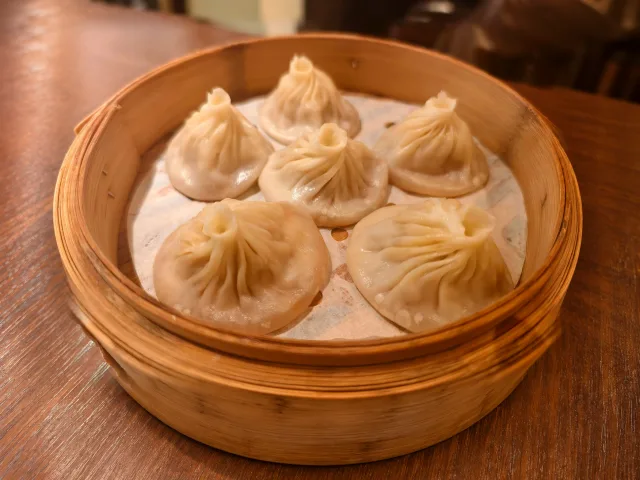
Xiaolongbao
Shanghai’s soup dumplings, the other City God Temple classic.
Read about xiaolongbao →Hot dry noodles
Wuhan’s tossed breakfast noodles with sesame paste.
Read about hot dry noodles →Zhajiang noodles
Beijing’s tossed noodles with fried bean sauce.
Read about zhajiang noodles →Shanghai classics
- Xiaolongbao
Steamed soup dumpling · Breakfast, lunch or a snack
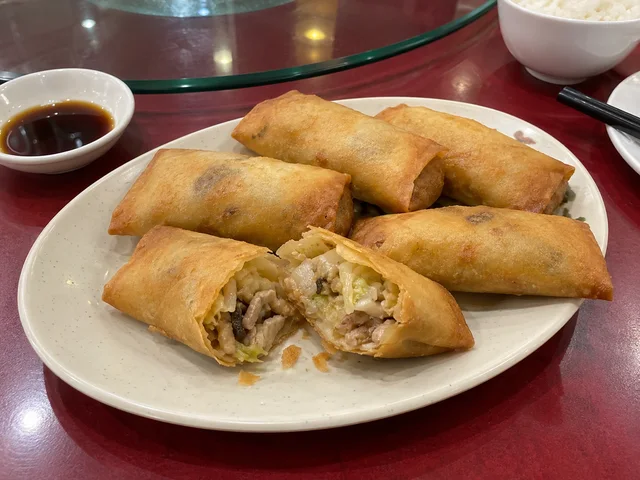
- Spring Rolls
Fried wrapped snack · Spring Festival, dim sum or a snack
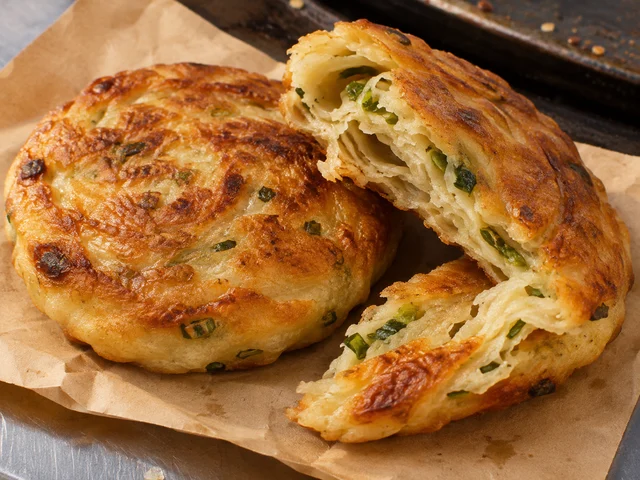
- Scallion Pancakes
Layered wheat flatbread · Breakfast or a hot street snack
- Drunken Crab
Crab steeped in wine and soy · Cold starter in autumn and early summer
- Qingtuan
Steamed glutinous rice dumpling · The weeks before Qingming, early April
- Shengjian
Pan-fried pork bun · Breakfast, snack or light lunch
Noodles from other regions
FAQ
Questions about Scallion Oil Noodles
What are Shanghai scallion oil noodles?
Plain wheat noodles tossed with oil in which scallions have been fried slowly until dark and crisp, with soy sauce and sugar, and often dried shrimp.
What does conggai mean?
It is the Shanghai nickname for 葱油开洋拌面, scallion oil noodles with dried shrimp, taking the first character of scallion and of dried shrimp.
Where did scallion oil noodles come from?
Shanghai’s City God Temple area. The Shanghai government credits a snack master there in 1889; other accounts just say a small vendor near the temple.
What kind of scallions are used?
Small, thin spring onions, fried with plenty of their white part. Some cooks add a little of the thicker Beijing scallion.
How long does it take to make scallion oil?
About 15 to 20 minutes on low heat for a small batch, until the scallions are dark brown and crisp. Large batches take much longer.
How long does scallion oil keep?
About a week in a clean jar in the fridge.
How much do scallion oil noodles cost in Shanghai?
In 2026, 7 or 8 yuan at neighborhood shops and 25 to 28 yuan at better-known restaurants that add dried shrimp.
What is the difference between scallion oil noodles and yangchun noodles?
Scallion oil noodles are tossed with no broth. Yangchun noodles are served in a clear soy and lard broth.
Are scallion oil noodles vegetarian?
The plain version is, if the oil is vegetable oil and nothing else is added. The conggai version contains dried shrimp, and some shops use lard.
What do you eat with scallion oil noodles?
A soup on the side, such as chicken and duck blood soup or small wontons, and sometimes a braised pork chop or fried egg on top.
Sources
Sources and further reading
- 1 Shen Jialu, Shanghai Lao Weidao (上海老味道), 3rd ed., chapters “Three liang of conggai, please!” (来三两“葱开”!), the author’s preface and “Paofan and its golden partners” (泡饭和它的黄金搭档) (in Chinese)Shanghai Culture Publishing House (2017)
- 2 Huang Qifang, Shanghai Zheme Chi (上海这么吃), chapters on Dingtele congee and noodle house and Longtang Wonton House (in Chinese)Publishing House of Electronics Industry (2012)
- 3 Fuchsia Dunlop, Yumi zhi Xiang (鱼米之乡), Chinese edition of Land of Fish and Rice, chapter “Noodles” (面食类): scallion oil noodles with dried shrimp (in Chinese)Translated by He Yujia, CITIC Press (2021)
- 4 Scallion oil noodles: a taste of simplicity and flavor, with four places to eat them and a home methodInternational Services Shanghai, Shanghai Municipal People’s Government (2026) ↗
- 5 Xiao Tao Mian Guan (小陶面馆) (in Chinese)MICHELIN Guide Shanghai ↗
- 6 Ten jin of scallions fried for three hours into a jar of scallion oil sauce (video, in Chinese)Ji Lu Sheng Huo De Dan Huang Pai (记录生活的蛋黄派), Bilibili (2020) ↗
- 7 An 8-yuan bowl of scallion oil noodles at a home-style restaurant below a block of flats near Jing’an Temple (video, in Chinese)Jiu Shi Qi Qi (就是气气), Bilibili (2020) ↗
- 8 An old Shanghai lane noodle shop where every bowl starts from scallion oil and refills are free (video, in Chinese)Gan Fan San Jian Ke (干饭三健客), Bilibili (2025) ↗
Last updated October 2026