
01
A thin wrapper, a cooked filling, hot oil
A Chinese spring roll is mostly wrapper and crunch: the filling is cooked before it goes in, and the frying is only for the skin.
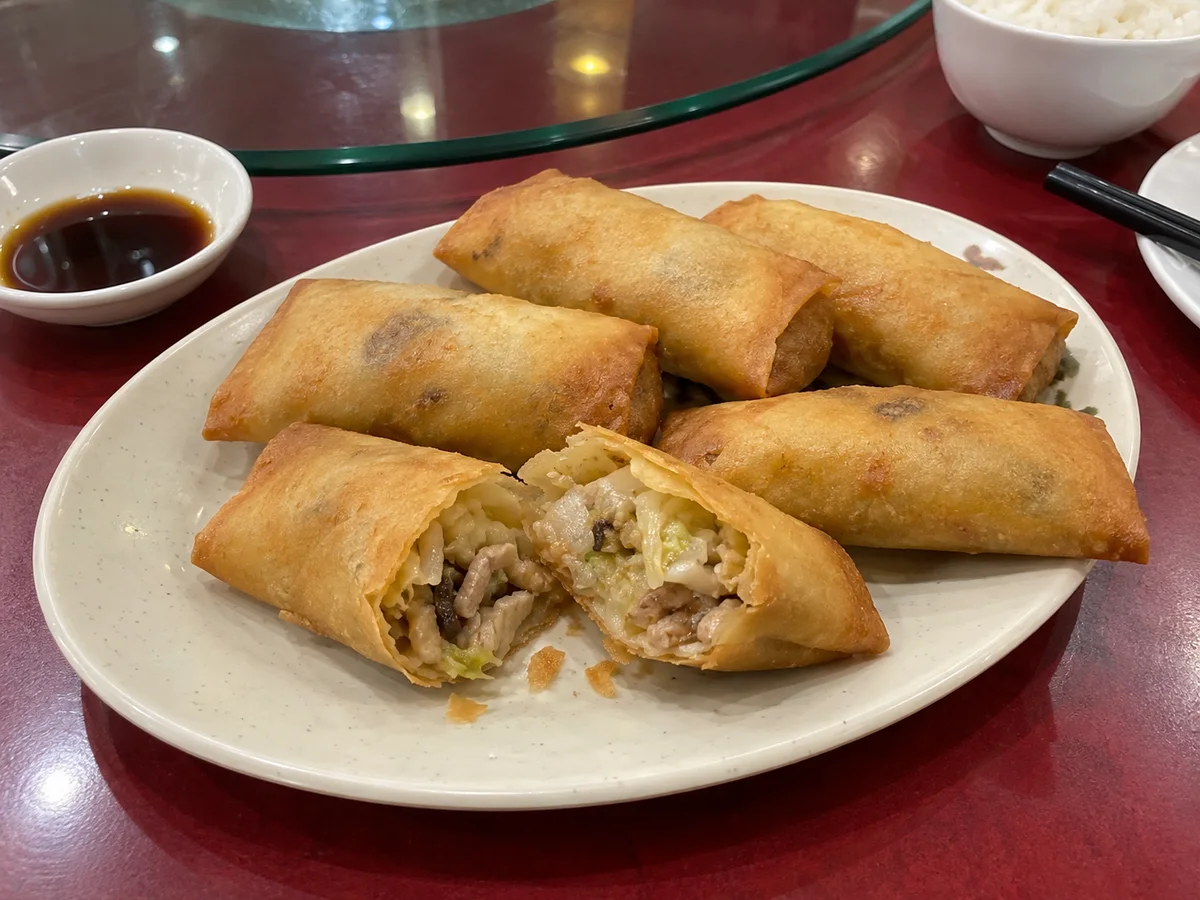
The wrapper is not a pastry and not rice paper. It is a sheet of wheat dough so thin you can read through it, made by wiping a ball of soft dough across a hot griddle. The filling is cooked first: in Shanghai, shredded napa cabbage and pork stir-fried with a little starch until the juices thicken, then cooled. A spoonful goes on each wrapper, which is folded into a neat rectangle about two cun (roughly seven centimeters) long, sealed with a dab of paste, and fried until golden and blistered. Served hot, the skin shatters and the filling is soft and savory. Shanghai people eat them with a dish of vinegar.
The name means “spring roll,” and it is meant literally. Spring rolls belong to the Spring Festival and the Start of Spring, the first of the 24 solar terms, around 4 February. In Shanghai there are two everyday kinds: savory rolls of napa cabbage and pork, or of shepherd’s purse and pork, and sweet rolls of red bean paste. Northern families fry them for New Year’s Eve too, with red bean paste, shredded radish and pork, or chives and bean sprouts, and in the northeast some cooks wrap them in an egg crêpe or a sheet of dried tofu instead of a flour wrapper. Cantonese teahouses serve small spring rolls among the fried dim sum, and most Chinese restaurants abroad have them on the menu.
Take it apart
A plate of Shanghai spring rolls
- The wrapper
A see-through wheat sheet, fried golden
- The filling
Napa cabbage, pork and shiitake, cooked and thickened first
- Vinegar
For dipping, to cut the oil
02
From the five pungent vegetables to the spring pancake
The spring roll comes at the end of a long line of foods eaten to welcome the season.
The custom starts with the 五辛盘, the plate of five pungent vegetables, recorded from the Jin dynasty in the third and fourth centuries: garlic, wild garlic, chives, coriander and rape shoots, eaten at the turn of the year because their sharpness was believed to drive out cold and wake the body up. In the Tang dynasty eating a spring platter, 春盘, of fresh vegetables became the fashionable way to greet the season; a Tang almanac, the Sishi Baojing, already pairs them with pancakes: “At the Start of Spring, eat reeds, spring pancakes and raw greens, called the vegetable platter.” Thin wheat pancakes to wrap them in followed, and the Song-dynasty writer Zhou Mi lists 春饼, chunbing or spring pancakes, among the snacks sold in Hangzhou. By the Ming and Qing dynasties the spring pancake had become the standard food of the Start of Spring.
In Beijing the day was called 打春, “beating the spring,” after the clay ox that officials beat to open the farming year. Fucha Dunchong’s Yanjing Suishi Ji, printed in 1906, records that on that day well-off families ate spring pancakes and women bought radishes to eat, which was called 咬春, “biting the spring,” and was said to cure spring drowsiness. A Qing poem from Tianjin runs: “We welcome the new spring and bite the spring again, and the purple radish is fresh in time.” By the twentieth century the north kept the soft pancake and the Yangtze delta preferred the fried roll. A rural relative of the Shanghai writer Shen Jialu told him that country people still eat spring pancakes on the Start of Spring, finishing every one so the year has a head and a tail, while city people bite the spring with fried spring rolls.
03
When the pancake was first rolled and fried
The fried roll is older than its name: cookbooks describe it centuries before the word chunjuan is written down.
The food historian Qiu Pangtong, who has studied Chinese cooking history since the 1970s, traces the fried roll to the turn of the Yuan and Ming dynasties, in the fourteenth century, when it went by other names. The cookbook Yiya Yiyi, attributed to Han Yi, has a 卷煎饼, “rolled pancake”: a thin pancake wrapped around a filling of lamb and lamb fat, or pork, made like bun filling with plenty of scallion whites or dried bamboo shoot, rolled into a strip with both ends glued shut with flour paste, fried in shallow oil until reddish-brown and served with a pungent vinegar. The Ming cookbook Songshi Yangsheng Bu calls its version 油煎卷, “oil-fried roll,” and says plainly that it is made by folding bun or wonton filling into a spring pancake and frying it in plenty of oil until dry. The Yuan household encyclopedia Jujia Biyong Shilei Quanji has a rolled pancake of its own, made from batter spread thin in an oiled pan, with a filling Qiu describes as strongly in the style of the northern peoples: lamb, mushrooms, cooked shrimp, pine nuts, walnuts, sugar and ginger. For Qiu, the Ming recipe settles where the spring roll came from: it is a spring pancake that someone sealed and fried.
The name itself turns up in the Qing. The Suiyuan Shidan Buzheng, an annotated expansion of Yuan Mei’s eighteenth-century cookbook, describes spring pancakes made in the south from winter until spring: a thin batter smeared on by hand and spread into a sheet that is cooked as soon as it is turned, which is still how wrappers are made. Families used them in the offering to the ancestors on New Year’s Eve, wrapped around shredded pork, “and those that are wrapped and fried in oil are called spring rolls.” Beijing shops sold them too: Daoxian Yilai Chaoye Zaji, a memoir of Beijing life from the mid-nineteenth century, praises the fried spring rolls of the pastry shop Zhimeizhai.
A popular story says the name began as 春茧, “spring cocoon,” because the rolls look like silkworm cocoons. Qiu rejects it. The old cookbooks file their “cocoons” in a different category from the rolled pancakes, and the cocoons they describe are balls of glutinous rice dough sealed all round like tangyuan and then fried, a food still made in the silk towns of southern Jiangsu and northern Zhejiang. A seamless oval of rice dough is not a rolled strip of wheat pancake.
Sources [6]
04
Spring pancakes, spring rolls and their relatives
Several dishes share the idea of a thin wrapper and shredded filling, and they are easy to confuse.
A Beijing spring pancake meal is a platter, not a snack. The pancakes are rolled out three or four at a time, with oil and flour between the layers, cooked together and then peeled apart, so each one is thin but strong. They are served soft with shredded cucumber, carrot, leek, cooked chicken and pork, sweet flour sauce and a stir-fry called 合菜, of bean sprouts, chives, egg, meat and glass noodles, and everyone rolls their own. Shen Jialu describes the dough as hot-water dough, two small pieces oiled between and rolled out together, so that after cooking they peel into two. In old Beijing a proper spring pancake meal came with a “box” of cold cuts ordered from a cured-meat shop and delivered to the house, smoked and sauced meats packed in compartments. The spring roll uses the same idea, but the filling is sealed inside and the whole roll is fried.
| Name | Where | Wrapper | Fried? |
|---|---|---|---|
| Spring pancake 春饼 | Beijing and the north | Soft wheat pancake, rolled at the table | No |
| Spring roll 春卷 | Shanghai, Jiangnan, Guangdong | Paper-thin wheat sheet | Yes |
| Runbing or popiah 润饼, 薄饼 | Fujian, Taiwan, Singapore | Paper-thin wheat sheet | No |
| Egg roll | United States | Thicker wheat skin | Yes |
| Chả giò; gỏi cuốn | Vietnam | Rice paper | Fried; fresh |
05
Shanghai: gold bars for the New Year
Shanghai cooking has no spring pancakes; what it has is spring rolls, especially at New Year.
At the Spring Festival a Shanghai family makes three snacks to offer guests between meals: tangyuan, spring rolls and eight-treasure rice. Shen Jialu explains the spring roll’s place at the New Year table as a matter of lucky words as much as taste. Fried to a golden yellow, a spring roll looks like a gold bar; some families add glass noodles to the filling, so the gold bars hold silver threads. The classic fillings are shepherd’s purse with shredded pork and napa cabbage with shredded pork, rolled into little pillows, fried golden and brought to the table with vinegar. The sweet version is filled with red bean paste.
The best-known restaurant version is 三丝春卷, three-shred spring rolls. The name lists three shredded ingredients rather than fixing them, but the usual set is pork, napa cabbage and shiitake, with winter bamboo shoots in a more careful kitchen. Shen lists them among the better snacks served with curry beef soup at Shanghai’s old shengjian shops, alongside pan-fried buns and crispy noodles, and they are still on teahouse menus next to wontons and scallion pancakes. In 2025 a Shanghai dumpling shop sold four freshly fried three-shred spring rolls for 14 yuan. Upmarket restaurants make seasonal versions for banquets: spring rolls of Yangtze knifefish in early spring, crab roe in autumn, and big rolls of shredded duck and shrimp.
06
How the wrappers are made
Making spring roll wrappers is a craft people stop in the street to watch.
The dough is a very wet, very elastic paste of strong flour, water and salt, beaten by hand for fifteen or twenty minutes and rested, often overnight. A good working ratio is about 0.8 parts water to 1 part flour, with a little oil to stop it sticking. The maker holds a soft ball of it, wipes it in one quick circle across a flat iron griddle and lifts it away, leaving a thin film behind. In about fifteen seconds the edges dry and curl and the sheet is peeled off; the next one is already going down. The griddle has to stay at about 100 to 120°C. Too hot, and the film cooks onto the dough in the hand and the edges burn; too cold, and it sticks and tears.
Shen Jialu remembers crowds at the windows of small shops watching the wrapper masters, who would let the dough sag almost to the floor and then flick it back up like a bungee jumper. Wrappers took so long that there were never enough before New Year: people queued, and when queuing failed they looked for someone with connections. Supermarkets now sell machine-made wrappers. They look neat, but older Shanghai customers say they do not taste as good as handmade ones.
07
Hangzhou’s scallion roll and Guangzhou’s fried snacks
The spring roll wrapper turns up in other cities in other forms.
Hangzhou has a snack called 葱包桧儿, cong bao hui: a spring roll wrapper spread with sweet flour sauce and rolled around half a youtiao, the fried dough stick, and a couple of scallions. Shen Jialu calls it a dish with an ancient air, which he guesses has been sold since the Southern Song, when Hangzhou was the capital. The 桧 in the name is Qin Hui, the twelfth-century chancellor every Chinese schoolchild learns to despise for having the general Yue Fei put to death; in the popular telling, the fried dough inside stands for him, so eating it is a small act of revenge.
In Guangzhou, fried spring rolls belong to the family Cantonese call 油器, “oil things”: fried and pan-fried snacks such as salty fried dumplings, pan-fried water chestnut cake, fried wontons and turnip cake. The Cantonese writer Sheng Hui counts them among the best partners for a bowl of congee. In teahouses they also appear among the fried dim sum, usually smaller and slimmer than Shanghai rolls.
08
The Cantonese spring roll
In Guangdong the shreds change: pork shoulder, yellow chives and a sauce thickened with water chestnut starch.
The traditional Cantonese version is also called three-shred, 炸三丝春卷, but its shreds are not Shanghai’s. A Guangdong vocational textbook on Cantonese food gives the main ingredients as 梅头肉, the well-marbled pork from the top of the shoulder, with shredded shiitake, carrot and yellow chives, the pale, mild chives grown out of the light. The pork is cut into fine strips, coated in wet starch and passed briefly through warm oil so it stays tender. It is then seasoned with sugar, salt, white pepper, chicken powder and light soy sauce and thickened with water chestnut starch, and the yellow chives go in last. Each roll is sealed with flour paste and fried golden. Guangdong kitchens also make spring rolls of fresh shrimp, shredded chicken or even shredded taro.
The Hong Kong food writer Ouyang Yingji describes the teahouse roll in much the same terms: shredded chicken, shrimp and pork mixed with yellow chives, shiitake and bamboo shoot, wrapped in a sheet made by spreading flour batter on a hot surface, and fried in very hot oil until golden. He calls the yellow chive and pork roll the Hong Kong style. In a busy teahouse the dim sum goes in waves, and he counts it as luck to catch spring rolls fried to order. One place he names for that is Fung Shing.
09
Runbing and popiah: the unfried roll
In southern Fujian the same thin wrapper is eaten fresh, and the roll is a festival meal.
In Xiamen and Quanzhou the wrapper is called 薄饼 or 润饼, and the rolls are not fried. A family lays out bowls of separately cooked fillings: shredded carrot, cabbage, bamboo shoots, dried tofu, jicama, bean sprouts, egg, pork, sometimes oysters, with crunchy toppings of fried seaweed and ground peanuts. Each person brushes a wrapper with sauce, lays down a lettuce leaf so the juices do not soak through, piles on fillings and rolls it up. Runbing is eaten at Qingming in early April and offered to ancestors. Families cook the fillings at home but buy the wrappers from specialist makers, and in Quanzhou the queues at the best-known wrapper shops before Qingming can last hours. Hokkien and Teochew emigrants took it to Taiwan and Southeast Asia, where it is popiah. In Singapore, Kway Guan Huat in Joo Chiat has made popiah skins by hand since 1938, and the Singapore company Tee Yih Jia is one of the world’s largest makers of the wrappers, exporting to almost fifty countries.
Ouyang Yingji, whose mother’s family is from Fujian, remembers festival “spring pancake parties” at home. Carrot, cabbage, green beans, bean sprouts and yellow chives were cut fine and cooked with shredded pork, shrimp, tofu and dried tofu; each soft flour pancake was dressed with hoisin sauce, sesame paste, mustard, dried flounder sauce or powdered seaweed before rolling. As a boy he piled on so much hot filling that his pancakes would not close. Whatever the family could not finish he turned into pan-fried pancakes or deep-fried spring rolls, and learned that a roll meant for the oil has to be wrapped small and neat.
10
Spring roll or egg roll?
The egg roll is an American dish, and it usually contains no egg.
An American Chinese egg roll is fatter than a spring roll, about two inches across and six inches long, with a thick, chewy, bubbly skin and a filling that is mostly shredded cabbage with a little chopped meat. It is served with duck sauce, soy sauce or hot mustard. The food historian Andrew Coe thinks it was probably created in a New York Chinese restaurant in the early 1930s; two chefs later claimed it. Henry Low printed a recipe in his 1938 cookbook with roast pork, shrimp and water chestnuts but no cabbage. Nobody knows for certain where “egg” came from. One idea is that some early wrappers were made with egg: Nom Wah Tea Parlor in New York, open since 1920, says it has made its egg rolls with a thin omelet wrapper since 1929. Vietnamese restaurants add more confusion: their fried rolls, chả giò, use rice paper, and their fresh “summer rolls” are not fried at all.
Sources [13]
11
Britain’s takeaway spring roll
Outside China, the fried Cantonese roll is the one most people know.
Ouyang Yingji suggests the spring roll may be the Chinese food that non-Chinese people know best. In Britain it arrived with Cantonese restaurants: the chef Ken Hom, on British television for three decades, has said that before the 1990s most British people thought of Chinese food as a stereotyped Cantonese menu, and what they saw most often was fried spring rolls and sweet and sour pork. British Chinese restaurants kept the color and shape of the Guangdong roll but changed the filling. Chicken, nearly always breast, replaces pork; bean sprouts or napa cabbage replace yellow chives; and ginger and five-spice powder are added. The cooking is the same, with the meat, shiitake and carrot stir-fried first, the sprouts added last to keep them crisp, and the mixture thickened with water chestnut starch.
Sizes vary more than in China, from squares about 20 cm across, as big as a small burger, down to slim rolls about 9 cm long and 3 cm wide, the Guangdong size. Vegetable spring rolls of napa cabbage, bean sprouts, carrot and glass noodles are a menu standard, and spring rolls now appear at luxury afternoon teas beside scones and finger sandwiches. In 2019 the BBC program The Best of British Takeaways held a Chinese takeaway contest, and the winning dish was a three-shred spring roll with wood ear mushroom added. Barbara Woodward, British ambassador to China from 2015 to 2020, has said that every New Year’s Eve dinner since her first Spring Festival in China in the 1980s has included spring rolls and noodles.
12
How to eat and order spring rolls
Spring rolls are best within a few minutes of leaving the oil.
Eat them hot
The skin softens as it cools and the filling steams it from inside. Order them last, or ask for them fried to order.
Dip in vinegar
In Shanghai, rice vinegar or black vinegar cuts the oil. Cantonese teahouses may offer Worcestershire-style sauce or chili sauce.
Know the filling
Ask whether they are savory (咸, 三丝 or 荠菜肉丝) or sweet (豆沙). Both look the same from outside.
Mind your fingers
Spring rolls are finger food, and greasy. Shen Jialu counts them among the snacks that do not belong at a tea table for that reason.
13
Shanghai spring rolls at home
For about 20 rolls: 20 spring roll wrappers (fresh or frozen, thawed under a damp cloth); 200 g pork, shredded and mixed with a little soy sauce and cornstarch; 500 g napa cabbage, finely shredded; 4 dried shiitake, soaked and shredded; salt, a pinch of sugar, 1 tablespoon cornstarch in 3 tablespoons water; a little flour paste to seal; oil for frying; vinegar to serve.
- 1. Cook the filling
Stir-fry the pork until it changes color and set it aside. Fry the cabbage and mushrooms until soft and wilted, return the pork, season with salt and sugar, and stir in the starch water so the juices thicken and cling.
- 2. Cool it completely
Spread the filling on a plate to cool. Warm filling softens the wrapper and makes it tear.
- 3. Roll
Put a spoonful near one edge of a wrapper, fold the sides in, and roll into a rectangle about 7 cm long. Seal the edge with flour paste.
- 4. Fry
Heat the oil to about 150°C and fry a few at a time, turning, until golden and blistered, about 3 to 4 minutes. Drain and serve at once with vinegar.
For the spring version, use blanched, chopped shepherd’s purse instead of cabbage. If the rolls burst, the filling was too wet or too hot.
14
More from Shanghai and the dim sum table
Xiaolongbao
Shanghai’s soup dumplings, often eaten with spring rolls.
Read about xiaolongbao →Baozi
Steamed buns, from Beijing pork buns to Shanghai shengjian.
Read about baozi →Cantonese yum cha
Where small fried spring rolls sit next to shrimp dumplings.
Read about yum cha →Shanghai classics
- Qingtuan
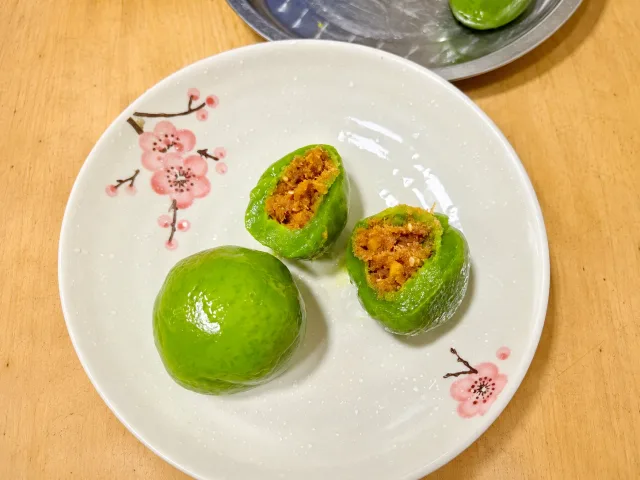
Steamed glutinous rice dumpling · The weeks before Qingming, early April
- Xiaolongbao
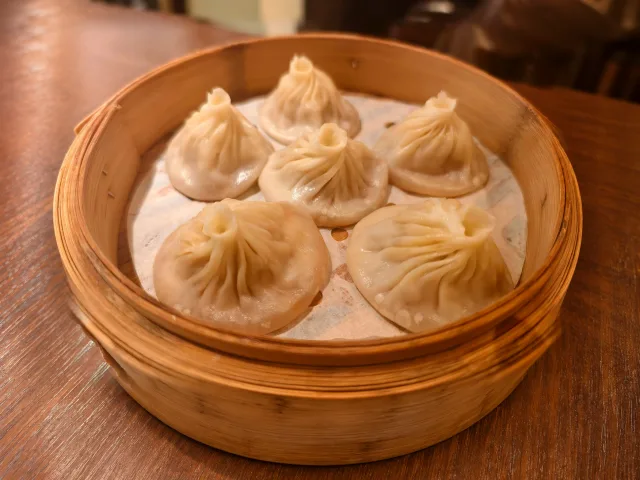
Steamed soup dumpling · Breakfast, lunch or a snack
- Scallion Pancakes
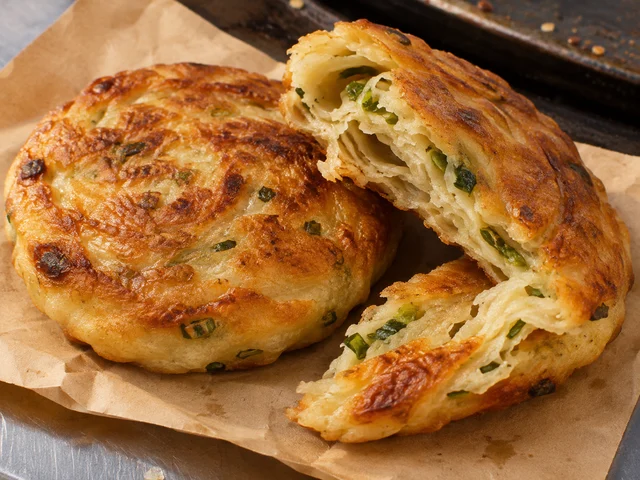
Layered wheat flatbread · Breakfast or a hot street snack
- Scallion Oil Noodles
Tossed noodles · Breakfast, lunch or a late snack
- Drunken Crab
Crab steeped in wine and soy · Cold starter in autumn and early summer
- Shengjian
Pan-fried pork bun · Breakfast, snack or light lunch
FAQ
Questions about Spring Rolls
What are Chinese spring rolls?
Paper-thin wheat wrappers rolled around a cooked filling, often shredded pork and napa cabbage, sealed and deep-fried until crisp.
Why are they called spring rolls?
They come from the custom of eating thin pancakes and fresh vegetables at the Start of Spring, and are eaten at the Spring Festival.
What is the difference between a spring roll and an egg roll?
An egg roll is an American Chinese dish with a thicker, bubbly skin and a mostly cabbage filling. Chinese spring rolls have a paper-thin wrapper.
How old are Chinese spring rolls?
Pancakes rolled around a filling, sealed and fried appear in cookbooks from the turn of the Yuan and Ming dynasties, in the fourteenth century. The name chunjuan is written down in the Qing.
What is in Cantonese spring rolls?
Traditionally shredded pork shoulder with shiitake, carrot and yellow chives, thickened with water chestnut starch. Shrimp, chicken and taro versions are common too.
Are spring rolls Chinese or Vietnamese?
Both have their own. Chinese spring rolls use thin wheat wrappers; Vietnamese rolls use rice paper and may be fried or fresh.
Are spring rolls always fried?
Chinese spring rolls are. Their unfried relatives are Beijing spring pancakes and Fujian runbing, known as popiah in Singapore.
What is in Shanghai spring rolls?
Usually napa cabbage and shredded pork, or shepherd’s purse and pork; the three-shred kind adds shiitake. There are sweet red bean ones too.
What sauce goes with Chinese spring rolls?
In Shanghai, vinegar. Abroad they often come with sweet chili or plum sauce.
When do Chinese people eat spring rolls?
Above all at the Spring Festival and the Start of Spring in early February, but they are sold all year.
How are spring roll wrappers made?
A soft, elastic dough is wiped in a circle across a hot griddle, leaving a thin film that sets in seconds and is peeled off.
Why do my spring rolls burst or go soggy?
The filling was too wet or still warm, or the oil was not hot enough. Thicken and cool the filling, and fry at about 150°C.
Can you make spring rolls ahead and freeze them?
Yes. Freeze the uncooked rolls on a tray so they do not touch, then bag them. Fry from frozen at a slightly lower heat so the middle warms through.
Can you bake or air-fry spring rolls?
You can, brushed with oil, at about 200°C until golden, turning once. They come out drier and less blistered than deep-fried rolls.
Are there vegetarian spring rolls?
Yes. Shanghai makes sweet red bean ones, and savory ones can use cabbage, shiitake, bamboo shoot and pressed tofu without meat.
Sources
Sources and further reading
- 1 Shen Jialu, Shanghai Lao Weidao (上海老味道), 3rd ed., chapters “New Year dishes and lucky words” (年菜与口彩), “The four great soups of Shanghai snacks” (小吃界四大名汤) and “Eat, eat, eat: reasons from the 24 solar terms” (吃吃吃,二十四节气给出的理由) (in Chinese)Shanghai Culture Publishing House (2017)
- 2 Shen Jialu, Shanghai Lao Weidao Xuji (上海老味道续集), parts “Jiangnan waters” (江南水色) and “Mother’s cooking” (妈妈味道) (in Chinese)Shanghai Culture Publishing House (2020)
- 3 Fucha Dunchong, Yanjing Suishi Ji (1906): “Da chun,” the Start of Spring in Beijing (in Chinese)Wikisource ↗
- 4 Zhou Mi, Wulin Jiushi (late 13th century), vol. 6: the snacks of Hangzhou (in Chinese)Wikisource ↗
- 5 Sheng Hui, Yuecai Ji (粤菜记), chapter “Notes on morning tea” (早茶小札): the youqi family of fried snacks (in Chinese)People’s Literature Publishing House, Beijing (2023)
- 6 Qiu Pangtong, Zhonghua Yinshi Zhi Yuan (中华饮食之源), chapter “Spring pancakes and spring rolls” (春饼和春卷:花样繁多的节日美食) (in Chinese)Qingdao Publishing House (2026)
- 7 Ouyang Yingji, Xianggang Weidao 1 (香港味道1), revised ed., chapter “Fried snacks with feeling: spring rolls, taro puffs and ham sui gok” (多情炸物 春卷芋角咸水角) (in Chinese)SDX Joint Publishing Company, Beijing (2018)
- 8 Guangdong Vocational and Technical Teaching Research Office, Zhongguo Yuecai Gushi (中国粤菜故事), chapter “Britain’s three-shred fried spring rolls” (英国的三丝炸春卷) (in Chinese)Guangdong Science and Technology Press (2022)
- 9 Special dishes as everything comes back to life: spring pancakes and spring rollsInformation Office of Shanghai Municipality, from Shanghai Daily (2019) ↗
- 10 Nine things you may not know about Start of SpringShanghai Municipal People’s Government, from China Daily (2026) ↗
- 11 Popiah: intangible cultural heritage, food heritageRoots.sg, National Heritage Board, Singapore ↗
- 12 A bite of spring (咬上一口春光): the Start of Spring, the five pungent vegetables and Shanghai spring rolls (in Chinese)Xinmin Evening News (3 February 2025) ↗
- 13 Egg roll: origins, Henry Low’s 1938 recipe and Nom WahWikipedia ↗
- 14 Learning to make spring roll wrappers for a street stall: flour, water and griddle heat (video, in Chinese)Wo De Yang Zi Ping Ping Wu Qi (我的样子平平无奇), Bilibili (2020) ↗
- 15 Xiaolongbao and three-shred spring rolls at a shop on Longshui North Road, Shanghai (video, in Chinese)Da Ge Zai Shanghai (达哥在上海), Bilibili (2025) ↗
- 16 New Year’s Eve fried snacks from childhood: radish balls, lotus root, stuffed eggplant and spring rolls (video, in Chinese)Jian Fei (简肥), Bilibili (2022) ↗
- 17 Fried spring rolls for the Start of Spring, red bean and chive fillings (video, in Chinese)Lao Dongbei Meishi (老东北美食), Bilibili (2023) ↗
- 18 A Quanzhou family that has made runbing wrappers for three generations, and the Qingming queues (video, in Chinese)Bai Wei De Gu Shi (百味的故事), Bilibili (2025) ↗
Last updated October 2026