
Choose the system
Pick broth, ingredient logic and safety rules as one package
The hot pots below differ in who cooks, what enters the broth, how timing works and which ingredients require strict doneness. Choose the system before building the tray.
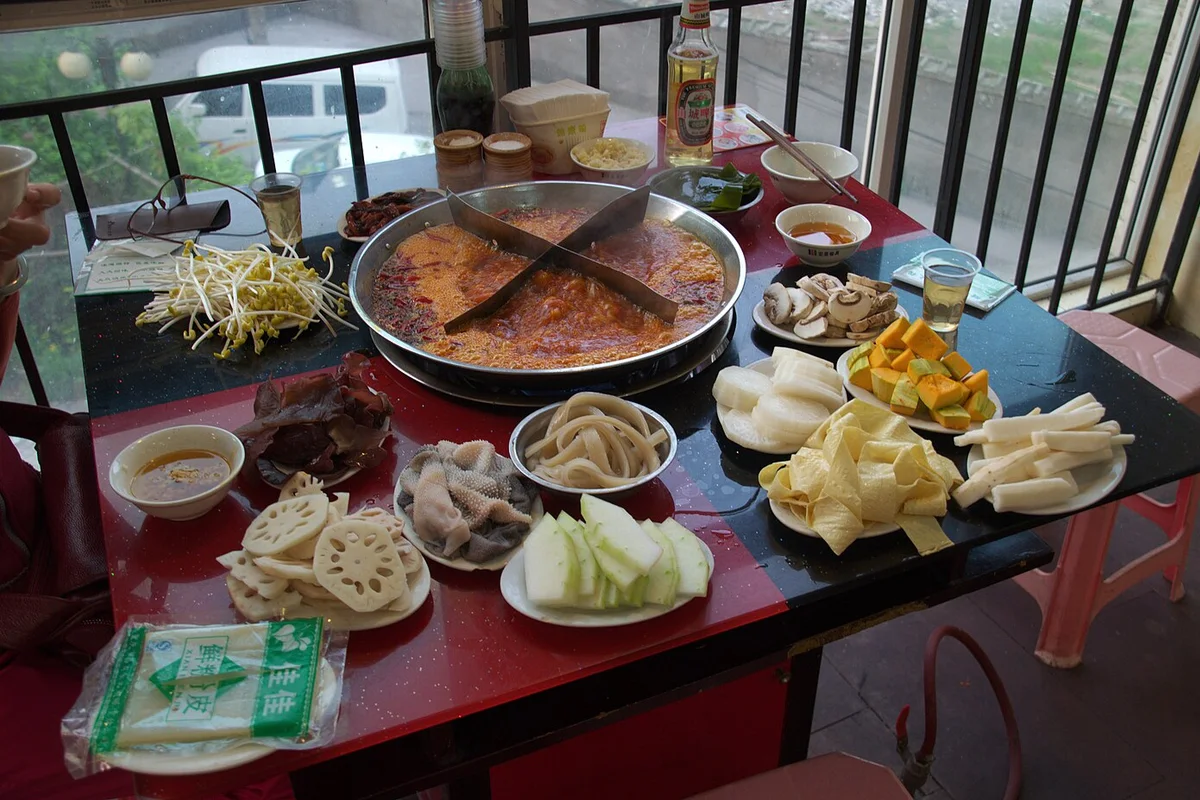
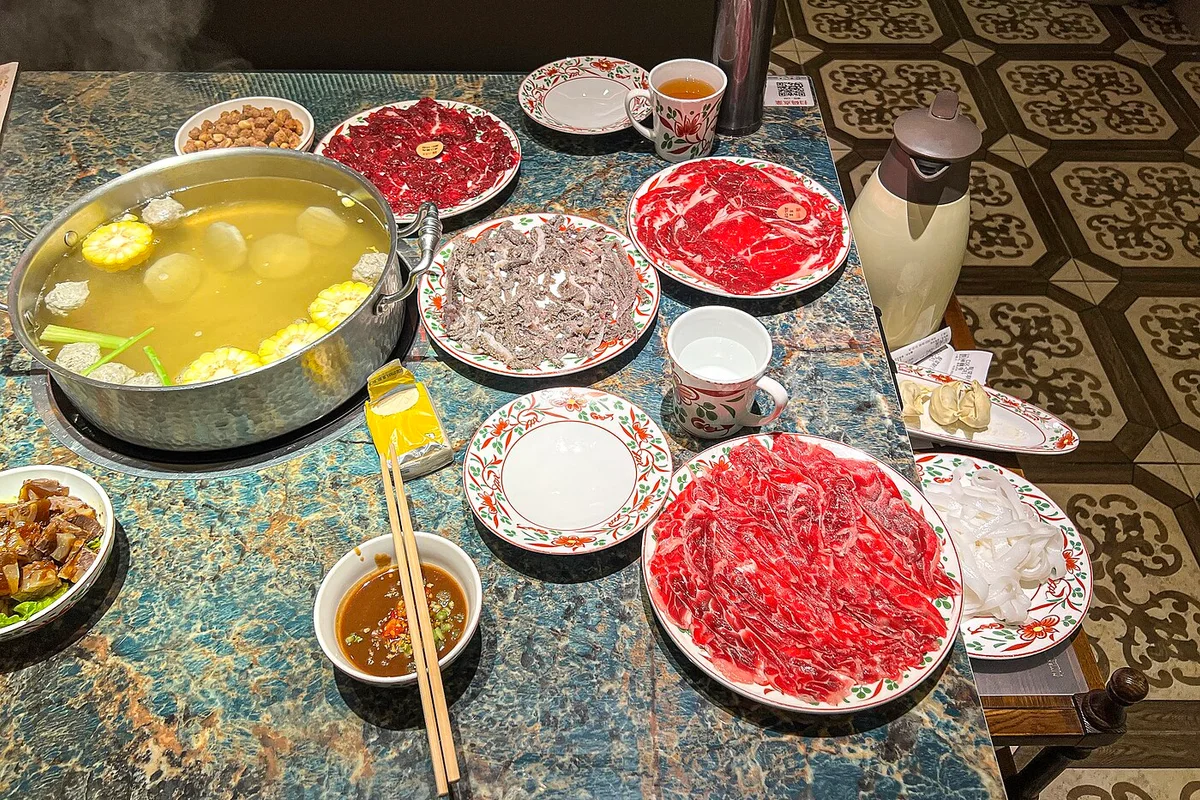
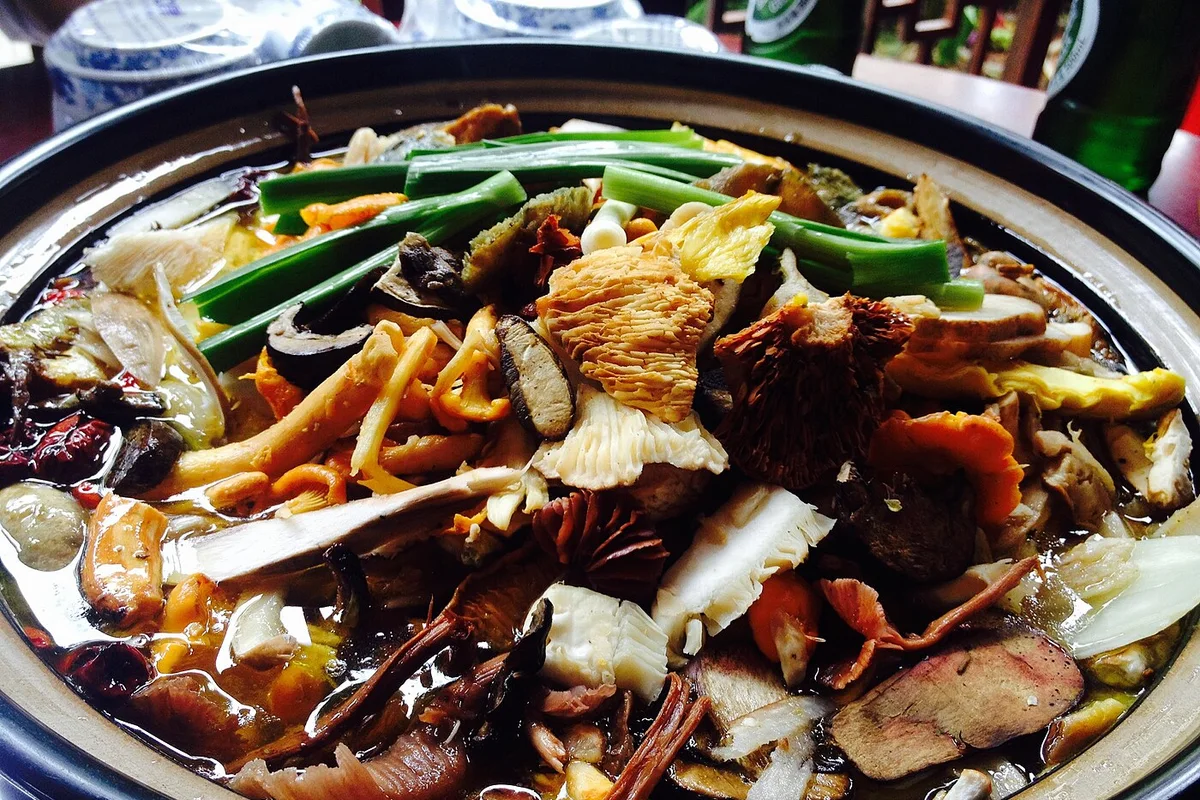
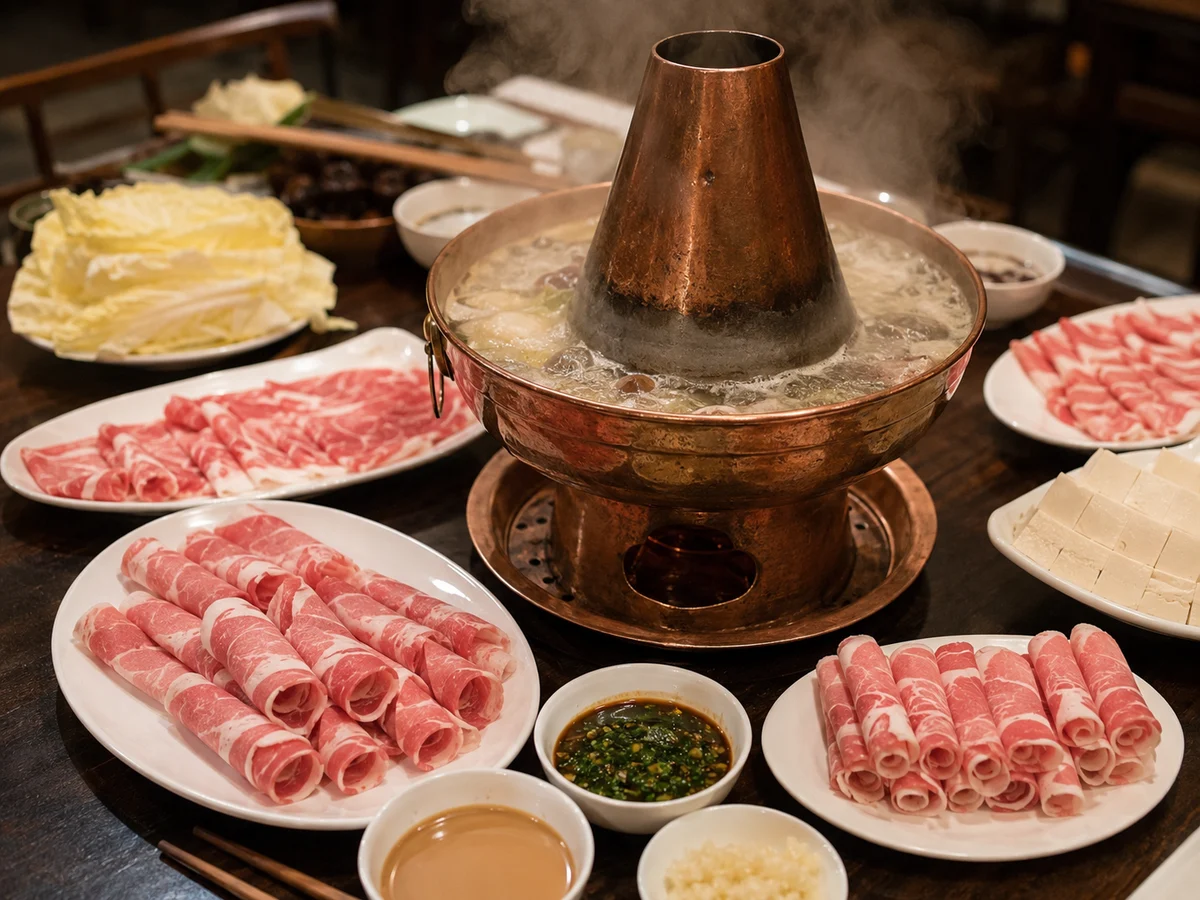
01
Choose the style before the side dishes
The broth determines which ingredients belong, what order works and how assertive the dip should be.
Sichuan mala broth suits tripe, yellow throat, tofu products and ingredients that can withstand red oil. Chaoshan beef hot pot uses clear broth and specialist fresh cuts, with shacha as a dip rather than a heavy soup base. Beijing copper-pot mutton is also clear, but its center is sheep meat, sesame paste and northern condiments. The three formats need different orders.
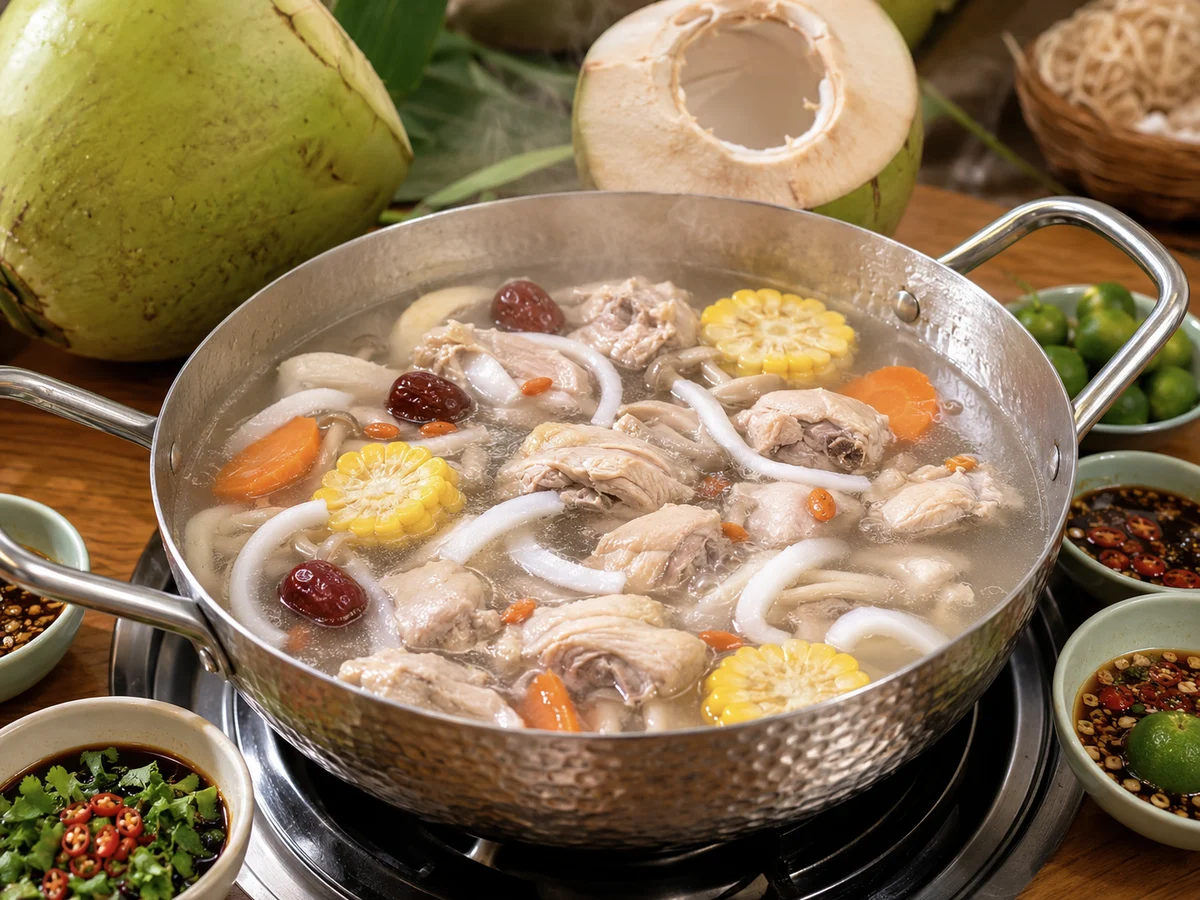
Yunnan mushroom hot pot is organized around species, aroma and prescribed cooking time; do not shorten the boil for crispness. With Hainan coconut chicken, cook the chicken first and taste the early broth before adding vegetables and starch. Strong processed balls added too soon can erase coconut and chicken.
02
Divide the menu into four rounds
Small batches preserve texture better than emptying every plate into the pot.
First choose broth and the anchor protein; next order thin meat or offal with precise cooking windows; then add tofu, mushrooms and vegetables; finish with noodles, rice noodles or rice. Put in only what the table can retrieve promptly so the broth stays hot and ingredients do not overcook.
A small table does not need something from every category. Two diners can begin with one broth, two or three core plates, two vegetables or tofu products and one staple. Four diners can add more cuts and textures rather than simply doubling identical sliced meat.
03
Match the dipping sauce to the broth
Sesame oil, sesame paste, shacha and citrus-soy dips belong to different flavor systems.
A Sichuan oil dip uses sesame oil, garlic and herbs to cool and perfume; Beijing sesame paste gives weight to clear-boiled mutton; Chaoshan shacha is savory and slightly sweet and should be used sparingly; Hainan coconut chicken often uses soy, small citrus, garlic and chilli for bright acidity.
A self-service sauce bar can make every pot taste the same. Try one ingredient plain or lightly dipped, then adjust. Confirm sesame, peanut, soy, seafood sauce and aromatic oils when allergies matter.
04
Keep raw and cooked food clearly separate
A lively shared table still needs explicit tools, timing and doneness.
Use different tongs for raw and cooked food, fully cook poultry, meatballs and offal, and never eat with chopsticks that have just handled raw meat. Follow restaurant timers for mushroom pots and never add unidentified wild mushrooms.
Broth becomes saltier and more concentrated as it boils. Ask for original broth when needed instead of trying to correct it with more dipping sauce. Oil-heavy red broth is a cooking medium, not an ordinary soup to drink at the end.
Leafy greens, frozen tofu, yuba and noodles absorb late-stage salt and oil quickly. Taste the broth before adding the final staple; if it has reduced sharply, ask for broth, bring it back to a boil and then decide how much to cook.
Quick-reference tool
Five hot-pot systems at a glance
The useful comparison is not only spice. Broth purpose, signature ingredients, dip and pacing change the whole meal.
| Style | Broth and focus | Best first-order clue |
|---|---|---|
| Sichuan / Chongqing | Chilli, beef fat or oil, Sichuan pepper; Chongqing is often associated with a more forceful old-school mala profile | Choose a sustainable heat level and ask which offal or beef items are house strengths |
| Chaoshan beef | Clear, restrained broth designed to show fresh beef cuts | Order a few named cuts in small rounds and use shacha-style dip sparingly |
| Yunnan mushroom | Mushroom aroma and carefully managed cooking safety | Follow the restaurant’s boil-time instructions; never taste mushrooms early |
| Beijing copper-pot mutton | Clear broth, thin lamb, sesame-based sauce | Compare two lamb cuts and avoid overpowering the broth with too many additions |
| Hainan coconut chicken | Fresh coconut liquid, chicken and a bright citrus dip | Taste the broth before sauce, then add vegetables gradually |
A practical four-person first round is one or two broths, two meat plates, one specialist item, two vegetables, one tofu product and one eventual starch. Add after seeing the plate sizes.
Group ingredients by cooking behavior
Cook fully
Poultry, meatballs and thick or high-risk items need the restaurant’s full cooking guidance.
Cook for texture
Thin beef and lamb cuts can move from tender to firm quickly; use staff guidance instead of a universal number of seconds.
Add early
Dense roots, firm tofu and sturdy mushrooms generally tolerate a longer simmer.
Add late
Leafy greens, delicate tofu, noodles and rice cakes can cloud, salt or thicken the broth near the finish.
Field method
Run hot pot as a cooking sequence, not a crowded soup
Broth, ingredient order, doneness, tools and dipping sauce determine whether hot pot stays clear and pleasurable.
Choose broth for the whole table
A divided pot helps, but it does not erase splashing or shared utensils.
Confirm whether clear, tomato or mushroom broth contains meat stock. Choose a chilli level the group can sustain for an entire meal, not one impressive first bite. Dedicated ladles and strainers matter for allergies and dietary restrictions.
Taste delicate meat and vegetables before the broth becomes heavily seasoned. Fatty cuts, offal, starch and noodles change the liquid; adding everything at once clouds flavor and makes cooking times impossible to track.
Cook by risk and texture
Thin meat, dense roots, seafood and leafy greens do not share one timer.
Follow restaurant guidance for meat and poultry, cook high-risk foods fully and keep raw-meat utensils away from cooked food. Add durable roots and mushrooms earlier, quick-cooking greens later, and noodles near the end unless the broth is already too salty.
Order half the expected ingredients first. Plate volume is deceptive, and hot pot appetite develops slowly. Add cuts after learning which textures the table prefers.
Worked example
Worked example: four diners, two heat levels
The group includes a vegetarian preference and one chilli-sensitive diner.
- Step 1 · Verify broth
Choose a divided pot and confirm whether the gentle side is truly vegetable-based.
- Step 2 · Separate tools
Assign ladles and strainers to each side before raw food enters.
- Step 3 · Stage ingredients
Begin with half the meat, mushrooms and firm vegetables; add greens later.
- Step 4 · Finish deliberately
Choose one noodle or rice-cake finish only if the broth and appetite support it.
A divided pot is useful only when broth ingredients and table behavior support the separation.
FAQ
Frequently asked questions
Which hot pot suits people who cannot eat chilli?
Chaoshan beef, Beijing copper-pot mutton and Hainan coconut chicken are usually not chilli-led, but confirm broth, dip and cross-contact at a shared table.
Can you drink hot-pot broth?
Early coconut, mushroom or clear broth may be intended for tasting. Sichuan red broth functions primarily as a cooking medium rather than an ordinary soup.
Should meat or vegetables go in first?
It depends on the style. Swish thin beef or mutton in small batches, fully cook chicken and mushrooms as directed, and leave absorbent greens and staples until later.
Sources
Sources and further reading
These sources support the food names, regional context, techniques and dining practices used in this guide. Individual restaurants, households and cities still vary.