
01
One word, several pots
Jibao means “chicken pot,” and in Guangdong it names a whole family of dishes cooked at the table around one chicken.
Order jibao in Guangdong and you could get one of several quite different meals. The oldest is the herbal charcoal pot: a fresh chicken chopped through the bone and simmered in a broth of medicinal roots and dried fruit, scooped out piece by piece and dipped in sauce, the soup drunk afterwards. The saucy pot, closer to the Cantonese sizzling clay pot (啫啫煲), braises the chicken in a thick, garlicky sauce that you eat first; broth is then poured in and the meal turns into hot pot. The newest is the Chaoshan sliced chicken pot, in which the chicken is taken off the bone, sliced, laid out by cut, and cooked in clear broth for seconds at a time.
What they share is the pot on the table, the shared meal and the insistence on a fresh chicken. Guangdong restaurant writers sort them into an herbal school, a sauce school and a looser group of newer inventions with durian, coconut or fruit.
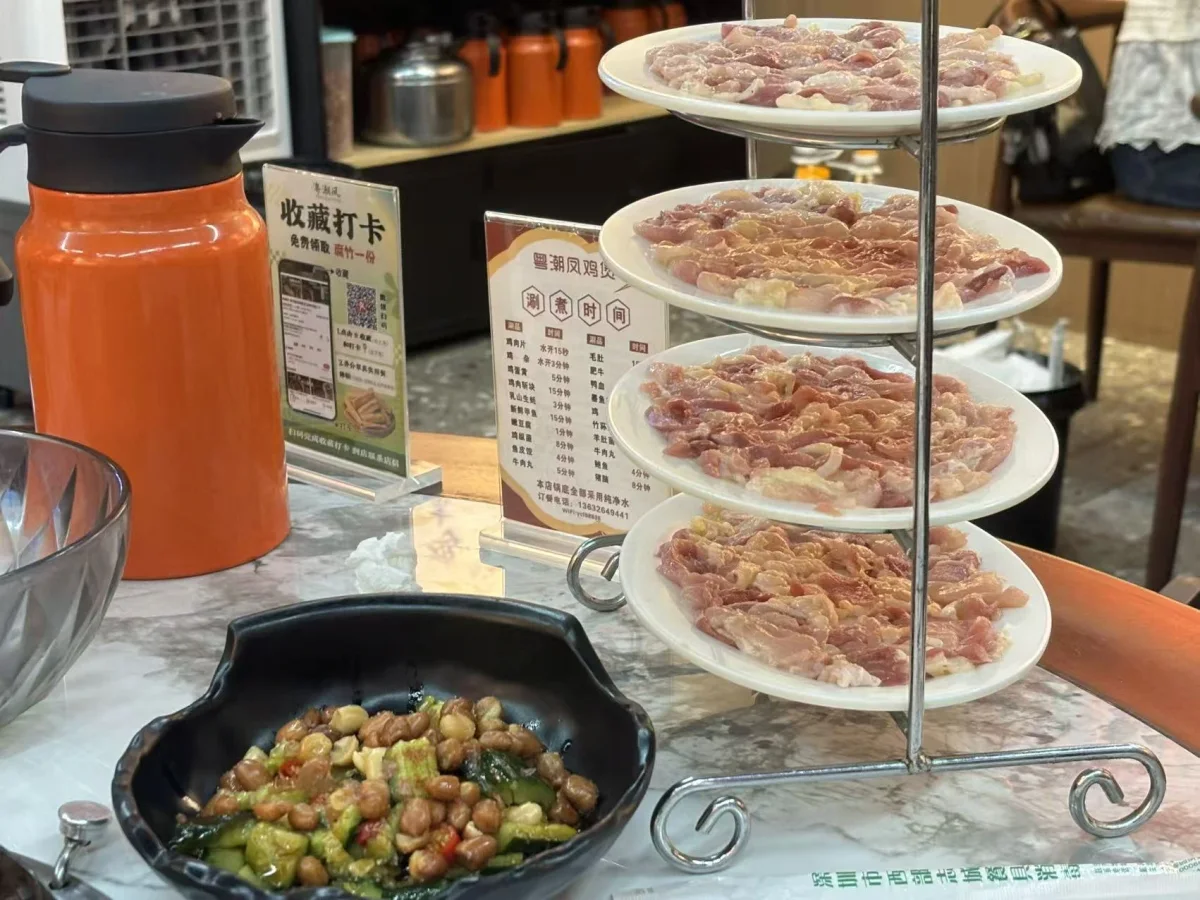
At a sliced chicken pot restaurant in Shenzhen, four plates of raw, freshly cut chicken stand on a tiered rack; on the table, a card headed “cooking times” tells diners how long each item needs once the pot boils, from 15 seconds for chicken slices to 15 minutes for chopped chicken, and notes that every pot is started with purified water.
02
Why Guangdong cooks chicken this way
In Guangdong a good chicken is judged by one standard: it should taste of chicken.
There is a saying that no feast in Lingnan is complete without chicken, and in Cantonese the word for chicken, gai, sounds like the word for luck. The highest praise a Cantonese cook gives a bird is that it “tastes of chicken” (有鸡味), which means a free-range bird raised long enough for firm, flavorful meat: Qingyuan’s ma chicken, Zhanjiang capon or Huizhou’s bearded chicken. Qingyuan alone sent 161 million chickens to market in 2025.
A chicken pot is built around that taste. Because the bird is cooked in front of you in plain or lightly flavored broth, there is nowhere for a dull chicken to hide, which is why chicken pot restaurants advertise the breed, the age of the bird and the time it was killed.
The dish is everywhere. By the end of May 2024 the review site Dianping listed more than 16,600 chicken pot businesses in the Pearl River Delta cities alone, from Guangzhou and Shenzhen to Foshan, Dongguan and Zhaoqing. Trade writers trace the chicken pot to Guangdong’s dai pai dong street restaurants in the 1980s, from where it moved up into smarter restaurants.
03
The herbal charcoal pot and Mo’s chicken pot
The classic Cantonese chicken pot is a chopped chicken simmered in herbal soup, eaten for the chicken and drunk for the soup.
The traditional base is a soup of roots, dried fruit and beans that Cantonese families also boil at home: qingbuliang (清补凉), a mixed pack of dried roots and seeds, or wuzhimaotao (五指毛桃), the root of a wild fig. The pot is set over charcoal, the soup brought to the boil and a chopped fresh chicken added. Diners fish out the pieces when they are just cooked and dip them in sauce; the soup, richer by the end, is drunk last. Many people choose such a pot for its supposed effect on “dampness,” a key idea in Cantonese eating in a hot, humid climate.
In spring 2026 this kind of pot became China’s most talked-about meal. Mo’s Chicken Pot (莫氏鸡煲), a husband-and-wife shop in Ganxian village, Chencun, in Foshan’s Shunde district, used to serve a dozen or so tables a day. After a food influencer posted a visit in which the owner, Mo Shaoyue, begged him not to make the place look too good, crowds arrived from all over the country: 2,000 to 3,000 visitors a day over the Qingming holiday, queues of up to seven hours, and queue tickets resold for 300 yuan. A red sign on the wall warned that the soup might send some diners to the toilet, which was normal, and that pregnant women should not drink it.
The owner made no secret of the recipe: wuzhimaotao, tufuling (a rhizome used against dampness), fuling, dried tangerine peel, ginger, soybeans and red dates, “just these seven things,” adjusted by season. The pot is started with purified water and the herbs, then the chicken goes in. In April 2026 a whole chicken cost 258 yuan and a serving of the herbal soup 38 yuan; two people typically spent about 300 yuan. The supplier Wens said the restaurant used its Qingyuan ma capon. By the end of April the village had built a new car park, the shop was handing out 100 queue numbers for lunch and 100 for dinner, and a branch had opened in Daliang, Shunde’s main town.
04
Chaoshan sliced chicken: ten seconds in the pot
The newest chicken pot borrows its method from Chaoshan beef hot pot.
In Shantou and Chaozhou the chicken pot is often called jilu (鸡炉), “chicken stove,” and for many families it was always sliced. The chicken is boned, the skin taken off, the meat cut into thin slices, and every part goes to the table on its own plate: breast, thigh, skin, giblets and the frame. Shantou market stalls will bone and slice a chicken for free. The bones go into the pot first to make the broth; then each cut is cooked for a set time, just as at a Chaoshan beef hot pot, where each cut of beef has its own count. Chicken meat needs only eight to ten seconds, skin three to five minutes, giblets about three.
The style spread out of Chaoshan from around 2023, when sliced chicken pot shops opened in Shenzhen, Guangzhou and Shanghai with open kitchens where a cutter carves whole chickens in view. They brought new soup bases too: stone olive and fig are the classics, and some shops use bitter melon, pineapple, passion fruit or papaya. One Shantou shop opened by a former beef cutter was said, at its peak, to serve more than a thousand tables and sell more than a thousand chickens a day.
Because the meat is barely cooked, the chicken matters even more here. Owners prefer free-range birds, a heavy breed known as dashan, or old hens, all of which grow slowly and have firm, fatty meat, and the bird must be killed the same day: chilled chicken, they say, makes a weak broth and slices that fall apart in the pot. In Shantou a meal costs about 60 to 80 yuan a head; in bigger cities 80 to 110. Diners dip the slices in soy with coriander, or in shacha sauce, and drink the broth, now sweet with chicken, at the end.
05
Sauce pots and the Hong Kong chicken-then-hot-pot
The other branch of the family cooks the chicken in sauce first and adds broth later.
Its ancestor is the Cantonese sizzling clay pot, 啫啫鸡煲, in which chicken, garlic, onion and shallots are cooked in a very hot clay pot until the sauce spits and the meat catches at the edges. The chicken pot restaurants of Shenzhen stretched this into a meal in stages. At Huxulao (胡须佬), a Shenzhen chicken pot shop with more than one branch, the pot arrives with chicken in a thick, glossy sauce under a heap of coriander and scallions, together with fried pork skin and pork intestine that soak up the sauce. When the chicken is gone, tofu skin and other items are stirred into what remains, with more sauce if needed; instant noodles soak up the last of it, and a plate of greens finishes the meal. In 2023 two people paid 287 yuan.
In Hong Kong the same idea became chicken pot followed by hot pot: the chicken pot comes first, and once the chicken is eaten the pot is switched to hot pot broth and the table carries on with an ordinary hot pot. Many Hong Kong chicken pot shops are all-you-can-eat. Chi Chun Chongqing Chicken Pot in Mong Kok, open for about thirteen years and often called the pioneer of the all-you-can-eat model, offers four pots, including a Chongqing-style spicy one, a cheese one, a pepper and pork stomach one and a coconut one, followed by about a hundred hot pot items; in 2025 a two-and-a-half-hour dinner cost HK$208 to HK$268 a head.
Shenzhen has also mixed the two traditions. Lukshen (禄婶) chicken pot, founded in 2018, paired free-range chicken and fish maw broth simmered for eight hours with Hong Kong hot pot and 1990s Hong Kong decor, and had three-hour queues at its peak.
06
A crowded, fast-changing trade
Chicken pot shops open and close at a remarkable rate.
The numbers show how competitive the trade is. In March 2026 there were 4,881 operating catering businesses with “chicken pot” in their names, most of them registered in the previous three years; new registrations rose from 463 in 2022 to 914 in 2025. Yet a 2025 count found more than 4,000 such businesses already deregistered, and in Guangzhou, which has nearly 5,000 chicken pot shops, many close within a year. Most chicken pot brands have between three and ten branches, nearly all in Guangdong.
Industry writers give three reasons the dish travels badly. It depends on freshly killed chickens raised for 120 days or more, which are hard to supply far from Guangdong. Its mild, herbal flavor does not hook diners the way spicy hot pot does. And it needs skilled cutters and long, slow meals, which keep costs high and tables turning slowly. Big chains have still tried: the hot pot chain Haidilao opened a fresh-cut chicken workshop in Shenzhen in 2025 with Qingyuan chickens, and some customers complained that the portions were small for the price.
07
The styles side by side
How to tell which chicken pot you are getting.
Ask whether the chicken is chopped or sliced, and whether the pot starts with soup or with sauce.
| Style | How the chicken is cooked | What follows |
|---|---|---|
| Herbal charcoal pot | Chopped on the bone, simmered in herbal soup | Drink the soup; add vegetables |
| Chaoshan sliced (jilu) | Boned and sliced, each cut swished for seconds in clear or fruit broth | Giblets, oysters and Chaoshan snacks; broth to finish |
| Shenzhen sauce pot | Braised in thick sauce with pork skin and intestine | Tofu skin, noodles, greens cooked in the sauce |
| Hong Kong chicken pot | Spicy, cheese, pepper-and-pork-stomach or coconut pot, eaten first | Switched to hot pot broth, often all you can eat |
08
Where to eat and how to order
Chicken pot is an evening meal for a group.
Most chicken pot shops are busiest at dinner and late at night; in Shantou many do not open until the afternoon. Go with three or four people, since the chicken is sold whole or by the half.
Choose the chicken
Menus list the breed and age; free-range and Qingyuan chickens cost more. Expect anything from about 100 yuan to over 250 for a whole bird.
Choose the base
Herbal (wuzhimaotao, qingbuliang), stone olive or fig for clear pots; sauce pots for the Shenzhen style, and spicy, cheese or pepper pots in Hong Kong.
Mind the timing
At sliced chicken shops a card lists times: about ten to fifteen seconds for slices, a few minutes for skin and giblets, longer for chopped pieces. Wait for the broth to boil before you start.
Add sides
Oysters, beef balls, tofu skin, fried dough sticks and greens; at Chaoshan shops, oyster omelet and Puning tofu.
In Hong Kong
Look for all-you-can-eat chicken pot shops in Mong Kok and other busy districts; the chicken comes first and the hot pot follows.
09
More chicken and hot pots
Other pages on the atlas.
Coconut chicken hot pot
Shenzhen’s other chicken pot, cooked in coconut water.
Read about coconut chicken →Chaoshan beef hot pot
The cut-by-cut hot pot that sliced chicken pots copy.
Read about Chaoshan beef hot pot →White-cut chicken
The Cantonese test of a chicken that “tastes of chicken.”
Read about white-cut chicken →Guangdong classics
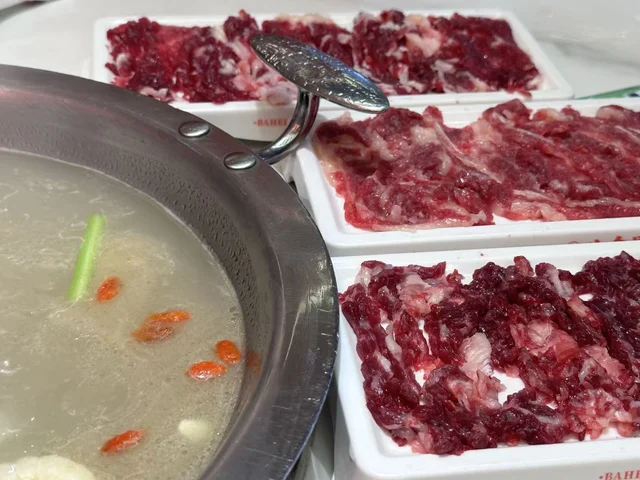
- Chaoshan Beef Hot Pot
Beef hot pot · Shared meal
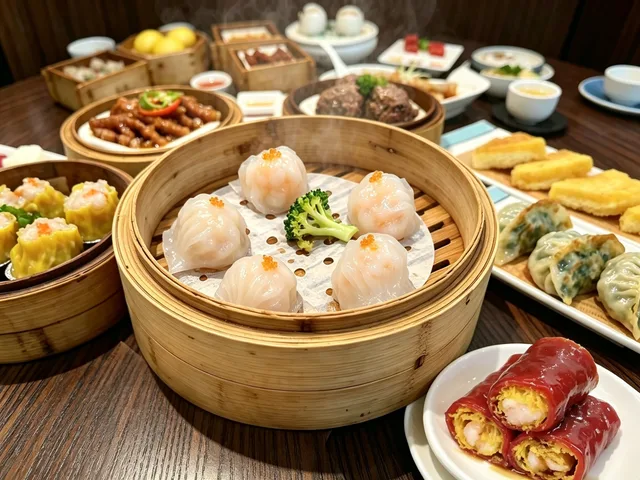
- Cantonese Yum Cha
Yum cha · Morning tea, weekends with family
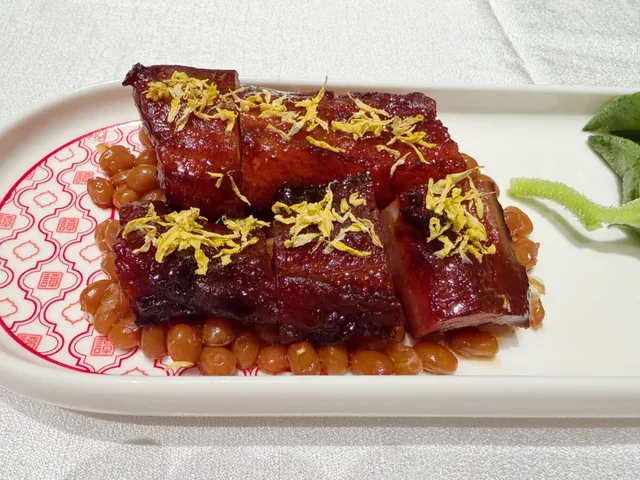
- Char Siu
Roast pork · Lunch or dinner, with rice
- Egg Fried Rice
Fried rice · Lunch, dinner, end of a meal
- Beef Chow Fun
Fried rice noodles · Lunch, dinner or late-night supper
- Mooncake
Festival pastry · Mid-Autumn Festival
Hot pots from other regions
FAQ
Questions about Cantonese Chicken Hot Pot
What does jibao mean?
Jibao (鸡煲) means “chicken pot.” In Guangdong it covers several table-cooked chicken dishes: herbal charcoal pots, sliced chicken in clear broth, and saucy pots that turn into hot pot.
Is chicken pot spicy?
Most Cantonese chicken pots are mild. Hong Kong chicken pots and some Shenzhen sauce pots come in spicy versions.
How long do you cook the sliced chicken?
About eight to fifteen seconds once the broth boils; skin and giblets need a few minutes, chopped pieces about fifteen.
Why does Mo’s chicken pot warn about the toilet?
Its herbal soup is meant to clear “dampness,” and the owner warns it may loosen some diners’ stomachs. He also advises pregnant women not to drink it.
How much does a chicken pot cost?
In Shantou about 60 to 80 yuan a head; in larger cities 80 to 110. At Mo’s in 2026 a whole chicken was 258 yuan.
Is it the same as coconut chicken?
They are cousins. Coconut chicken is Shenzhen’s chicken hot pot cooked in coconut water; jibao usually means herbal, clear or sauce-based pots.
Sources
Sources and further reading
- 1 Zhou Mo, “Eating chicken by the cut? Chaoshan sliced chicken pots take off, one shop sells 1,000 chickens a day” (吃鸡也要分部位?潮汕切片鸡煲爆火) (in Chinese)Canyin (红餐网), via Jiemian (June 11, 2024) ↗
- 2 Li Jinzhi, “Can’t leave Guangdong? Shenzhen’s ‘queue king’ chicken pot is down to two shops” (走不出广东?“深圳鸡煲排队王”仅剩2家店) (in Chinese)Canyin (红餐网), via Jiemian (May 26, 2025) ↗
- 3 Fu Zihao, “The Shunde chicken pot whose owner told people not to come” (老板劝退“别来吃”的顺德鸡煲店,逼着广东文旅去斩鸡) (in Chinese)China News Service (April 9, 2026) ↗
- 4 Chen Xiaotong, “Mo’s chicken pot goes viral; copies of its soup pack sell by the thousand online” (莫氏鸡煲爆火出圈,电商平台同款汤料包单店最高售出超5000单) (in Chinese)Jiemian (April 14, 2026) ↗
- 5 Shen Xiaoge, “Mo’s chicken pot opens a new Shunde branch and denies franchise-fee rumors” (莫氏鸡煲顺德新店火爆开业,否认10万元加盟费传闻) (in Chinese)Jiemian (April 30, 2026) ↗
- 6 He Qitong, “The Chinese Restaurant That ‘Didn’t Want Fame’ and the Internet That Wouldn’t Listen”Sixth Tone (April 8, 2026) ↗
- 7 “Chicken pots with three- and four-hour queues: why can’t they leave Guangdong?” (排队三四小时的鸡煲,为何走不出广东?) (in Chinese)Canyin Laoban Neican, via 36Kr (April 8, 2026) ↗
- 8 Fran Lu, “China restaurant owner rejects fame after being overwhelmed by growing number of customers”South China Morning Post, via The Star (April 14, 2026) ↗
- 9 “A month after going viral, how long can Mo’s chicken pot stay hot?” (爆火1个月的莫氏鸡煲,还能红多久?) (in Chinese)Nanfang+, via Southern Finance (May 1, 2026) ↗
- 10 “Mong Kok’s pioneer of all-you-can-eat chicken pot, Chi Chun Chongqing Chicken Pot” (旺角鸡煲放题始祖「至尊重庆鸡煲」) (in Chinese)Sing Tao Headline (September 10, 2025) ↗
- 11 Fresh-cut chicken pot: why is it suddenly everywhere? (video, in Chinese)Make Gan Fan Rizhi (马克干饭日志), Bilibili (March 19, 2025) ↗
- 12 The chicken pot I have eaten 109 times in Shenzhen (video, in Chinese)Ni De Hao Linju Wang Datou (你的好邻居王大头), Bilibili (January 7, 2023) ↗
Last updated November 2026