
Change the map
Replace takeaway categories with region, technique and meal format
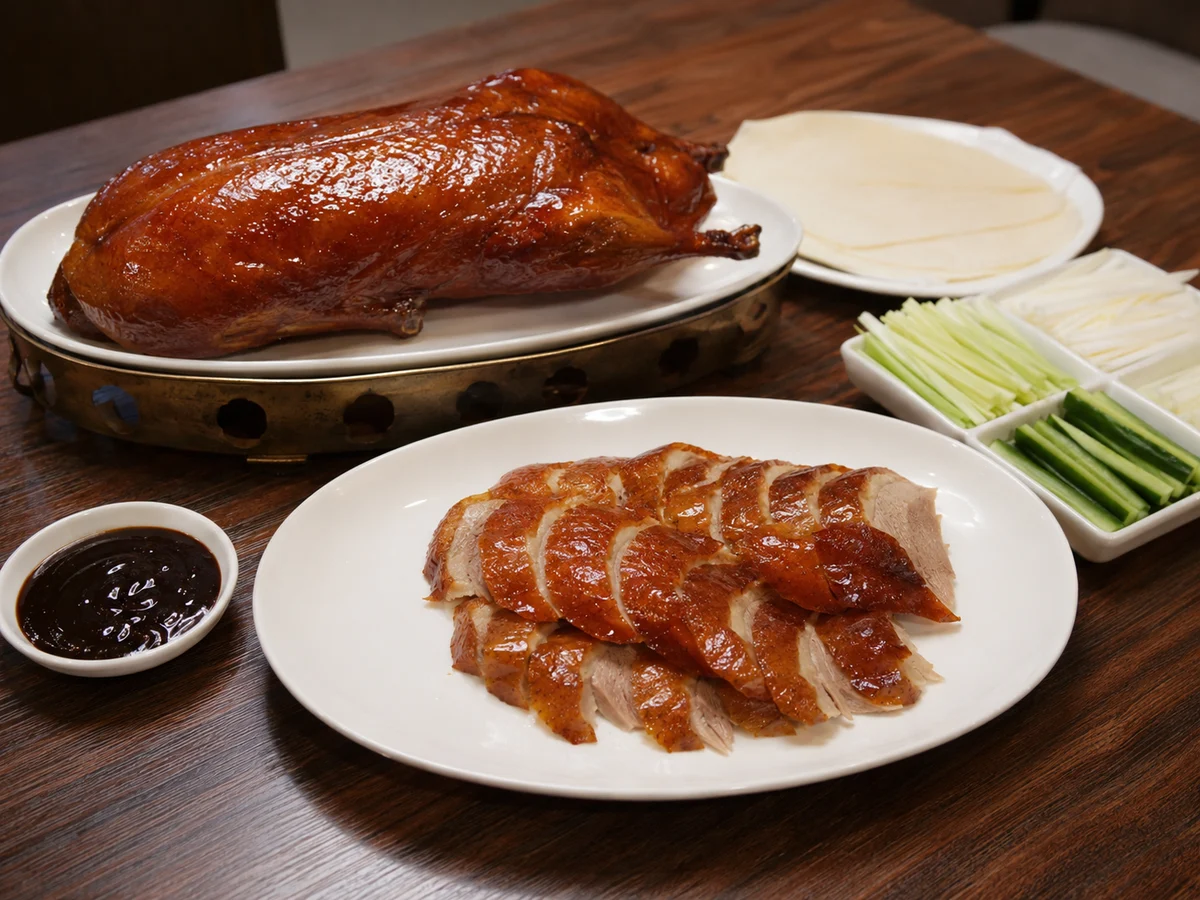
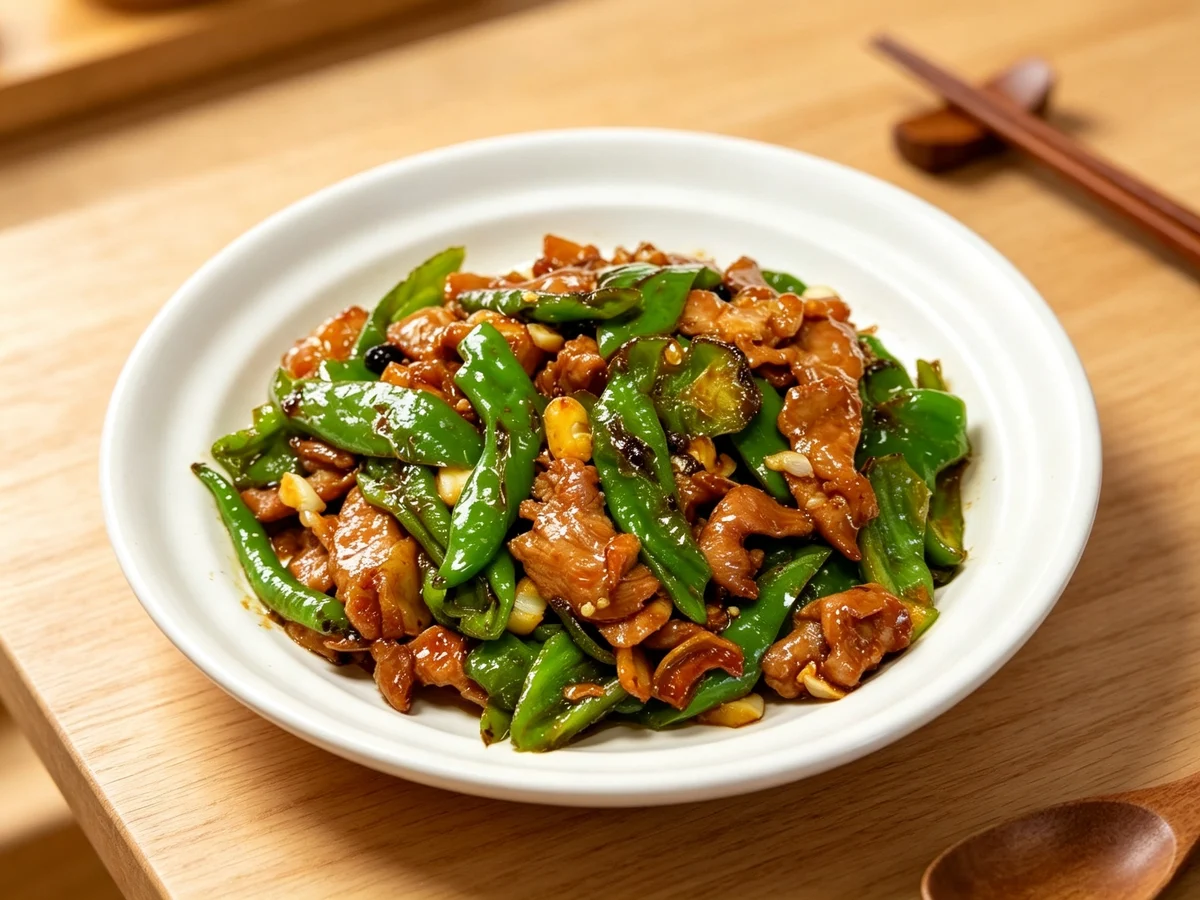
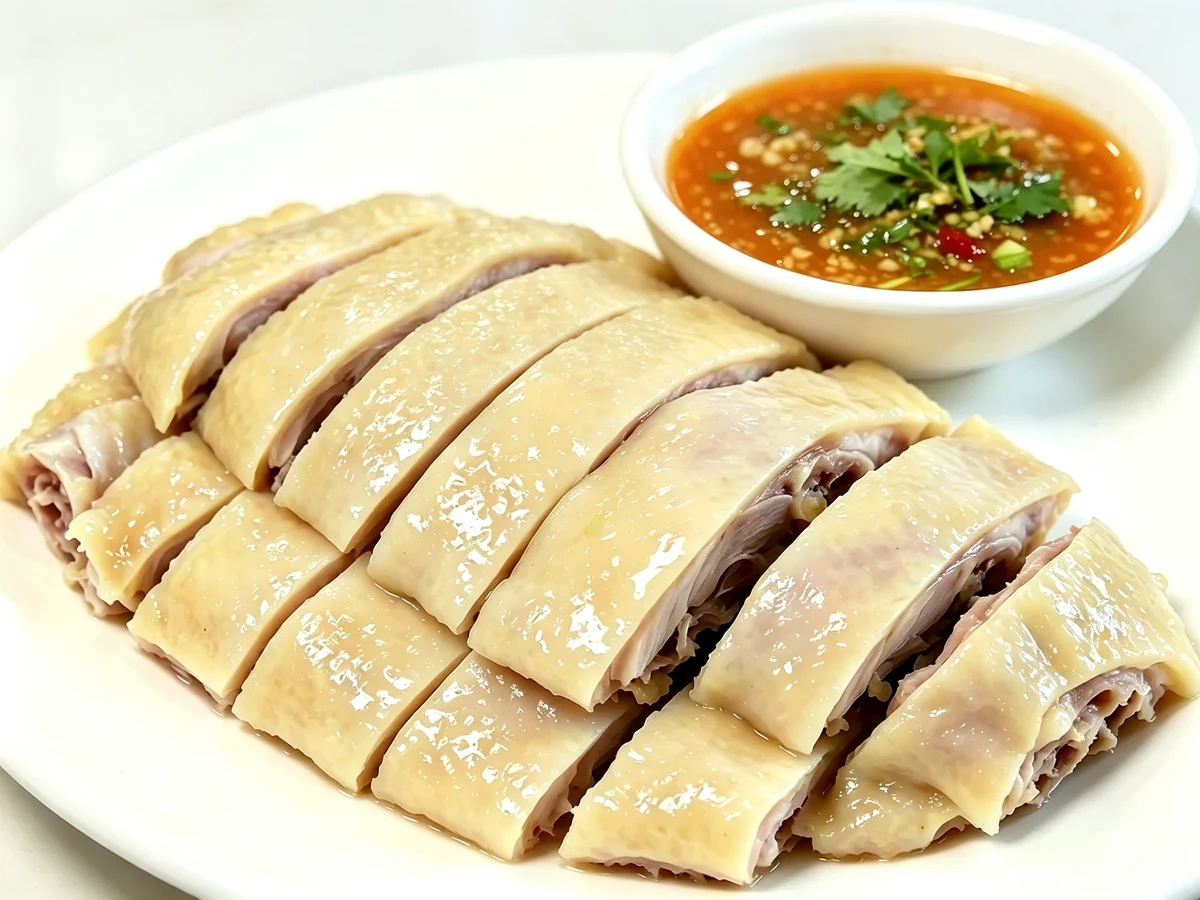
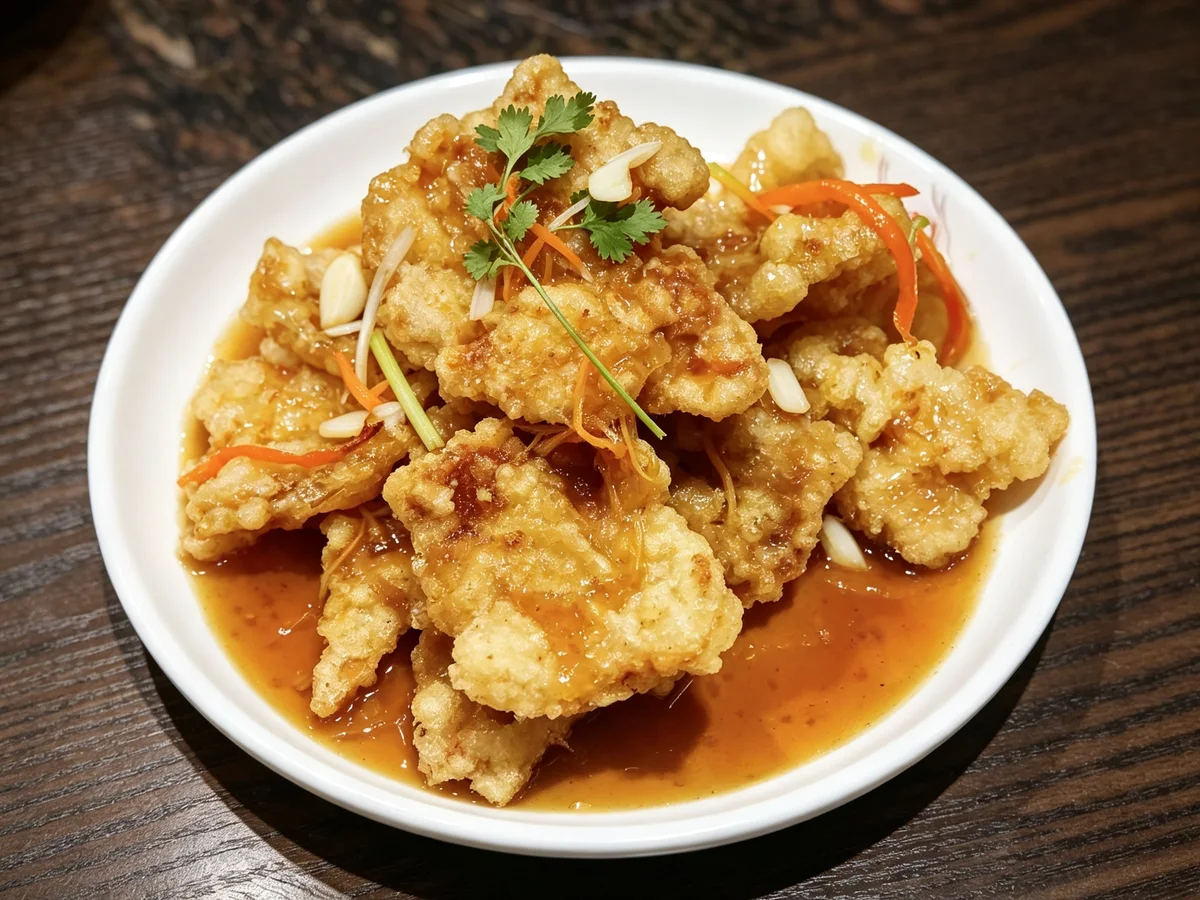
Each linked food opens a different route into Chinese cooking. Compare how it is made and eaten before trying to fit it into a familiar overseas menu category.
01
Step one: read the restaurant before the individual dishes
A regional label is an opening clue; the shape of the menu is stronger evidence of what the kitchen does well.
Look for provinces, cities and local names repeated in the restaurant name, signs and menu—Chaoshan, Wuhan, Xi’an, Chengdu, Dongbei or Hainan, for example. Specific place language helps predict staples and service, but it is not a guarantee of quality. The useful signal is whether the menu consistently develops a related set of ingredients and techniques.
Notice where the menu becomes detailed. Several pages of named Chaoshan beef cuts, freshwater fish by weight, Hunan cured meats, Shaanxi wheat foods or hot-pot ingredients probably reveal more than a small corner of generic fried rice and spring rolls. Cooking verbs such as steam, flash-fry, braise, mix and swish predict moisture and timing; rice, noodles, rice noodles, bread and congee show how the meal is meant to work.
Equipment and service provide a final check: a roast oven, copper pot, stacked steamers, seafood tanks, clay pots or tableside assembly show where the restaurant has invested skill and space. Ask what regulars order, how many people a portion serves and which dishes best represent the house. Those questions are more useful than demanding the single “most authentic” item.
02
Step two: test whether the menu contains regional detail
A real specialty usually appears as verifiable detail, not merely a province name on the sign.
Look for cities, counties, ingredient cuts and local dish names. A Chaoshan beef menu that distinguishes named cuts, a Shaanxi menu that separates several wheat-food traditions, or a Hainan shop that explains its noodle families offers stronger evidence than generic labels such as “special beef” or “handmade noodles.”
Then check whether names, images, translations, staples and seasoning descriptions point to the same food system. One regional dish cannot define a whole restaurant; a concentrated group whose differences the menu can explain is a much stronger signal.
03
Step three: cross-check equipment, service and staff answers
Kitchen investment and service routines are harder to improvise than an authenticity slogan.
Roast ovens, copper pots, stacked steamers, seafood tanks, clay pots, open cutting stations and tableside assembly all constrain what a kitchen can deliver consistently. Check that the equipment is actually used and that the related dishes form a meaningful part of the menu.
Ask what regulars order, how similar dishes differ and which item best demonstrates the house style. Specific, consistent answers are more useful than “this is the most authentic.” If the answers conflict with the menu, equipment and food arriving at nearby tables, lower your confidence.
04
Know what these clues cannot prove
Regional identity, cooking quality and suitability for your table are three different judgments.
An owner’s birthplace, a wall map, influencer coverage, a queue or menu photography supplies context but cannot prove quality by itself. Regional food changes with city, season, supply and cook; variation is not automatically inauthentic, and an old-brand claim does not guarantee every dish.
After identifying the specialty, use the shared-meal guide for portions, contrast and later rounds. Use the vegetarian, allergy or non-spicy guides for dietary boundaries. Separating restaurant identification from meal construction makes both decisions clearer.
Compare
General Tso’s vs orange vs sesame chicken
These three are near-universal on US Chinese menus and are often mistaken for “authentic Chinese food.” In reality they are American-Chinese inventions that share one idea—battered fried chicken in a sweet glaze. The real difference is the sauce accent, and recipes vary widely by restaurant.
American-Chinese, often traced to chef Peng Chang-kuei
American-Chinese, popularized by Panda Express
American-Chinese
Sweet-savory with garlic and ginger, mildly spicy and tangy
Sweet-tangy with orange peel or citrus
Sweet, with toasted sesame
A little chilli heat (usually mild in the US)
Usually not spicy
Not spicy
Battered, deep-fried, then glazed
Battered, fried, citrus glaze
Battered, fried, sesame glaze
Rare; not a standard dish
Rare
Rare
It is more useful to treat them as one family of sweet fried chicken with different sauce accents than to over-separate them. To move from American-Chinese toward an authentic tradition, start with a genuine northeastern sweet-and-sour dish— Harbin guo bao rou.
For a little heat with garlic-ginger tang
Choose General Tso’s. In the US it is usually only mildly spicy.
For bright citrus sweetness
Choose orange chicken. It is usually not spicy, with a clear fruit note.
For nutty sesame sweetness
Choose sesame chicken. Sweetness leads, with toasted sesame behind it.
If you actually want authentic Chinese food
All three are American-Chinese inventions, not standard dishes in China. For a real sweet-and-sour tradition, see Harbin guo bao rou.
Quick-reference tool
Five signals that reveal a restaurant’s real specialty
Treat each signal as evidence, not proof. A convincing regional focus appears when several details point to the same food system.
| Signal | What to look for | What it can establish |
|---|---|---|
| Place-name concentration | Repeated cities, counties and subregional labels across a whole menu section | The geographic system the restaurant wants diners to recognize |
| Ingredient specificity | Named beef cuts, fish species, preserved ingredients, noodle forms or local staples | Whether the kitchen works beyond a few generic regional bestsellers |
| Technique vocabulary | Consistent use of meaningful terms such as steamed, red-braised, dry-fried, hand-pulled or clay-pot cooked | The cooking capabilities behind the menu’s regional claim |
| Equipment and service | Working roast ovens, steam stations, seafood tanks, copper pots, carving counters or tableside cooking | Which food system receives sustained space, training and service support |
| Staff explanation | Clear answers about differences between related dishes and what regulars return for | Whether menu detail is understood in practice rather than copied into labels |
Do not let décor, an owner’s birthplace, one famous dish or a long menu decide the question alone. Look for agreement among menu depth, technique, equipment and delivered food.
Field method
Test a regional claim against visible evidence
This example stops before meal construction. It asks whether an unfamiliar restaurant’s menu, equipment and staff answers describe one coherent regional food system.
Worked example
A restaurant claiming a river-region specialty
Freshwater fish, clay pots and seasonal vegetables receive the most detailed menu space. Generic fried dishes occupy a small final section, while the dining room shows working clay burners and a fish display.
- Step 1 · Locate menu concentration
Count where names become specific: fish species, clay-pot methods, local greens and house broths carry more evidentiary weight than a province name printed above generic dishes.
- Step 2 · Check operational investment
Confirm that the fish display and clay burners actually serve the detailed menu rather than functioning as decoration.
- Step 3 · Ask one comparison question
Ask how two named fish preparations differ or why one clay pot uses a particular ingredient. A concrete answer should connect cut, moisture, seasoning and service.
- Step 4 · Observe one delivered dish
Check whether the named technique is visible in texture, vessel behavior and garnish instead of deciding from décor or popularity alone.
- Step 5 · Limit the conclusion
Record what this kitchen demonstrated on this visit. Do not convert one successful plate into proof that every dish is regional or universally authentic.
Menu concentration, working equipment, specific staff knowledge and the delivered technique align. That supports a focused claim about the restaurant without duplicating a shared-meal ordering formula.
FAQ
Frequently asked questions
Does a long menu mean the restaurant covers more regions well?
Not necessarily. A focused cluster of named cuts, local dishes, matching staples and techniques is stronger evidence than a long menu where every region receives one isolated bestseller.
How can I tell what a restaurant really does well?
Look for the ingredients, cuts and techniques described most specifically, then ask what regulars order and how many people each portion serves.
Can décor or an owner’s birthplace prove regional quality?
No. They provide context, but quality has to be tested against menu depth, technique, working equipment, staff explanations and the food that actually arrives.
Sources
Sources and further reading
These sources support the food names, regional context, techniques and dining practices used in this guide. Individual restaurants, households and cities still vary.
- Sweet and Sour in the History of Chinese Food in AmericaSmithsonian National Museum of American History ↗
- An Introduction to China’s Eight Great CuisinesChina.org.cn ↗
- Hong Kong Dim Sum Culture and Dining CustomsHong Kong Tourism Board ↗
- Guozao: Wuhan’s Breakfast CultureWuhan Municipal People’s Government ↗
- A Guide to Chinese Table EtiquetteShanghai Municipal People’s Government ↗
- Beijing Regulations on Preventing Food WasteBeijing Municipal People’s Government ↗