
01
A hot pot built on a fermented soup
Guizhou sour soup hot pot is a hot pot whose broth was made days or months before, in a fermenting jar.
In Qiandongnan Miao and Dong Autonomous Prefecture, in the southeast of Guizhou, sour soup, 酸汤, is the base of the cooking. It is counted the most representative dish of the Miao people, and it turns into sour soup fish, sour soup beef, sour soup pig’s trotters and a plain vegetable sour soup. The best known is Kaili sour soup fish, named after the prefecture capital, whose craft, now listed as national intangible heritage, has four stages: making the sour soup, preparing the fish, mixing the seasonings and cooking it, at the table, as a hot pot. Its heartland is Kaili and the neighboring counties of Leishan, Taijiang and Jianhe.
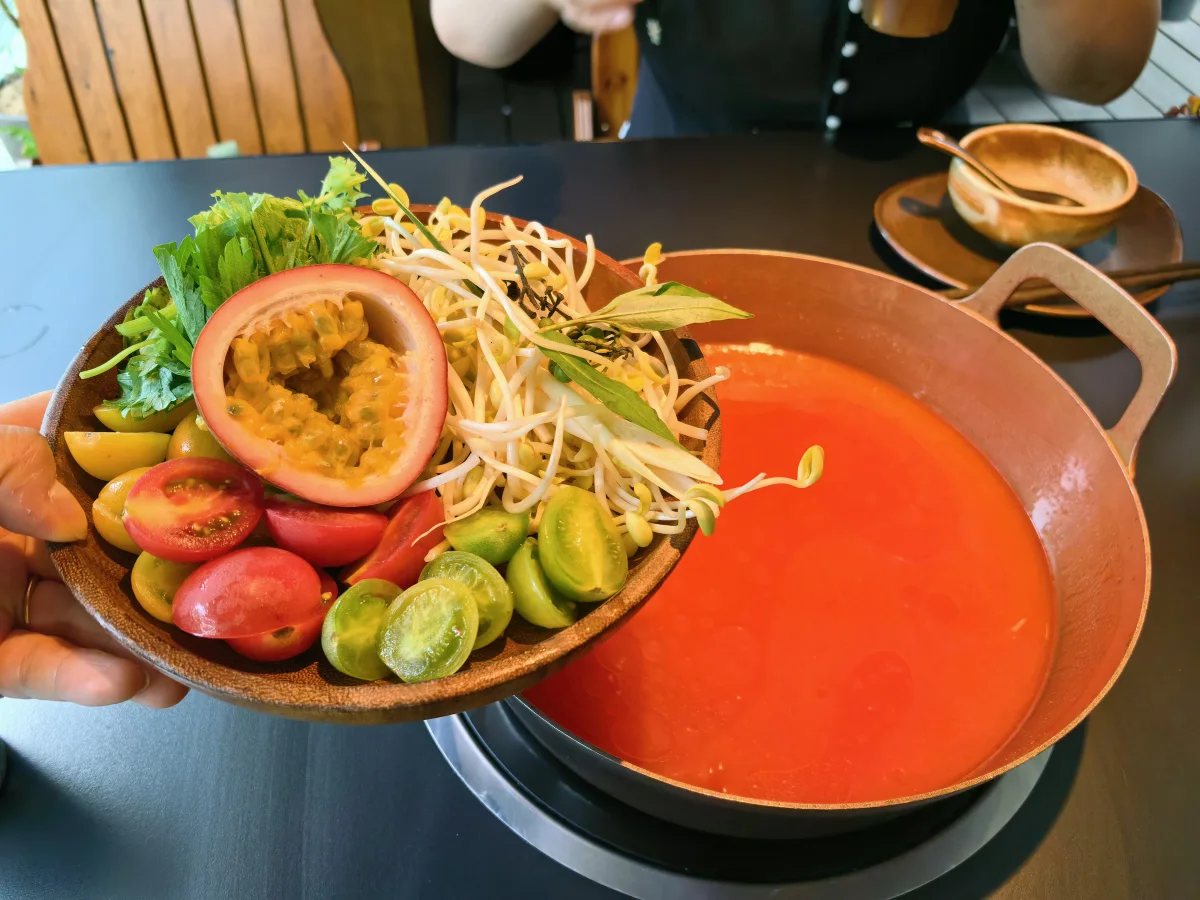
Its sourness does not come from vinegar. Yang Jieling, a researcher from Jiangsu who lived in Kaili, told The World of Chinese that the vinegars she grew up with have “a slightly aggressive edge,” while this is “clean and bright, almost alive.” Xinhua sums up Kaili sour soup as clean and true in its sourness, deep and lingering in its heat, and moderate in salt. The white soup is mellow, with a sweet finish and a smell of rice; the red one is fuller and more pungent in its sourness, with a light chili heat. Next to the fiery, oily bases of Sichuan and Chongqing it is a lighter pot, and no two jars taste quite the same.
Two local aromatics finish the meal. Litsea (木姜子), a small, peppery berry with a lemony scent, is fermented into red sour soup, and its oil goes into the dip. Fish mint (折耳根), the crunchy root of Houttuynia, tastes strongly fishy and a little medicinal; many first-timers find it hard going, and it is easy to leave out.
02
“Sour in place of salt”
Local tradition holds that sour soup began as a substitute for salt.
Guizhou has no salt of its own, and for most of its history transport was hard and salt scarce and dear. A local saying puts it plainly: 要吃盐,过大年, “salt only at New Year.” The answer was to season with sour soup and pickles instead, 以酸代盐, “sour in place of salt.” Nobody knows exactly where the soup itself began; one popular story has early Miao cooks finding that rice-washing water left by the stove had turned pleasantly sour.
Nearly every household in Qiandongnan still keeps a sour soup jar, and girls traditionally learned to make sour soup and sour soup fish from their mothers before they married. Salt is no longer scarce, but the habit stayed, and people still drink a bowl of white sour soup against the summer heat or after a night of drinking. Kaili sayings keep it alive: 三天不吃酸,走路打蹿蹿, “go three days without sour and you will walk unsteadily,” and 宁舍家财,不舍酸汤, “give up the family fortune before the sour soup.”
The food writer Yao Yun, in a 2020 book on sour food, argued that for all of Shanxi’s fame for vinegar, the place where sourness is truly the essential everyday taste is Guizhou. By one estimate the province has more than a hundred kinds of sour, from salt sour to shrimp sour and stinky sour, nearly all made by fermentation; the shrimp and stinky kinds are commoner in the south, the tomato-and-chili red sour in the southeast.
03
White sour and red sour
There are two main sour soups, and they start from very different things.
White sour soup is fermented rice water. Glutinous-rice water is cooled, poured into a jar smoked with burning rice straw, primed with a ladle of old sour soup and left by the stove or the fire at 30–35°C for five or six days, until it is clear, fragrant and sour with a sweet finish. At home it is simpler: each day the water left from cooking rice goes into the jar, which is sealed when six or seven tenths full and is ready three to five days later. In Guizhou the white soup is the older, everyday one.
Red sour soup is fermented tomato and chili. It came later, after tomatoes and chilies, both from the Americas, reached Guizhou. It is made from maolaguo, 毛辣果, the local name for a small, half-wild tomato, and red chilies, with young ginger, garlic, Sichuan pepper, litsea and mint. The tomatoes are fermented in clay jars with salt and baijiu; the chilies are chopped and sealed separately with salt and liquor, kept well away from any oil; once the tomatoes have softened, the two are mixed and fermented again. Traditionally the red sour sits in its jars for half a year or more. Another method blends everything to a paste, seasons it and seals it for at least a month, and finished red sour keeps best at 10–18°C. The tomato has become a crop in its own right: at the end of 2025 a variety called Kaisuan No. 1 became the first maolaguo registered nationally.
These are only the two best known. Kaili has at least eight kinds of sour on the market: white and red, then a sour of fermented chili (糟辣), a tomato sour, a fermented fish-paste sour (鱼酱酸), a pickling-brine sour, a fruit sour and a salted-vegetable sour. Wengdi, a village on the edge of Kaili known for its sour soups and its many professional cooks, is called the “sour soup model village” and is building a sour soup museum and cave cellars to age it.
| White sour 白酸汤 | Red sour 红酸汤 | |
|---|---|---|
| Made from | Rice water, with old sour soup as starter | Small local tomatoes and red chilies, with ginger, garlic, Sichuan pepper, litsea |
| Fermentation | 3–6 days, warm | Half a year or more; at least a month (paste method) |
| Taste | Clear, mellow sour, sweet finish | Bright red, sour and lightly hot |
| Used for | Everyday soups; the base of sour soup fish | Sour soup fish and the red hot pot |
04
Sour soup fish at the table
A sour soup fish meal has two halves: the pot and the dip.
At the harvest festival in Jidao, a Miao village near Kaili, Chen Qin starts with white sour soup, stirs in a little red sour, seasons it with bean sprouts, tomato and salt and brings it to the boil; then fresh rice-paddy fish go in, with tofu, vegetables and a chili dip on the table. The fish come from the rice-and-fish farming of the prefecture, which is credited with keeping the dish alive. Wu Duqin, the dish’s listed heritage bearer, brought Miao sour soup fish to the banquet table in 1986 and founded the Lianghuanzhai restaurant in Kaili, where diners eat the fish first while it is tender, then drink a bowl of the soup; sliced meat, vegetables and tofu can go into the pot after. The order has a reason. The red soup arrives bubbling hard; the fish, lifted out in slices, is tender and soaked through with sour heat; and by the time it is gone, the soup has cooked long enough to be at its best, so a bowl is ladled out at once. The house soup, brewed by hand, carries a faint green, plant-like fragrance.
The dip, 蘸水, is the other half. It is grilled chili powder, litsea oil and fish mint, loosened with a few spoonfuls of the boiling sour soup. Yang Jieling found that the grilled chili “is not pungent, but offers a mild and lasting taste.” Every piece of fish goes through the dip on its way to the mouth.
From the same meal
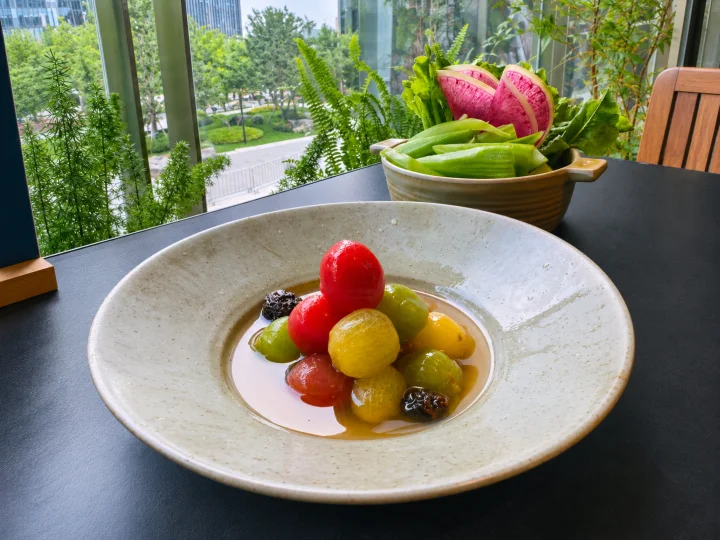
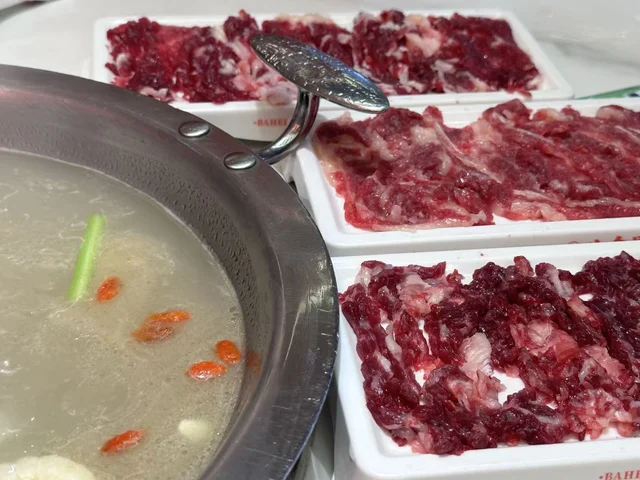
Our own photograph from the same sour soup meal as the photo at the top of this page.
05
Ordering a sour soup pot
Know the names on the menu, and decide how sour you want it.
In Kaili, sour soup restaurants line the streets, and the day often starts with a bowl of sour soup rice noodles, 酸汤粉. At a food market, the most traditional sour soup dish, sour soup with cabbage, mung bean sprouts and sometimes tofu, costs two or three yuan. On a restaurant menu, 红酸汤鱼 is fish in red sour soup and 白酸汤鱼 the milder white version; 酸汤牛肉 is beef in sour soup, and 鱼酱酸 a pot seasoned with fermented fish paste.
Outside Guizhou the pot is usually red, because it looks the part, and some restaurants turn the sourness down for general tastes and add more if you ask; one Beijing white-sour restaurant even stirs in a little red soup just for the color.
If you don’t eat chili
Order white sour soup and ask for the dip without chili; the white soup itself has none.
If fish mint is too much
Ask for 不要折耳根, no fish mint, in the dip.
For one or two people
A bowl of sour soup rice noodles is the quick, cheap way to try it.
06
From Kaili to the whole country
In 2023 sour soup became the surprise hit of China’s restaurant trade.
In 2023 Guizhou sour soup became the restaurant trade’s “dark horse,” “anything goes with sour soup” was Guizhou’s summer fashion, and related topics reached nearly 450 million impressions on social media. By 2025 the industry tracker China Restaurant Insider counted about 9,000 Guizhou sour soup hot pot restaurants across China, roughly two and a half times as many as in 2022.
The prefecture has turned the jar into an industry. Kaili red sour soup became a national geographical indication product in 2013, the China Cuisine Association named Kaili China’s “capital of sour soup cuisine” in 2016, and the prefecture has published group standards for Kaili sour soup fish and sour soup beef. Industry has changed the soup itself, too: Lianghuanzhai’s company says the automated line it opened in 2022 ferments red sour in thirty days instead of the year its traditional method took. The jar has also become a product line: sour soup rice noodles, wheat noodles, ready meals and even sour soup drinks, sold as far as North America, Southeast Asia and Oceania.
The pot traveled early. According to the prefecture’s industry bureau, Kaili sour soup fish was already being served in Vietnam, Laos, Myanmar, South Korea and Singapore by the late 1980s, and a Guizhou sour soup fish sign now hangs near the royal palace in Madrid. Away from Guizhou, though, the white soup is hard to make. It needs the right water, warmth and humidity; Meng Jun, a Kaili native who runs a white sour soup restaurant in Beijing, only got it right after repeated attempts and with his mother’s help, and he puts on a mask and gloves before opening the jar, to keep oil and anything else that could spoil the broth out of the jar. Back home, he says, nobody argues about which sour soup is authentic: “you say which type you prefer, sourer or spicier.”
| Year | What happened |
|---|---|
| 1986 | Wu Duqin brings sour soup fish to the banquet table |
| 2013 | Kaili red sour soup becomes a national geographical indication product |
| 2016 | Kaili named China’s capital of sour soup cuisine |
| 2021 | Kaili sour soup fish craft added to the national intangible heritage list |
| 2023 | Sour soup hot pot becomes a national dining trend |
| 2025 | About 9,000 sour soup hot pot restaurants in China |
07
Sour soup fish at home
With jars of white and red sour soup, the pot itself is quick.
Bottled sour soup bases are sold in every Kaili market and now well beyond Guizhou. This follows the Miao home method, which is built on white sour soup; plain water in its place makes a much thinner pot. In Kaili the fish is a whole rice-paddy fish.
White sour soup, red sour soup to taste, bean sprouts, tomatoes, salt, a whole fresh freshwater fish, tofu, green vegetables; for the dip, grilled chili powder, litsea oil and fish mint (optional).
- 1. Build the broth
Put the white sour soup in the pot and stir in red sour soup to taste.
- 2. Season
Add bean sprouts, tomato and salt, stir and bring to the boil.
- 3. Cook the fish
Slide in the fish and cook until the flesh turns opaque and lifts from the bone.
- 4. Make the dip
Mix the grilled chili powder, a few drops of litsea oil and chopped fish mint, then loosen with two or three spoonfuls of the boiling soup.
- 5. Eat at the table
Eat the fish through the dip, drink a bowl of the soup, then cook tofu and greens in the pot.
08
More hot pots
Other hot pots from around China.
Chinese hot pot guide
Red broth, clear soup, sour soup and congee: China’s hot pots compared.
Compare China’s hot pots →Sichuan hot pot
The numbing, beef-tallow pot of Chengdu and Chongqing.
Read about Sichuan hot pot →Coconut chicken hot pot
Hainan’s gentle pot of coconut water and chicken.
Read about coconut chicken hot pot →Hot pots from other regions
FAQ
Questions about Guizhou Sour Soup Hot Pot
What makes the soup sour?
Fermentation, not vinegar. White sour soup is fermented rice water; red sour soup is fermented small tomatoes and red chilies.
Is Guizhou sour soup hot pot spicy?
Red sour soup is sour and lightly hot; the chili dip adds more heat. White sour soup is made from rice water and has no chili.
Why does the pot I had outside Guizhou taste different?
Outside the province most restaurants serve the red soup, which looks the part, and some turn the sourness down for general tastes. In Guizhou the white soup is the older, everyday one, and every jar tastes a little different.
Is there a vegetarian version?
Yes. Plain sour soup with vegetables is one of the basic Miao sour soup dishes, and a market bowl of sour soup with cabbage and bean sprouts is the most traditional of all.
Who makes sour soup fish?
It is handed down among the Miao of Qiandongnan, southeast Guizhou, and is cooked across the prefecture. Its craft is on the national intangible heritage list.
How should bought red sour soup be stored?
Finished red sour keeps best at 10–18°C. For a bottled base, follow the label.
Sources
Sources and further reading
- 1 Kaili sour soup fish (凯里酸汤鱼制作技艺), national intangible cultural heritage list, item 1525 (2021) (in Chinese)China Intangible Cultural Heritage Network, China National Intangible Cultural Heritage Protection Center ↗
- 2 Huang Xian, “A jar of good sour soup, a spoonful of Guizhou” (一坛好酸汤 一勺知黔味) (in Chinese)People’s Daily Overseas Edition (October 31, 2024) ↗
- 3 “Kaili’s eight sours: red sour” (贵州“凯里八酸”之红酸:坛中烈火) (in Chinese)Xinhua (November 1, 2025) ↗
- 4 Chen Dan, “A thousand years of sour soup, an industry heading for ten billion” (酸汤越千年 产业奔百亿) (in Chinese)Guizhou Daily, via China Daily (January 22, 2025) ↗
- 5 Qian Shihao, “Qiandongnan’s sour soup farms reach 500,000 mu” (黔东南州酸汤原料基地达50万亩) (in Chinese)Guizhou Daily, via China News Service (August 31, 2026) ↗
- 6 Tan Yunfei, “How Guizhou’s Sour Soup Went From Local Specialty to a Trending Flavor Across China”The World of Chinese (March 16, 2026) ↗
Last updated November 2026