
01
A jelly, a worm and a misleading name
The name means “earth shoot jelly,” and there is no shoot in it. Tusun is a local name for a small peanut worm, a sipunculid that lives in the brackish mud where rivers meet the sea along the coasts of Fujian. In Quanzhou people also call it 海蚯蚓, sea earthworm, which is closer to what it looks like: a ringed, brownish worm a few centimeters long that contracts when touched. English menus usually call the dish sea worm jelly. The worm moves with the tide: when the water goes out it burrows into the mud, and when the tide comes back it crawls out again.
It is easy to confuse with a relative. The sand worm (沙虫) is a different sipunculid that lives in sandy shores. The tusun worm lives in soft tidal mud, often around mangrove roots, and its skin is tougher than an earthworm’s, more like firm rubber. Cooks prize it for the gel in its body wall, which is what lets the broth set.
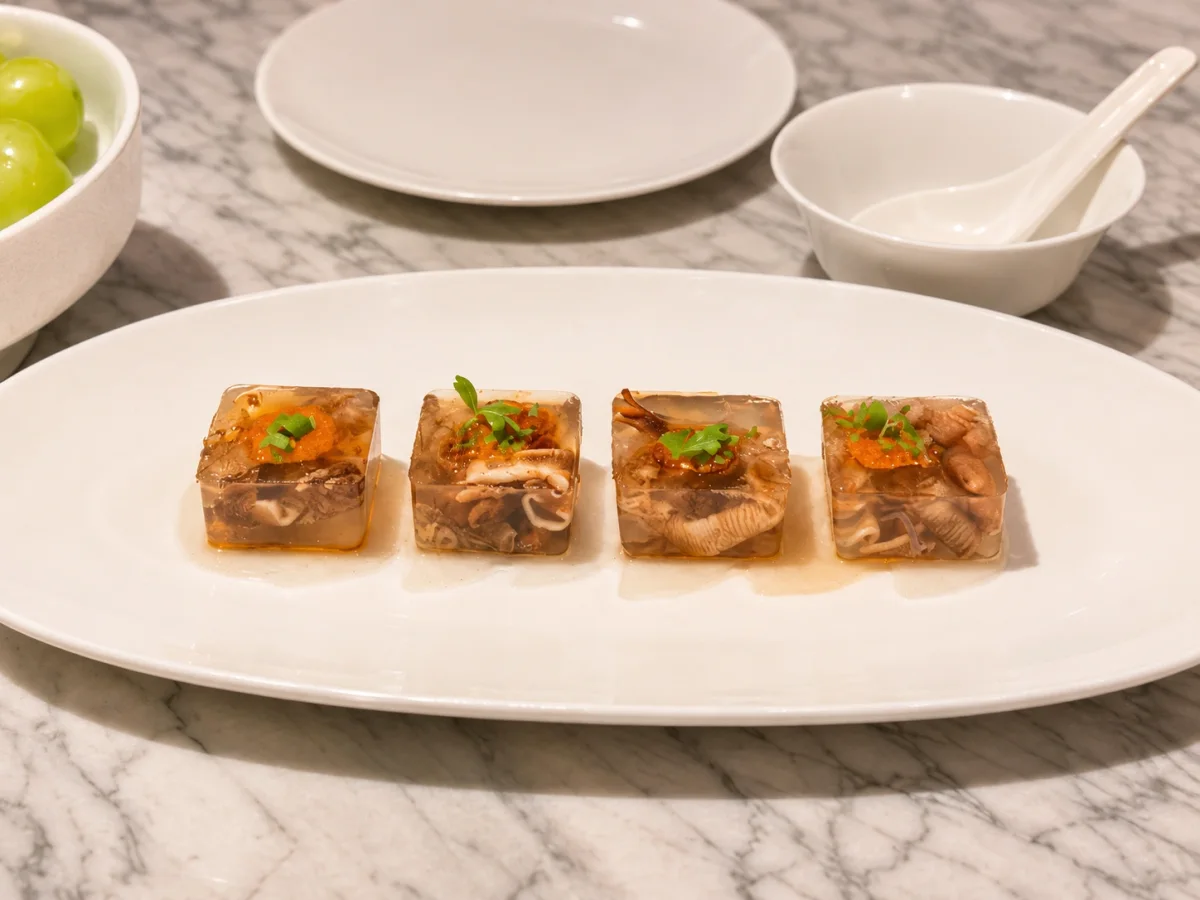
A tusundong comes out of its cup as a pale dome or square, clear to slightly cloudy, with three or four worms suspended inside. Vendors put the paler, peeled worms on top where they can be seen. The jelly is firm enough to pick up, cool and slightly springy, and mild on its own. Everything else comes from the sauce.
02
Four hundred years of names in the records
The worm appears in Fujian records long before anyone wrote down the jelly. In the late Ming, Tu Benjun’s catalog of Fujian seafood lists 泥筍 as shaped like a small bamboo shoot, growing in rivers, ugly to look at and sweet to eat, also called 土筍. In the early Qing, Zhou Lianggong, who served as an official in Fujian, wrote that he often ate tusun jelly there and found its taste fresh and unusual, though he had never seen what the creature looked like until he read a description in a Ningbo gazetteer.
A 2025 survey of the old texts in Quanzhou Evening News collects the worm’s other names: 沙蒜, 沙噀, 涂笋, 涂蚕, 涂虬. It traces the earliest likely mention to the Tang dynasty, when Liu Xun described a “sand chopstick” dug from the shore by stepping softly, because the creature retracts into the sand at any noise. Quanzhou diggers still go about it the same way. The Qianlong-era Jinjiang county gazetteer gives the clearest early recipe in five characters: the worm “can be boiled clean into a jelly.” Two or three centuries ago, Quanzhou people called the dish 涂蚕冻 or 涂虬冻 after the mudflats.
Zhou Lianggong’s note says more than that he liked it. Once he had read the Ningbo description of 沙噀, a soft, headless creature that shrinks when touched and is boiled with spices, he decided that was what he had been eating, and that the Fujianese called it a shoot by mistake. He also passed on a warning: the creature is very “cold” in nature, and eating too much of it could bring on a sudden bout of diarrhea. In the nineteenth century the Fujian scholar Liang Zhangju described it as shaped like a large earthworm, a formless thing with no head, tail or eyes, and its taste as superb.
The Quanzhou historian Lin Jianqiang, quoted in the 2025 article, reads the modern name as a softening of the old ones. 土 is the colloquial form of 涂, the tidal flat where the worm lives. 笋 compares it to a bamboo shoot, a word that suggests freshness and spring growth and avoids saying “earthworm.” The older names 涂蚕 and 涂虬, mudflat silkworm and mudflat dragon, describe the animal more bluntly.
Two more records place the worm in Quanzhou specifically. The Anhai town gazetteer, compiled in the early Qing, calls it sweet, clean-tasting and good fresh or dried, and repeats that it “can be boiled clean into a jelly.” In the late Qing, Shi Hongbao wrote that the worm grows in holes in the sand of the beach and was then found on the Quanzhou shore. Besides jelly, cooks stir-fried it, made soup from it, and dried it to simmer with American ginseng and lean pork as a tonic soup.
Popular accounts attribute the dish to the troops of Zheng Chenggong or Qi Jiguang, soldiers short of food who boiled the worms and found the soup had set by morning. Those stories are legends. The written record points to a coastal food that was cooked and set long before anyone attached a famous name to it.
03
Gutted by hand, set by its own gel
Most of the work is cleaning. Each worm is slit and its gut pushed out, by hand or with a chopstick, and the body is rubbed and rinsed until no sand is left. In a Xiamen workshop, the gutted worms go through rounds of washing in a machine until the water runs clear. Grit is the worst fault a tusundong can have, so this step takes most of the time.
The cleaned worms are boiled in salted water and stirred so they do not tangle into a clump. As they cook, the body wall gives up a slippery gel into the water. One cook who tried it at home boiled the worms for about forty minutes, plunged them into iced water to firm them, and strained the broth before reducing it. The first batch never set: the worms had been scrubbed so hard that they lost too much of the slime that carries the gel.
The hot broth is poured into small cups or molds, a few worms are dropped into each so every portion gets its share, and the cups go into a cold room. Nothing else is added in the workshop version. In Anhai, the Quanzhou town best known for it, shops use fresh worms and their own gel; some versions sold in tourist streets are helped along with gelatin.
At Ah Wang Tusundong (阿望土笋冻), a century-old shop in Anhai, the owner buys worms at three in the morning and starts cooking at four, so the jelly is on sale early. Nothing is added. The owner told the writer Chen Zhou that the hard part is invisible: worms from different places and seasons differ in plumpness and gel, so the amount of water and the boiling time have to change with them, and that judgment is passed on by word of mouth. Stir a finished cup and the jelly breaks apart, because only the worms’ own gel holds it together.
04
The sauce does most of the talking
On its own the jelly is cool and faintly salty, with a little taste of the sea. That is why every stall offers sauces. The usual set in Xiamen is garlic soy sauce, a sharp green mustard, a sweet chili sauce (甜辣酱, the thick, sweet-sour southern Fujian kind), vinegar and peanut sauce. Pickled white radish and cilantro go on top for crunch and freshness. In Anhai, Ah Wang’s shop has customers stir in their own mix of aged vinegar, soy sauce, garlic paste, shredded ginger and chili sauce; the more particular southern Fujian way adds young cilantro and sweet-sour pickled radish.
The mustard is the strongest of the sauces, so take a little at first. Garlic soy suits the briny taste of the worm, and the sweet chili sauce is sweet with a little sourness. Eat it cold, soon after it is dressed.
Bite through the jelly and you reach the worms. They are crunchy and mildly sweet. People who order it once for the dare tend to find it less strange than they expected. In southern Fujian it is a summer snack, often bought in the evening.
05
Ordering in Xiamen and Anhai
Anhai, on Anhai Bay in Jinjiang near Quanzhou, is the largest producer and the town most associated with the dish. From the 1950s, Anhai vendors made a living carrying tusundong through the streets on shoulder poles, and its making technique is now on Fujian’s provincial intangible heritage list, after Quanzhou listed the Anhai method in 2013. Twenty to thirty households in Anhai’s Xi’an village (西垵村) still make it the traditional way, with orders coming from Xiamen and Zhangzhou. The Anhai mudflats themselves were spoiled by industrial wastewater long ago, so even Anhai’s makers now buy worms from nearby coasts. In Xiamen, Tianhe Ximen Tusundong sells it in large, medium and small cups or sliced from a block, with five sauces on the counter.
Prices are low. A bowl cost about ¥8 in 2022. Count the worms before you pay if you are comparing stalls: the jelly is cheap to make, and the worms are what cost money. A good cup has several visible worms; a sparse one is mostly broth.
Along the Fujian coast, from Fuding and Putian to Quanzhou, Xiamen and Zhangzhou, and across the strait in Taiwan, people eat tusundong, and Haicang in Xiamen, Shima in Longhai and Anhai each claim the real thing. Tusundong is also made in workshops and sold chilled in sealed cups, the same jelly set in molds and kept cold until sale. For more of the region’s food, see the Fujian food guide.
| Format | Where | Notes |
|---|---|---|
| Single cup or dome | Street stalls in Xiamen and Quanzhou | Turned out and dressed to order |
| Large, medium or small | Tianhe Ximen Tusundong, Xiamen | Size by cup; sauces on the counter |
| Sliced from a block | Tianhe Ximen Tusundong, Xiamen | Easier to share |
| Workshop cups | Made in molds and kept in a cold room | Sold chilled |
06
If you are nervous about the first bite
Order a small cup with all the sauces and eat it in two bites, jelly and worm together. The sauces and the cold make the first taste familiar, and the crunch of the worm comes after. If you want to try it plain, ask for the sauce on the side.
People with shellfish allergies should ask before eating it; the worms are marine invertebrates, and the jelly is often served alongside other seafood. Eat it cold.
In Quanzhou the dish has kept the method the old gazetteer described: boil the worms clean and let them set. That is still the test of a good one. The jelly should be clear and springy, the worms crunchy and free of grit, and the taste of the sea faint under the garlic and mustard.
Fujian classics
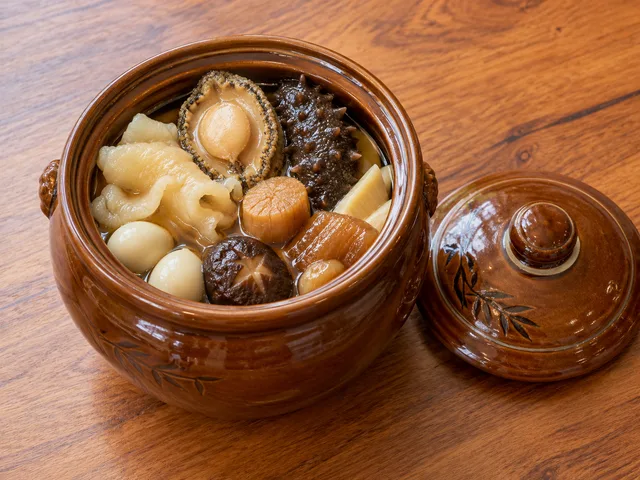
- Buddha Jumps Over the Wall
Banquet jar soup · Banquets and New Year dinners
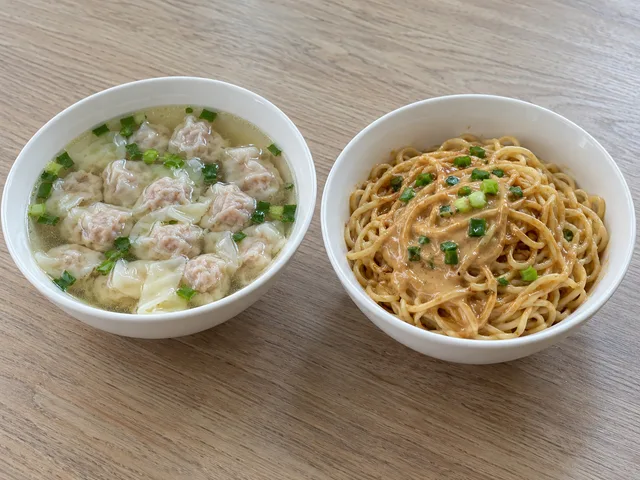
- Shaxian Bianrou and Banmian
Wontons and tossed noodles · Any meal, often late at night
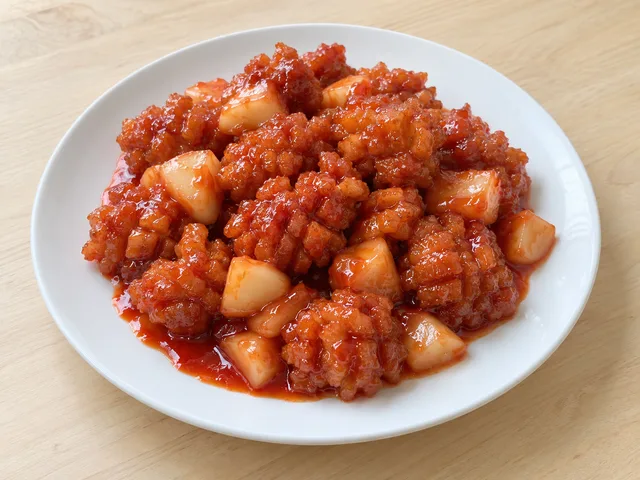
- Lychee Pork
Sweet-and-sour fried pork · Family meals and banquets
FAQ
Questions about Tusundong (Sea Worm Jelly)
What is tusundong made of?
Small peanut worms (sipunculids) from Fujian’s tidal mudflats, cleaned, boiled and set in their own gel. No bamboo shoot is involved; tusun is the local name for the worm.
Is gelatin added?
Traditional versions are set by the gel the worms release when boiled. Some cheaper tourist versions add gelatin.
What does it taste like?
Cool, mild and faintly salty, with crunchy worms inside. Most of the flavor comes from garlic soy, mustard, sweet chili sauce, vinegar and pickled radish.
Where is it from?
Southern Fujian. Anhai in Jinjiang, near Quanzhou, is the best-known producer, and it is sold widely in Xiamen.
Is it the same as sand worm?
No. Sand worm (沙虫) is a larger sipunculid from sandy beaches in Guangxi and Guangdong. Tusun is a smaller worm from tidal mud.
How much does it cost?
A few yuan for a small jelly at a Quanzhou stall; about ¥8 a bowl in 2022.
Sources
Sources and further reading
- 1 Zhou Lianggong, Min Xiao Ji, vol. 1, “Tusun” (Qing dynasty, in classical Chinese) (in Chinese)Wikisource ↗
- 2 Tu Benjun, Min Zhong Hai Cuo Shu, “Nisun” (Ming dynasty, in classical Chinese) (in Chinese)Wikisource ↗
- 3 Tracing Quanzhou foods in old texts: the many names of tusun and the old method of boiling it clean into jelly (in Chinese)Zhang Junlin, Quanzhou Evening News (October 17, 2025) ↗
- 4 Fujian food: tusun dong, and why the “shoot” is not a shoot (in Chinese)Ourchinastory, Chinese Culture Research Institute, Hong Kong (2023) ↗
- 5 Sea Worm JellyFrank Kasell, A Field Guide to Chinese Street Food (2015) ↗
- 6 Chen Zhou, Min Weir (The Taste of Fujian), chapter “Tusun grows out of the sea” (in Chinese)SDX Joint Publishing, 2021; WeRead edition ↗
- 7 Tianhe Ximen Tusundong in Xiamen: three sizes, sliced jelly and five sauces (video, in Chinese)Danniu Shi Zouqi (丹牛食走起), Bilibili (2023) ↗
- 8 Inside a Xiamen tusundong workshop: gutting by hand, washing, boiling and setting with no additives (video, in Chinese)Amy Aimifan (Amy艾米饭), Bilibili (2022) ↗
- 9 Making tusundong at home from fresh worms: cleaning, gutting, boiling with salt and setting in molds (video, in Chinese)Bilibili (2022; account since closed) ↗
- 10 Jinjiang food: Anhai tusundong made from fresh worms, set without gelatin (video, in Chinese)Mixue Shiji (米雪食记), Bilibili (2024) ↗
- 11 The mud worm behind tusundong, and a home attempt: 40 minutes of boiling, an ice bath and straining (video, in Chinese)Tansuoba Yuyuan (探索吧芋圆), Bilibili (2025) ↗
Last updated November 2026