
01
Bricks and steel beams
Shaxian people call bianrou the bricks and banmian the steel beams of their snack industry: two cheap dishes on which tens of thousands of shops were built.
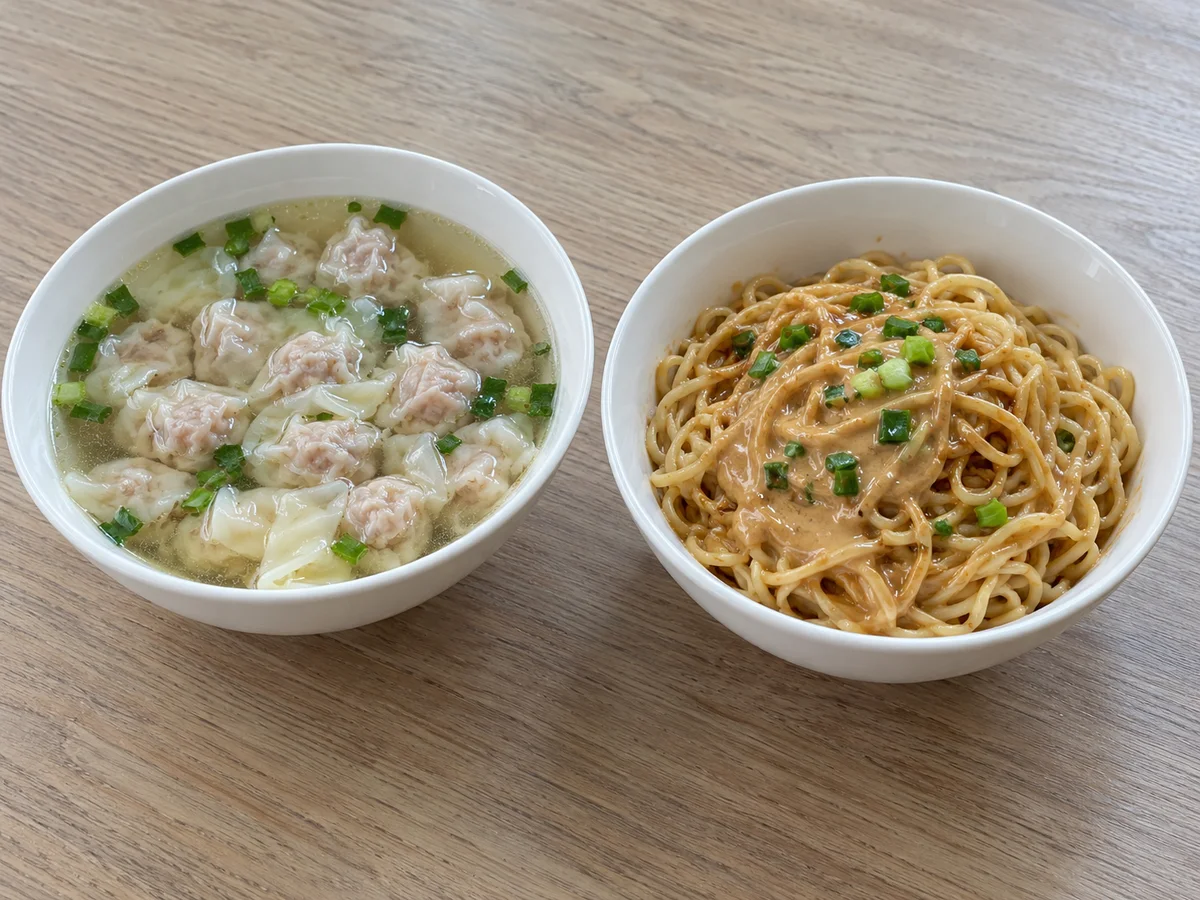
Almost every Chinese city has a Shaxian snack shop, usually with a short wall menu and a few tables, and almost every customer orders the same thing: a bowl of 扁肉 (bianrou, “flat meat”), small wontons in a clear broth, and a plate of 拌面 (banmian), noodles tossed in peanut sauce. Chinese internet users joke that the shops are the “Shaxian Grand Hotel,” open late, cheap and always there for office workers, students and gym-goers. In 2023 there were more than 88,300 of them, with sales of over 55 billion yuan a year and more than 300,000 jobs.
The two dishes are the simplest things on the menu, which is why they traveled. Both can be made from a few prepared ingredients in a minute or two, and the flavors are mild: salty-savory, a little sweet, nutty, never hot unless you add chili. In Shaxian itself, people say there are more than two hundred kinds of snacks, and that “real Shaxian snacks have never left Shaxian.”
02
Bianrou: pork pounded into a springy paste
What makes bianrou different from an ordinary wonton is not the wrapper but the filling.
Traditional bianrou filling is lean pork beaten with a wooden mallet or stick, for a long time, until the fibers break down into a smooth, elastic paste, with a little salt and seasoning; Shaxian’s snack mascot even holds the pounding stick. Cooked, the filling is springy and almost crunchy, closer to a fish ball or a Chaozhou beef ball than to the soft minced pork of a Jiangnan wonton. A dab of it goes into a very thin square wrapper, which is pinched closed so the skin flutters loosely around a small, firm center, and the wontons are boiled and served in a clear broth seasoned with salt, pepper, scallion and a little fried-garlic oil.
In Shaxian the filling is generous and bouncy; in some chain shops elsewhere it has shrunk to a dot no bigger than a fingernail, and some menus simply translate bianrou as “small wontons.” Home cooks and many shops now make the paste in a blender with crushed ice and a pinch of baking soda to get the same spring in a few minutes, and Shaxian’s own factories turn out hand-pounded-style filling for franchise shops. Bianrou can also be eaten dry, tossed in peanut sauce like the noodles, or deep-fried.
03
Banmian: peanut sauce, scallion lard and sweet soy
Banmian is three sauces and a handful of noodles, mixed fast while everything is hot.
The noodles are thin, springy wheat noodles, traditionally alkaline, boiled just past al dente and lifted onto a plate with a splash of the cooking water. On top go a spoon of peanut sauce, a little seasoned soy and a little scallion lard. The peanut sauce is not raw peanut butter: Shaxian cooks grind fried peanuts, and home versions fry peanut butter in very hot peanut oil until it darkens to a roux-like brown, which gives it a toasty, almost savory smell. The soy is light soy boiled with water and sugar. The scallion lard is lard in which sliced scallions have been fried brown and crisp.
The plate is mixed at once, before the sauce cools, until every strand is coated; it should be glossy and loose, not a stiff paste. Chinese Cooking Demystified’s version uses one tablespoon of peanut sauce, two teaspoons of seasoned soy, a teaspoon of scallion lard and two teaspoons of water for 60 grams of dried noodles. Shops sell it as 飘香拌面, “fragrant tossed noodles,” and some in Shaxian add garlic; diners add vinegar and chili sauce from the table.
04
From a mountain county to 79 countries
Shaxian’s food is old; its snack empire is about thirty years old.
Shaxian lies in the hills of Sanming in central Fujian, a trading town since the Eastern Jin. Its cooking, like much of Fujian’s, is traced to migrants from the Central Plains, and China’s heritage authorities say its snacks flourished under the Tang and Song and peaked in the Ming and Qing; there are more than a hundred kinds, made by pounding, grinding, fermenting, steaming and frying.
The national spread began in the 1990s. As China urbanized and millions of migrant workers moved to the cities, Shaxian families opened small shops selling the cheapest filling food they knew; the saying was that a yuan got you through the door, two filled you up and five (or three, in another version) fed you well. Most were husband-and-wife shops. The county government backed them with a snack office, loans and more than twenty years of snack festivals, and more recently pushed standardized shops, central kitchens and an industrial park making frozen dumplings, prepared foods and sauce packs. Shaxian snack-making was added to China’s national list of intangible cultural heritage in 2021. By 2023 there were more than 88,300 shops, more than 3,000 of them in Shanghai alone, but only 3,760, under 5 percent, met the county’s new standard. Abroad, the brand is registered in 75 countries and regions and had 238 overseas outlets by 2025, from a first shop in France in 2018 to Tokyo and a flagship in Riyadh.
05
What you only get in Shaxian
Locals say that real Shaxian snacks never left Shaxian, and a visit proves them partly right.
In Shaxian the everyday “three great kings” are banmian, bianrou and 芋饺, taro dumplings: triangular dumplings whose wrapper is mashed taro worked with glutinous-rice flour, a way of making dumplings without wheat that locals connect with northern migrants. The pleated dumplings sold steamed in chain shops everywhere, nicknamed 老鼠饺 (“mouse dumplings”) for their shape, are boiled in Shaxian and dipped in a sauce made fiery with yellow chili; inland Shaxian eats a little hotter than the coast. 水晶烧卖 are translucent dumplings of fine vermicelli and a little pork, nothing like Cantonese siu mai, and the town of Xiamao makes a sweet version filled with laver, peanuts, pork fat and crushed sugar cake. 金包银, “gold wrapping silver,” is braised tofu with a meat filling.
Shaxian’s snack world splits into two schools: the town center, Chengguan, and Xiamao, whose Yubang village calls itself “the first village of Shaxian snacks.” Locals finish with 青草冻, a dark herbal jelly cut by hand and drunk with rock-sugar syrup, mint and spring water, or a 状元饼, a sesame cake filled with pork or preserved vegetables, sold on one old lane for 2.5 yuan in 2026.
| Snack | In chain shops elsewhere | In Shaxian |
|---|---|---|
| Bianrou 扁肉 | Small wontons, tiny filling | Big, springy pounded filling |
| Banmian 拌面 | Peanut sauce and soy | Peanut sauce, sometimes garlic; made to order |
| Pleated dumplings 蒸饺 | Steamed, dipped in vinegar | Boiled “mouse dumplings,” dipped in yellow-chili sauce |
| Taro dumplings 芋饺 | Rare | One of the three great kings |
| Shaomai 烧卖 | Rare | Crystal shaomai of vermicelli and pork; sweet shaomai in Xiamao |
| Soups 汤 | Small stew pots of soup | Stew pots, duck-blood tofu soup and smoked duck |
06
How to order
The classic order costs little more than a cup of coffee and takes five minutes to eat.
Order the pair
拌面 and 扁肉 together are the default: dry noodles and a soup to wash them down.
Add a third thing
Steamed dumplings, a braised duck leg or chicken drumstick, or a stew pot of herbal soup.
Mix the noodles at once
The peanut sauce sets as it cools; stir it through while the plate is hot.
Season at the table
Vinegar and chili sauce are on the table; pepper goes into the wonton soup.
Try them dry
Ask for 拌扁肉, bianrou tossed in peanut sauce instead of soup.
07
Where to eat in Shaxian
Shaxian’s best snack shops are small specialists, and the ones with heritage plaques are worth finding.
Large all-round shops serve dozens of snacks at once; specialists do one thing. For banmian alone there is Xiangzi Banmian (巷子拌面), which sells nothing else and offers a garlic version beside the peanut one; in February 2026 a diner paid 7 yuan for a large bowl and 6 yuan for a small bowl of bianrou at another shop, about 13 yuan for the pair. Toss the noodles and eat them as soon as they arrive: after a couple of minutes they turn dry. Li Ji Shaxian Snacks (李记沙县小吃) on Binhe Road, run by a recognized master of the craft and once Shaxian’s representative at the Shanghai Expo, serves more than thirty kinds and jams the street when it opens over the New Year. A-Lian Snacks, opened in 2008, is known for tofu balls stuffed with pork and mushroom and offers more than a hundred snacks. Look for plaques naming a “Shaxian snack technique inheritor” on crystal-shaomai shops, and for the old sesame-cake ovens on Banjie Lane. Xiamao town has its own sweet shaomai and loach soup with rice jelly.
08
Banmian and bianrou at home
For 2 people. Noodles: 120 g thin dried alkaline wheat noodles; 60 ml peanut oil and 60 g natural peanut butter; 3 tbsp lard and 10 g sliced scallion; 2 tbsp light soy, 2 tbsp water and 2 tsp sugar. Bianrou: 250 g lean pork from the hind leg, ½ tsp salt, white pepper, 100 g crushed ice, a pinch (about 1 g) of baking soda and a little garlic; 30 thin wonton wrappers.
- 1. Make the peanut sauce
Heat the oil until it just smokes, turn off the heat, stir in the peanut butter, then cook on low, stirring, until it turns a toasted brown. Cool.
- 2. Make the scallion lard and soy
Fry the scallions in the lard on medium-low for about 10 minutes until brown and crisp. Boil the soy, water and sugar together for a moment.
- 3. Make the filling
Blend the pork with salt, pepper and half the ice for three minutes, add the rest of the ice, garlic and baking soda and blend three minutes more, until springy and smooth.
- 4. Wrap and boil
Put a small dab of filling on each wrapper and pinch it closed. Boil until they float, and serve in hot water or stock with salt, pepper, scallion and a little garlic oil.
- 5. Toss the noodles
Boil the noodles just past al dente. For each plate, mix 1 tbsp peanut sauce, 2 tsp soy, 1 tsp scallion lard and 2 tsp noodle water with the hot noodles at once.
The peanut sauce and scallion lard keep for a week in the fridge. Without a mallet, the blender and ice give most of the spring of pounded bianrou.
09
More Fujian food, and other wontons
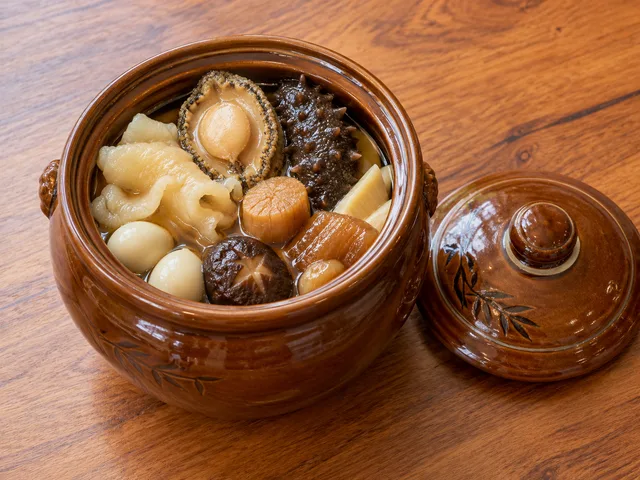
Buddha Jumps Over the Wall
Fujian’s grandest dish, from Fuzhou.
Read about Buddha Jumps →Wonton noodles
The Cantonese wonton, with shrimp, in a dried-fish broth.
Read about wonton noodles →Hot dry noodles
Wuhan’s other famous tossed noodle, with sesame paste.
Read about hot dry noodles →Fujian classics
- Buddha Jumps Over the Wall
Banquet jar soup · Banquets and New Year dinners
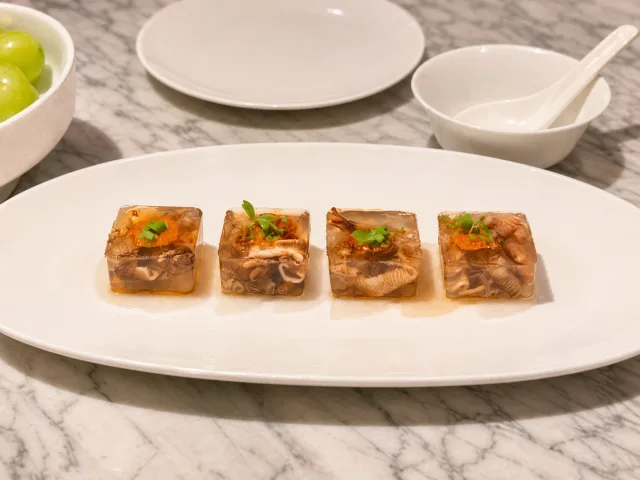
- Tusundong (Sea Worm Jelly)
Cold seafood jelly · Snack, summer evenings
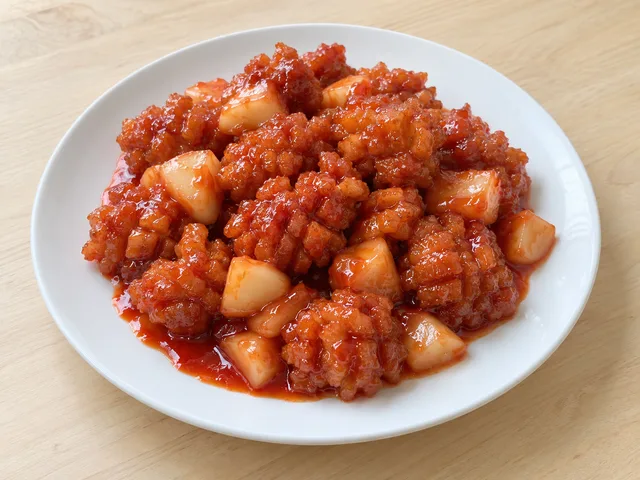
- Lychee Pork
Sweet-and-sour fried pork · Family meals and banquets
FAQ
Questions about Shaxian Bianrou and Banmian
What is Shaxian bianrou?
Small wontons from Shaxian in Fujian whose pork filling is pounded into a smooth, springy paste, served in a light broth.
What is the difference between bianrou and wontons?
Bianrou is a kind of wonton; the difference is the filling, pounded rather than minced, so it is bouncy like a fish ball.
What is in Shaxian peanut noodles?
Thin wheat noodles tossed with peanut sauce made from fried peanuts or fried peanut butter, sweetened soy and scallion lard.
Where is Shaxian?
A mountain district of Sanming in central Fujian.
How many Shaxian snack shops are there?
More than 88,000 in China by 2023, plus outlets in dozens of countries.
Why are Shaxian snack shops everywhere?
From the 1990s Shaxian families opened cheap snack shops in cities full of migrant workers, and the county government backed them with loans, training and standards.
How much do Shaxian snacks cost?
They are among the cheapest meals in China; a banmian-and-bianrou set cost about 13 yuan on a delivery app in 2024.
Are Shaxian snacks spicy?
Not as served; chili sauce is on the table. Shaxian itself uses a hot yellow-chili dip.
What are the “four great kings” of Shaxian snacks?
Lists vary: usually banmian, bianrou and steamed or taro dumplings, with a stew pot as the fourth.
Are Shaxian snacks national heritage?
Yes. Shaxian snack-making was added to China’s national intangible heritage list in 2021.
Sources
Sources and further reading
- 1 From street stalls to world markets: Shaxian snacks, their makers and their overseas shopsLi Yingxue, China Daily, on the Fujian Provincial People’s Government English site (2025) ↗
- 2 National intangible cultural heritage: Shaxian delicaciesChina Daily (2025) ↗
- 3 Policy support keeps Shaxian snacks breaking out: shops, sales, standard stores and the 1990s (in Chinese)Zheng Zhiwei, Minsheng Weekly, People’s Daily (2023) ↗
- 4 Xinhua Viewpoint: the rise of Shaxian snacks, from standard stores to 79 countries (in Chinese)Xinhua (2026) ↗
- 5 Shaxian peanut sauce noodles (沙县拌面): the peanut sauce, scallion lard and seasoned soyChinese Cooking Demystified (2024) ↗
- 6 Shaxian’s two schools, Chengguan and Xiamao: banmian, pounded bianrou, taro dumplings, boiled “mouse” dumplings and crystal shaomai (video, in Chinese)A Xing Tan Dian (阿星探店), Bilibili (2026) ↗
- 7 Why Shaxian snacks spread everywhere: how bianrou differs from small wontons (video, in Chinese)Hao Fan Tuan Zhang (好饭团长噜噜噜), Bilibili (2019) ↗
- 8 Shaxian bianrou at home: hind-leg pork, ice and a pinch of baking soda (video, in Chinese)Pu Xian Xiao Mei (莆仙小妹儿), Bilibili (2021) ↗
- 9 A Shaxian snack shop that jams Binhe Road when it opens: thirty kinds of snacks from a heritage master (video, in Chinese)Dong Wu Log (东吴log), Bilibili (2019) ↗
Last updated November 2026