
01
Pork that looks like lychees
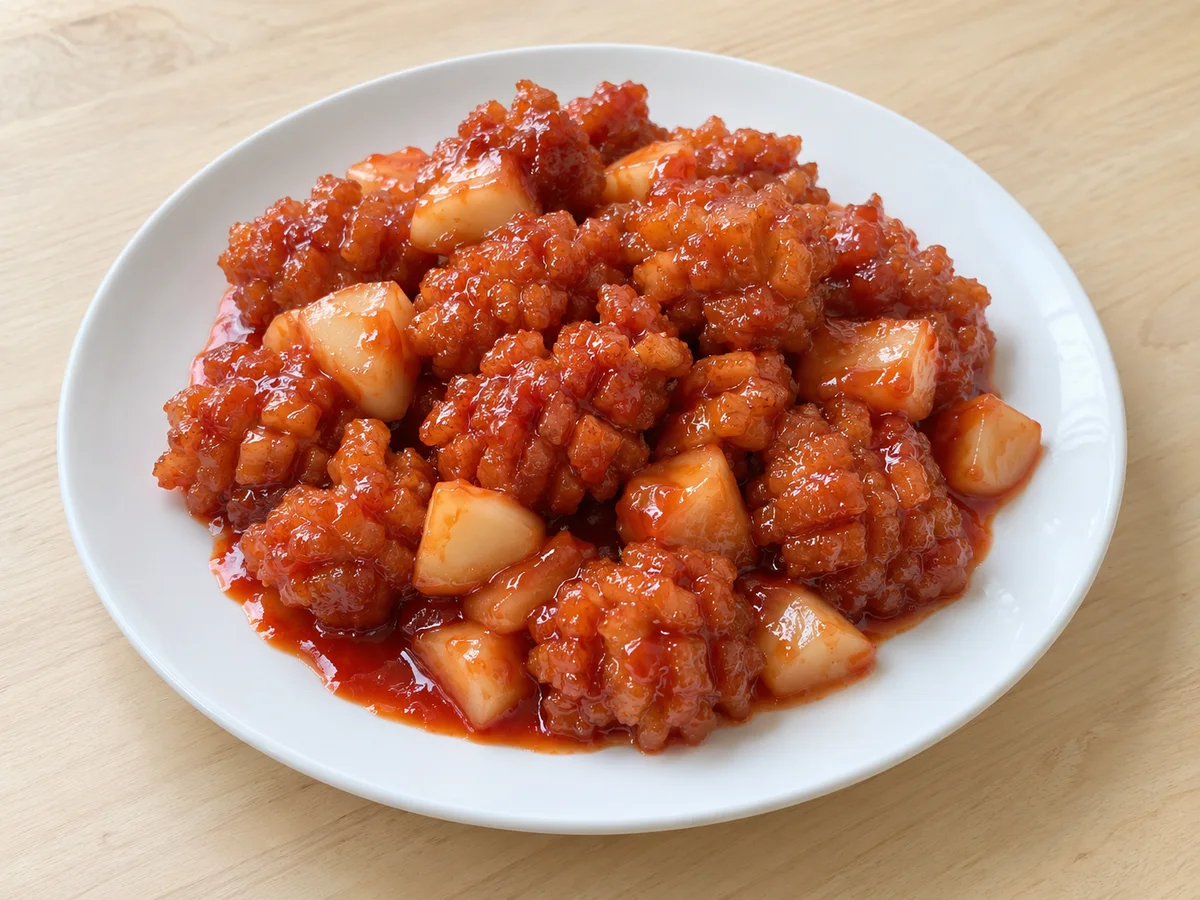
Lychee pork is named for what it looks like, not what is in it: there is no lychee in the dish.
Fuzhou is lychee country, and its cooks made a dish that imitates the fruit three ways. The color comes from red yeast rice, the same red mold-fermented rice used to brew Fujian’s red rice wine, which tints the pork a deep red. The shape comes from the knife: the pork is scored in a fine cross-hatch and wrapped around a nugget of water chestnut, and when it hits the oil it curls into a little ball whose scored surface looks like the rough skin of a lychee. The taste is meant to echo the fruit too, sweet with a sour edge, and the water chestnut inside is crisp and juicy like lychee flesh.
It is the best-known of Fuzhou’s many sweet-and-sour dishes, and the Fuzhou writer Chen Zhou calls it the classic of the style and unique to the city. Almost every Fuzhou household can make some version of it, and almost every Fuzhou restaurant has it on the menu.
02
Banquet, home and market lychee pork
In Fuzhou, “lychee pork” covers a family of dishes, from the carved banquet version to a bag of fried pork from the market.
The banquet version takes the most work: each piece of scored pork is rolled around water chestnut so it fries into a ball, and some restaurants list it as 夹心荔枝肉, “stuffed lychee pork,” to show that it is done the old way. At Juchunyuan in 2026 the traditional version and a dearer one wrapped around water chestnut were both on the menu, the cheaper at 58 yuan. The home version is simpler: pork cubes and potato chunks in batter, fried and tossed in the sauce, with the potato soaking up the sweet-sour glaze. Popular restaurants serve big platters of it with potato and a sharp vinegar sauce, and many cheaper places now color the sauce with ketchup.
Morning markets sell it cold by the bag, 3.3 yuan of red pork pieces in 2024, next to 醉排骨, “drunken ribs,” the fried spare ribs in sweet-sour sauce sold at 41 yuan a jin. Many Fuzhou families mix the two up: only years later did Chen Zhou realize that the holiday “lychee pork” Chen’s mother made, spare-rib meat and potato fried and tossed in sauce, was really drunken ribs, a dish found all over China, while lychee pork is Fuzhou’s alone. Chen accepts the looser use: once a dish is a classic, home cooks need not carve it, and anything cooked the same way, round, crisp and sweet-sour, gets called lychee pork.
| Version | Pork | Other ingredients | Where |
|---|---|---|---|
| Banquet 夹心荔枝肉 | Scored tenderloin or neck, rolled into balls | Water chestnut inside; red yeast or red lees | Old restaurants, banquets |
| Home or everyday | Pork pieces, scored or not | Potato chunks | Family kitchens, neighborhood restaurants |
| Ketchup version | Fried pork pieces | Ketchup in the sauce | Cheap eateries, buffet canteens |
| Market bag | Small fried pieces, served cold | None | Morning markets, by weight |
03
A Qing recipe, a Tang legend and a Fuzhou dish
The name is old; the Fuzhou dish as people know it is younger.
A dish called lizhi rou appears in Yuan Mei’s cookbook Suiyuan Shidan of 1792, but it is nothing like Fuzhou’s: domino-sized slices of pork are boiled, fried in hot oil, plunged into cold water until the surface wrinkles, then simmered soft in wine, soy and water. Yuan Mei does not explain the name, and the recipe has no sugar, vinegar, red coloring or water chestnut. A legend from Putian, south of Fuzhou, pushes the dish back to the Tang: a chef named Jiang, who served Consort Mei, a Putian native at the emperor’s court, rolled pork into lychee shapes and stewed them sweet and sour, and brought the recipe home after the An Lushan rebellion. Scholars, Lu Xun among them, have argued that Consort Mei never existed.
Fuzhou cooks today call their version a famous dish of a hundred years or more. Its scoring, red coloring and sweet-sour sauce are all hallmarks of the Fuzhou cooking that took shape from the late Qing.
04
The cut: scoring “like a lychee”
Fuzhou chefs list lychee pork among the tests of knife work: “scoring like a lychee.”
At Xuanheyuan, a Fuzhou restaurant known for traditional cooking, the pork is tenderloin cut into fairly thick slices, scored on one side in a cross-hatch of even depth and width, and cut on the diagonal into pieces. The depth matters: if it is even, the scored face shrinks in the oil faster than the back and the piece curls into a cone. One Fuzhou master prefers pork belly, rested for hours and blotted of some of its fat, for more tenderness and flavor, and Juchunyuan’s cooks use neck meat, half lean and half fat. The pieces are coated in sweet-potato starch mixed with red yeast powder, or with red lees, the red mash from brewing Fuzhou’s qinghong rice wine, which gives a softer, darker red. A cube of water chestnut the size of a chopstick tip is rolled inside each piece, and the Fuzhou master Yang Weihua insists there is no substitute for it: its crisp juiciness against the crisp-fried meat is the whole point.
05
Frying and the sauce
Fuzhou cooks say even a clever cook struggles with sweet-and-sour, and lychee pork is where the test happens.
The pieces go into hot oil one by one and are left alone until they set, so they keep their shape; then they are fried through at a lower heat and fried again briefly in hotter oil to crisp. One home recipe gives 130°C for three minutes, then 195°C for fifteen seconds. The water chestnut goes in for the last minute or two. The fried pieces should be deep red, crisp-edged and curled.
The sauce is made in the wok at the last moment: garlic and scallion white fried for a few seconds, then soy, sugar, rice vinegar, a little stock and starch brought to a boil, the pork tossed through two or three times and out. Fuzhou cooks use a mild local yellow rice vinegar, add the sugar first and splash in the vinegar just before serving, so the dish reaches the table smelling sharp; the ideal is “sweet but not cloying, sour but not harsh.” Too much sauce makes it soggy; done well, the pieces stay crisp on the table for a long time.
06
Lychee pork and China’s other sweet-and-sour pork
Every Chinese region has a fried pork in sweet-and-sour sauce; lychee pork is Fujian’s, and it is the most sculpted.
Fuzhou’s sweet-and-sour dishes all pair the sauce with crisp things, from fried pork and spare ribs to kidney, tripe, jellyfish and squid, because a soft dish in a sweet sauce would be cloying. Chen Zhou explains the taste by the city: hot, damp weather that dulls the appetite, seafood that needs something sour against its fishiness, sugar cane in the fields, and a belief that chili brings on internal heat. He also advises restraint: two or three sweet-and-sour dishes for a table of ten, one for six or fewer.
| Dish | Where | Pork | Sauce |
|---|---|---|---|
| Lychee pork 荔枝肉 | Fuzhou | Scored and rolled into balls around water chestnut | Sugar, rice vinegar, soy; tinted red with red yeast or lees |
| Sweet and sour pork 咕噜肉 | Guangdong | Battered pork shoulder or belly cubes | Sugar, vinegar, ketchup, often pineapple |
| Guo bao rou 锅包肉 | Northeast China | Large thin battered slices | Sugar and vinegar, old style without ketchup |
| Sweet and sour tenderloin 糖醋里脊 | Shandong and the north | Battered strips of tenderloin | Sugar and vinegar; newer versions add ketchup |
| Drunken ribs 醉排骨 | Fuzhou and beyond | Fried spare ribs | Sweet-sour soy sauce |
07
Where to eat it in Fuzhou, and what it costs
You can spend three yuan or fifty-eight.
Juchunyuan, the old restaurant famous for Buddha Jumps Over the Wall, charged 58 yuan in 2026. A forty-year-old neighborhood eatery charged 30 yuan in 2024 for a ketchup-red plate, served alongside 南煎肝, pork liver fried twice in a sweet garlic sauce, and red-lees pork intestines, both Fuzhou favorites. In 2025 a crowded old restaurant served it with potato and a sour sauce strong enough to make diners cough, among six dishes for two at 338 yuan. Morning markets sell it cold by the bag for a few yuan.
08
Lychee pork at home
For 2 to 3 people: 300 g pork tenderloin; 100 g peeled water chestnuts; 5 g red yeast rice powder (or a spoon of red wine lees); 4 tbsp sweet-potato starch or cornstarch mixed with a little water; a pinch each of salt and baking soda; 2 cloves garlic and a scallion white; sauce of 30 ml stock, 15 g soy, 15 g sugar, 15 g rice vinegar and 1 tsp starch; oil for frying.
- 1. Cut
Slice the pork about 1 cm thick into pieces half the size of your palm. Score one side in a fine cross-hatch about two-thirds deep, then cut each piece into two triangles.
- 2. Coat
Toss the pork with salt, baking soda, red yeast powder and the starch paste and rest ten minutes. Cut the water chestnuts into small cubes.
- 3. Roll
Roll each triangle around a cube of water chestnut, scored side out, and press it closed.
- 4. Fry twice
Fry the rolls at about 130°C for three minutes without stirring until set, lift out, then fry again at about 195°C for 15 seconds until crisp and curled.
- 5. Toss
Fry the garlic and scallion in a spoon of oil, add the sauce and bring it to a boil, add the pork and toss two or three times. Serve at once.
For the everyday version, skip the rolling, cut the pork into chunks and fry it with potato cubes. Add the vinegar at the very end for a sharper smell.
09
More Fuzhou food, and other sweet-and-sour pork
Buddha Jumps Over the Wall
Fuzhou’s grandest banquet dish.
Read about Buddha Jumps →Sweet and sour pork
Guangdong’s version, with pineapple.
Read about sweet and sour pork →Guo bao rou
The northeastern version, in big crisp slices.
Read about guo bao rou →Fujian classics
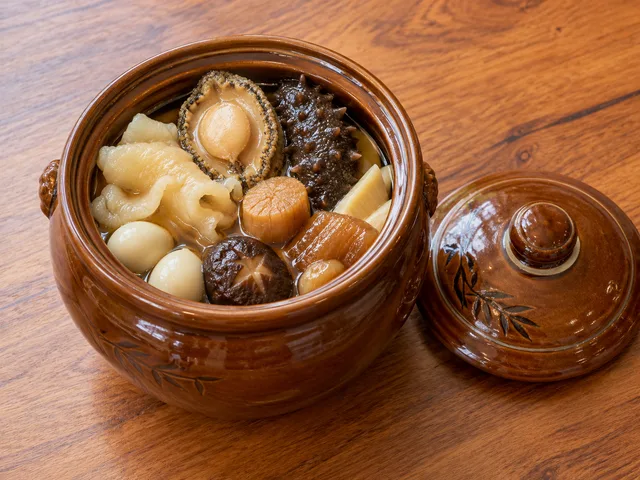
- Buddha Jumps Over the Wall
Banquet jar soup · Banquets and New Year dinners
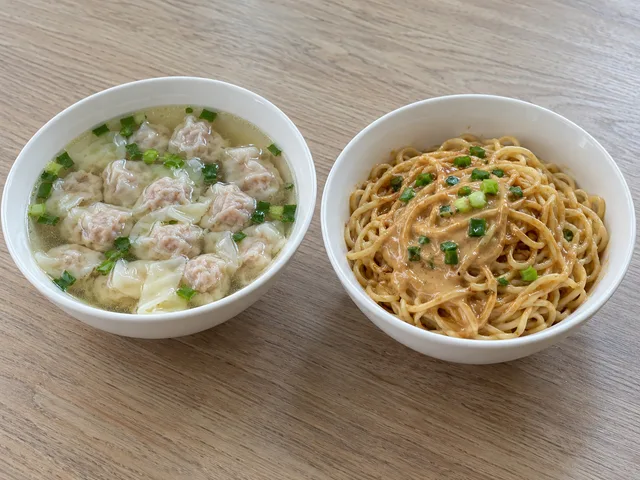
- Shaxian Bianrou and Banmian
Wontons and tossed noodles · Any meal, often late at night
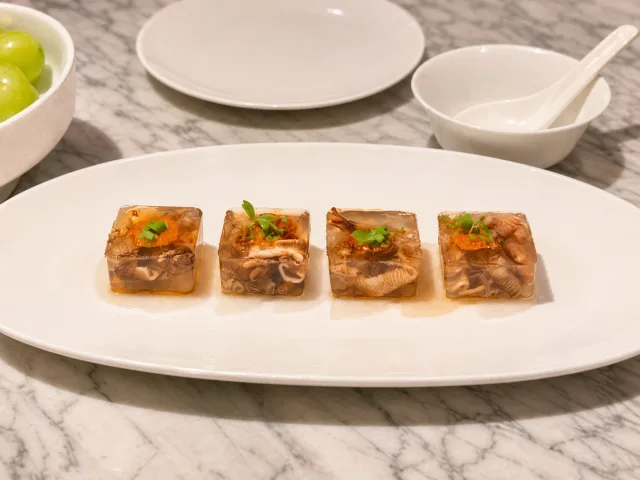
- Tusundong (Sea Worm Jelly)
Cold seafood jelly · Snack, summer evenings
FAQ
Questions about Lychee Pork
What is lychee pork?
A Fuzhou dish of pork scored in a cross-hatch, often wrapped around water chestnut, tinted red, fried until it curls into lychee-like balls and tossed in a sweet-and-sour sauce.
Does lychee pork contain lychees?
No. It is named for its color, its bumpy round shape and its sweet-sour taste.
Why is lychee pork red?
From red yeast rice or the red wine lees left from brewing Fuzhou’s red rice wine; cheaper versions use ketchup.
What is inside lychee pork?
In the banquet version, a cube of water chestnut, which stays crisp and juicy. Home versions often add potato instead.
What is the difference between lychee pork and sweet and sour pork?
Lychee pork is Fuzhou’s, scored and shaped into balls and tinted red; Cantonese sweet and sour pork uses battered cubes with ketchup and pineapple.
Is lychee pork the same as drunken ribs?
No, though many Fuzhou families confuse them. Drunken ribs are fried spare ribs in a sweet-sour sauce found across China.
How much is lychee pork in Fuzhou?
About 3 yuan for a small bag at a morning market, around 30 yuan at a neighborhood eatery and 58 yuan at Juchunyuan (2024–2026).
What cut of pork is used?
Tenderloin in most recipes; some masters use belly or neck for more fat and flavor.
How old is lychee pork?
A different dish of the same name is in Yuan Mei’s 1792 cookbook; Fuzhou cooks call their version a century-old dish.
Is lychee pork spicy?
No. It is sweet and sour, with only a little garlic.
Sources
Sources and further reading
- 1 Chen Zhou (沉洲), Min Wei’er (闽味儿), chapter “The flavors that open the appetite”: lychee pork, sweet-and-sour Fuzhou dishes and the kidney-and-jellyfish exam dish (in Chinese)SDX Joint Publishing (2021)
- 2 Suiyuan Shidan (隨園食單), “Pork” chapter: lizhi rou (in Chinese)Yuan Mei (1792); Chinese original on Wikisource ↗
- 3 Fruit of the South: lychee pork, the Consort Mei legend and a recipeTan Yunfei, The World of Chinese (2021) ↗
- 4 Lychee pork (荔枝肉): a homestyle version with potatoes and a banquet version with water chestnutsChinese Cooking Demystified (2024) ↗
- 5 A Fuzhou master’s lychee pork: belly pork, cross-hatch cuts, red lees for color and water chestnut (video, in Chinese)Da Shi De Cai (大师的菜), Bilibili (2020) ↗
- 6 Juchunyuan’s lychee pork at 58 yuan, with and without water chestnut (video, in Chinese)Te Chu Wei Wei (特厨魏味), Bilibili (2026) ↗
- 7 A forty-year-old Fuzhou eatery: 30-yuan lychee pork with ketchup, nanjian liver and red-lees intestines (video, in Chinese)Dan Niu Shi Zou Qi (丹牛食走起), Bilibili (2024) ↗
- 8 A Fuzhou morning market: 3.3 yuan of cold lychee pork and drunken ribs at 41 yuan a jin (video, in Chinese)Dan Niu Shi Zou Qi (丹牛食走起), Bilibili (2024) ↗
- 9 A busy old Fuzhou restaurant: lychee pork with potatoes and six dishes for two at 338 yuan (video, in Chinese)Da Ge Zai Shanghai (达哥在上海), Bilibili (2025) ↗
Last updated November 2026