
Control the variables
Compare cut, starch shell, glaze and serving time
Color is a weak shortcut. Put the two pork traditions side by side through thickness, coating, frying, sauce behavior and how quickly the crust changes.
01
First ask whether the pork is sliced or cubed
The cut determines the shell-to-meat ratio and how the sauce attaches.
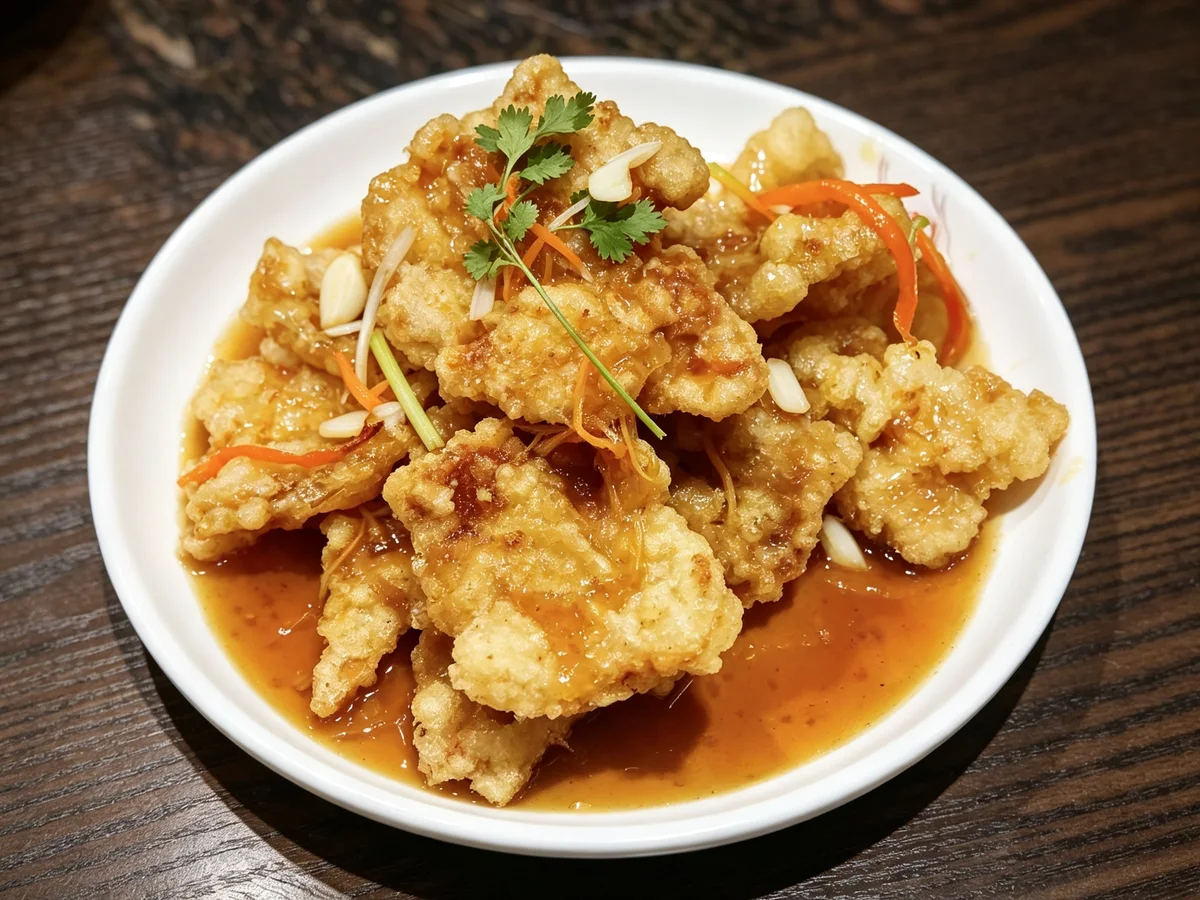
Traditional Harbin guo bao rou commonly uses broad, thin loin slices in a potato-starch coating, creating a large crisp surface. The target is a light shell with brittle edges and moist pork, not a heavy bread jacket.
Cantonese gulou rou and many overseas versions more often use three-dimensional chunks with a meatier center and more substantial crust. Neither shell-to-meat ratio should be judged by the design standard of the other.
02
Guo bao rou should send vinegar aroma upward first
Volatile acidity, clean sweetness and a thin glaze determine whether the shell stays crisp.
Guo bao rou is tossed quickly in sugar-and-vinegar glaze with fine shreds of ginger, scallion, carrot or coriander. The coating should shine without becoming a puddle that soaks the starch shell.
Gulou rou may use tomato color, pineapple, green pepper or other fruit and vegetables, with more sweetness and sauce. Overseas takeaway may increase batter or pack the sauce separately. Describe those service choices rather than reducing them to authentic or inauthentic.
03
Time out of the wok is the largest comparison variable
The same fried pork can lose its defining contrast within minutes.
Eat guo bao rou promptly after glazing. Compare the edge and center for a thin shell, moist meat and bright vinegar. A long photo session or wait softens every version.
Any takeaway comparison must record travel time and packaging. A restaurant plate straight from the wok and pork sealed in a box for forty minutes mainly compare logistics, not cuisines.
Steam in a closed box returns to the starch even when sauce is packed separately. Dry reheating may remove some surface moisture but cannot restore lost vinegar aroma or meat juice. Judge dine-in and takeaway separately; if takeaway is unavoidable, ask for vented packaging and eat promptly.
04
Describe regional origin and migration accurately
Guo bao rou belongs to northeastern urban history; overseas sweet-and-sour pork belongs to migration history.
Guo bao rou is closely tied to modern Harbin, where narratives combine Russian-facing banquet culture with Chinese frying and sweet-and-sour technique. Color, coriander and sweet-sour balance still vary by restaurant.
Cantonese and overseas sweet-and-sour pork developed through port exchange, Chinese restaurants abroad and local demand. Adaptation is not a loss of value; cut, batter, fruit, sweetness and transport provide more useful descriptions.
Quick-reference tool
Four dishes that English menus often collapse
The categories overlap, but cut, coating and sauce still produce distinct targets.
| Dish | Typical construction | What to notice first |
|---|---|---|
| Guo bao rou | Broad lean pork slices, starch coating, light vinegar-led glaze | Brittle edges, aromatic acidity and sauce that does not soak the crust |
| Tangcu liji | Pork tenderloin strips or pieces in a smoother sweet-sour sauce | Tender meat, even coating and a more unified sauce-to-crust experience |
| Gulou rou | Cantonese battered pork pieces, often with pineapple or peppers | Chunkier form, fruit-acid balance and a robust fried shell |
| Overseas sweet-and-sour pork | Restaurant-dependent adaptation using local ingredients and expectations | Treat the menu’s Chinese name and kitchen style as evidence; no single overseas formula exists |
Guo bao rou is closely associated with Harbin and northeastern cooking. Origin stories often name specific people and dates, but the most responsible summary separates documented regional association from restaurant legend.
Why delivery changes the dish
Steam
A closed container traps vapor and softens the starch shell.
Contact time
Glaze continues migrating into the crust while the order travels.
Temperature
Cooling dulls vinegar aroma and makes fat or coating feel heavier.
Better benchmark
Judge the first restaurant-served piece before using takeaway texture to define the dish.
Field method
Compare the dishes by cut, crust and sauce behavior
Both are sweet-sour pork, but that family resemblance does not make their textures or histories interchangeable.
Watch how the pork is built
Guo bao rou commonly uses broad slices and a thin crisp coating; other sweet-and-sour pork forms may use chunks and a thicker shell.
A good comparison begins before sauce: slice versus cube, lean-to-fat ratio, starch coating and frying method. Guo bao rou aims for a brittle edge that survives a light glaze; a Cantonese or overseas restaurant may pursue a crunchier battered chunk with fruit and a more abundant sauce.
Names vary by restaurant. Guobaorou, crispy sweet-and-sour pork and sweet-and-sour sliced pork may refer to related forms, so confirm the Chinese name and photograph instead of declaring identity from English alone.
Judge freshness at the moment of service
Both dishes decline when trapped in steam or held in sauce.
Eat the first piece promptly. The sauce should sharpen the pork without turning the coating pasty; aromatics such as ginger and scallion should remain perceptible. Delivery versions are not reliable texture benchmarks.
Order one as the fried anchor, then add a vegetable, soup or plain starch. Placing both on one small table is useful only for a deliberate comparison with enough diners.
Worked example
Worked example: a side-by-side tasting
Six diners can order both without wasting two fried centerpieces.
- Step 1 · Confirm names
Verify guo bao rou for the northeastern plate and gulou rou or the restaurant’s exact Cantonese name for the other.
- Step 2 · Serve together
Request close timing and taste before taking photographs.
- Step 3 · Compare variables
Record cut, shell thickness, sauce quantity, fruit and aromatics.
- Step 4 · Balance
Add greens, rice and tea rather than a third fried meat.
The verdict can acknowledge two successful targets instead of forcing one dish to be the authentic winner.
FAQ
Frequently asked questions
Is guo bao rou simply northeastern gulou rou?
They belong to a broad sweet-and-sour fried-pork family, but differ in cut, starch shell, vinegar aroma, garnish and ideal sauce amount.
Why does guo bao rou soften so quickly?
Its thin starch shell keeps absorbing moisture after it meets the glaze, so frying, tossing, service and eating time are inseparable.
Does a paler color prove authenticity?
No. Judge cut, shell, vinegar aroma, glaze and texture together because restaurant traditions vary.
Sources
Sources and further reading
These sources support the food names, regional context, techniques and dining practices used in this guide. Individual restaurants, households and cities still vary.