
01
An oyster, a spoonful of garlic, and the juice in the shell
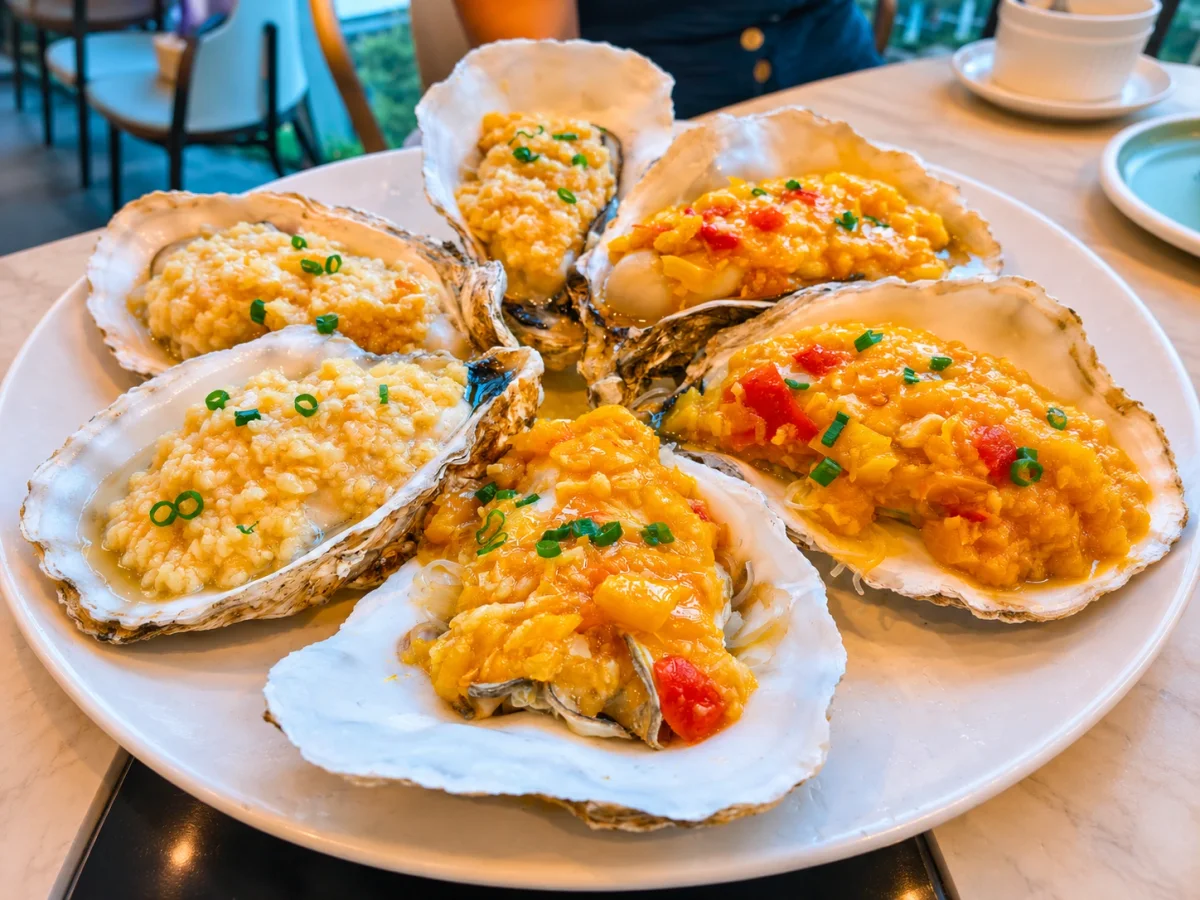
Suanrong means minced garlic, and it should cover the oyster completely.
The oyster is opened and left on its deeper half shell. A heap of garlic sauce goes on top, sometimes over a small bundle of soaked mung bean vermicelli. Then the shell goes onto a charcoal grill or into a steamer. As the oyster cooks it releases its own salty juice, which mixes with the garlic oil in the shell. The vermicelli, when there is any, is there to soak that juice up.
Night stalls grill them, and kitchens also steam oysters under garlic, a dish Zhanjiang cooks call suanrong zhenghao. In Zhanjiang the grilled oyster is the one everyone means, eaten with garlic and a little bird’s-eye chili. Shops there also sell oysters grilled plain, with nothing on top, for dipping in soy sauce and wasabi, and oysters cooked in soups, on iron plates, in crisp batter and in omelets.
The flavor depends on the balance. Too much fried garlic and the topping turns bitter on the grill; too much raw garlic and it stays harsh. A good one tastes of sweet, toasted garlic first, then the briny oyster, then the juice at the bottom of the shell.
02
Golden and silver garlic
Cooks call the mixture jīnyín suàn (金银蒜), golden and silver garlic.
Chop the garlic by hand. A machine grinds it so fine that it melts or burns as soon as it touches hot oil, and an uneven chop means the fine bits blacken before the coarse ones color. Take about a third of it for frying. Start it in oil that is only warm and let the temperature rise slowly over low heat, so the garlic dries and colors all the way through rather than browning outside and staying raw inside. Lift it out just before it looks done, because it keeps cooking in its own heat, and spread it on paper to cool quickly.
Mix that golden garlic with the remaining raw garlic. The usual mix is about one part fried to two parts raw, and never more fried than raw: fried garlic burns and turns bitter when it goes back under the grill or into the oven. Season with salt, a little sugar, oyster sauce and light soy, then stir in some of the warm garlic oil from the frying. Chopped bird’s-eye chili can go in for a spicy batch. The same sauce also goes on steamed scallops, prawns and grilled eggplant.
Sources [6]
03
Zhanjiang and the night-market oyster
Across southern China, grill stalls write “Zhanjiang oysters” on their signs.
Zhanjiang is a port city at the southwestern tip of Guangdong, with sea on three sides and, by its own reckoning, the longest coastline of any city in China. Its oysters are farmed in those bays. The grilled garlic oyster appeared in the first season of the barbecue documentary Rensheng Yi Chuan, and the dish has carried the city’s name to barbecue stalls well beyond Guangdong.
The oysters that made the name are not the ones locals prize most. The big, cheap oysters on grills across China come from high-yield farms elsewhere in Zhanjiang, such as Beitan in Suixi county. Zhanjiang people themselves favor Guandu oysters from Potou district, which they simply call Zhanjiang oysters or “white oysters.” They grow where the Zhanjiang waterway meets fresh water, and they are pale, rounded and not especially large, but plump, crisp and mild. Output is small and most of it is eaten in the city, which is why the name is little known elsewhere. Guandu growers once raised oysters on cement posts for about three years; hanging them on ropes has cut that to a little over a year.
In the city, oyster grilling is concentrated in food courts and night-market streets. At Lülin Shifang (绿林食坊), one of the best known, a covered hall holds twenty or thirty oyster shops in a row, each with someone at the door calling to passers-by, and the air smells of garlic. The busiest in 2020 were Zhanjiang Shaokao Wang (湛江烧烤王), which had appeared in Rensheng Yi Chuan, and one called 168 Hao Ye. Locals are particular about freshness: seafood should be alive and bought that day. Anything frozen, dead or trucked a long way in a holding tank is only “aquatic produce,” not seafood.
04
Ordering by size and by the dozen
Oysters are sold by size, and in Zhanjiang usually by the dozen.
| Size | Price seen | What you get |
|---|---|---|
| Large 大 | ¥78 a dozen (2021); ¥5 each (2023) | About 18 g of meat, a full mouthful, chewier |
| Medium 中 | ¥48 a dozen (2021) | A middle choice for sharing |
| Small 小 | ¥30 a dozen (2021); ¥2 each (2023) | About 6 g of meat, softer and more delicate |
Bigger is not always better. A ¥5 oyster can hold eighteen grams of meat against six in a ¥2 one, but the small ones are more tender and have more flavor, and many people order several dozen of those instead.
Tell the grill cook how hot you want it: no chili, a little, or more. Ask for some plain grilled oysters if you want to taste the oyster itself. Zhanjiang people consider oysters past their fattest after Qingming in early April, though the stalls sell them all year. For Guandu oysters, the season runs from October to March and they are at their best in December and January. Anyone who wants to buy them at the source can go to the Sanjiao wholesale oyster market in Guandu, beside National Road 228, where in early 2023 whole clusters sold for 5 to 7 yuan a jin and shucked meat for about 45.
05
Which oysters end up under the garlic
China farms most of the world’s oysters, and the south coast and the east coast grow different species.
In 2019 China produced about 5.23 million tons of farmed oysters, while a 2024 study puts world oyster aquaculture at about 6.06 million tons in 2020. The most important farmed species in the south is the Hong Kong oyster, Crassostrea hongkongensis, about 37 percent of China’s output, around two million tons, with Qinzhou on the Beibu Gulf one of its biggest farming centers. Further up the coast, in Fujian and Zhejiang, the main farmed oyster is a smaller species, the Portuguese oyster, Crassostrea angulata. A Guandu grower’s advice for the grill: about two to three minutes over high heat for a plump, very slightly underdone oyster, four for one cooked right through, which is what food-safety advice calls for, though it shrinks a little.
07
Garlic oysters at home, in the oven or steamer
Make the garlic first. The oysters take only minutes.
For 12 large oysters: 2 whole heads of garlic, about 120 ml neutral oil, 1 tbsp oyster sauce, 1 tsp light soy sauce, ½ tsp sugar, salt, a small bundle of mung bean vermicelli (optional), chopped scallion, and chopped bird’s-eye chili if you like heat.
- 1. Make golden and silver garlic
Chop the garlic by hand. Fry one-third of it in the oil from cold over low heat until pale gold, lift it out and spread it to cool. Mix it with the raw garlic, the seasonings and a few spoonfuls of the garlic oil.
- 2. Open the oysters
Scrub the shells, open the oysters and keep them on the deeper half shell with their juice. Cut the muscle underneath so the oyster lifts out easily.
- 3. Top them
Put a few strands of soaked vermicelli under each oyster if you are steaming. Cover each oyster completely with a spoonful of garlic.
- 4. Cook through
Bake at about 180 °C for 12–15 minutes for large oysters, or steam over high heat until the edges curl, the flesh is firm and opaque and the juice is bubbling. Smaller oysters need less time.
Scatter scallion and eat them while the juice is still hot. Drink the juice from the shell.
Guangdong classics
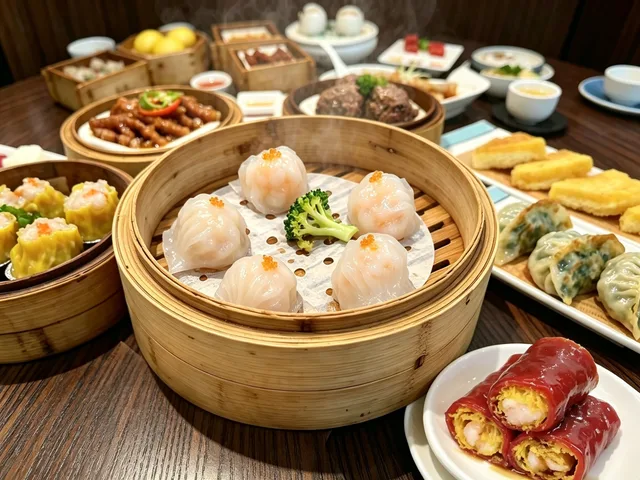
- Cantonese Yum Cha
Yum cha · Morning tea, weekends with family
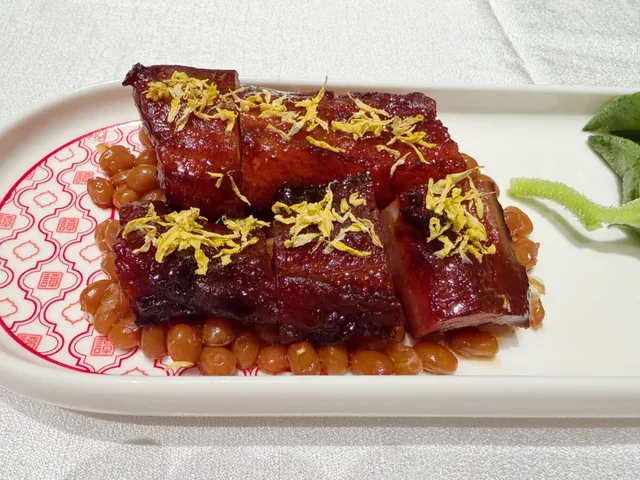
- Char Siu
Roast pork · Lunch or dinner, with rice
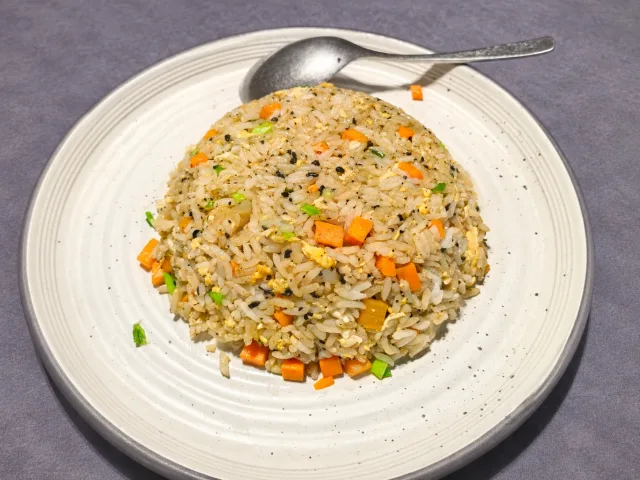
- Egg Fried Rice
Fried rice · Lunch, dinner, end of a meal
- Beef Chow Fun
Fried rice noodles · Lunch, dinner or late-night supper
- Mooncake
Festival pastry · Mid-Autumn Festival
- Egg Tart
Custard tart · Dim sum, afternoon tea or bakery snack
FAQ
Questions about Garlic Oysters
What are Chinese garlic oysters?
Oysters on the half shell cooked under a heap of garlic sauce, either grilled over charcoal or steamed, often with vermicelli to soak up the juice.
What is golden and silver garlic?
A mixture of garlic fried until golden and raw garlic, usually about one part fried to two parts raw, seasoned and loosened with garlic oil.
Why is my garlic topping bitter?
Too much pre-fried garlic, or garlic fried too dark. It browns again under the grill. Keep the fried part to a third and lift it out when pale gold.
Why are garlic oysters linked with Zhanjiang?
Zhanjiang in western Guangdong farms large oysters and is known for its night-market grilled oysters. Stalls across southern China use its name on their signs.
How much do grilled oysters cost in Zhanjiang?
In 2021 one food court sold them at ¥78, ¥48 and ¥30 a dozen by size. In 2023 a stall charged about ¥5 for a large one and ¥2 for a small one.
Are bigger oysters better?
Not necessarily. Large ones have more meat, but the small ones are more tender and sweeter.
Is it safe to eat grilled oysters?
Only if they are cooked through. Garlic, chili, lemon and alcohol do not kill norovirus or Vibrio. Wait until the flesh is firm and opaque and the juice bubbles.
Are garlic oysters grilled or steamed?
Both. Night-market stalls grill them over charcoal; kitchens also steam them under garlic, often with vermicelli underneath.
Sources
Sources and further reading
- 1 Food safety concerns of oysters: norovirus, Vibrio and advice to consumers (in Chinese)Centre for Food Safety, Hong Kong (2013) ↗
- 2 By high-speed rail to Zhanjiang: oysters, prawns and the seafood city (in Chinese)Weilai Cheng Bu Luo, via 36Kr (2025) ↗
- 3 Aquaculture performance of the “South China No. 1” oyster in Beibu Gulf: China’s oyster output and the Hong Kong oyster’s shareBiology 13(5), MDPI (2024) ↗
- 4 Oyster species along the Zhejiang coast: the Portuguese oyster as the main farmed oyster in Zhejiang and FujianFrontiers in Marine Science (2021) ↗
- 5 EFSA advises on heat treatment of bivalve molluscsEuropean Food Safety Authority (2015) ↗
- 6 An all-purpose garlic sauce: golden and silver garlic, and how to use it on oysters (video, in Chinese)Wanneng Gongjuren A Wei (万能工具人阿伟), Bilibili (2023) ↗
- 7 Grilled oysters in Zhanjiang at ¥78, ¥48 and ¥30 a dozen (video, in Chinese)Chang’an Lao Wu (长安老五), Bilibili (2021) ↗
- 8 Twenty or thirty grilled-oyster shops in one Zhanjiang food court (video, in Chinese)Hua Miao Qu Chifan (花喵去吃饭), Bilibili (2020) ↗
- 9 Zhanjiang grilled oysters from ¥1: weighing a ¥5 oyster against a ¥2 one (video, in Chinese)Guaika Yi Zhi Ou (怪咖一只鸥), Bilibili (2023) ↗
- 10 Guandu white oysters, Zhanjiang’s local favorite: where they grow, the market and how to cook them (video, in Chinese)Shichang Bowu (市场博物), Bilibili (January 26, 2023) ↗
Last updated November 2026