
Read the stall
Judge street food by specialization, turnover and eating moment
The useful comparison is not cheap versus expensive. Look at what a stall specializes in, when the food reaches its best texture and how cleanly ingredients move through service.
01
“Street” describes an everyday buying system
Stalls, windows, breakfast shops and tiny specialists all belong to the ecosystem.
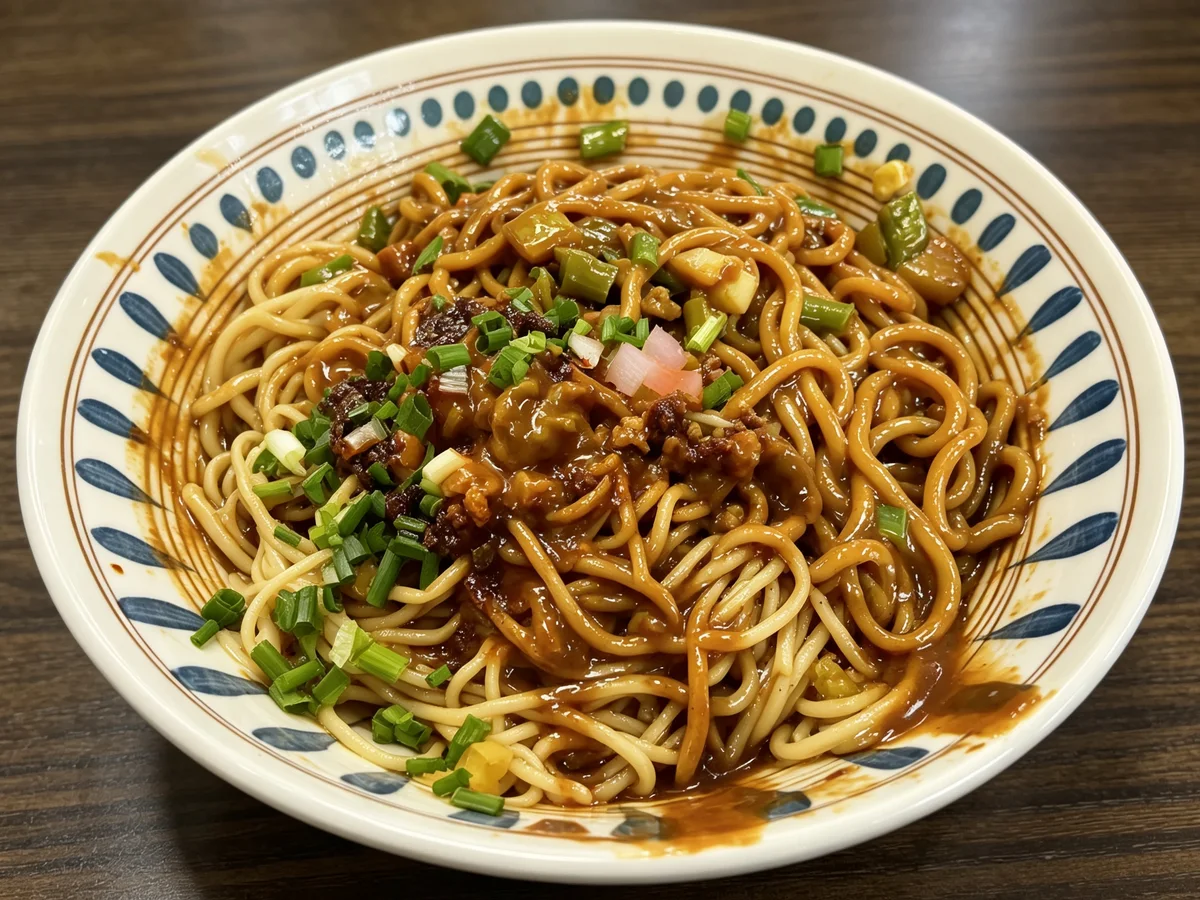
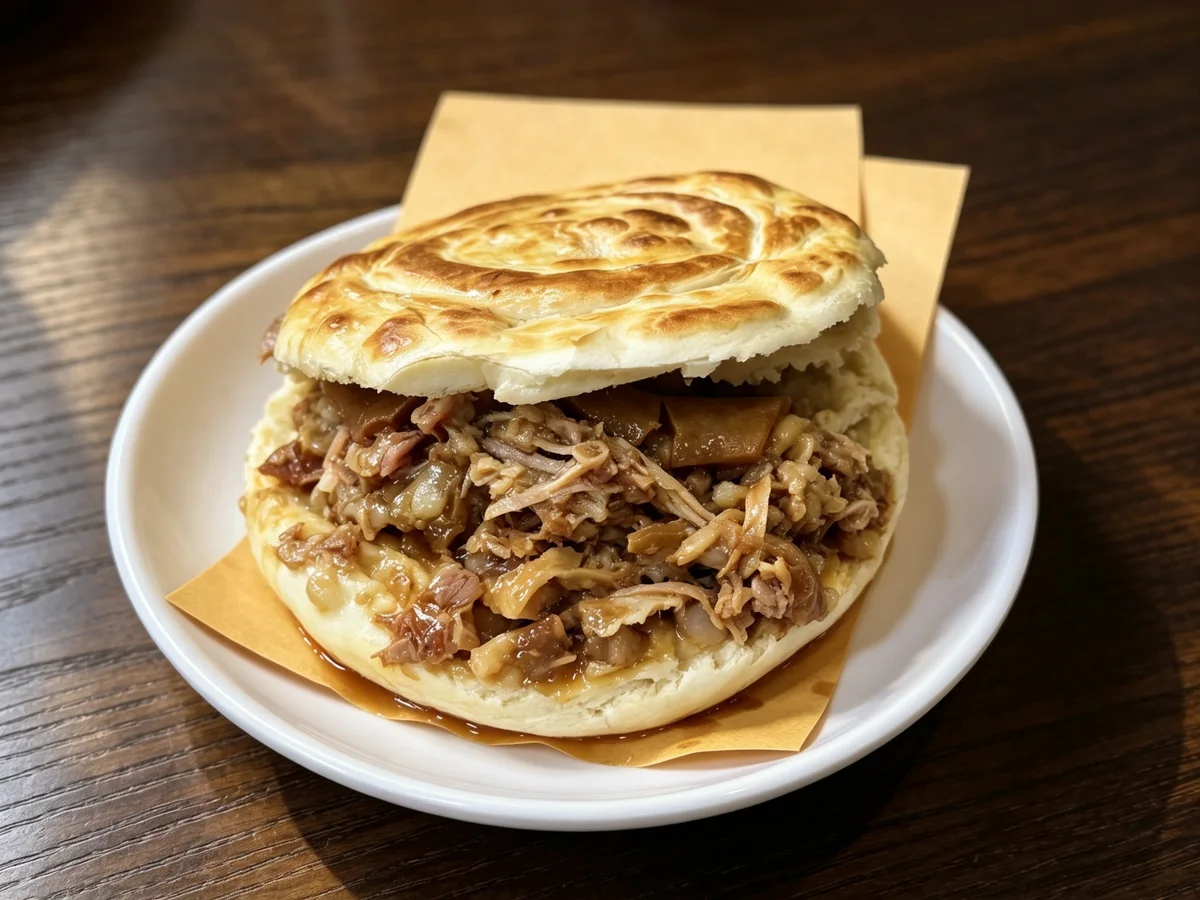
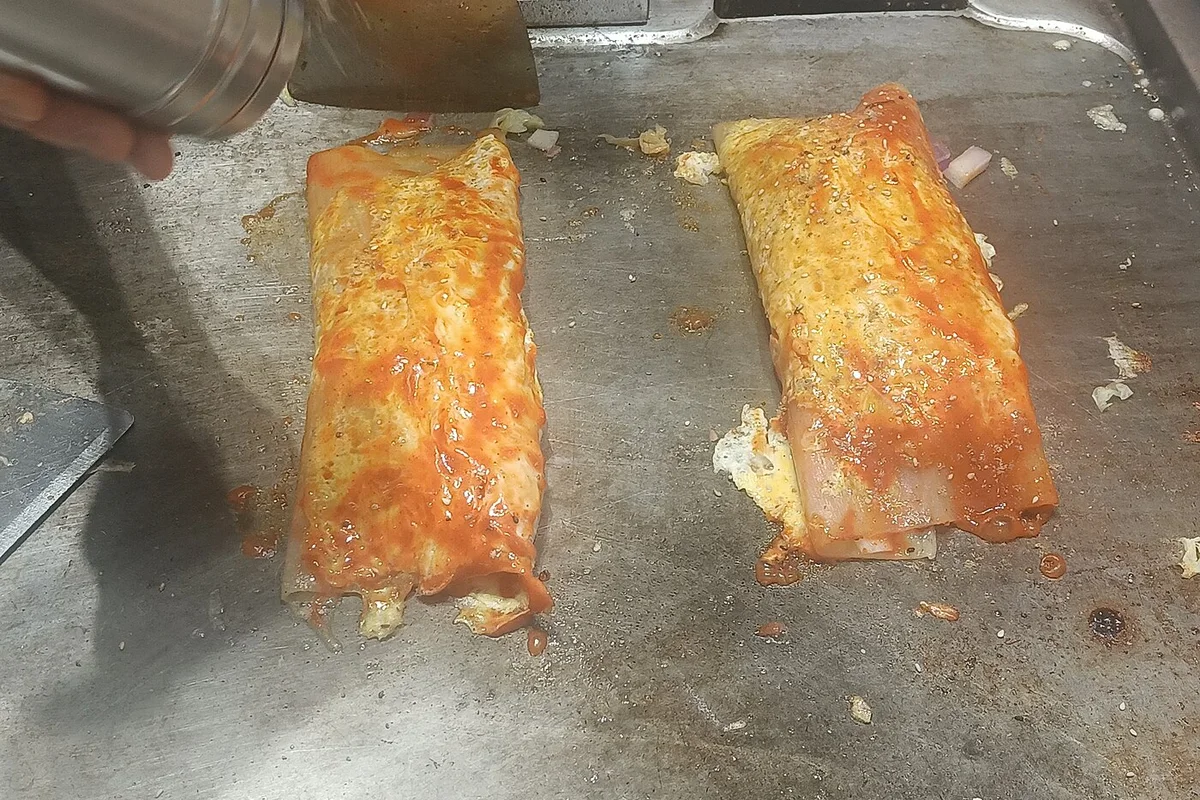
Many representative foods are not pushed around on carts. Wuhan breakfast requires continuous noodle reheating, doupi griddling and mianwo frying; roujiamo needs meat braised in advance and chopped into bread to order; grilled cold noodles require live control of moisture on an iron plate.
Street food therefore does not mean careless, cheap or unskilled. It often means a focused menu, fast turnover and a format built around local schedules, whether eaten standing, taken away or finished during a brief stop.
02
Choose by time of day before choosing by ranking
The service window is closely tied to the food’s best state.
Hot dry noodles, doupi, mianwo and hutang rice noodles belong to Wuhan’s breakfast system and benefit from steady morning turnover. Shaanxi peppery soup and breads are also fullest in the morning. Portable cakes and cooling sweets make more sense later in the day.
Night markets suit griddled, grilled and skewered foods that can be made in small batches, but not every local specialty belongs there. Saving a breakfast food for midnight or collecting many cities at one tourist strip often means reheated, prefabricated or low-turnover versions.
03
Choose a busy, focused stall with a readable process
Popularity is not proof, but transparent preparation and turnover are useful evidence.
Watch whether raw and cooked foods are separated, hot food is held safely, tongs are kept distinct and fried food leaves the oil in small batches. A short menu with constant fresh production can preserve texture more reliably than a stall attempting dozens of unrelated items.
Buy one portion first and continue only after tasting. Roujiamo, sticky-rice cakes, doupi and egg-topped griddle foods can be filling even when they look small; they are not weightless tasting samples.
04
Keep the city name and the food’s original role
Regional difference is the value of street food, not a problem to flatten into one national story.
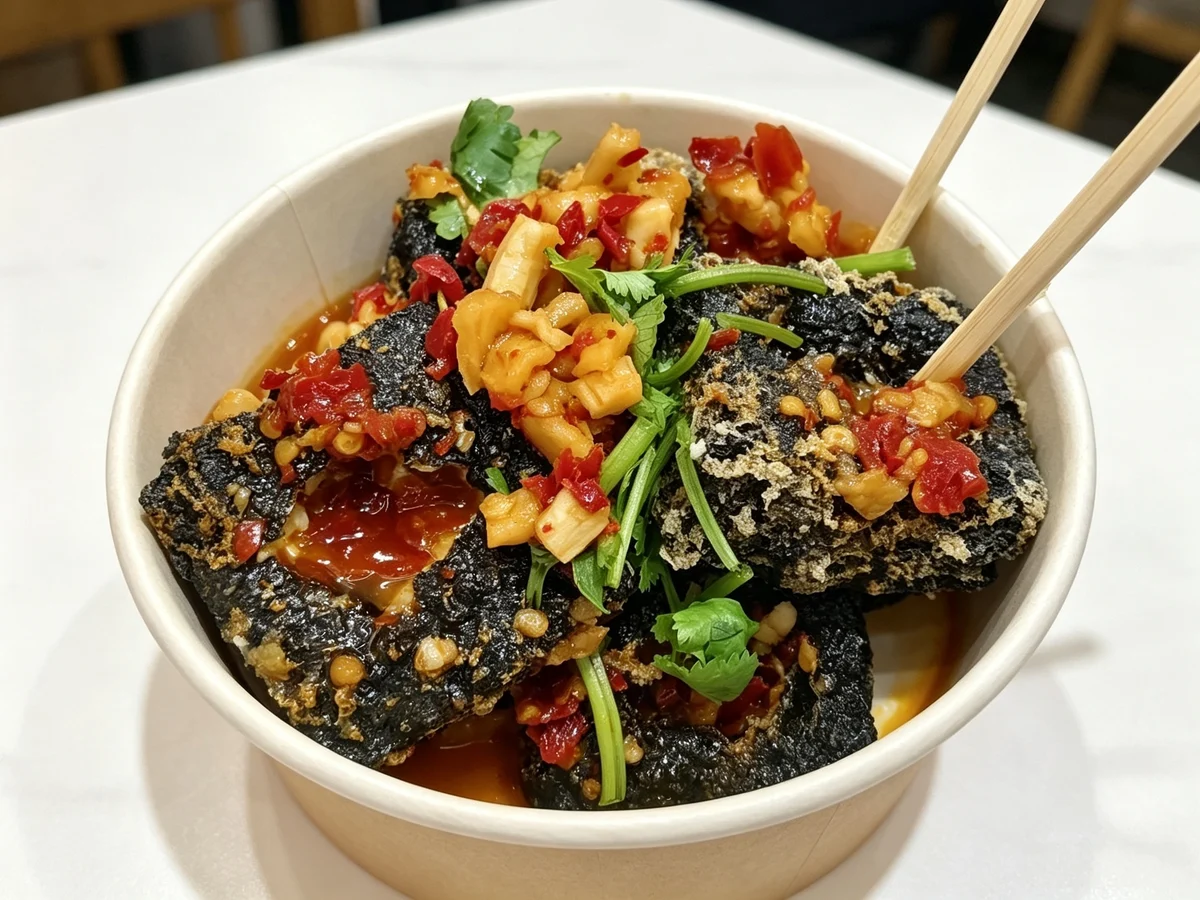
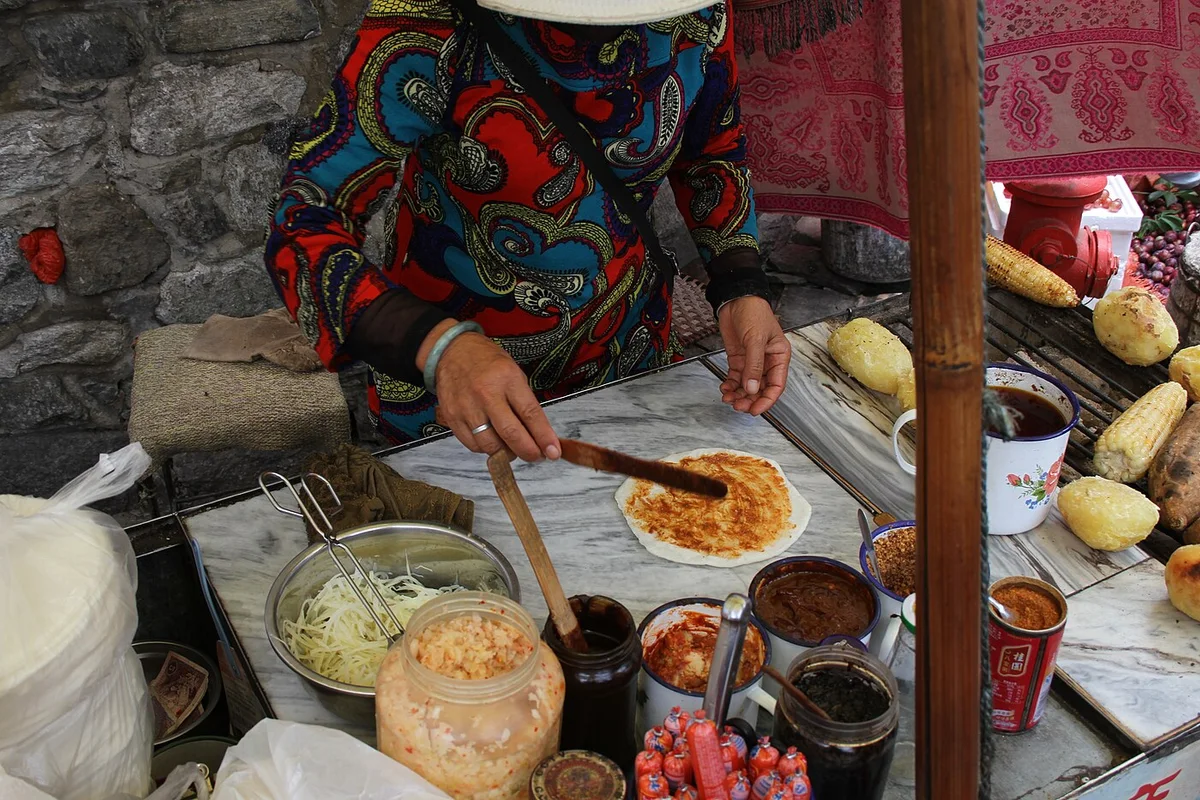
Zhong dumplings are a Chengdu red-oil snack, not northern festival jiaozi. Grilled cold noodles are served hot from a griddle despite the name. Changsha stinky tofu’s color, brine and dressing do not represent every stinky-tofu tradition in China.
Ask before filming and do not block the queue. Calling fermented food, offal or strong aromas a bravery challenge erases local everyday experience. Ingredients, intended texture, occasion and eating method offer a more accurate story.
Compare
Spring roll vs egg roll vs summer roll
These three rolls are often lumped together overseas, but they come from different places: the spring roll is Chinese, the egg roll is an American-Chinese invention, and the summer roll is Vietnamese. Knowing the origin keeps your order from surprising you.
Chinese (春卷, chūnjuǎn)
American-Chinese
Vietnamese (not a Chinese dish)
Thin wheat or rice wrapper
Thick, bubbly wheat wrapper
Soft rice paper, not fried
Usually fried; some regions also serve fresh
Deep-fried
Fresh, served cool
Cabbage, carrot, pork or shrimp; sweet versions exist
Cabbage and pork, usually heartier
Rice vermicelli, herbs, shrimp or pork
Light and crisp
Thick, chewy-crisp
Cool and soft
“Spring roll” points to the Spring Festival 春卷
Called “egg roll” but usually contains no egg
The Vietnamese fresh roll
The short version: spring rolls are thin and crisp, egg rolls are thick and deep-fried, and summer rolls are cool, un-fried and Vietnamese. To find spring rolls at dim sum, see the Cantonese dim sum guide.
For something light and crisp
Choose a spring roll. Its thin wrapper fries up crisp with a lighter filling.
For a thick, deep-fried bite
Choose an egg roll. It is American-Chinese, with a thicker, bubblier, heartier wrapper.
For a cool, un-fried roll
You want a Vietnamese summer roll, wrapped cold in rice paper—it is not a Chinese dish.
At yum cha
Spring rolls are a classic fried item; order them alongside steamed dim sum.
Quick-reference tool
From breakfast griddles to late-night barbecue
Street food changes with the hour: breakfast griddles, midday staples, afternoon snacks and night-market dishes answer different needs.
| Time and food | What it tastes or feels like | A useful first order |
|---|---|---|
| Breakfast · jianbing guozi | Thin griddled batter, egg, crisp cracker, savory sauce and herbs | Ask about chilli and extra sausage; eat immediately before the cracker softens |
| Breakfast · soy milk and youtiao | Warm or chilled soy milk with an airy fried stick | Specify sweet or savory soy milk where both exist; dip only as you prefer |
| Breakfast · baozi | Steamed, soft dough with meat or vegetable filling | Confirm filling and pieces per order; “vegetable” may include egg or dried seafood |
| Morning · Wuhan hot dry noodles | Sesame-rich, savory and dry-mixed | Mix at once and treat the bowl as a meal, not a side sample |
| Midday · roujiamo and liangpi | Rich chopped meat in bread contrasted with cool, tangy noodles | Sharing one of each gives better contrast than two heavy breads |
| Midday · xiaolongbao / shengjian | Soup-filled steamed parcels or pan-fried buns | Check temperature; distinguish the delicate steamed form from the crusted pan-fried one |
| Afternoon · tanghulu | Hard sugar shell and tart fruit | Choose freshly coated fruit and protect teeth from an excessively thick shell |
| Afternoon · Changsha stinky tofu | Fermented aroma, crisp shell and hot savory dressing | Order a small portion, eat hot and adjust chilli dressing if possible |
| Evening · grilled cold noodles | Soft-chewy northeastern griddle sheets with egg and sauce | Ask about sweetness and chilli; eat while edges remain lightly crisp |
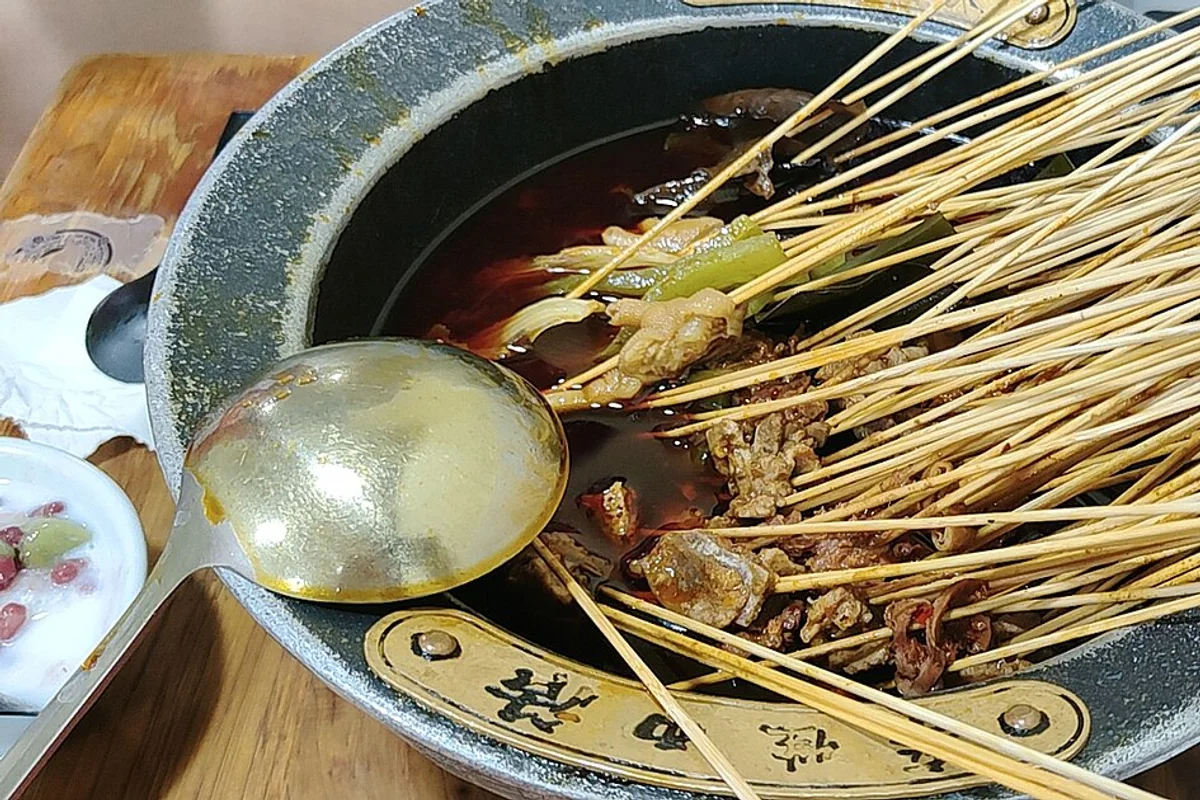
| Night · chuanr / barbecue | Cumin, smoke, fat and char across lamb, vegetables or seafood | Order a small mixed first round and verify doneness before adding more |
“Street food” may be sold from a cart, market stall, permanent counter or tiny shop. The service format changes by city and regulation; portability alone does not define authenticity.
A safer tasting route
Choose turnover
A short queue and continuous cooking provide better evidence than a viral sign with food sitting under heat.
Alternate techniques
Follow a griddled item with soup, fruit or a steamed item instead of stacking five fried foods.
Protect temperature
Eat soup dumplings, fritters and crisp coatings immediately rather than carrying them through several stops.
Escalate allergy care
Shared grills, oil and condiment brushes make a fast stall unsuitable for restrictions that require controlled cross-contact.
Field method
Evaluate street food by routine, turnover and timing
Street food is a service format, not one cuisine. Breakfast griddles, noodle counters and evening snack stalls have different rhythms.
Follow local demand rather than a universal checklist
A busy morning stall and a night-market fryer are designed for different foods.
Wuhan hot dry noodles and mianwo make sense during breakfast turnover; roujiamo and liangpi can form a quick meal; stinky tofu and grilled cold noodles are cooked for immediate snacking. Visit at the food’s active time to see fresh batches and normal ordering.
Limit stops and share when possible. Fried and starch-heavy items accumulate quickly, and a six-stop crawl often means eating every item below its best temperature.
Use visible safety evidence
Popularity helps only when turnover and handling are actually observable.
Look for food cooked through, raw and cooked utensils kept apart, clean surfaces, protected ingredients and oil that does not smell stale. For ice, cut fruit and cold sauces, refrigeration and handling deserve extra attention.
Ask price and portion before adding toppings. Allergy communication can be difficult at a fast stall with shared tools; choose a full-service setting when cross-contact must be controlled.
Worked example
Worked example: a two-hour evening route
Three people want variety without replacing dinner with six fried foods.
- Step 1 · Set a limit
Choose three stops with different techniques.
- Step 2 · Begin savory
Share a griddled item made to order.
- Step 3 · Add one fried item
Select a high-turnover stall and eat immediately.
- Step 4 · Finish differently
Choose fruit or a sweet drink only after checking ice and handling.
The route remains enjoyable because each stop contributes a distinct technique and safe, hot food.
FAQ
Frequently asked questions
How can I judge street-food safety?
Favor fast turnover, visible preparation, separate raw and cooked tools and food served fresh and hot. If the process is unclear, walking away is reasonable.
Does a night market serve the best local breakfast?
Not necessarily. Many breakfasts depend on morning demand and fresh batches, so visit the specialists when local people actually eat them.
Should I buy many dishes at once for a tasting?
Buy in small rounds. Staple snacks are filling, and fried, mixed and griddled foods quickly lose their intended texture while waiting.
Sources
Sources and further reading
These sources support the food names, regional context, techniques and dining practices used in this guide. Individual restaurants, households and cities still vary.
- Ten Representative Foods of WuhanHubei Provincial Department of Culture and Tourism ↗
- Representative Foods and Snacks of ShaanxiShaanxi Provincial People’s Government ↗
- Leshan Food Culture and Bobo ChickenLeshan Municipal People’s Government ↗
- Mishan Grilled Cold NoodlesMishan Municipal People’s Government ↗